


Vintage Timber Candle Stands
These vintage timber candle stands bring genuine warmth to a room, offering practical lighting platforms shaped by centuries of woodworking traditions.
Vintage Timber Candle Stands
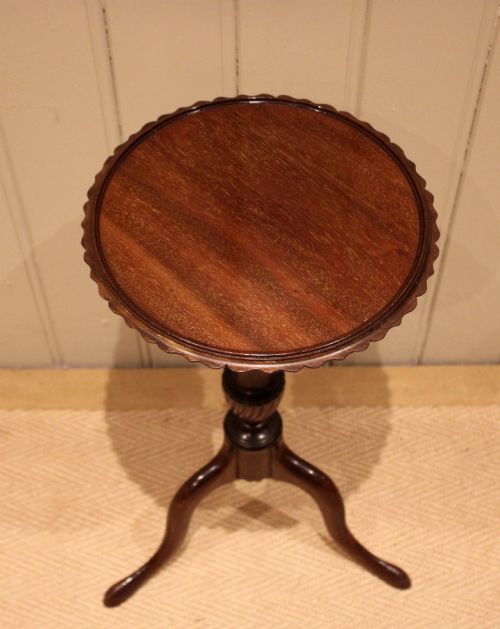
When you search for vintage timber candle stands, you encounter turned sticks, carved holders, and occasional tables that double as elevated platforms for light. The selection spans centuries of design, encompassing Georgian elegance, Victorian mass, and early twentieth-century folk art.
You are most likely to meet mahogany and walnut pieces from the eighteenth and nineteenth centuries, alongside turned wood designs from the 1920s. Form follows function across these items, ranging from small taper sticks to tall floor-standing columns and occasional tables adapted for candles.
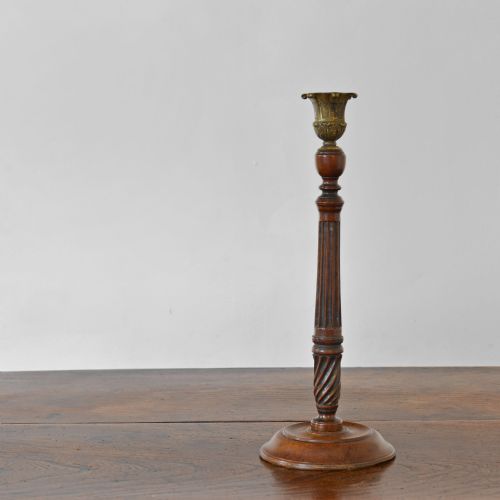
The materials reflect the prevailing cabinet-making timbers of their respective eras, utilising dense hardwoods that take a fine polish. Many examples incorporate brass components, metal prickets, or ebonised details to contrast with the warm grain of the wood.
How they were made
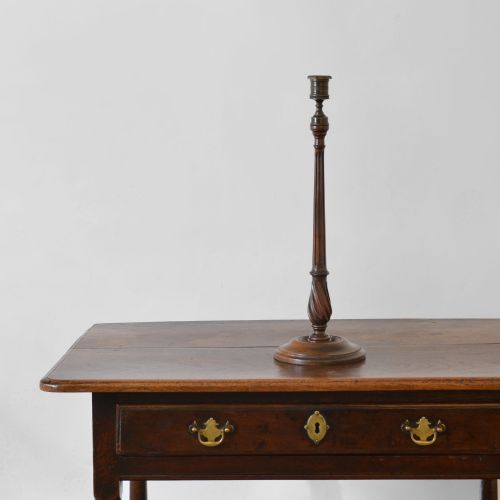
Makers shaped these stands using traditional turning lathes and hand-carving chisels, working dense timbers such as mahogany, walnut, and rosewood. The construction often employs spiral twist patterns and barley twist columns that demand precise lathe work from the artisan.
Surface finish was achieved through manual polishing and waxing, highlighting the natural grain and figuration of the timber. Folk art pieces display direct hand-carving techniques, creating figural forms like poachers carrying game or angel motifs without the symmetry of professional workshops.
One exceptional folk art pair depicts poachers carrying game, proving that anonymous rural carvers possessed a keen eye for character.
What varies in quality
The distinction between ordinary and superior pieces rests on the weight of the timber and the crispness of the turned or carved details. Finer examples display harmonious proportions, deep relief in carved elements, and well-chosen grain patterns that enhance the sculptural form.
Age and regional origin dictate construction nuances, with Georgian and earlier pieces showing hand-cut joinery and period-appropriate hardware. The integration of brass fittings and metal prickets also indicates the tier of the piece, with heavier metals pointing to higher initial cost.
The Vintage Timber Candle Stands Glossary
- Pricket
- A sharp metal spike set in a candlestick to secure the base of a candle. This form appears frequently on older liturgical and domestic holders.
- Barley twist
- A spiral column resembling the shape of barley sugar, turned on a lathe. This motif is common on nineteenth-century stands and tables.
- Treen
- Small domestic wooden objects made by turning or carving. These items range from miniature taper candlesticks to small bowls and boxes.
- Pie crust
- A decorative raised border carved with undulating curves, resembling the edge of a pastry crust. This detail marks finer walnut and mahogany occasional tables.
- Ebonised
- Wood treated with a chemical stain or black finish to imitate ebony. This technique provided a contrasting dark accent in Victorian design.
Vintage Timber Candle Stands: Frequently Asked Questions
How do I date a wooden candle stand?
Dating relies on identifying the timber species, the turning style, and the method of construction used by the maker. Eighteenth-century examples often feature heavier proportions and dense mahogany, while later pieces show lighter turned elements or folk art carvings.
Examining the tool marks and any brass components provides further context. Georgian pieces display different joinery and weight compared to Edwardian or 1920s vernacular items.
Were these stands used for dining tables?
Many smaller taper sticks and low stands served on dining and side tables to provide targeted illumination before the advent of gas and electric lighting. Taller floor-standing versions stood in corners or beside seating areas to cast light across a room.
Occasional tables listed alongside candlesticks functioned as multi-purpose furniture pieces that held small illumination sources or supported writing equipment.
How do I care for antique timber stands?
Maintenance requires keeping wooden stands away from direct heat sources and dramatic humidity fluctuations that cause timber to split. Applying a microcrystalline wax periodically preserves the dry finish of the old polish without building up sticky layers.
Avoid commercial liquid cleaners containing silicone, which can penetrate porous historic finishes and damage the underlying wood grain over time.
What is the difference between treen and standard stands?
Treen refers specifically to small, functional wooden items produced by turning or carving, such as miniature taper sticks and pocket items. Standard candle stands generally encompass larger architectural forms, floor-standing columns, and furniture-scale pieces like wine tables.
While both categories utilise similar turning techniques, treen pieces prioritize compact utility and domestic portability over the decorative presence of larger stands.