
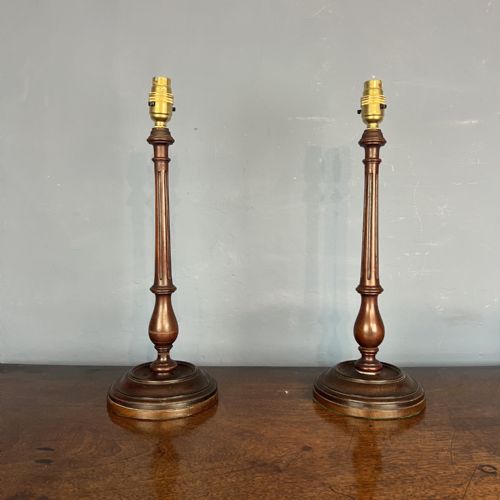
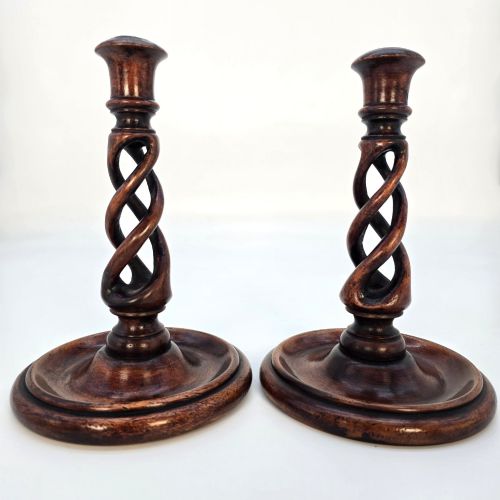
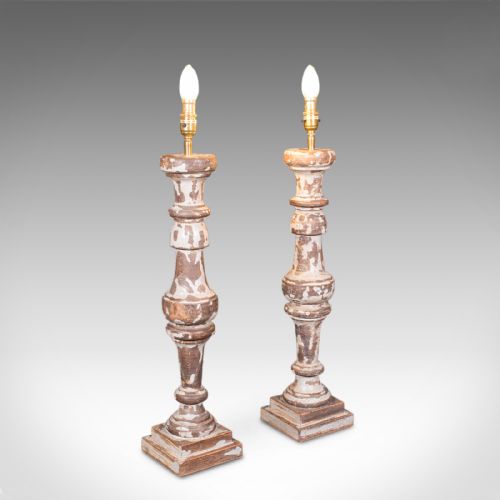


Pair Turned Wood Candlesticks
These pair turned wood candlesticks bring warmth and tactile grain to a table, offering solid forms shaped by the lathe over centuries.
Pair Turned Wood Candlesticks
When you search for pair turned wood candlesticks, you encounter items shaped on a lathe from timbers such as mahogany, oak, fruitwood, and walnut. The selection spans the eighteenth century through the Edwardian period, alongside styles imitating earlier Georgian eras.
You meet simple domestic treen alongside larger architectural shafts with spiral or barley twist profiles. Some examples incorporate brass sconces or terminals, while others utilise paint or gold leaf decoration.
The category extends to compact travelling pieces known as Brighton buns and conversions adapted into table lamp bases. These objects reflect both everyday utilitarian lighting and more decorative interior uses across British and Continental workshops.
How they were made
Craftsmen shaped these items on a lathe, cutting open twists, spiral carvers, and bobbin forms into dense hardwoods like fruitwood, lignum vitae, and teak. Selected timbers provided the structural stability needed for tall shafts and weighted bases.
Makers integrated brass sconces, nozzles, and weighted plates to secure candles and provide balance. Surface finishes range from simple wax polish on exposed grain to painted pine and traces of gold leaf.
One pair utilises teak salvaged from the Royal yacht HMS Renown, bringing naval history directly to the mantelpiece.
What varies in quality
The standard depends upon the crispness of the turning and the selection of the timber. Dense woods like lignum vitae or figured fruitwood yield sharper profiles and greater weight than softer pines.
Proportion and balance define the better specimens, where the diameter of the base supports the height of the shaft without wobble. The integration of brass components, where present, reveals the precision of the original construction.
The Pair Turned Wood Candlesticks Glossary
- Treen
- Small handmade wooden household objects. These items range from domestic treen taper sticks to turned desk accessories.
- Barley twist
- A spiral column carved or turned into wood. This profile appears frequently on nineteenth-century oak and walnut shafts.
- Brighton bun
- A compact travelling candlestick that screws together into a round wooden case. This form protected the candle inside during transit.
- Sconce
- The metal cup at the top of a candlestick that catches wax. Brass editions protect the surrounding wood from heat.
- Holtzapffel
- A notable firm associated with ornamental turning machinery and precision woodwork. Their pieces display high technical mastery.
Pair Turned Wood Candlesticks: Frequently Asked Questions
How do I date a turned wooden candlestick?
Dating relies on timber choice, turning style, and wear patterns. Eighteenth-century examples often utilise fruitwood with hand-finished surfaces, whereas later Victorian and Edwardian pieces frequently feature heavier oak or mahogany.
Hardware details such as brass sconces and the presence of conversion holes for electricity also indicate the period of manufacture or subsequent adaptation.
Were these candlesticks converted to lamps?
Several listed items began life as candle holders and were later adapted into table lamps with internal wiring. This practice preserves the turned wooden shaft while updating the object for modern domestic illumination.
Examining the base and top reveals whether original brass sockets remain or if channels were drilled for electrical fittings.
What is a Brighton bun?
A Brighton bun is a small, portable candlestick that unscrews and packs inside its own wooden halves for travel. The enclosed design kept the candle and snuffer secure in luggage.
These tactile objects represent a specific form of nineteenth-century utilitarian treen.
How should I clean antique wood candlesticks?
Maintenance requires gentle dusting and occasional application of microcrystalline wax to nourish the dry timber. Avoid harsh liquid cleaners that strip historic patina from fruitwood or mahogany.
Keeping them away from direct heat sources prevents the timber from splitting or warping over time.