


Twist Stem Candlesticks
Twist stem candlesticks are domestic holders shaped by turning and casting, offering movement and weight to a table.
Twist Stem Candlesticks
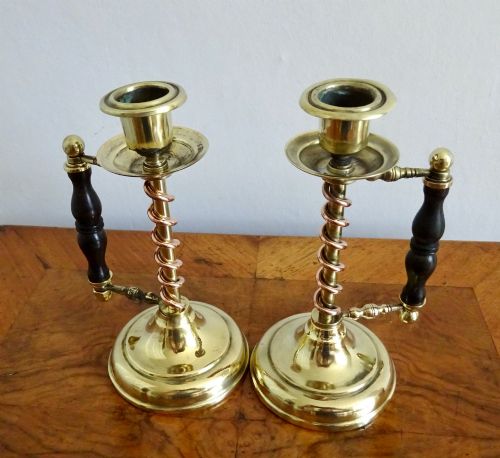
Twist stem candlesticks combine utility with decorative form, bringing architectural rhythm to lighting through spiralled pillars. When searching for twist stem candlesticks, a buyer encounters forms that range from slender domestic brass pairs to heavier ecclesiastical examples.
The materials span brass, copper, crystal glass, mahogany and silver plate, reflecting production methods from the Victorian, Edwardian and later periods. Domestic lighting pieces sit alongside table lamps adapted from similar turned designs.
Makers such as T Thomason & Co produced specialised ecclesiastical metalwork, while anonymous workshops turned out domestic brass and glass pairs with barley twist shafts.
How they were made
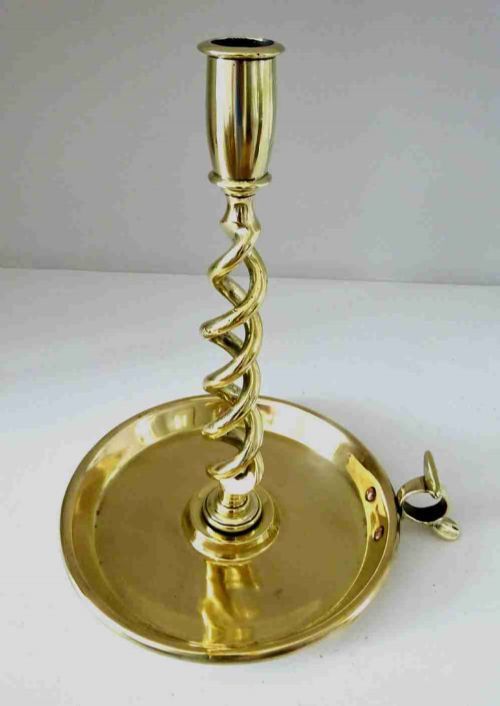
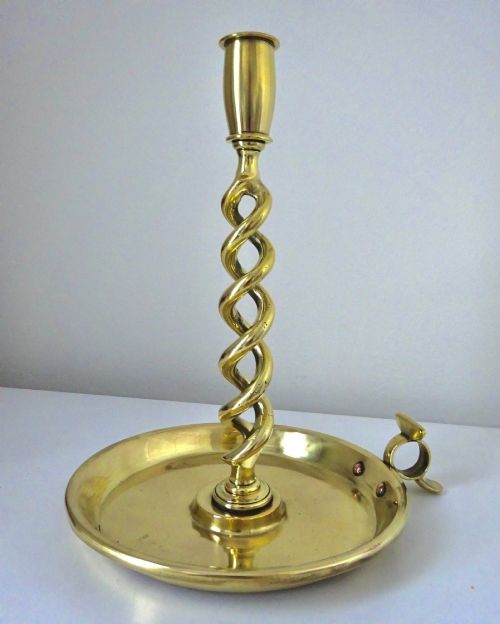
Metal twist stem candlesticks rely on brass and copper casting, sometimes incorporating applied silver plate or integrated fitted trays with handles. Makers formed the spiral shafts either through mechanical turning or by hand-hammering sheet metal over shaped cores.
Glass examples utilise crystal glass blown and moulded into barley twist profiles, featuring domed and folded feet for stability. Wooden pieces combine turned mahogany with brass mounts, joining organic grain to polished metal components.
Listings feature diverse materials including crystal glass, mahogany, copper and brass across Victorian and Edwardian eras.
What varies in quality
Quality in twist stem candlesticks rests on the crispness of the spiral turn and the structural integrity of the base. Heavy, well-balanced castings and thick-walled crystal provide stability that lighter, mass-produced variants lack.
The choice of secondary materials, such as fitted brass trays or heavy copper bases, separates standard production items from more substantial ecclesiastical or commission work.
T Thomason & Co
The Twist Stem Candlesticks Glossary
- Barley twist
- A spiralling column resembling the stalks of barley. This profile appears frequently on both turned wooden shafts and cast metal stems.
- Ecclesiastical
- Pertaining to the Christian church. Such pieces often exhibit heavier gauge metal and Gothic revival styling.
- Double helix
- A decorative motif featuring two intertwined spirals. This form creates a complex optical effect on tall brass table lamp stems.
- Folded foot
- A rim turned back underneath the base of a glass candlestick. This technique adds structural strength and weight to the lower section.
- Silver plate
- A thin layer of silver fused to a base metal such as copper. This finish provides the appearance of solid silver at a lower cost.
Twist Stem Candlesticks: Frequently Asked Questions
What periods do these pieces date from?
The selection spans the nineteenth and twentieth centuries, covering Victorian, Edwardian and Art Deco eras. Common dates range from the eighteen-eighties through to nineteen-thirty.
Production methods shifted over these decades from heavy ecclesiastical brassware towards lighter domestic crystal glass and mixed metal designs.
How were twist stems formed in metal?
Metal stems were typically cast or hammered into spiral configurations using lathe-turning and hand-finishing techniques. Heavier ecclesiastical examples utilised robust brass components for structural support.
Lighter domestic pairs often combined extruded tubing with applied decorative elements to achieve the characteristic twist.
Are glass and metal candlesticks cleaned differently?
Crystal glass requires gentle washing with warm soapy water to maintain clarity without scratching the surface. Metal surfaces such as brass and copper respond to appropriate metal polishes depending on the desired finish.
Care must be taken around silver-plated areas to preserve the thin metallic layer during routine maintenance.
How do I distinguish Victorian from Edwardian examples?
Victorian pieces often display heavier proportions and Gothic revival influences, utilising robust brass and dark mahogany. Edwardian designs frequently incorporate cleaner lines and alternative materials like silver plate.
Manufacturing stamps and stylistic motifs help narrow the production date within these broad periods.