
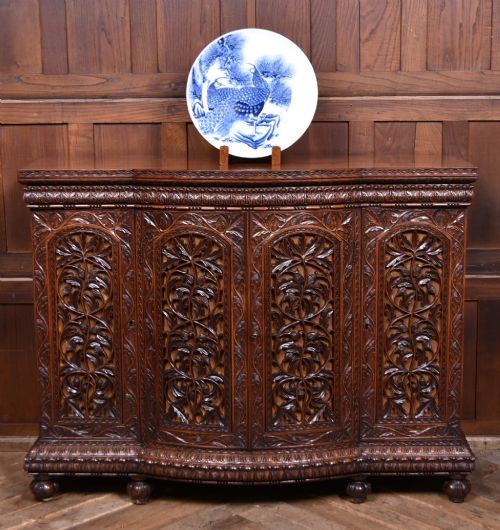
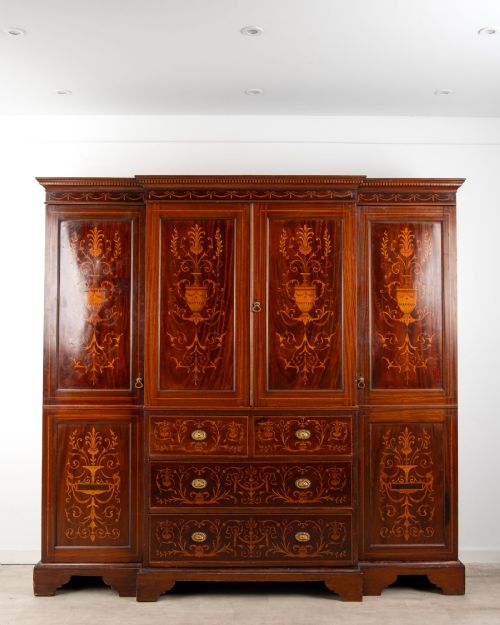
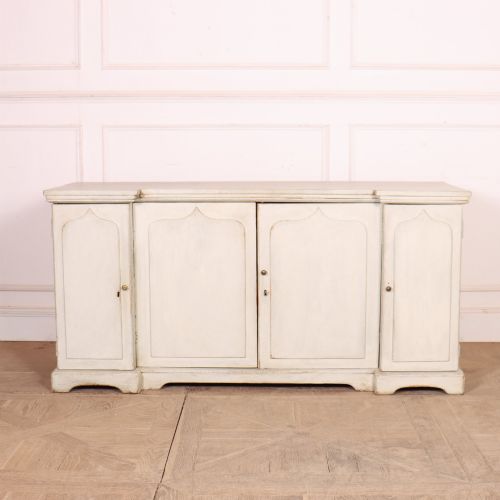
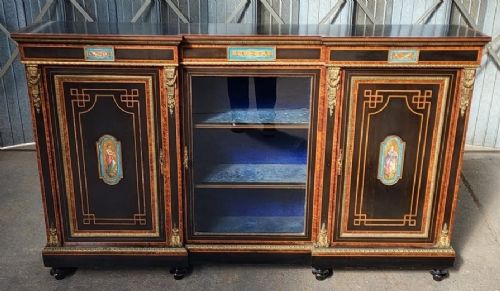
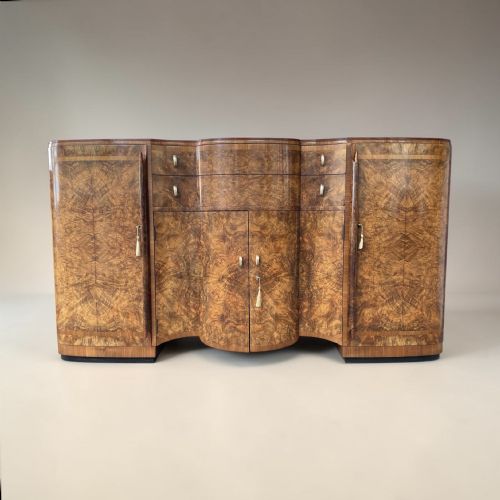

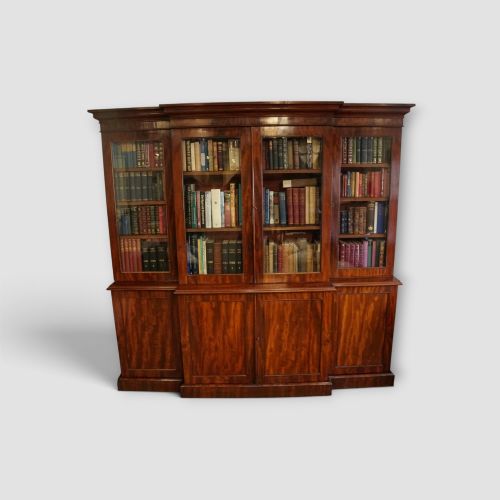
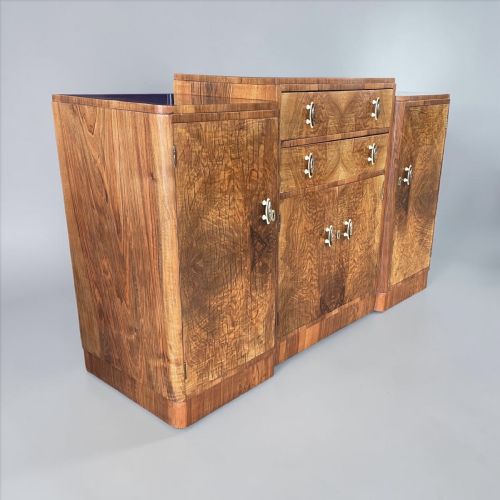
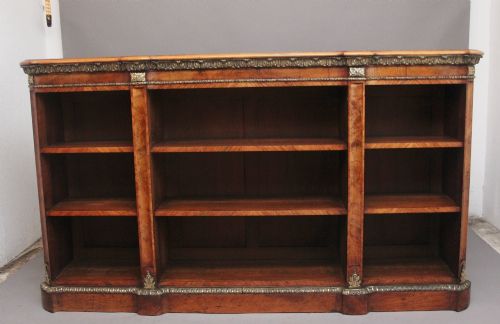
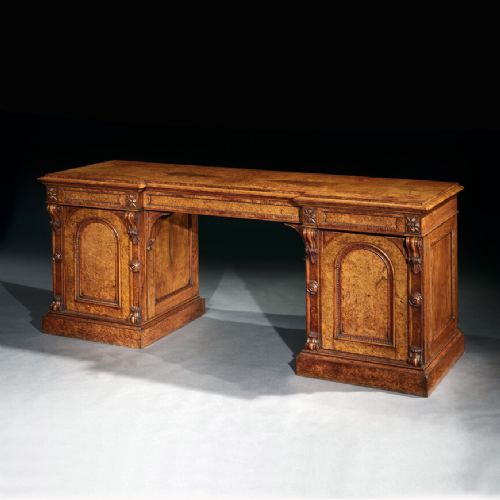
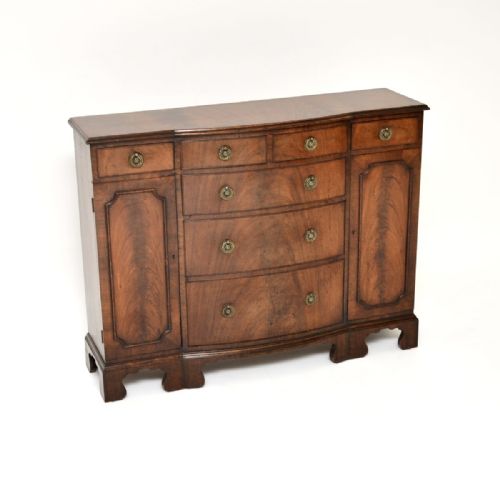
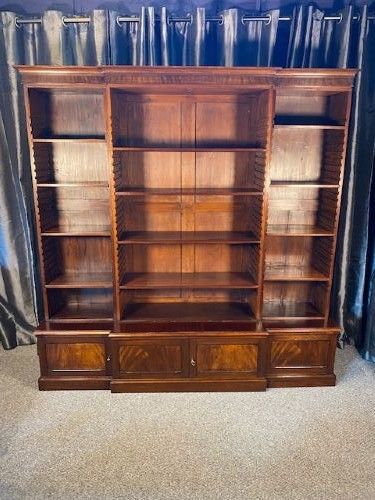
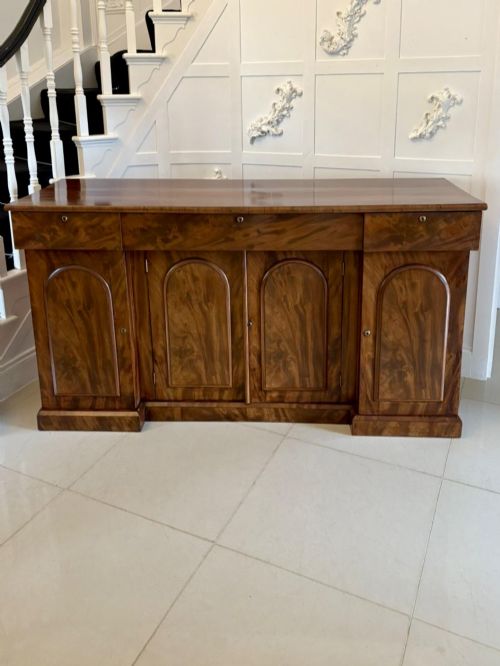
Antique Wooden Breakfront Cabinet
An antique wooden breakfront cabinet offers commanding presence and ample storage, making it a natural centrepiece for any serious library or dining room.
Antique Wooden Breakfront Cabinet
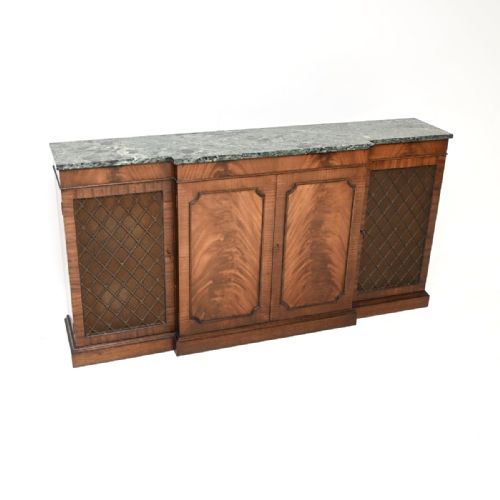
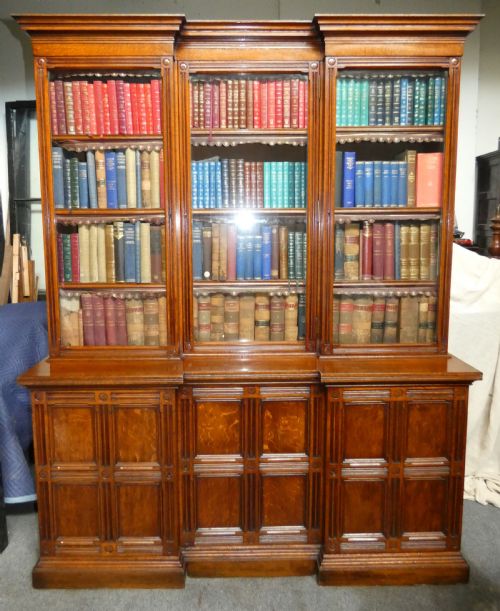
An antique wooden breakfront cabinet is a substantial case piece defined by its protruding central section, which breaks forward from the flanking wings. You will most frequently encounter nineteenth-century and Victorian examples fashioned as bookcases or sideboards, alongside later Edwardian and Georgian style iterations.
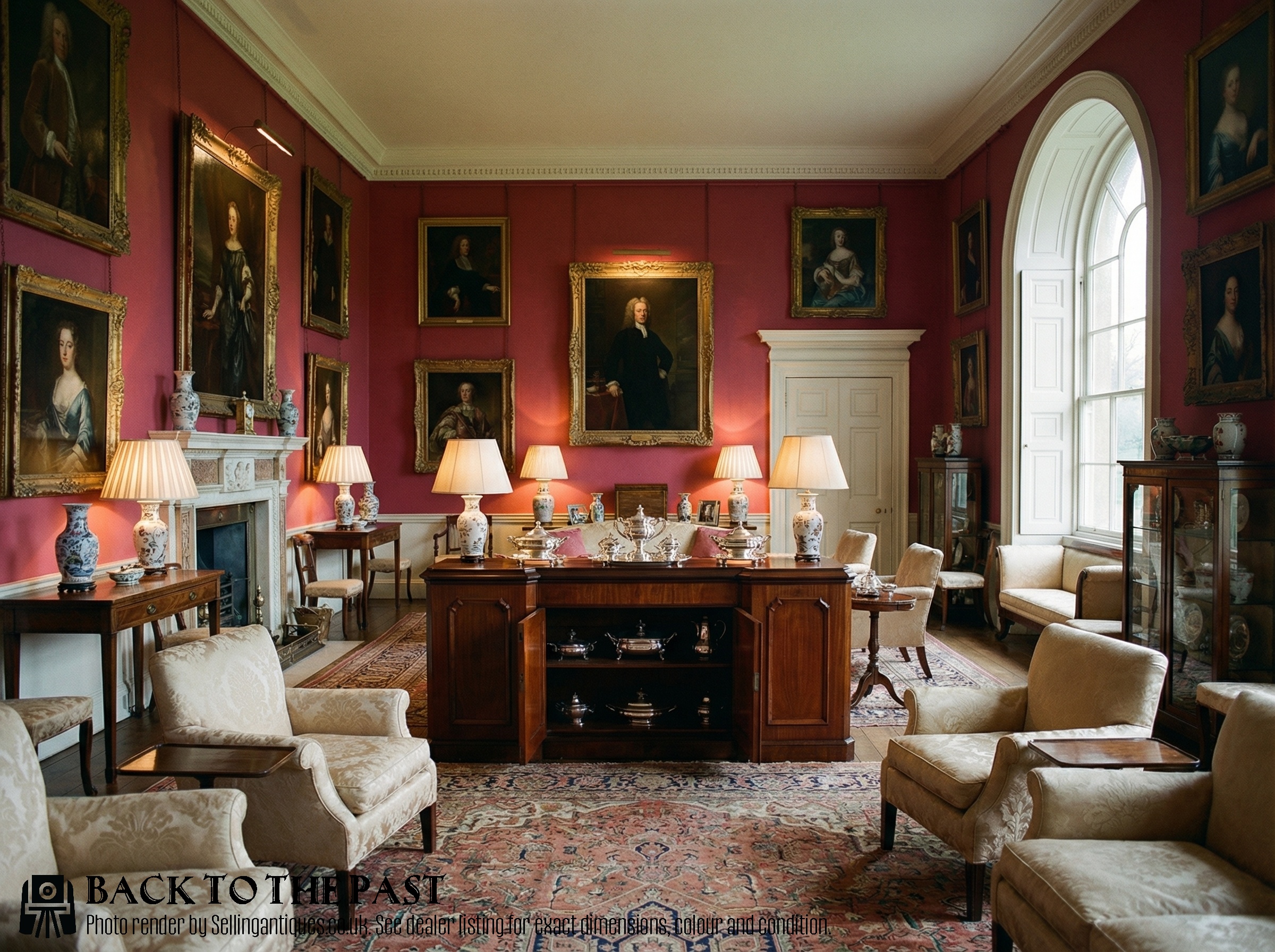
These grand forms served primarily to display prized volumes, porcelain or silver behind glass doors while concealing less ornamental items within lower cupboards or drawers. The layout creates a distinct architectural rhythm along a wall, separating the central block from recessed side compartments.
Originating in the Georgian period and remaining popular through the Edwardian era, these cabinets evolved from simple storage units into highly decorative centerpieces. Their enduring appeal lies in this combination of architectural gravitas and functional compartmentalisation.
How they were made
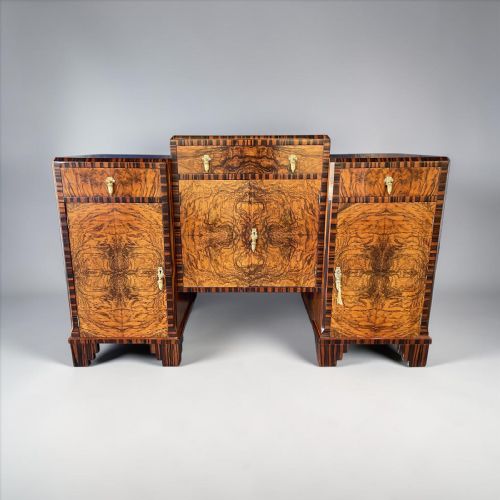
Cabinet makers relied heavily on solid timber frames faced with carefully chosen veneers, particularly flame mahogany, burr walnut and satinwood, to create striking grain patterns across large flat surfaces. Brass inlay, ormolu mounts and delicate stringing were frequently applied to accent the linear geometry of the breakfront profile.
Glass doors on bookcases required precise joinery to form individual glazed panes or trelliswork grills, while interior shelving was often made adjustable to accommodate varying heights of folios and display objects. Carved details, where present, were executed by hand along the pediments, cornices and pilasters to emphasise the tripartite structure.
Mahogany and walnut remain the dominant timbers across these listings, appearing alongside decorative accents of brass, glass and ormolu.
What varies in quality
The distinction between ordinary and superior pieces rests on the choice of timber and the ambition of the veneering, where matched flame mahogany or figured burr walnut commands greater visual weight. Superior examples display seamless integration of the central projection with harmonious proportions across all three sections rather than a boxy, heavy-handed assembly.
Hardware and interior detailing further separate grades of manufacture, distinguishing cabinets equipped with original brass inlays, fire-gilded ormolu and fine adjustable shelving from those altered or simplified later. The crispness of the hand-cut mouldings and the tightness of the door mitres reveal the underlying standard of the workshop.
Maurice Adams·Johnstone and Jeanes
The Antique Wooden Breakfront Cabinet Glossary
- Breakfront
- A piece of furniture where the central section projects forward from the flanking sections. This architectural arrangement creates depth and shadow along the facade.
- Veneer
- A thin slice of figured wood applied over a secondary timber base to create decorative patterns. Flame mahogany and burr walnut are common examples.
- Ormolu
- Gilded bronze mounted onto furniture as decorative enrichment. It is frequently found on nineteenth-century walnut and ebonised pieces.
- Pediment
- The triangular or arched ornamentation crowning the top of a bookcase or cabinet. It draws the eye upward and completes the classical silhouette.
- Compactum
- A multi-compartment wardrobe designed to hold various types of clothing in designated sections. These pieces often include linen slides alongside hanging space.
Antique Wooden Breakfront Cabinet: Frequently Asked Questions
How do I clean the wood safely?
Dust the surfaces regularly with a soft, dry cloth to prevent grit accumulation. Apply a quality beeswax periodically to nourish the timber and maintain its natural lustre.
Avoid modern liquid polishes containing silicone, which can penetrate the finish and damage antique veneers over time. Keep the cabinet away from direct sunlight and radiators to prevent wood shrinkage.
Can shelves be adjusted easily?
Many nineteenth-century and Edwardian bookcases feature adjustable shelving systems supported by wooden ratchets or metal pins. This allows you to reconfigure the interior heights for different sizes of books or display objects.
Take care when lifting heavy timber shelves to avoid scraping the interior lining or side panels. Some older cabinets have fixed shelves in the central section, so check the internal construction before rearranging.
How do I spot a marriage piece?
Examine the timber species, colour and patination across the central projection and the side wings to ensure they match identically. Discrepancies in the grain or secondary woods often suggest parts from different cabinets were joined together later.
Look closely at the backboards, interior carcase construction and mounting points for signs of structural alteration. Consistent wear throughout the piece generally indicates an authentic, undisturbed origin.
Where should I place my cabinet?
Position the piece against a sturdy interior wall away from damp exterior masonry and direct heat sources. Because breakfront cabinets are exceptionally heavy and tall, ensure the floor is level and capable of supporting the distributed weight.
Allow sufficient clearance in front of the cabinet for doors and drawers to open fully without obstruction. Proper placement protects the polished timber from environmental extremes and accidental knocks.