
Antique Wood Vanity Desk
These antique wood vanity desks combine the utility of a writing surface with the intimate focus of a dressing table, bringing period character and functional surface area to a room.
Antique Wood Vanity Desk
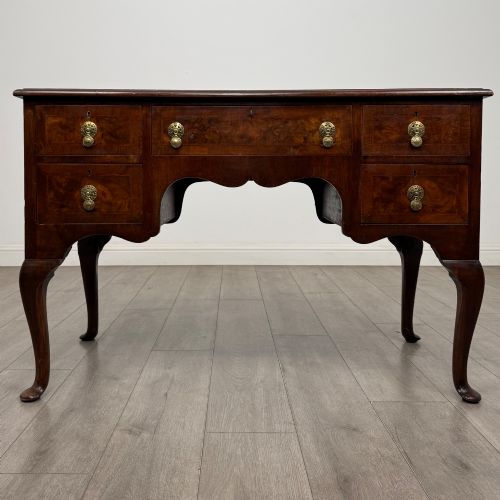
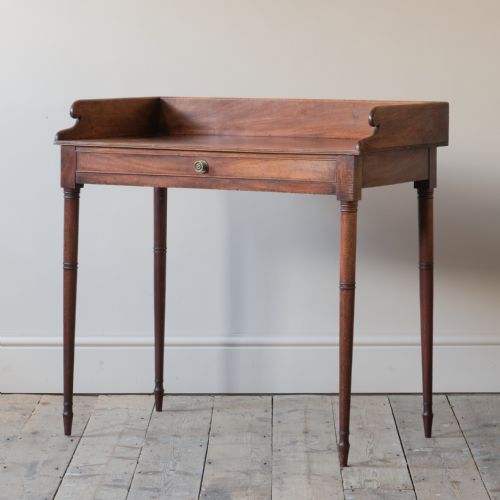
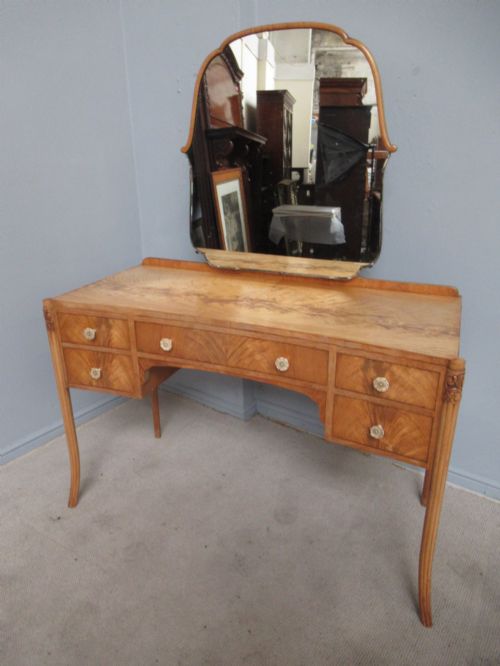
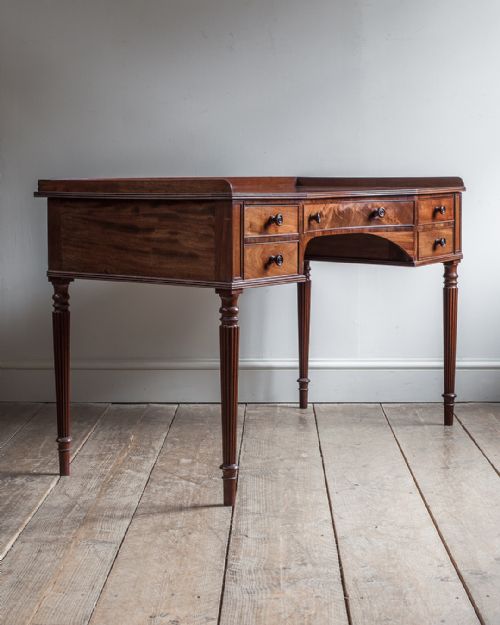
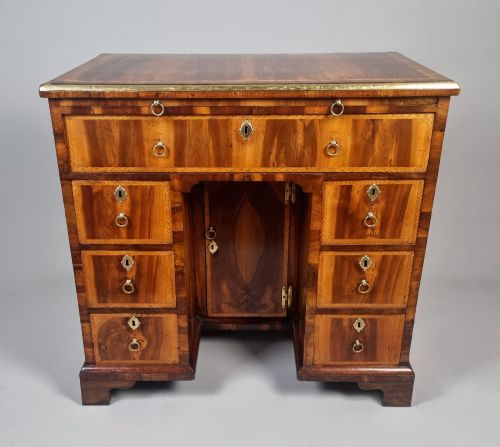
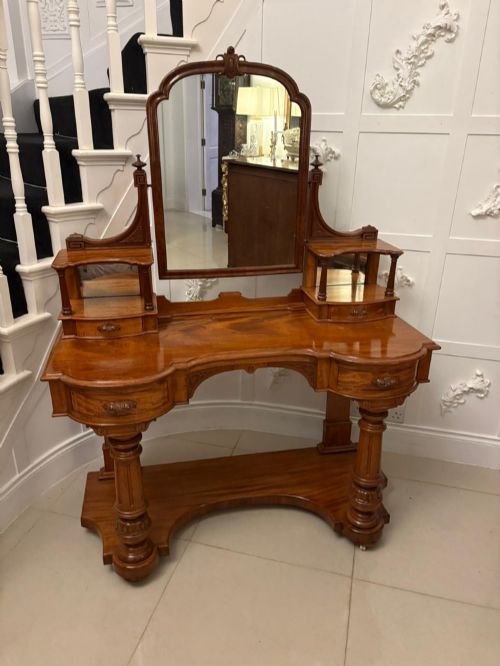
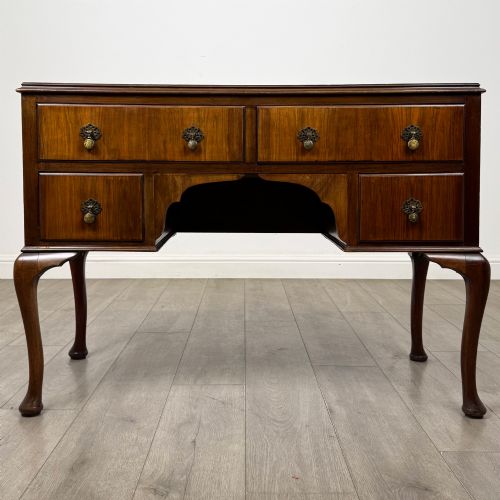
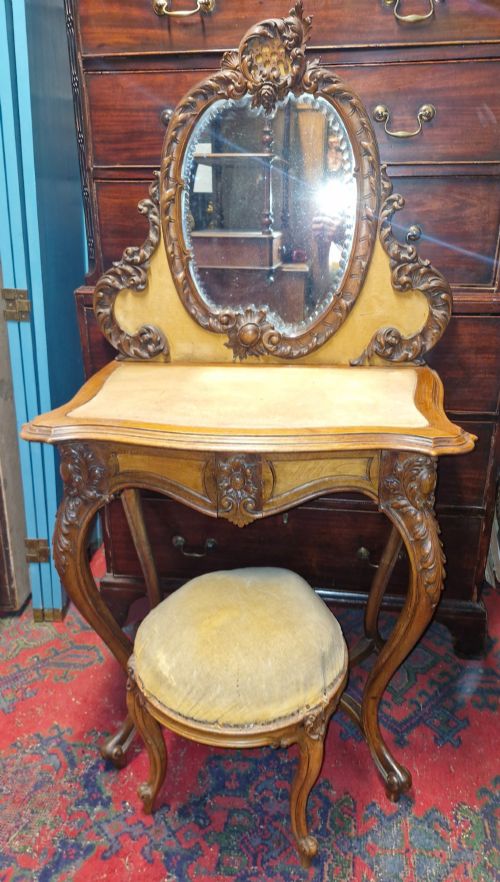
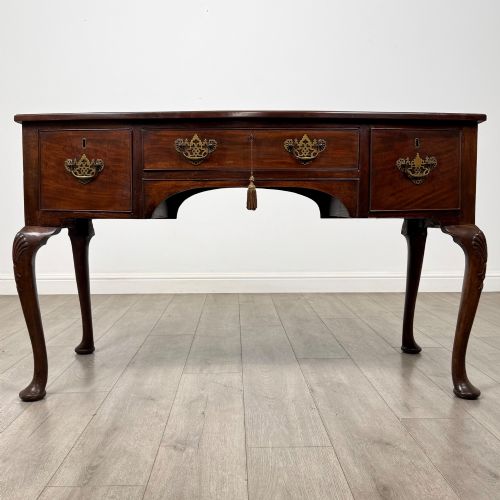
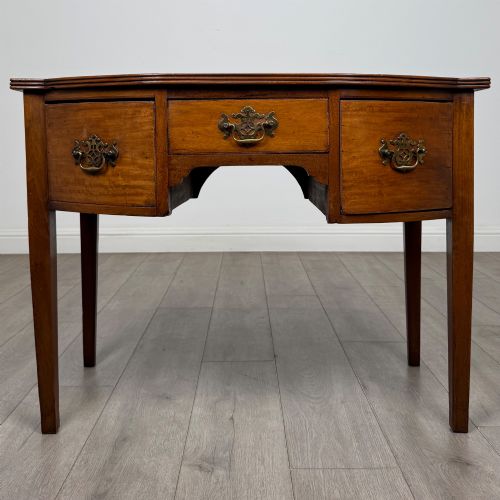
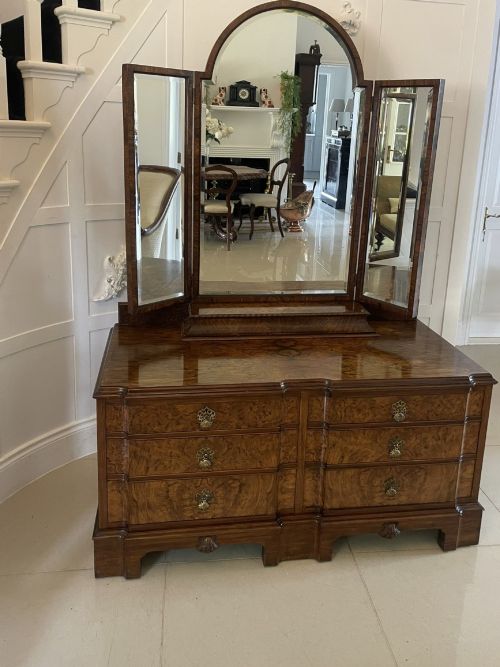
An antique wood vanity desk brings together forms designed for personal grooming and written correspondence, spanning periods from the eighteenth century through the Edwardian era and into the Art Deco years. When you search for an antique wood vanity desk, you encounter pieces that range from compact Georgian kneehole tables to substantial Victorian and Edwardian mahogany or burr walnut designs equipped with mirrors and multiple drawers.
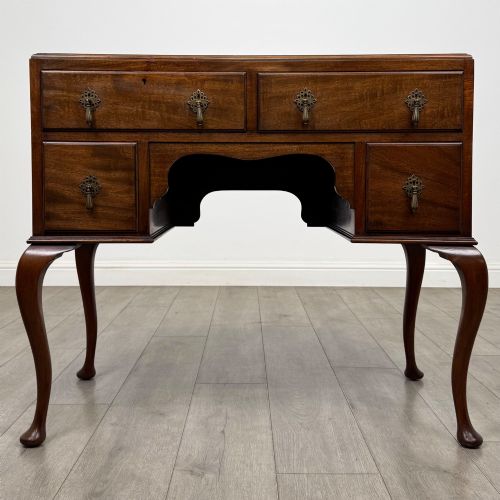
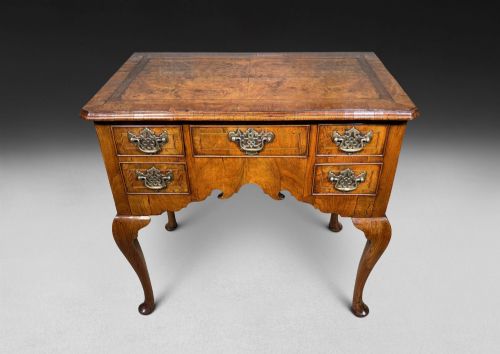
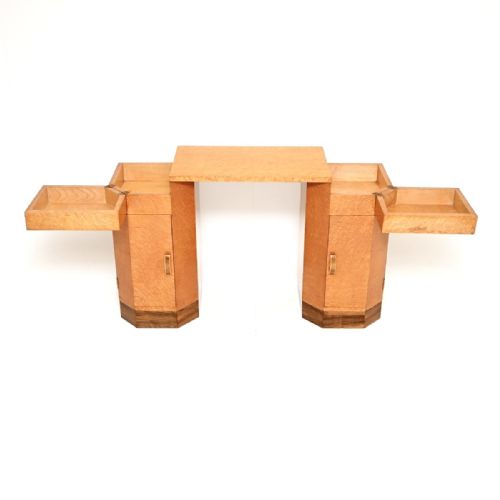
The selection includes variations such as lowboys, dressing chests, and writing tables adapted for vanity use, often retaining original brasses or paired matching mirrors and chairs. Earlier examples display figured veneers and serpentine fronts, whilst later twentieth-century pieces incorporate maple, satinwood, and geometric lines.
Most entries bridge the gap between a desk and a dressing table, functioning equally well as a compact writing station or a bedroom dressing surface. Buyers frequently select these pieces for their combination of useful drawers, decorative timber grains, and compact proportions suited to modern rooms.
How they were made
Cabinet makers utilised solid timbers alongside decorative veneers, applying mahogany, walnut, burr walnut, maple, and oak over robust secondary woods. Surfaces often highlight figured grains, flame mahogany patterns, or burr clusters selected for visual depth.
Construction techniques involve traditional joinery, dovetailed drawer boxes, and applied mouldings, occasionally complemented by brass hardware, glass mirrors, marble tops, and leather writing inserts. Carved details, cabriole legs, and boxwood stringing appear across specific stylistic revivals and period pieces.
Listings feature woods spanning mahogany, walnut, burr walnut, oak, maple, satinwood, and yew, across periods from the seventeenth century to Art Deco.
What varies in quality
The degree of refinement in timber selection and veneer matching defines the upper tiers of quality, where cabinet makers chose highly figured burr walnut, flame mahogany, or birdseye maple with deliberate grain continuity across the drawers and top. Lesser examples utilise plain or uniformly stained timbers with less attention to surface symmetry.
The integrity of original brasses, integrated mirrors, and matching hardware elevates a piece significantly, as does the survival of original polished finishes rather than modern stripping. Superior construction shows in crisp hand-cut dovetails and smooth drawer operation within the kneehole structure.
The Antique Wood Vanity Desk Glossary
- Kneehole desk
- A writing or dressing table featuring a central recessed space for the legs, flanked by pedestals of small drawers. This form became popular during the eighteenth century and provides compact storage.
- Serpentine
- A curved furniture front characterised by a convex centre flanked by concave wings. This contour requires skilled woodworking to shape solid timber or apply veneers.
- Cabriole leg
- A furniture leg that curves outward in a convex arc at the knee and tapers inward in a concave arc toward the foot, often ending in a pad or claw shape.
- Burr walnut
- Timber sliced from walnut tree growths or burls, producing intricate swirling grain patterns highly prized for decorative veneer panels on tabletops and drawer fronts.
Antique Wood Vanity Desk: Frequently Asked Questions
How do I identify a Georgian vanity desk?
Georgian pieces, dating from the eighteenth century, generally exhibit restrained proportions, solid mahogany or figured walnut construction, and hand-dovetailed drawer boxes without modern mechanical aids. Look for characteristic details such as bracket feet, brass swan-neck handles, and occasionally crossbanded veneer borders.
Later Victorian and Edwardian interpretations often adopted these Georgian proportions during revival periods, so examining the interior secondary woods and construction marks helps confirm the true age.
Can I use an antique vanity desk as a modern computer desk?
Many antique vanity desks provide adequate surface area and knee clearance for a laptop, provided you check the internal height of the kneehole against your seating requirements. The presence of multiple small drawers also offers convenient storage for stationery and modern accessories.
Care should be taken with delicate veneer or leather writing inserts, utilising a blotter or desk mat to protect historical surfaces from daily wear and tear.
How do I care for wood surfaces on an antique desk?
Maintain antique wood finishes by dusting regularly with a soft, dry cloth and avoiding silicone-based polishes or excessive moisture. Applying a traditional beeswax polish periodically helps nourish timber surfaces and preserves the natural lustre of mahogany and walnut.
Keep desks away from direct sunlight and strong heat sources, such as radiators, to prevent the timber from drying out, warping, or causing veneers to lift.