


Antique Wood Secretary
An antique wood secretary combines a practical writing desk with enclosed shelving, offering a refined workspace that stands as a centrepiece in a room.
Antique Wood Secretary
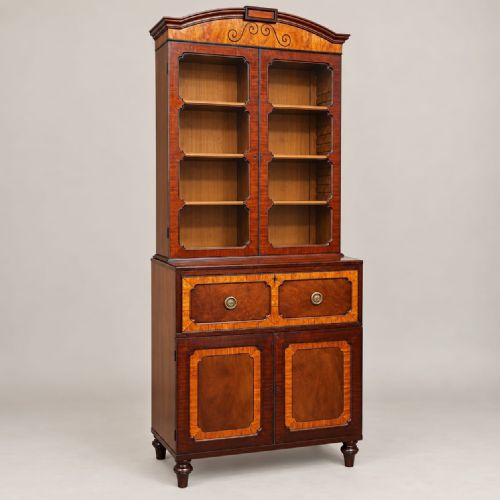
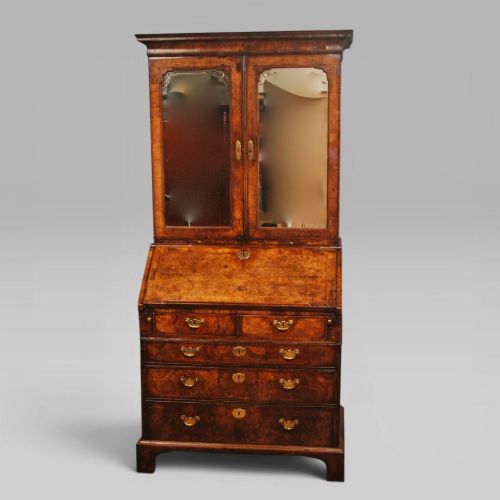
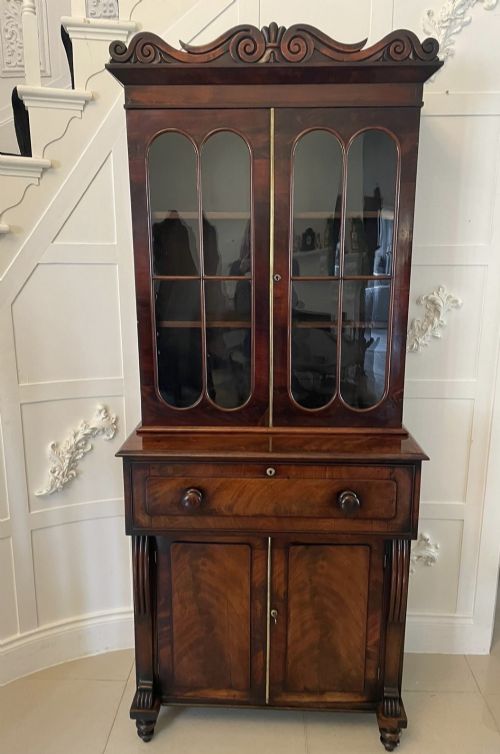
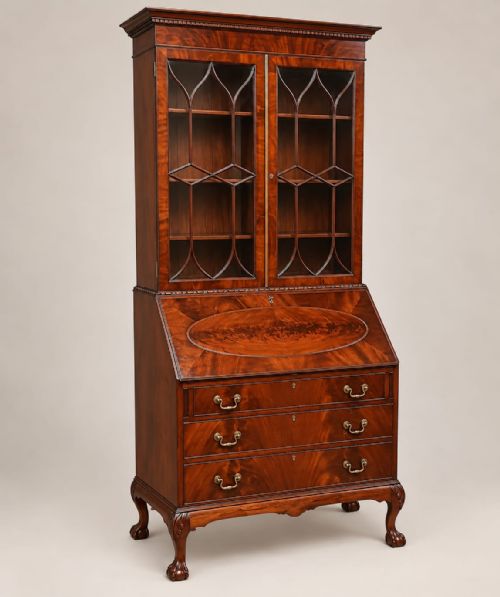
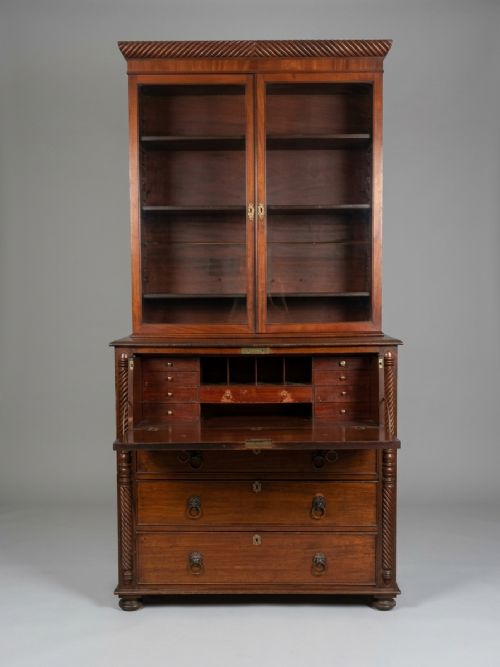
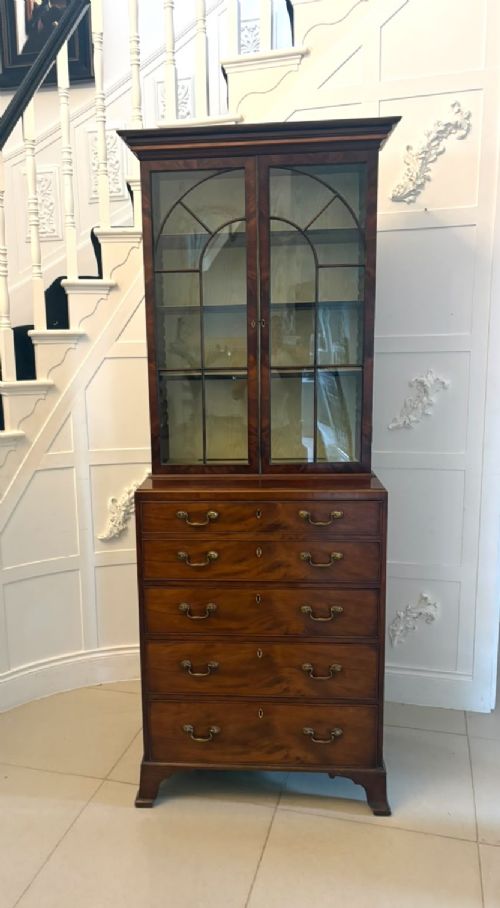
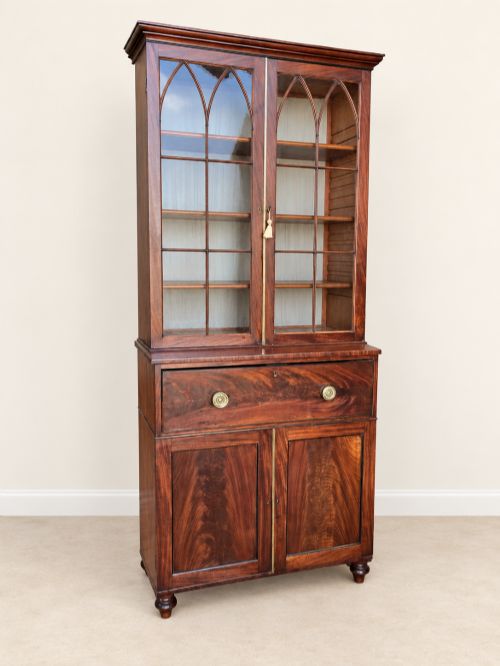
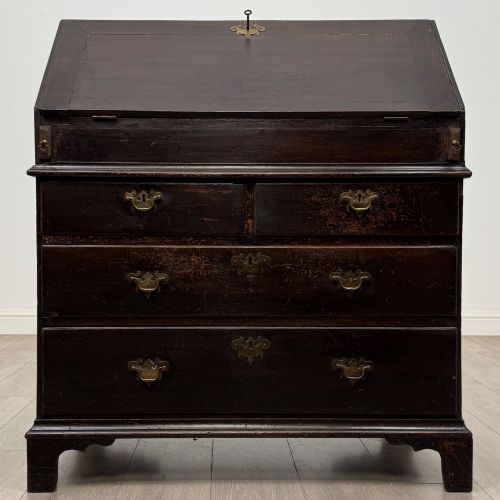
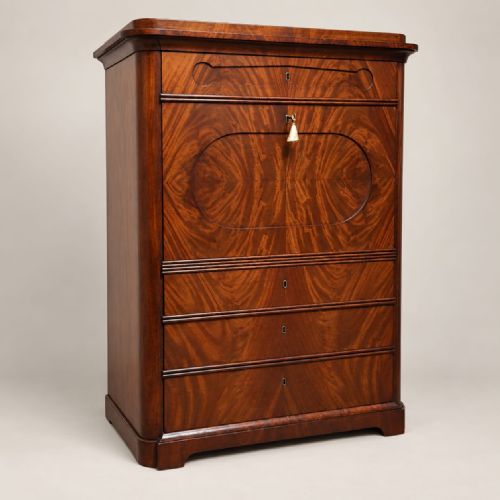
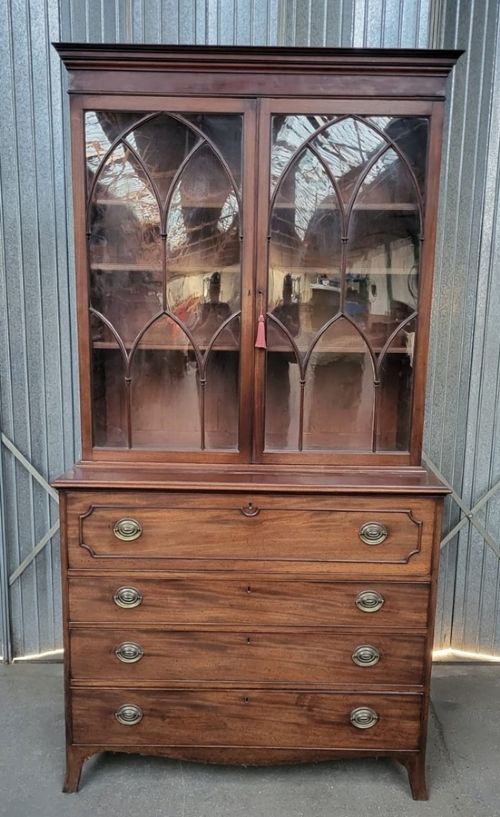
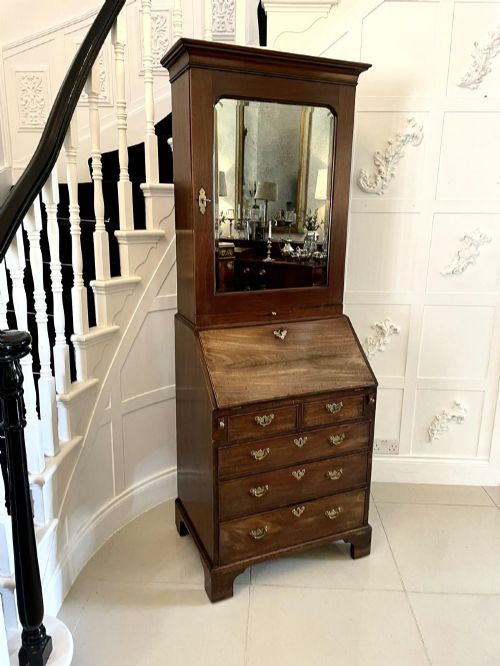
An antique wood secretary appears in several distinct forms, including bureau bookcases, fall-front bureaux, and cylinder desks, merging a drop-down or pull-out writing surface with upper display shelving or lower drawer storage. These pieces originate from various eras, spanning the Queen Anne, Georgian, Regency, William IV, Biedermeier, and Edwardian periods.
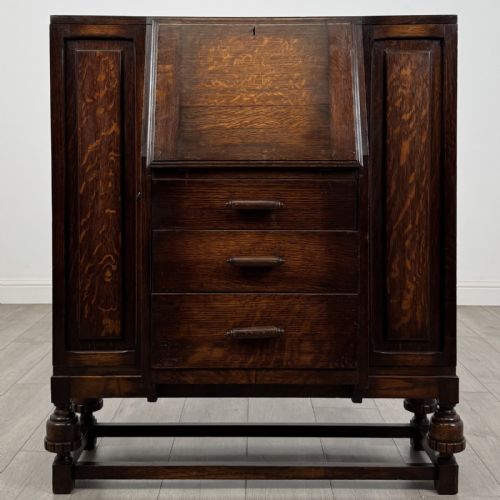
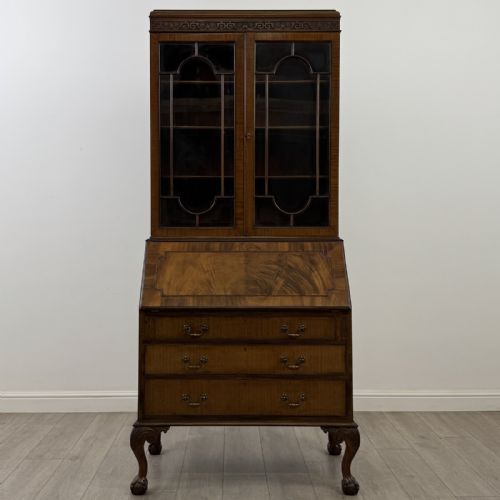
Mahogany examples dominate the selection, often featuring astragal glazed doors and fitted internal compartments with pigeonholes and small drawers. Oak, walnut, burr walnut, satinwood, and yew versions also appear, demonstrating a broad repertoire of cabinet-making materials from the eighteenth century into the twentieth century.
Materials and construction
Cabinet makers built these pieces using solid timbers and figured veneers, applying mahogany, walnut, oak, and satinwood over secondary woods. Brass hardware, including drop handles and escutcheons, secures the drawers and fall fronts.
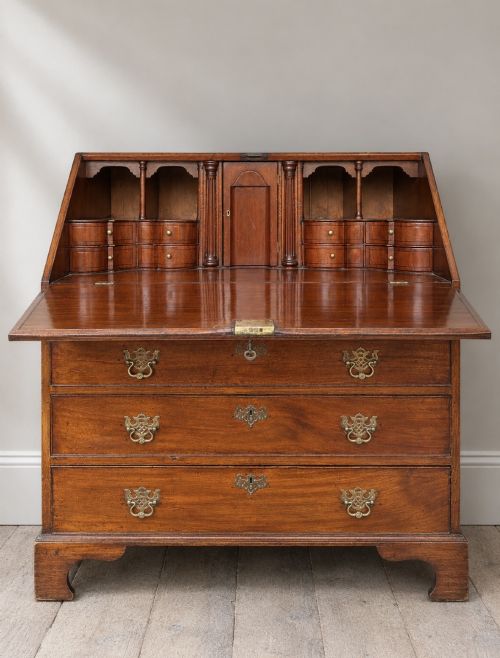
Glazing bars create geometric patterns on the upper bookcase doors, while internal writing compartments incorporate secret drawers, hidden wells, and leather-lined writing surfaces.
Some oak pieces incorporate hidden wells and secret compartments designed to keep private correspondence away from prying eyes.
Craftsmanship and timber selection
The choice of timber grain dictates much of the visual merit, with figured mahogany and burr walnut showing complex, highly patterned surfaces that elevate simpler cabinet designs. Finer examples display meticulous attention to internal joinery, such as secret compartments and finely dovetailed drawer construction.
Gillows·George Oakley
The Antique Wood Secretary Glossary
- Secretaire
- A piece of furniture containing a drawer or compartment that folds down to form a writing surface. This term often interchanges with bureau.
- Astragal glazed
- Glass cabinet doors divided into small panes by narrow wooden framework strips. These frames frequently form Gothic arch or geometric patterns.
- Fall front
- A hinged writing flap that drops into a horizontal position for writing and lifts vertically to conceal the internal pigeonholes and drawers.
- Bracket feet
- Simple, architectural corner feet supporting case furniture like desks and bookcases. They lift the body slightly off the floor.
- Tambour
- A flexible shutter made of narrow vertical strips of wood glued to canvas, allowing a cylinder desk top to slide open smoothly.
Antique Wood Secretary: Frequently Asked Questions
How do I use a secretary desk?
Lower the fall front or pull out the cylinder top to reveal the fitted interior, which usually holds pigeonholes and small drawers for correspondence.
Close the front panel when writing concludes to hide paperwork and maintain a tidy room appearance.
What is the difference between a bureau and a secretary bookcase?
A bureau focuses primarily on the lower writing desk section, sometimes standing on legs or chest drawers without upper shelving.
A secretary bookcase incorporates an extensive upper cabinet with glass or solid doors for storing books and displaying collections.
How do I date an antique wood secretary?
Examine the secondary woods, dovetailing methods, and hardware styles to determine the likely period of manufacture.
Stylistic markers such as bracket feet point toward Georgian eras, while lighter satinwood and painted details often indicate Edwardian work.
Where should I place a secretary in my home?
Position the piece against a sturdy wall in a study, library, or living room with stable humidity levels.
Ensure adequate clearance in front of the unit for the drop-down writing flap or pull-out cylinder mechanism to open fully.