

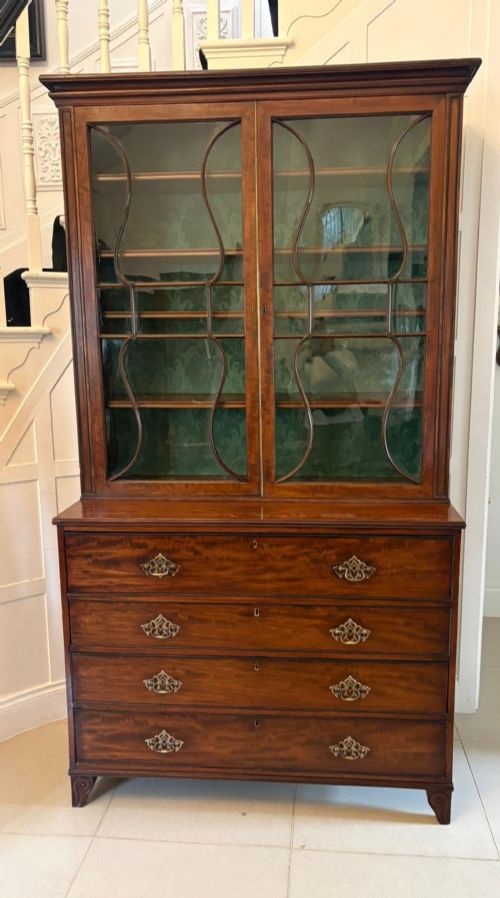
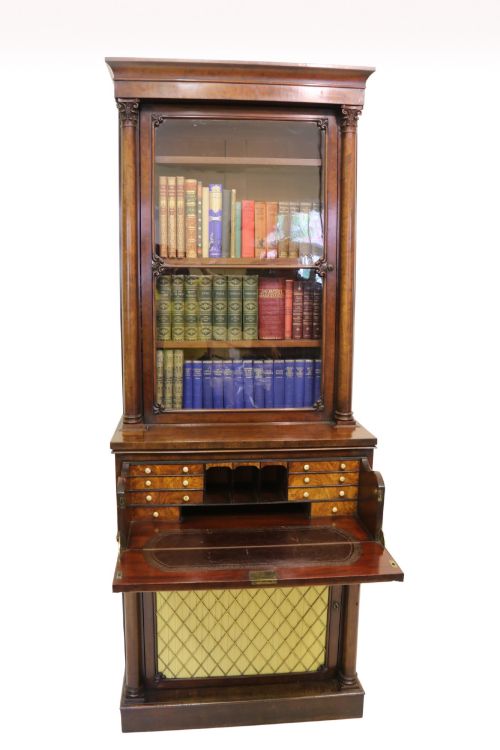
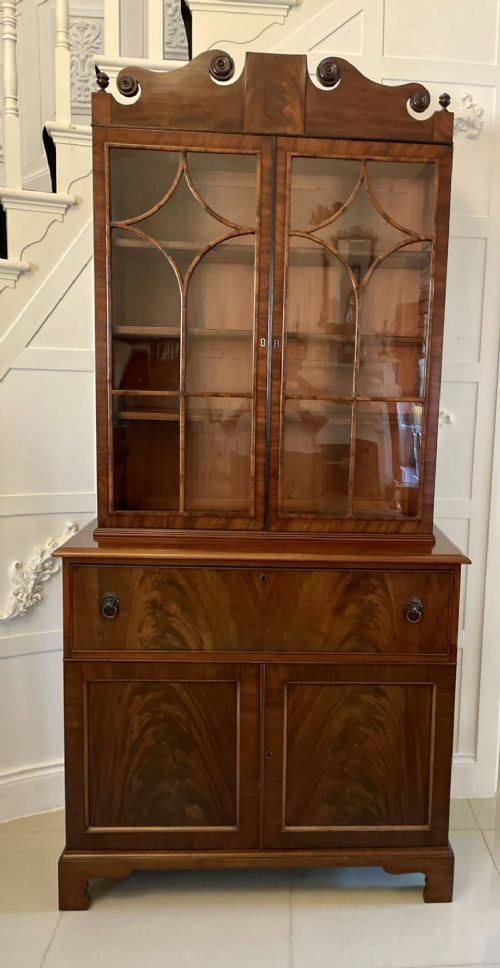
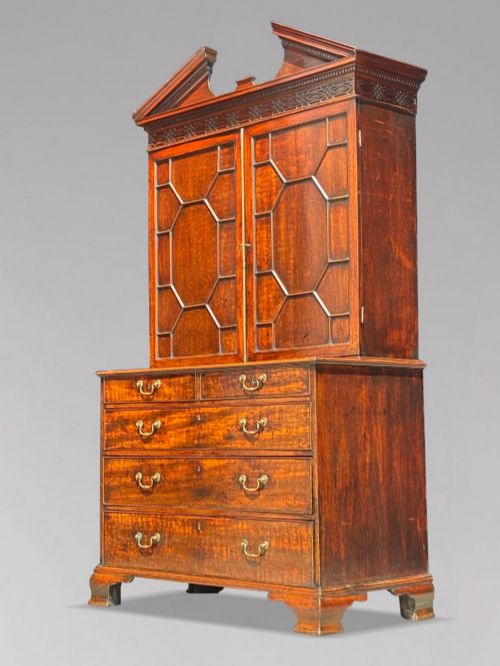
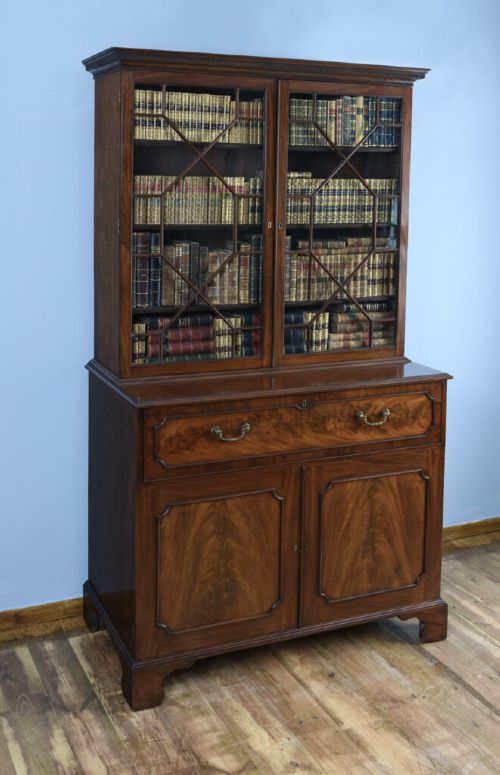
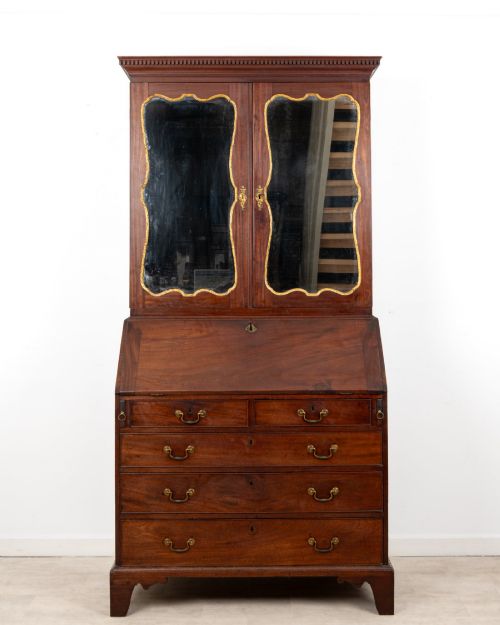
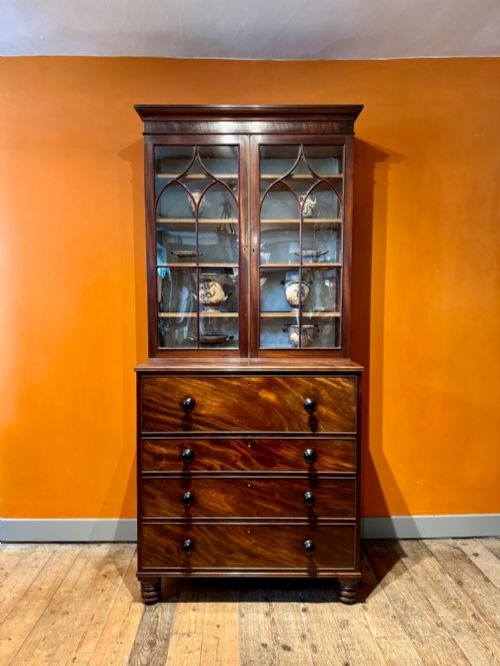
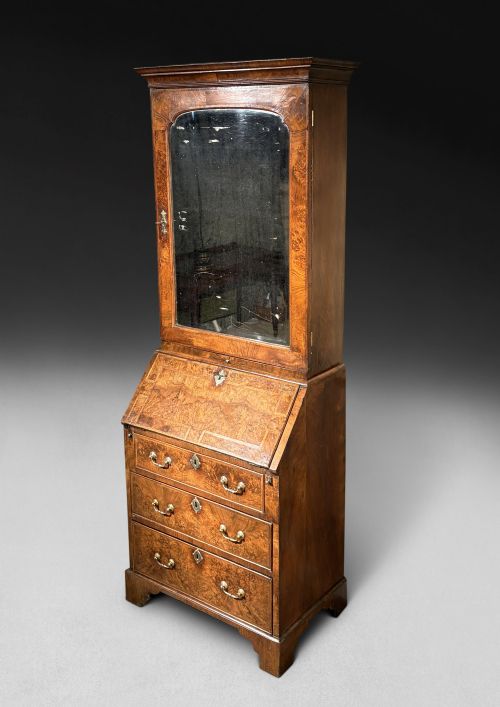


Period Bureau Bookcase
A period bureau bookcase combines a writing desk with enclosed shelving, offering an imposing yet practical focal point for any study.
Period Bureau Bookcase
A period bureau bookcase is a dual-purpose architectural piece uniting a sloped or fitted writing compartment with upper book storage behind glazed or panelled doors. Buyers seeking these items encounter notable examples originating primarily from the eighteenth and nineteenth centuries, spanning distinct stylistic revivals and reigns.
The form evolves across periods from the early walnut and burr walnut iterations of William and Mary, Queen Anne, and George I eras toward the refined mahogany and satinwood creations of the George III, Sheraton, and Regency movements. Mahogany and walnut dominate the selection, frequently enhanced by intricate inlay or figured grain patterns.
The lower section typically deploys a fall front or pull-out drawer mechanism revealing pigeonholes and small drawers, while the upper cabinet houses adjustable shelving. Such pieces reflect the changing domestic interior requirements of Georgian and Regency households.
Materials and construction methods
Cabinetmakers utilised solid timbers and choice veneers of mahogany, walnut, burr walnut, oak, and satinwood over robust carcases. Fine examples incorporate decorative brass hardware and glass panes within the upper cabinet doors.
Surfaces often display polished finishes that preserve the timber's natural grain and colour, while specialised joinery secures the heavy upper bookcase to the lower desk base. Satinwood and mahogany sections frequently feature delicate stringing or contrasting inlay work.
Period Bureau Bookcase Retail Price Guide 2026
Typical asking prices for period bureau bookcase among the pieces listed under this phrase on Sellingantiques today, from the lower quarter to the upper quarter. They describe what is for sale here now, not the wider market.
Listings feature eighteenth and nineteenth-century periods, incorporating woods such as mahogany, walnut, burr walnut, oak, and satinwood.
Evaluating craftsmanship and proportion
The standard of a bureau bookcase depends upon the choice of timber figure, such as highly decorative burr walnut or figured mahogany, and the precision of the cabinetmaker's joinery. Superior examples maintain balanced proportions between the deep upper bookcase and the functional desk base.
Makers such as Gillows of Lancaster demonstrate exceptional execution in structural stability and internal compartment layout. The presence of original glass, patinated hardware, and cohesive stylistic detailing separates standard production from finer workshop output.
Gillows of Lancaster·Thomas Chippendale·Thomas Hope
The Period Bureau Bookcase Glossary
- Secretaire bookcase
- A tall cabinet featuring a fitted writing drawer with a drop-front mechanism rather than a traditional sloping fall front.
- Burr walnut
- A highly prized wood veneer harvested from the warted growths of walnut trees, displaying swirling, irregular grain patterns.
- Fall front
- A hinged writing flap that drops down to form a horizontal desk surface over internal pigeonholes.
- Stringing
- Thin inlaid lines of contrasting timber used to edge panels and drawer fronts on eighteenth-century furniture.
- Patina
- The surface sheen and softening of colour developed on timber through age, handling, and regular polishing.
Period Bureau Bookcase: Frequently Asked Questions
What is a bureau bookcase?
A bureau bookcase is a tall item of furniture combining a lower writing desk with an upper shelving unit enclosed by doors. It serves as both a workspace and a display cabinet.
These pieces emerged to meet the storage needs of literate households, housing portable libraries alongside correspondence materials.
How do I date a bureau bookcase?
Dating relies upon identifying timber choices, construction methods, and stylistic cues associated with specific reigns and periods. Walnut and marquetry indicate earlier eighteenth-century origins, whereas mahogany and satinwood point towards later Georgian and Regency eras.
Hardware styles, foot designs, and interior drawer configurations provide further chronological markers for the cabinet.
Where should I place a bureau bookcase?
These tall cabinets require substantial wall space and benefit from placement in studies, libraries, or well-proportioned living rooms. Stable environmental conditions away from direct heat sources protect the older timber and veneers.
Positioning the piece where natural light illuminates the desk surface makes the writing compartment functional for daily use.
What is the difference between a bureau and a secretaire?
A bureau traditionally utilises a sloping hinged flap that opens to reveal internal compartments and a writing surface. A secretaire employs a drawer that pulls out and drops down via a hinged front to create the desk space.
Both forms integrate seamlessly beneath glazed upper bookcase sections across eighteenth and nineteenth-century examples.