


Antique Wine Cooler Table
An antique wine cooler table holds bottles at table height, combining practical refreshment with the formal presence of Georgian, Regency or Victorian dining rooms.

Antique Wine Cooler Table
When you search for an antique wine cooler table, you encounter a variety of forms designed to hold bottles and ice near the dining table or sideboard. These pieces bridge the gap between heavy floor cellarettes and smaller barware, often taking the shape of cellarettes, jardinieres, or dedicated serving tables.
The versions most commonly met on this page span the Georgian, Regency, and Victorian periods, alongside later French and Italian examples. Many pieces share overlapping functions as planter stands, jardiniere tables, or decanter caddies.
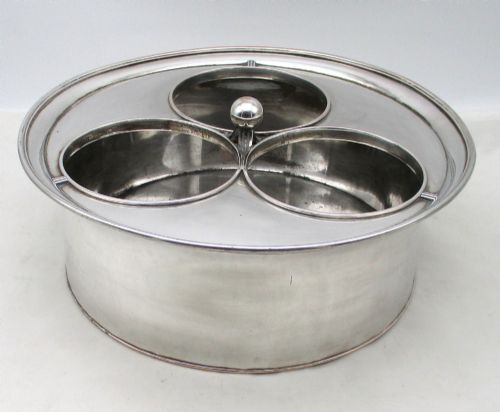
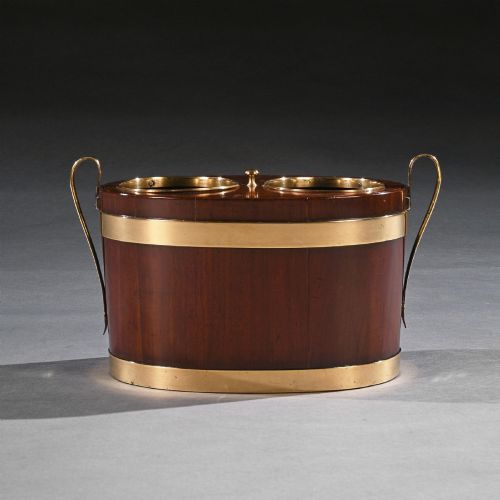
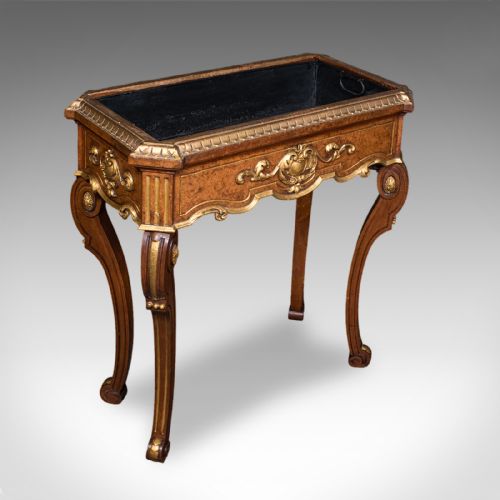
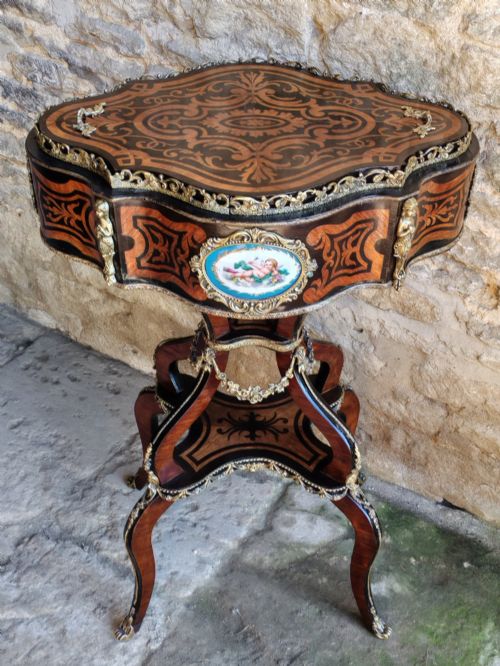
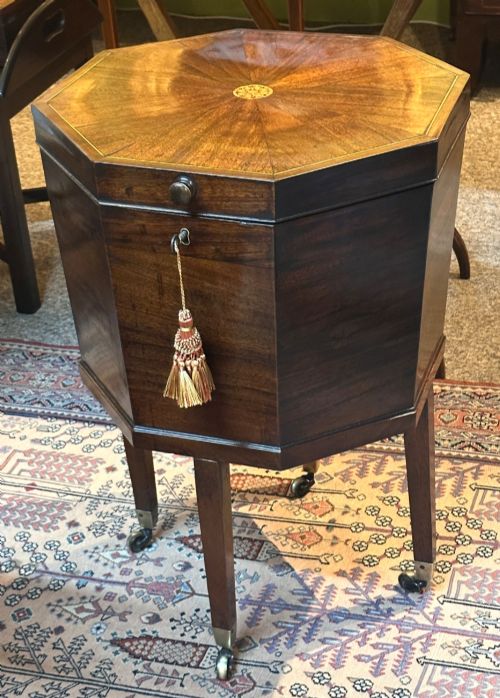
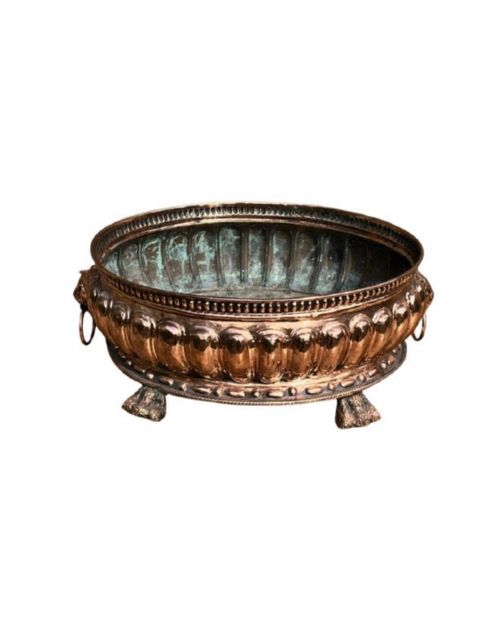
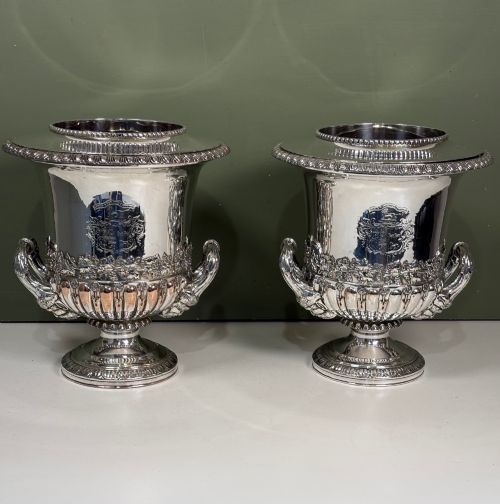
The construction ranges from compact mahogany oval tables with brass banding to more elaborate burr walnut marquetry and ebonised frames with gilt mounts. Alongside these stand metal pieces in silver plate, copper, and brass, including campana-shaped coolers and punch bowls.
Materials and construction
Makers utilised dense timbers such as mahogany, walnut, rosewood, and satinwood, frequently employing brass banding to reinforce stave-built bodies or adding intricate marquetry and gilt mounts. Timber forms relied on traditional cabinet-making joints to withstand the weight of ice and liquid.
Metal vessels and liners were cast, spun, or plated, drawing on Old Sheffield Plate, solid brass, and copper techniques to ensure waterproof containment. These metal components were often paired with wooden stands, tables, or frames to create elevated serving furniture.
Antique Wine Cooler Table Retail Price Guide 2026
Typical asking prices for wine cooler table among the pieces listed under this phrase on Sellingantiques today, from the lower quarter to the upper quarter. They describe what is for sale here now, not the wider market.
Object types include cellarettes, jardiniere tables, campana coolers, punch bowls, and French rafraichissoirs designed for entertaining.
Distinctions in quality
Quality rests upon the crispness of the timber grain, the precision of the brass banding or inlay work, and the integrity of the original metal linings. Pieces with well-matched veneers and sound structural joinery stand apart from simpler utilitarian boxes.
In silver-plated and metal examples, the weight of the vessel, the depth of the casting, and the retention of the original plating layer define the tier of the piece. The relationship between the stand and the cooling vessel must feel cohesive rather than assembled from disparate parts.
Christofle·Macabo
The Antique Wine Cooler Table Glossary
- Cellarette
- A lockable container or cabinet designed for storing bottles of wine near the dining table.
- Jardiniere
- An ornamental pot or stand for holding plants and flowers, frequently utilised interchangeably with wine coolers in the nineteenth century.
- Campana
- A bell-shaped vessel profile commonly seen in classical metal wine coolers and ice buckets.
- Old Sheffield Plate
- A fused composite material made by applying a thin sheet of silver to a thicker copper base, standard for better dining wares before electroplating.
- Rafraichissoir
- A French table featuring built-in metal cylinders or wells designed to chill glasses or wine bottles in iced water.
Antique Wine Cooler Table: Frequently Asked Questions
What is the difference between a cellarette and a wine cooler table?
Cellarettes are generally lower floor-standing boxes or chests intended to sit beneath a sideboard, whereas wine cooler tables elevate the function to table height.
Many tables incorporate fitted metal liners or stands that allow bottles to remain accessible directly beside the dining seating.
How were these tables used in historic dining rooms?
Servants filled the internal metal or lead-lined compartments with ice and water to chill wine and champagne before or during meals.
They also served as convenient stations for holding bottles, decanters, and draining spoons close at hand.
Can these pieces be used as plant stands today?
Their waterproof metal liners and deep bowls make them well suited for use as indoor planters and jardiniere tables.
Many historic examples were designed with interchangeable uses in mind, functioning equally well for flora or bottles.
How do I distinguish Regency pieces from Victorian ones?
Regency pieces often display restrained neoclassical lines, brass inlay, and austere mahogany or rosewood surfaces inspired by classical antiquity.
Victorian iterations tend towards heavier proportions, darker woods, elaborate marquetry, and rich gilt mounts.