


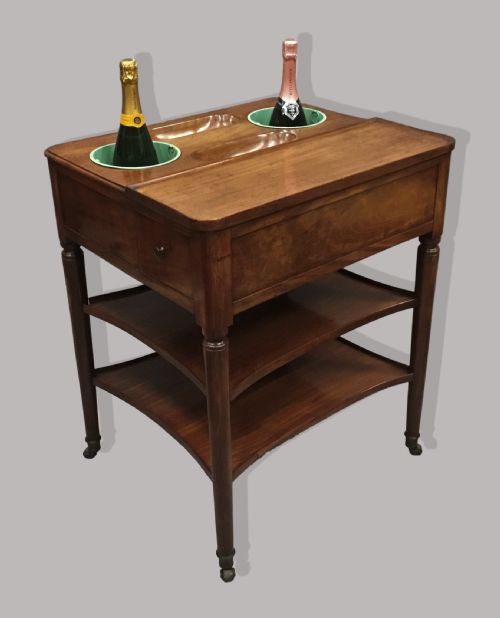


Antique Wine Trolley
These antique wine trolley examples range from Georgian Old Sheffield silver plate to Edwardian inlaid drinks tables, built to serve bottles with grace.
Antique Wine Trolley
An antique wine trolley serves as a mobile dining accessory designed to move bottles around the table or room with ease. Buyers searching this phrase encounter wheeled bottle stands, silver plated carts, and metamorphic drinks chests from various historical periods.
The pieces on this page span from Georgian George III designs to Edwardian inlaid tables and 1930s Art Deco side tables. The most frequent forms include silver plated wine coasters, decanter carriages, and freestanding bottle stands.
Originating to keep port and wine moving smoothly among guests without damaging polished table surfaces, these trolley pieces combine practical utility with period craftsmanship. They appear in woods such as mahogany and walnut, alongside silver plate and brass fittings.
How they were made
Makers utilised solid timbers like mahogany and walnut, frequently applying veneer and inlay work to decorate the surfaces of Edwardian and Georgian pieces. Wood sections were turned, joined, and polished by hand to highlight the natural grain.
Metal elements relied on silver plating over copper bases, particularly for Old Sheffield plate wine trolleys and double or triple bottle carriages from the nineteenth century. Brass wheels, handles, and gallery rails were cast and fitted to allow smooth rolling action.
Antique Wine Trolley Retail Price Guide 2026
Typical asking prices for wine trolley among the pieces listed under this phrase on Sellingantiques today, from the lower quarter to the upper quarter. They describe what is for sale here now, not the wider market.
Available forms range from single decanter carriages and double bottle carts to metamorphic tables and freestanding drinks chests.
What varies in quality
The distinction between standard items and exceptional pieces rests on the crispness of metalwork, the weight of the silver plate, and the finesse of the timber joinery. Superior examples retain original wheels, working castors, and intact gallery rails without replacement parts.
Proportion and ingenuity define the better workshops, seen especially in metamorphic designs, clever drop-leaf trays, and balanced double or triple bottle carts. Finer execution shows in smooth rolling mechanisms and careful hand-chased ornamentation on the silver plate.
Maple London·Incorporall
The Antique Wine Trolley Glossary
- Silver Plate
- A thin layer of silver fused or electroplated onto a base metal such as copper or brass. This technique allowed makers to achieve the appearance of solid silver at a lower cost.
- Old Sheffield Plate
- An early method of fusing a sheet of silver to a copper ingot before rolling them together into plates. Pieces made this way often reveal faint lines of base metal where wear has occurred.
- Decanter Carriage
- A wheeled frame or trolley holding one or more glass decanters. These carriages enabled diners to slide wine safely across the table.
- Rafraichissoir
- A French serving table featuring built-in metal liners or ice buckets for chilling wine or champagne. These tables often incorporate wood tiers and brass galleries.
- Gallery Rail
- A raised metal or wooden rim surrounding the edge of a tray or table top. It prevented bottles and glassware from sliding off while the trolley moved.
Antique Wine Trolley: Frequently Asked Questions
What is a wine trolley used for?
These trolleys were built to transport wine bottles and decanters safely across dining room tables or floors during meals. They allowed hosts to keep drinks circulating among guests without lifting heavy glass.
The raised frames and fitted coasters ensured bottles stayed secure while the wheels rolled smoothly over polished wood or carpets.
How do I date an antique wine trolley?
Dating relies on combining the wood types, construction methods, and stylistic details visible across the piece. Georgian and Regency pieces show heavier use of Old Sheffield plate and classical mahogany frames.
Edwardian and later examples introduce lighter inlay work, alternative veneer patterns, and distinct mechanical hardware associated with early twentieth century manufacturing.
Are all wine trolleys silver plated?
Not all pieces utilise silver plate, as many examples consist entirely of timber such as mahogany or walnut. Tables configured as drinks cabinets or drinks tables often focus on woodwork rather than metal carriages.
When metal is present, it typically appears as silver plate on copper, brass gallery rails, or cast metal wheels designed to bear the weight of glass bottles.
How do I care for wood and silver plate?
Wooden surfaces benefit from occasional polishing with suitable wax to preserve the grain and protect the finish from moisture. Silver plated components require gentle cleaning with non-abrasive cloths to avoid wearing through the thin metal layer.
Keeping the pieces away from direct heat sources and damp environments helps maintain the stability of both the timber joints and the metal mountings.