
Antique Wine Cellarette Chest
An antique wine cellarette chest is a substantial timber vessel designed to store and cool vintage bottles beside the dining table.
Antique Wine Cellarette Chest
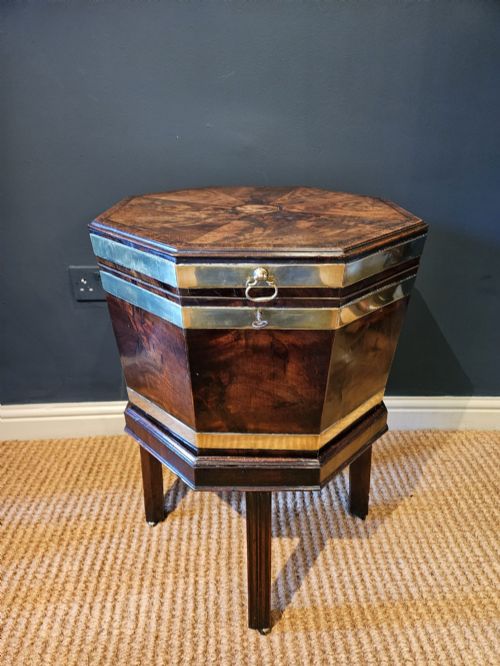
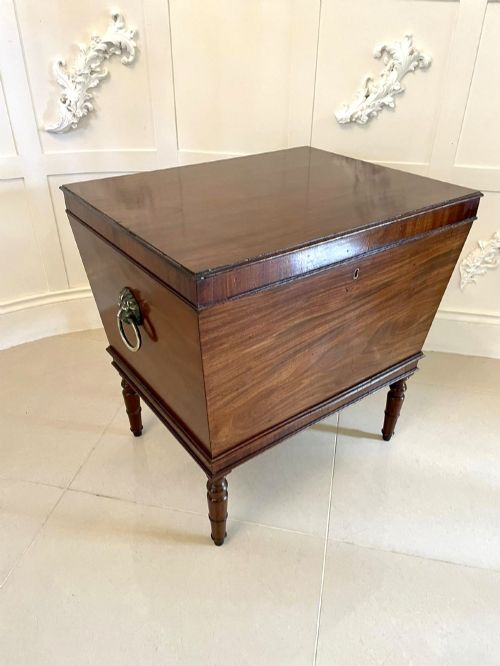
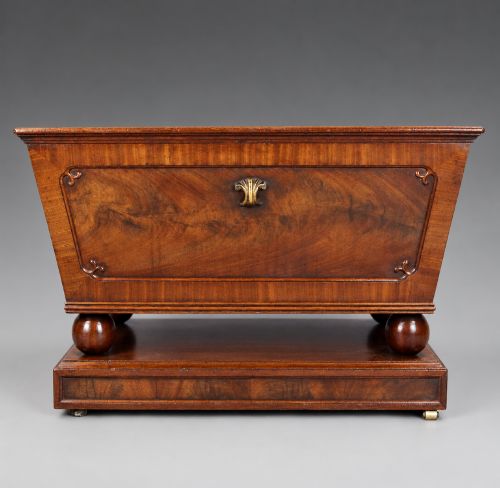
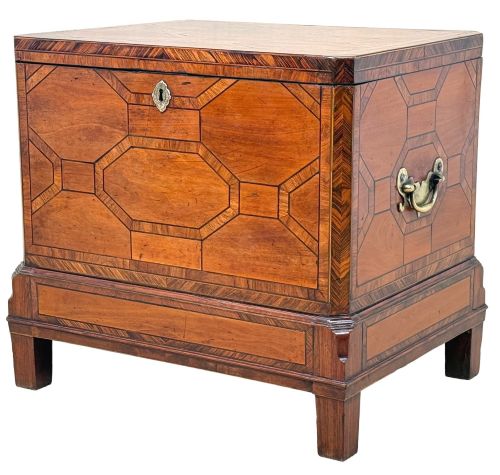
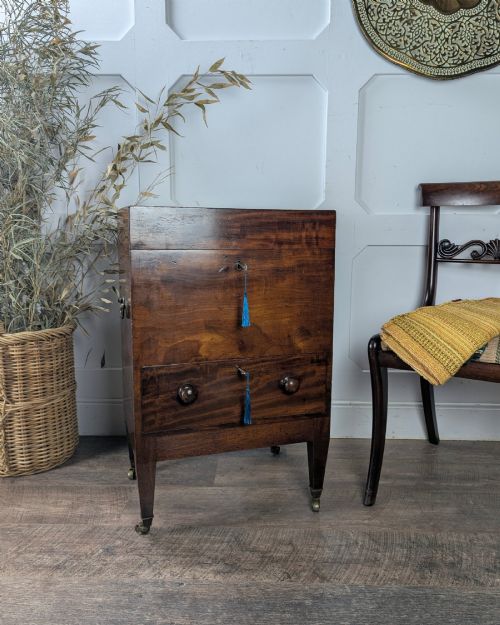
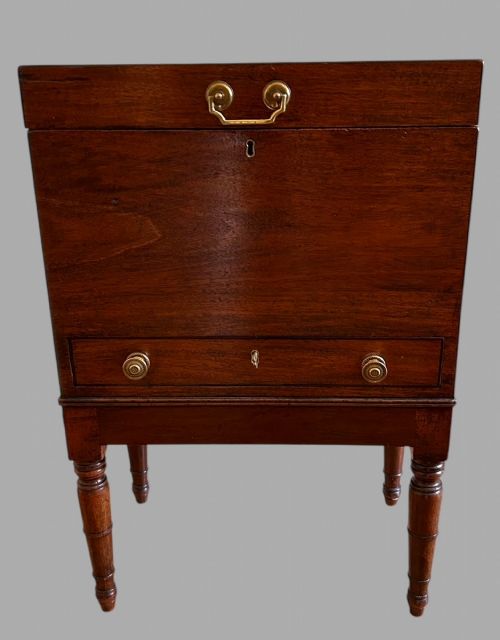
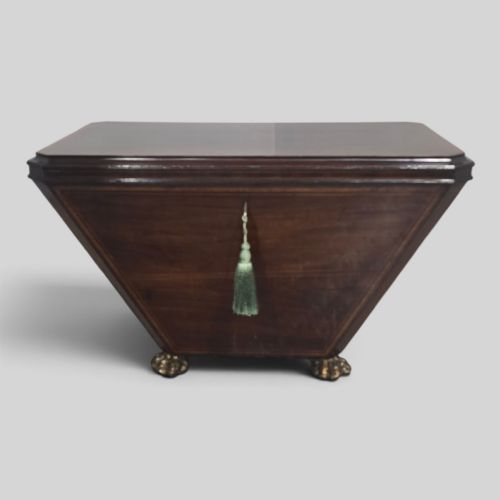
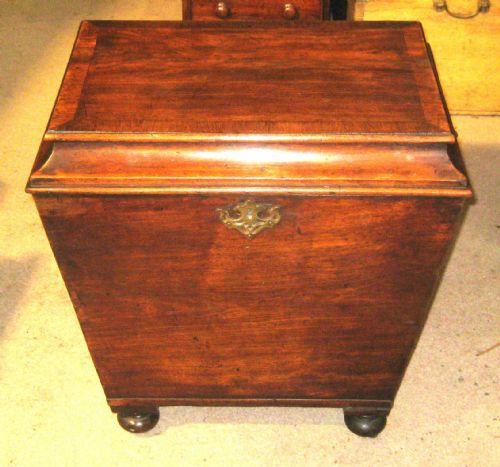
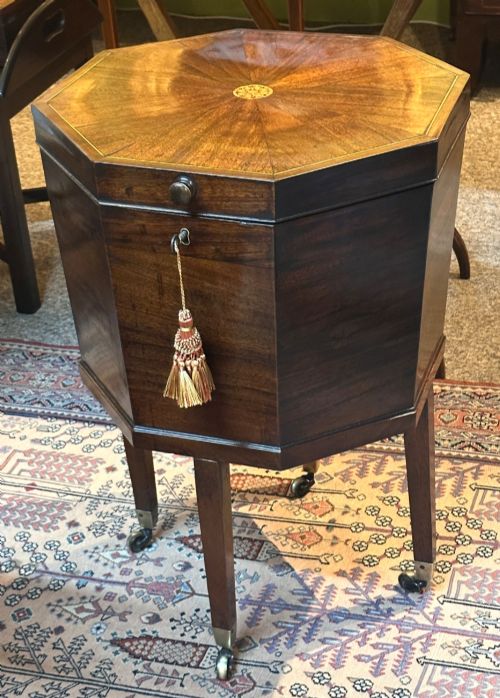
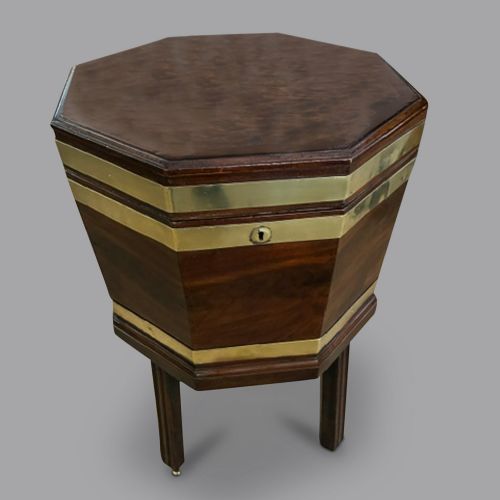
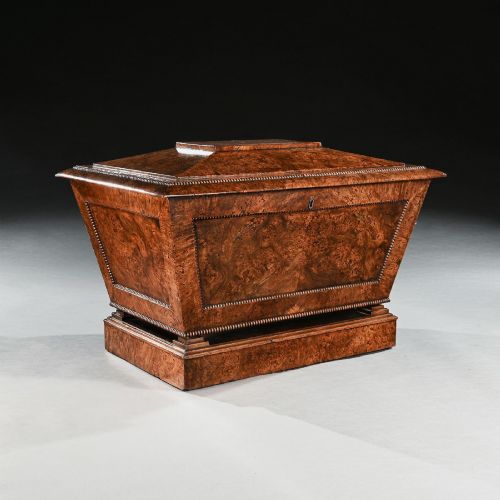
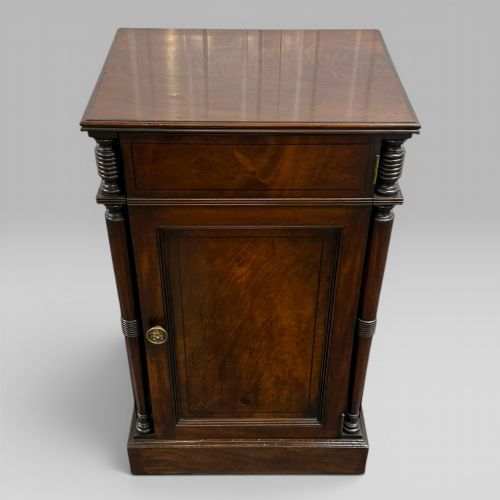
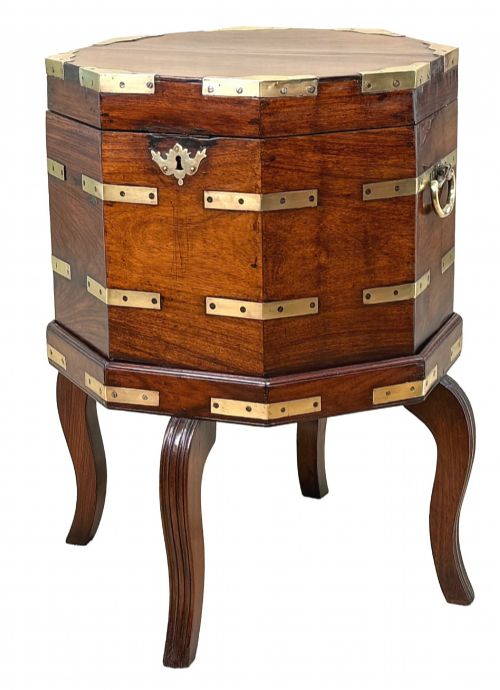
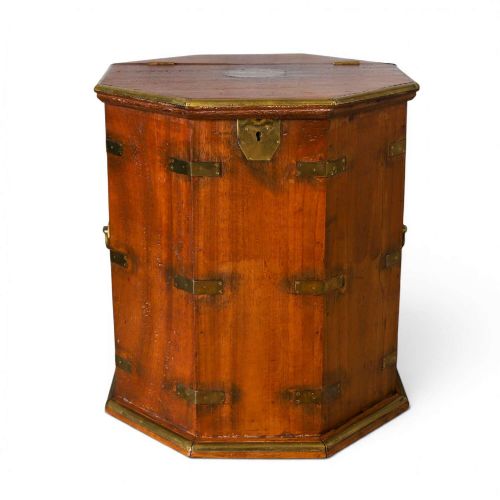
When you search for an antique wine cellarette chest, you encounter sturdy timber receptacles spanning the Georgian, Regency, and Victorian periods. These pieces take the form of octagonal boxes, sarcophagus containers, or cabinets fitted with internal compartments to hold bottles safely.
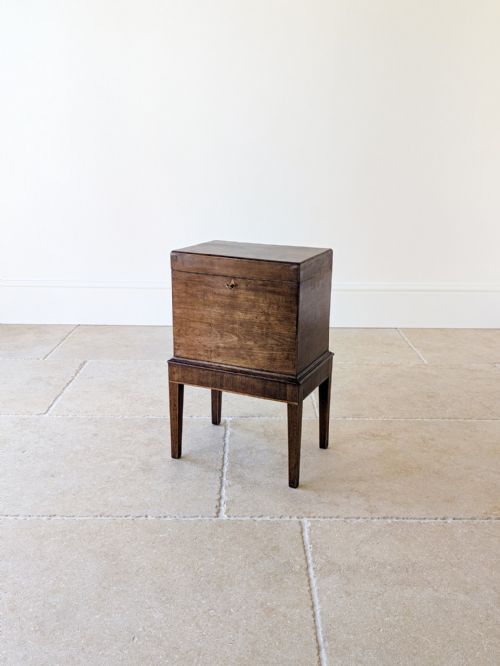
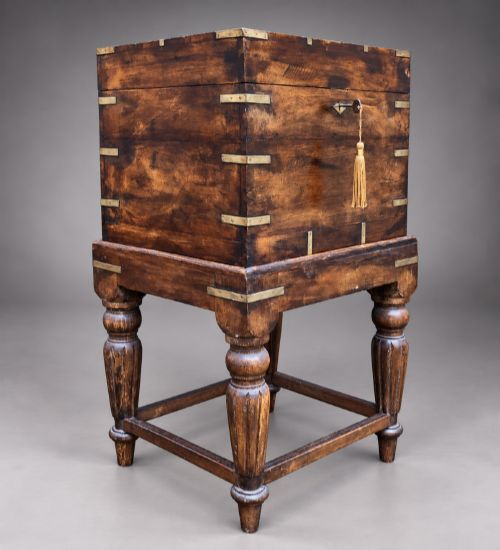
Mahogany dominates the listings, frequently enriched by flame grain, satinwood, or pollard oak. You meet examples standing on independent wooden frames or resting directly on short bracket feet, alongside campaign styles equipped with hinged lift-up lids.
Makers such as Gillows and Edwards and Roberts produced notable examples, while other pieces reflect the influence of Thomas Hope or Anglo-Indian workshops. These containers served dining rooms by keeping wine chilled near the guests without requiring frequent trips to the cellar.
Materials and construction methods
Cabinet makers relied heavily on solid mahogany, flame mahogany, and walnut, often accentuating the timber with satinwood inlay or ormolu mounts. These woods provided the structural integrity needed to withstand heavy daily use in formal dining rooms.
Many interiors incorporate original lead linings designed to hold melting ice and water safely without rotting the surrounding timber. Brass bands and carrying handles feature on numerous pieces to reinforce the heavy box construction and assist with transportation.
Listings feature woods including mahogany, flame mahogany, satinwood, pollard oak, padouk, and walnut, paired with metal and ormolu mounts.
Assessing quality and finish
The standard of a cellarette rests on the choice of timber figure, such as richly marked flame mahogany or pollard oak, combined with the crispness of any inlay or brass banding. Superior examples retain their original internal lead linings and fitted bottle dividers rather than later replacements.
Proportion and form dictate the visual success of the piece, with well-balanced sarcophagus curves or clean octagonal lines marking out the finer workshops. Original stands and authentic patination elevate the standing of a piece considerably against altered or heavily restored equivalents.
Edwards and Roberts·Gillows·Gillingtons
The Antique Wine Cellarette Chest Glossary
- Cellarette
- A lockable box or chest designed to hold wine bottles in a dining room. These containers often featured internal divisions to separate individual bottles.
- Sarcophagus
- A distinct burial-chest shape with a domed lid and sloping sides popular during the Regency period. This architectural form lent a classical gravity to dining furniture.
- Ormolu
- Gilt-bronze mounts applied to furniture for decorative enrichment. This technique added metallic contrast to dark polished timbers like mahogany.
- Lead lining
- A protective metal sheet fitted inside the box to hold ice. This feature kept wine cool while protecting the wooden structure from moisture damage.
- Padouk
- A dense tropical hardwood prized for its reddish hue and durability. Cabinet makers utilised this timber for robust colonial and Anglo-Indian items.
Antique Wine Cellarette Chest: Frequently Asked Questions
What is an antique wine cellarette chest used for?
These vessels were kept in the dining room to store wine bottles close to the table during long meals. Inside, lead-lined compartments held ice and water to keep the wine at the proper temperature.
Guests enjoyed chilled drinks without waiting for servants to fetch bottles from the deep cellars below. They also served to secure prized vintages under lock and key.
How do I date an antique wine cellarette?
Dating relies on observing the timber choice, decorative motifs, and overall architectural form of the chest. Georgian pieces often display straight-grained mahogany or satinwood inlay, while Regency examples favour sarcophagus shapes and ormolu.
Later Victorian adaptations lean towards heavier proportions and darker finishes. Hardware such as brass bands and handles also helps anchor the piece to a specific decade.
Did cellarettes always have stands?
Some cellarettes were built as self-contained boxes meant to sit on sideboards or the floor, while others were raised on purpose-built wooden stands or legs. Smaller oval and box forms frequently required a separate stand to bring them to a convenient height.
Larger sarcophagus chests usually rested directly on the floor via bracket feet or paw feet. Both formats remain common across different stylistic periods.
How do I care for a wooden cellarette?
Keep the timber away from direct heat sources and sudden humidity changes to prevent the wood from splitting or warping. Dust regularly with a dry cloth and occasionally apply a quality wax to maintain the patina.
Avoid placing wet items directly on unlined wooden surfaces if the original interior protection is missing. Gentle handling preserves both the finish and the historic hardware.