
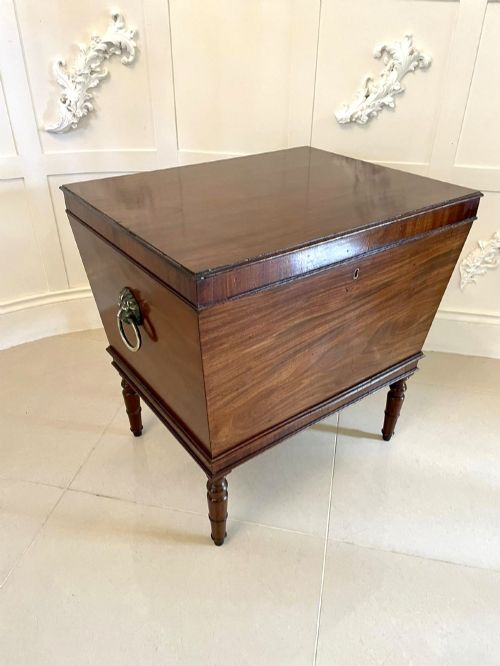
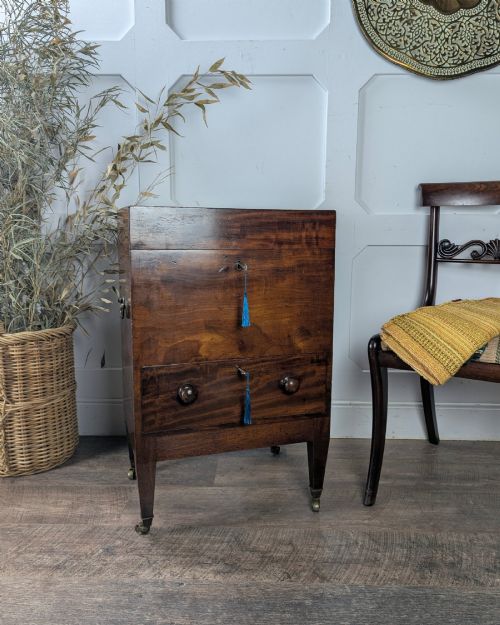


Mahogany Drinks Storage Box
These mahogany drinks storage box pieces are period containers for wine and bottles, offering substantial timber character and historic utility.
Mahogany Drinks Storage Box
A mahogany drinks storage box serves as a designated container for wine bottles, appearing in forms such as cellarettes, wine coolers, and bottle storage chests. These pieces emerge from periods spanning the mid-eighteenth century through to the early twentieth century, including Georgian, Regency, and Edwardian eras. Buyers encounter traditional chest forms and sarcophagus shapes designed to hold collection items securely.
The pieces listed on this page represent diverse stylistic interpretations, from George III Sheraton designs to early twentieth-century Edwardian inlaid examples. Forms range from large wine coolers to specific cellarettes and storage chests. Each item reflects the domestic requirements of historic dining rooms and entertaining spaces.
How they were made
Construction relies primarily on mahogany timber, sometimes enhanced with boxwood inlay, satinwood, and satinwood inlay to create decorative surface contrasts. Internal elements frequently incorporate brass fittings, zinc, lead, and bone details to line compartments and support bottle storage.
Cabinet makers utilised traditional joinery methods suited to heavy storage requirements, incorporating fine stringing and inlay techniques on select pieces. Metal linings in zinc and lead provided practical waterproofing and temperature management for cooling wine.
Some nineteenth-century wine chests included lead linings so ice could be packed directly around the bottles during long dinner parties.
What varies in quality
Quality rests in the selection of the mahogany timber and the precision of decorative inlays such as boxwood and satinwood. Finer pieces demonstrate superior proportion, sophisticated styling like Sheraton or Regency sarcophagus forms, and careful integration of brass hardware.
The sophistication of internal lining materials, including fitted zinc and lead elements, distinguishes standard storage chests from finer wine coolers. Attribution to notable workshops, such as Gillows of Lancaster and London, elevates the standing of an individual piece.
The Mahogany Drinks Storage Box Glossary
- Cellarette
- A lockable container or chest designed for holding wine bottles near the dining table. These pieces often feature internal divisions to protect glass vessels.
- Sarcophagus wine cooler
- A monumental form shaped like a stone coffin, popular during the Regency period. These large vessels typically incorporate lead or zinc linings.
- Boxwood inlay
- A pale contrasting wood inserted into the darker mahogany surface in thin strips or geometric patterns. This technique defines decorative borders on select pieces.
- George III Sheraton
- A late eighteenth-century style characterised by classical restraint, straight lines, and refined satinwood or boxwood inlay. Pieces from this era display balanced proportions.
Mahogany Drinks Storage Box: Frequently Asked Questions
How were these boxes used?
These boxes were positioned in dining rooms to hold wine bottles close to the table for guests and hosts. Interiors often included zinc or lead linings designed to hold ice or water for cooling wine.
Many examples featured locks to secure valuable vintages from household staff. Today, they function as decorative storage chests or side tables in residential interiors.
How do I identify a Georgian piece?
Georgian pieces display cabinet-making characteristics typical of the mid-eighteenth to early nineteenth centuries. Look for robust mahogany construction, traditional joinery, and period-specific stylistic elements such as Sheraton inlays.
Proportions tend to be classical and functional, reflecting the formal dining habits of the period. Documentation or attribution to makers like Gillows can also indicate the era.
What materials are used inside?
Interiors frequently feature metal linings made from zinc or lead to contain moisture and ice when cooling wine. Additional internal elements can include wooden dividers, brass fittings, and occasional bone details.
These functional linings protected the timber frame from liquid damage during use. Surviving metal interiors remain an important aspect of a piece's original condition.