



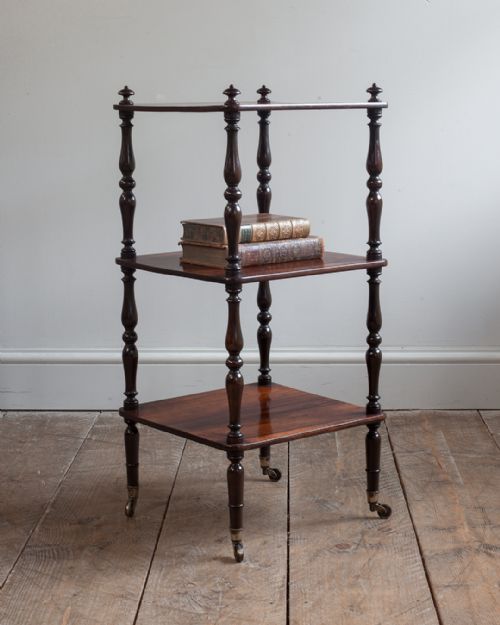


Antique What Not Stand
An antique what not stand offers open tiers designed for displaying ornaments or holding books.
Antique What Not Stand
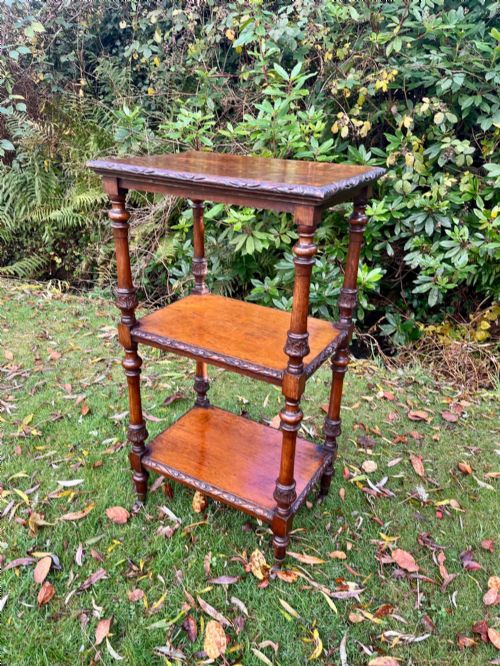
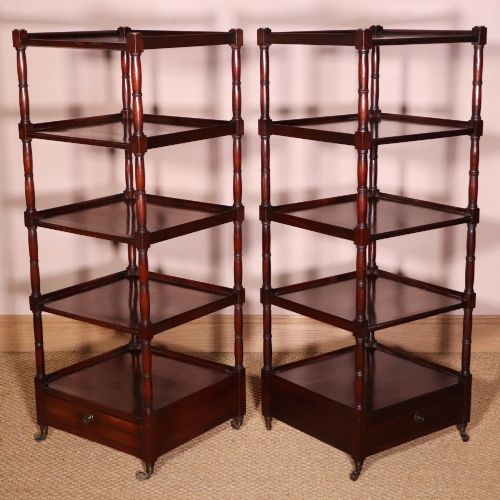
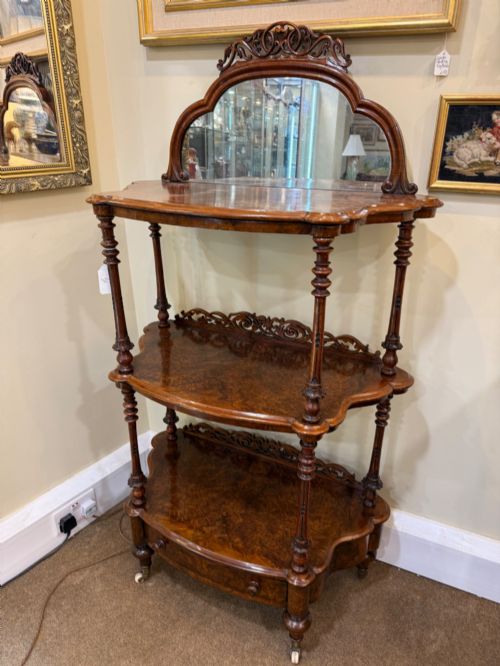
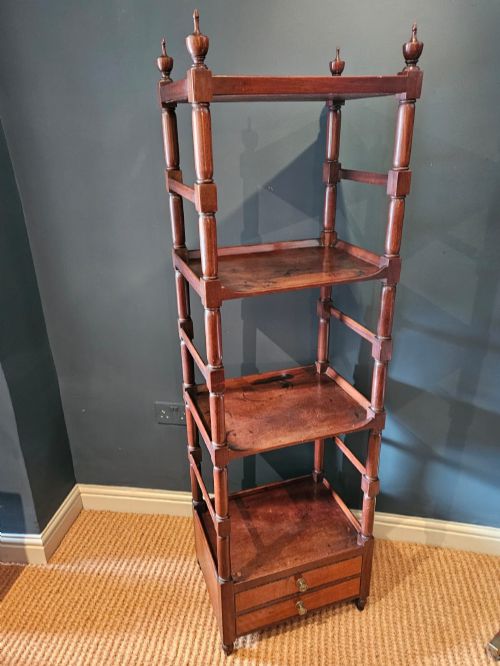
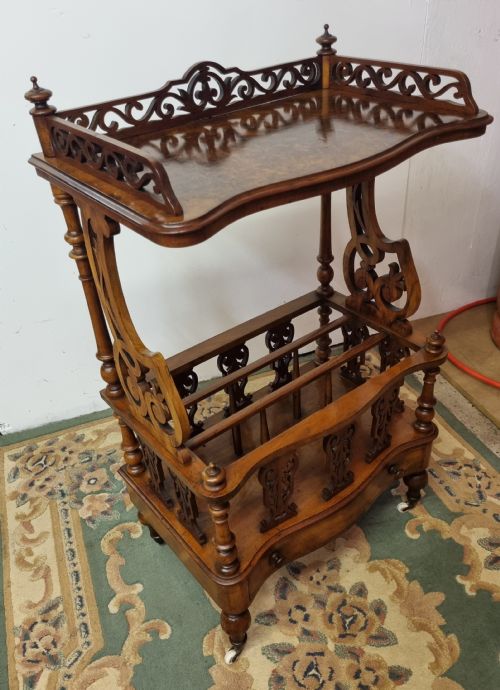
An antique what not stand encompasses multi-tiered display furniture engineered for domestic utility and ornament holding across the nineteenth century. These pieces range from simple three-tier mahogany structures to elaborate serpentine-shaped burr walnut examples with integrated drawers or music racks.
The selections available here predominantly feature Victorian and Regency designs, spanning freestanding multi-shelf units, corner configurations, and combined canterbury forms. Mahogany and rosewood dominate the earlier decades, while burr walnut and marquetry enrich the later Victorian items.
Variations in quality
Superior examples distinguish themselves through the choice of timber, particularly highly figured burr walnut or dense, richly toned mahogany. The precision of the joinery in supporting multiple tiers without visible structural sagging marks the work of skilled workshops.
Design complexity drives differentiation, separating standard utilitarian shelving from exhibition pieces featuring serpentine shaping, marquetry inlay, or multi-functional compartments like integrated canterburys and music cabinets.
Antique What Not Stand Retail Price Guide 2026
Typical asking prices for what not stand among the pieces listed under this phrase on Sellingantiques today, from the lower quarter to the upper quarter. They describe what is for sale here now, not the wider market.
Some nineteenth-century stands doubled as magazine tidies, ready to hide today's broadsheet mishaps behind neat mahogany slats.
Gillows
The Antique What Not Stand Glossary
- Whatnot
- A piece of furniture consisting of a set of shelves for holding books, ornaments, or other small items. These structures appeared in multiple tiers throughout the nineteenth century.
- Etagere
- A piece of furniture with a set of open shelves for displaying ornaments. The term often overlaps with whatnot but frequently describes French or lighter decorative variants.
- Canterbury
- A low stand with partitions for holding music sheets, magazines, or newspapers. They often incorporate shelf tiers above the rack section.
- Dumb waiter
- A tiered serving table or stand used for holding food or tableware. Certain models feature folding tiers or rotating surfaces.
- Marquetry
- Decorative woodwork where pieces of veneer are fitted into a ground material to form designs. This technique appears on tabletop surfaces and cabinet doors.
Antique What Not Stand: Frequently Asked Questions
What is an antique whatnot stand?
A whatnot stand is a multi-tiered piece of furniture created to display ornaments, books, or small collections in nineteenth-century interiors. They evolved in various forms, including freestanding rectangular units and corner-fitting shelves.
Many examples incorporate lower drawers, music racks, or canterbury sections, combining display space with practical domestic storage.
How were whatnot stands used originally?
These stands functioned primarily as decorative display surfaces in drawing rooms and parlours for porcelain, silver, and small curiosities. Versions with integrated partitions also served to hold sheet music, periodicals, and newspapers near seating areas.
Dining rooms occasionally utilised dumb waiter variants for holding tableware and dishes during meals without requiring constant servant attendance.
What is the difference between an etagere and a whatnot?
While both terms describe multi-tiered open shelving, etagere frequently references lighter decorative French designs or pieces intended specifically for display. Whatnot serves as the broader traditional English term for tiered shelving units.
In practice, nineteenth-century makers and modern inventories often use the terms interchangeably for similar multi-shelf furniture.
How do I date an antique whatnot?
Dating relies on identifying primary timber choices, construction techniques, and stylistic markers associated with specific periods like Regency, William IV, or Victorian. Earlier pieces from the early nineteenth century favour mahogany and rosewood with architectural turning.
Later Victorian and Edwardian examples frequently employ burr walnut, elaborate marquetry inlay, or ebonised wood alongside specific aesthetic movement details.