



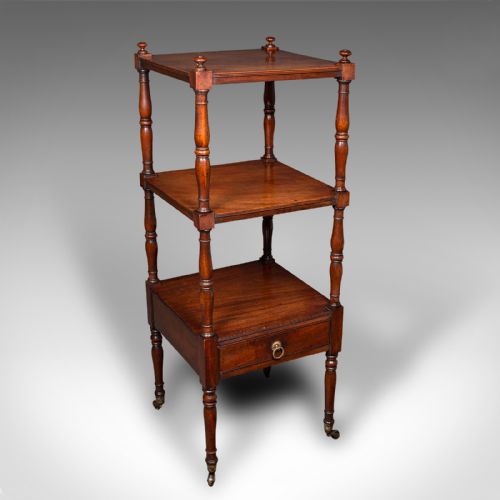


Turned Column Shelf Unit
A turned column shelf unit offers practical tiered display space, bringing architectural verticality and rich timber grain to domestic interiors.
Turned Column Shelf Unit
When buyers search for a turned column shelf unit, they encounter tiered open display pieces commonly known as whatnots, etageres, and wall shelves. These items span periods from the Georgian and Regency eras through to the late Victorian and Edwardian decades, providing practical vertical storage.
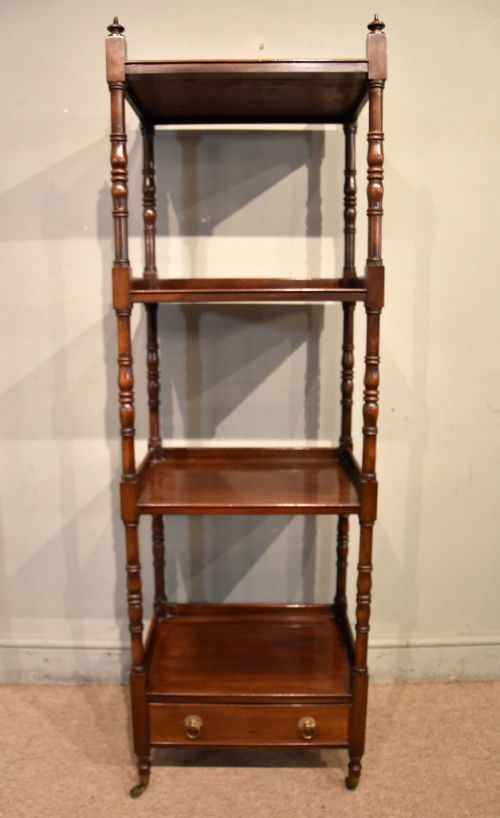
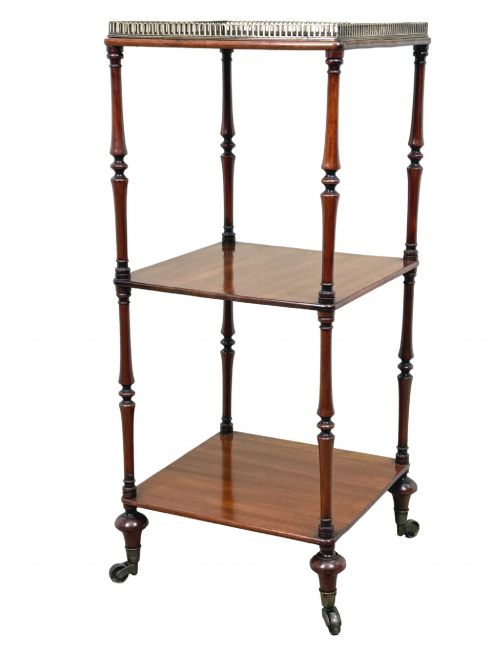
The most frequent form on this page is the freestanding multi-tier mahogany whatnot, often featuring four shelves supported by turned uprights. Examples also appear in walnut, ebonised wood, birdseye maple, and oak, taking the form of corner stands, music cabinets, and wall-mounted bookcases.
How these pieces were made
Cabinet makers constructed these tier units primarily from dense hardwoods like mahogany and walnut, occasionally employing birdseye maple, rosewood, and oak for distinct grain patterns. Uprights were shaped on the lathe to create characteristic turned columns, which supported horizontal shelves fixed at intervals.
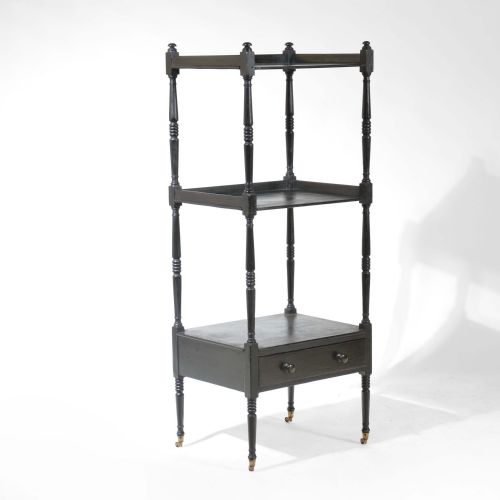
Detailing often included boxwood inlay to accent the timber surfaces, while ebonised wood finishes provided a deep black appearance. Joints were secured with traditional cabinet-making methods, ensuring rigid stability across multiple tiers of shelving.
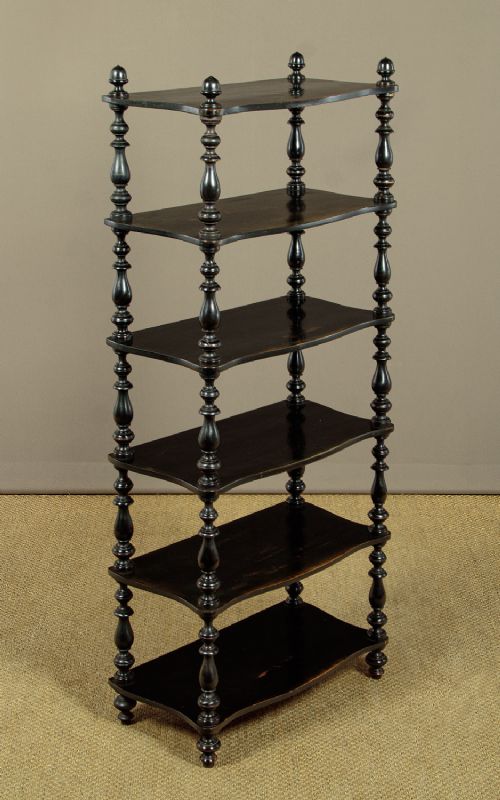
A towering six-tier ebonised dumb waiter stands ready to hold an improbable quantity of afternoon teacups.
What varies in quality
Quality in these multitier pieces rests upon the choice of timber and the precision of the turning on the upright columns. Dense mahogany with rich figuring or distinctive birdseye maple sits at the upper end of the scale, showing careful timber selection.
Construction detail also separates standard utility pieces from finer examples, seen in crisp boxwood inlay work, balanced proportions across multiple tiers, and robust structural joinery that prevents wobble in tall standing units.
The Turned Column Shelf Unit Glossary
- Whatnot
- A freestanding piece of furniture consisting of a series of open shelves supported by pillars or columns, used for displaying ornaments or books.
- Etagere
- A piece of furniture consisting of a set of open shelves for displaying small objects, similar in function to a whatnot.
- Ebonised
- Timber treated with a stain or finish to imitate ebony, creating a dark, uniform black surface.
- Birdseye maple
- Timber figured with small, circular patterns resembling bird eyes, valued for decorative cabinet work.
- Boxwood inlay
- Contrasting pale wood inserted into recesses in a darker timber surface to form decorative borders or patterns.
Turned Column Shelf Unit: Frequently Asked Questions
What is a whatnot?
A whatnot is an open-shelved tiered stand designed for holding books, ornaments, or display items in principal rooms.
They gained popularity in the Georgian and Victorian periods as functional furniture that made efficient use of vertical floor space.
How were etageres used?
Etageres served as decorative display stands for holding porcelain, small silver, and ornamental objects.
Their multiple open tiers allowed items to be viewed clearly from various angles within a drawing room or parlour.
What is ebonised wood?
Ebonised wood is timber finished with a black stain or polish to replicate the dense, dark appearance of solid ebony.
This technique appeared frequently on nineteenth-century display furniture to provide a striking contrast against lighter interior walls.
How do I date a shelf unit?
Dating relies on identifying timber choices, characteristic turning styles on the upright columns, and decorative elements like boxwood inlay.
Georgian and Regency pieces tend to show restrained classical proportions, while Victorian and Edwardian examples often feature heavier turning or applied stringing.