
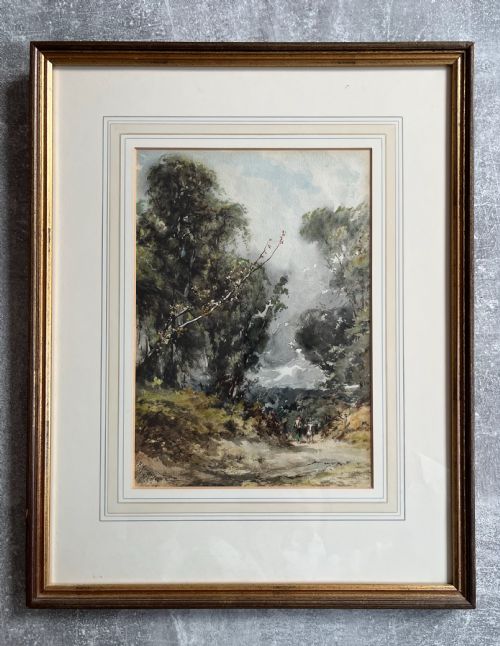
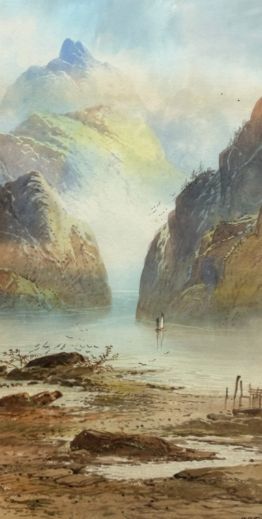
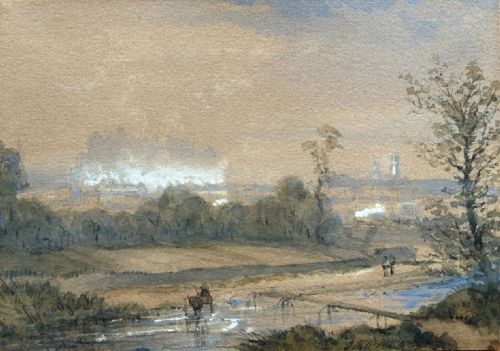

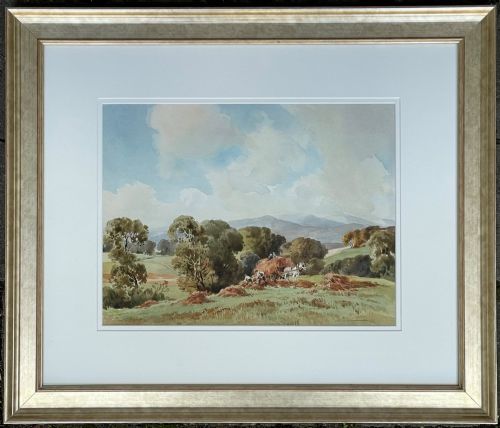
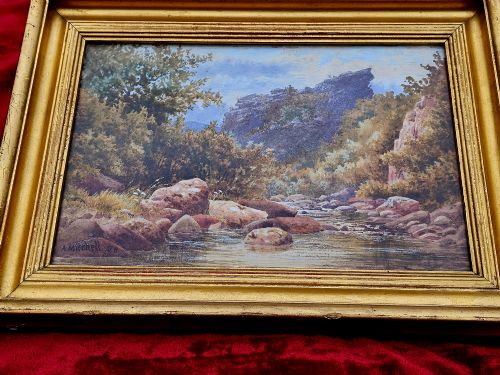
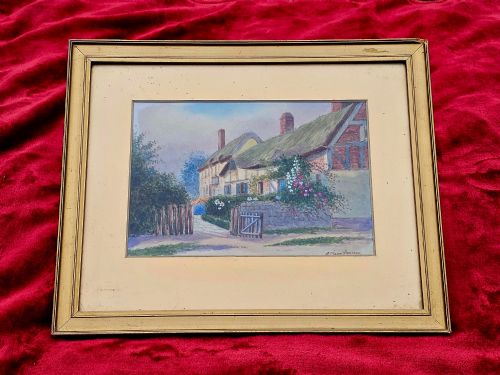
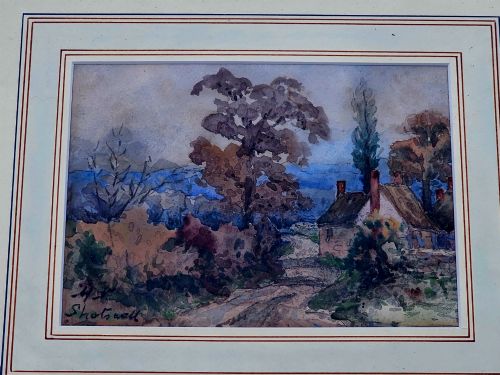
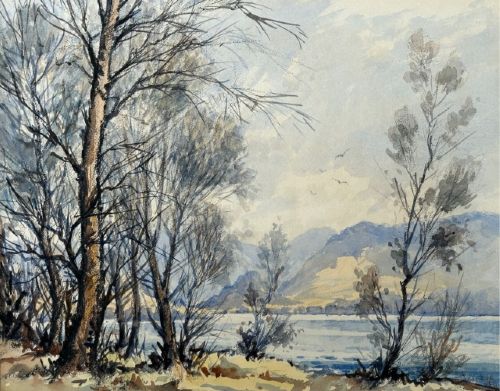
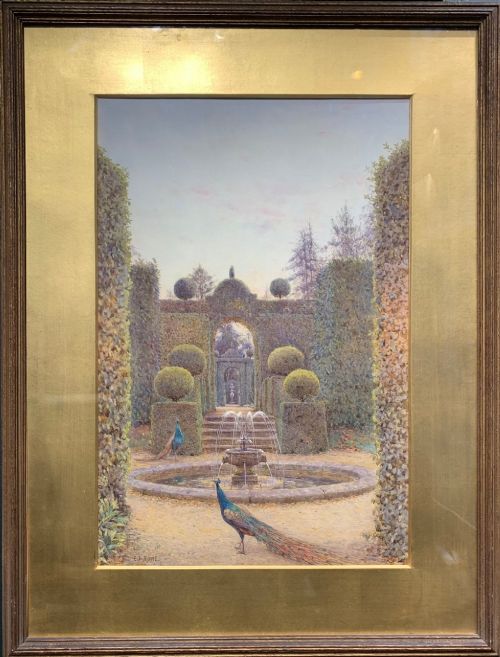
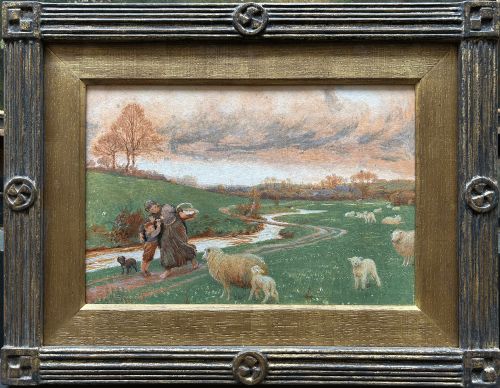
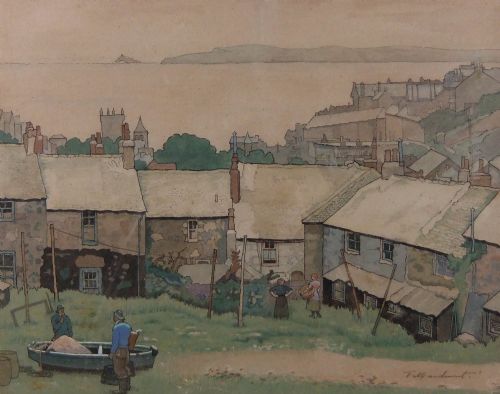
Antique Watercolour Landscape Picture
When searching for an antique watercolour landscape picture, buyers uncover works capturing rural scenes and coastal views preserved on paper.
Antique Watercolour Landscape Picture
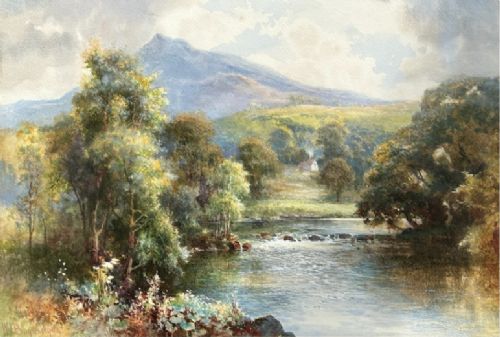
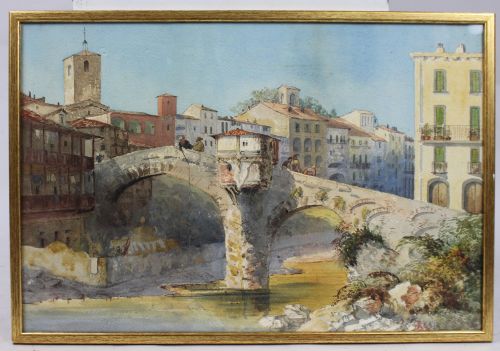
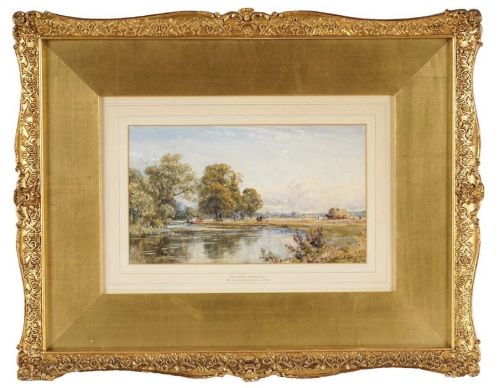
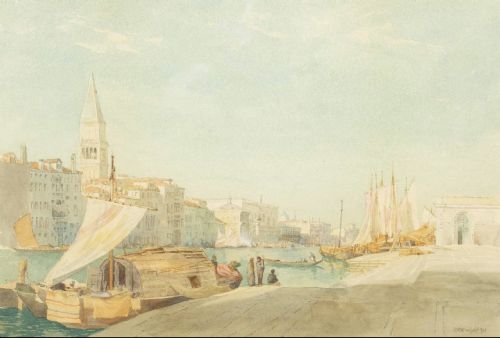
An antique watercolour landscape picture brings pastoral scenes, river valleys, and coastal harbours into domestic spaces.
The selections span the Victorian and Edwardian eras, reaching from the mid nineteenth century into the early decades of the twentieth.
Works on this page range from intimate studies of Welsh rivers and Scottish castles to broader impressions of English countryside and Venetian canals.
How They Were Made
Artists applied watercolour pigment suspended in water onto paper sheets, building transparent washes to capture light and atmosphere.
Many examples are preserved behind glass within wooden frames, often enhanced with gold leaf or gilt wood moulding.
Framing materials recorded across the selection include traditional wood, gilt wood, and gold leaf.
What Varies in Quality
The strength of a composition lies in the artist's handling of light, shadow, and perspective across the landscape.
Fine brushwork and confident washes distinguish skilled practitioners from more modest hands.
George Fotherly Hargitt·William Henry Earp·John R Prentice·Alfred Young Nutt·Percy Lancaster·A. Mitchell·A. Marie Parsons·William Joseph Boyes·J.L.·Robert Thorne Waite·Richard Henry Wright·Ernest Arthur Rowe·Frederick Walker·Thomas Maidment·Frederick James Kerr·Robert Leslie Howey·Henry Martin Pope·David Cox·Herman S Melville·George Stanfield Walters·John Moxon·F.J. Snell·William Frederick Settle·Alfred George Morgan·Thomas Cooper Moore
The Antique Watercolour Landscape Picture Glossary
- Watercolour pigment
- Finely ground colour particles mixed with a water-soluble binder, used to create transparent washes on paper.
- Gilt wood
- Timber frames covered with a thin layer of gold leaf or metallic gilt, commonly used to frame nineteenth-century works.
- Impressionism
- A style focusing on the accurate depiction of light and its shifting qualities rather than minute detail.
- Provincial
- Pertaining to regions outside the capital, often describing local views and regional artists documented in these works.
Antique Watercolour Landscape Picture: Frequently Asked Questions
How do I care for an antique watercolour landscape picture?
Keep works out of direct sunlight to prevent the pigments from fading over time.
Ensure they hang in rooms with stable humidity levels to protect both the paper and the wooden frame.
Are these paintings usually signed by the artist?
Many examples bear the signature or initials of the creator, often inscribed directly onto the lower portion of the sheet.
Unsigned works also appear, frequently attributed to specific schools or periods based on style and technique.
What subjects are most common in these landscapes?
River valleys, coastal bays, and pastoral countryside views dominate the selection across different regional schools.
Artists frequently documented specific locations in Britain, ranging from Scottish highlands to Welsh valleys and English coastal towns.
How can I tell the period of a watercolour?
Stylistic cues, framing materials, and inscribed dates help establish the era in which the work was produced.
Victorian and Edwardian pieces often display specific mount styles and pigment characteristics associated with nineteenth-century palette choices.