
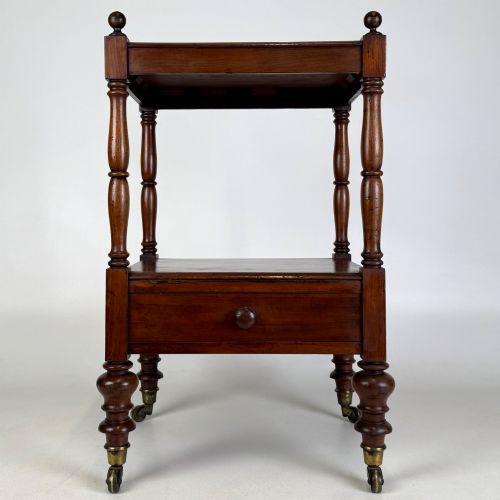
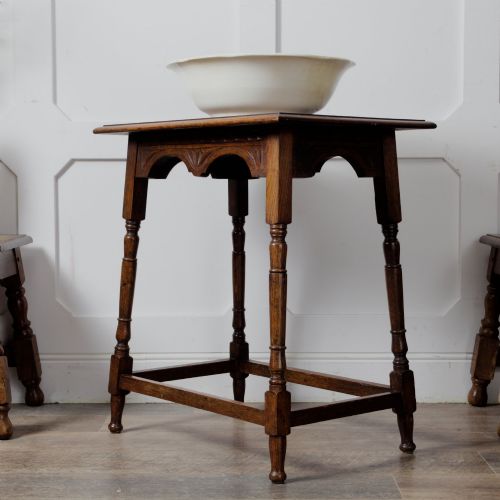
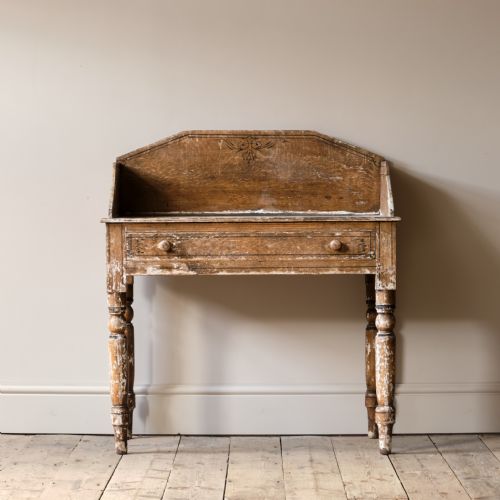
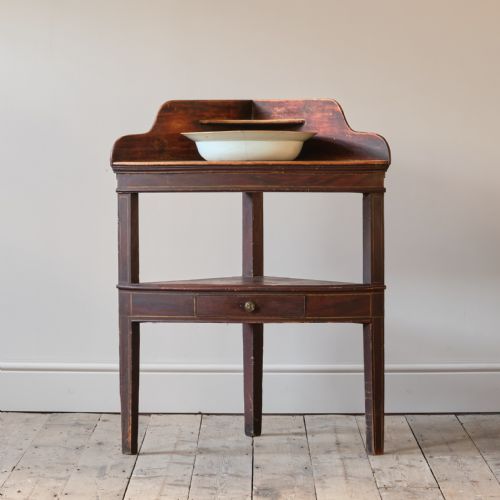
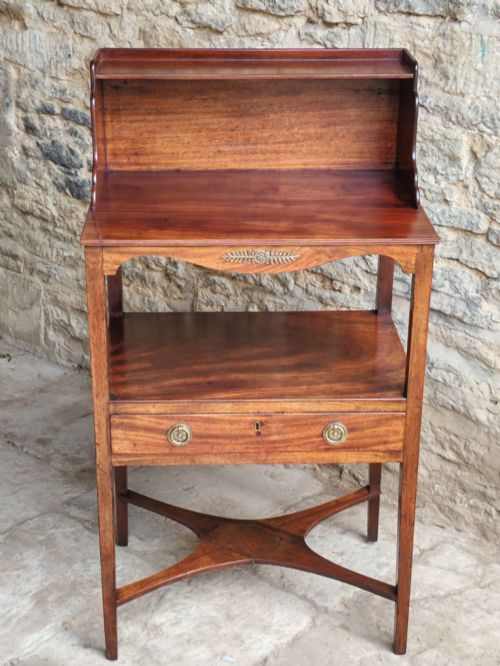
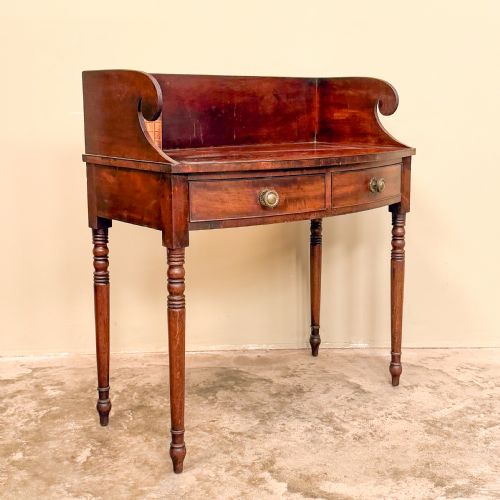
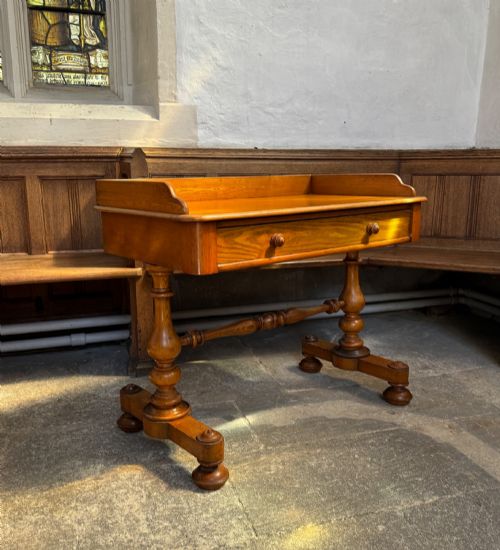
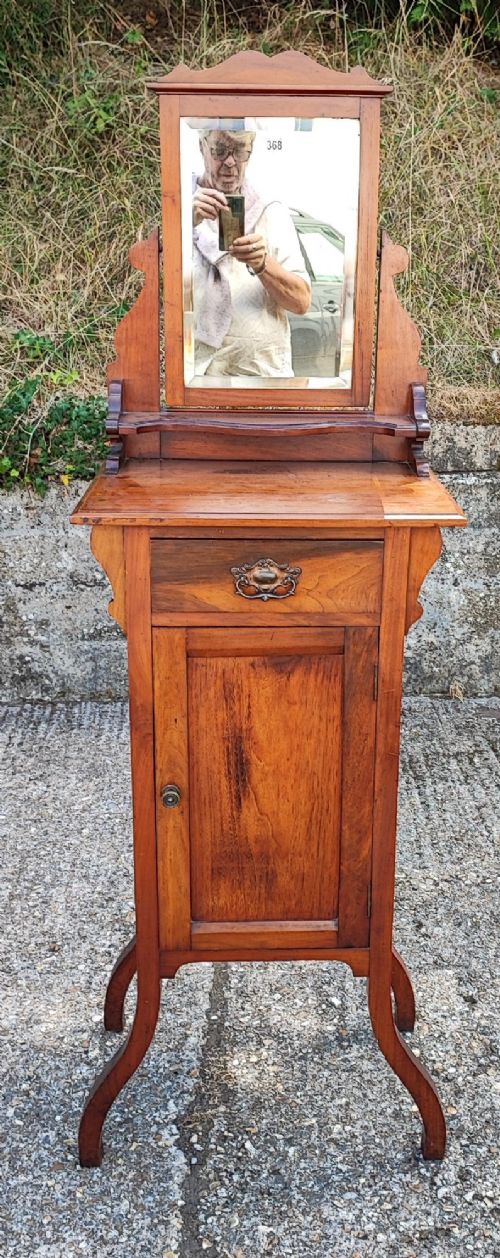
Antique Washstand Table
An antique washstand table combines domestic utility with fine timber work, offering a practical surface suited for modern bedrooms or hallways.
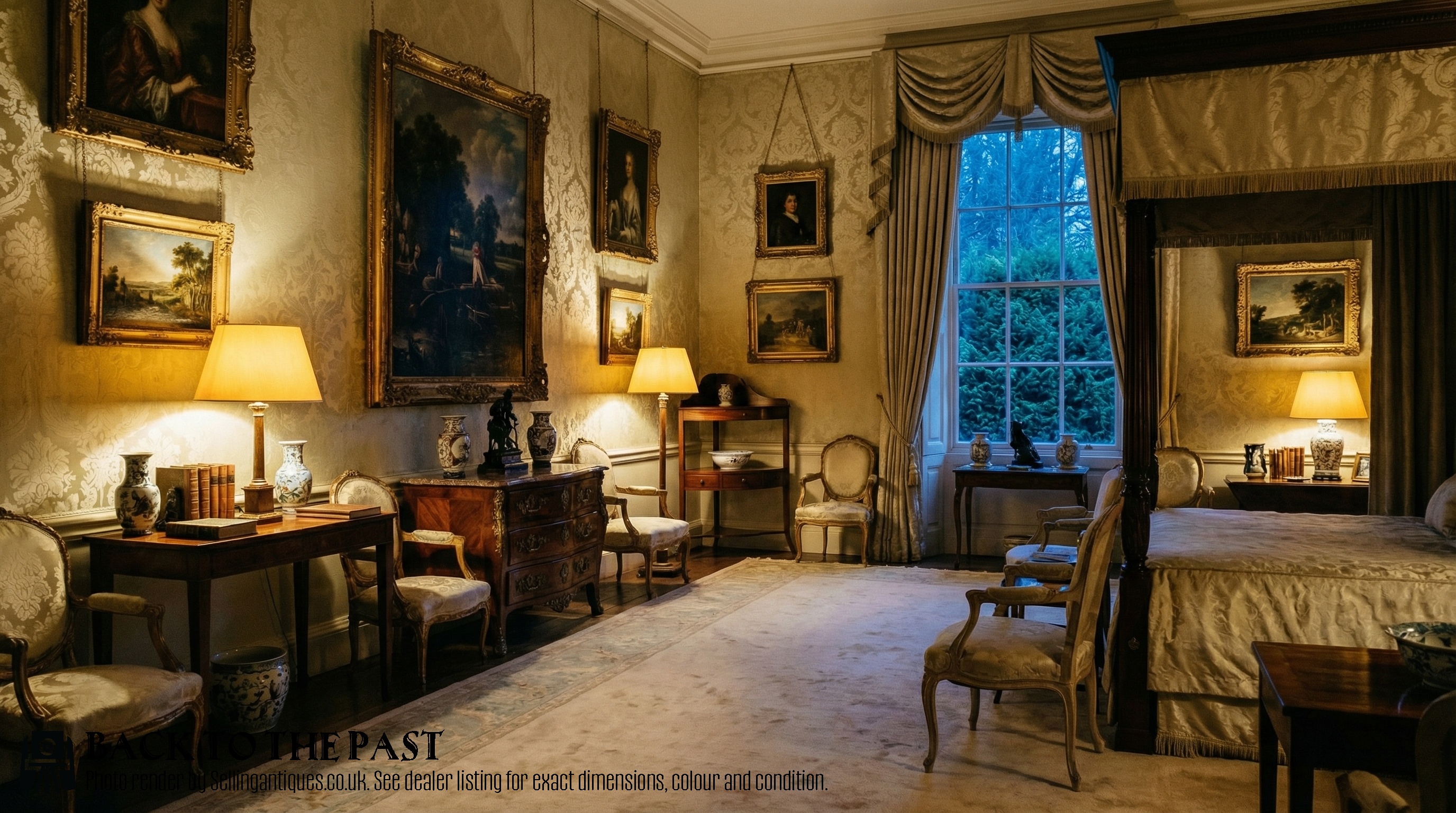
What an antique washstand table is
When you search for an antique washstand table, you encounter practical furniture designed for personal hygiene before modern plumbing. The records show forms ranging from corner units and bedside variants to larger dressing tables.
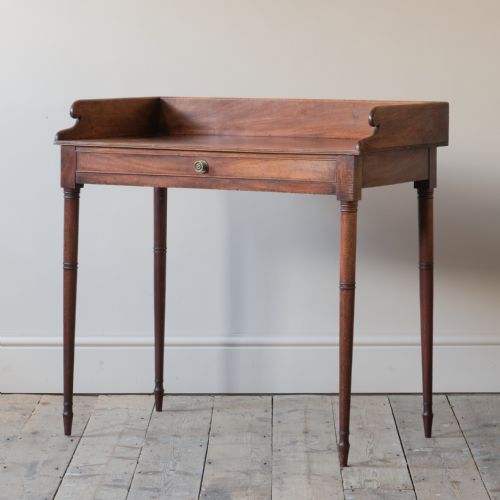
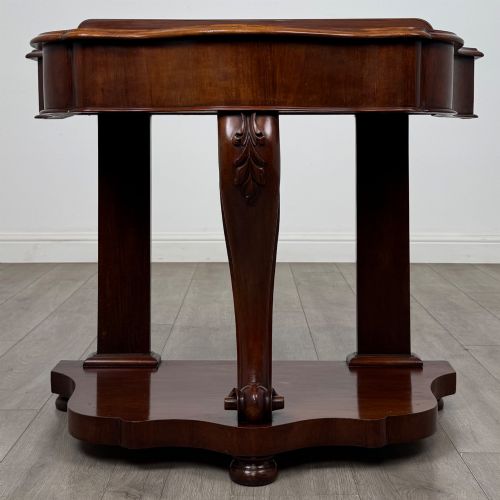
The pieces on this page span the Georgian, Victorian, and William IV periods, alongside general nineteenth-century examples. Mahogany dominates the surviving pieces, accompanied by pine, painted wood, and satinwood.
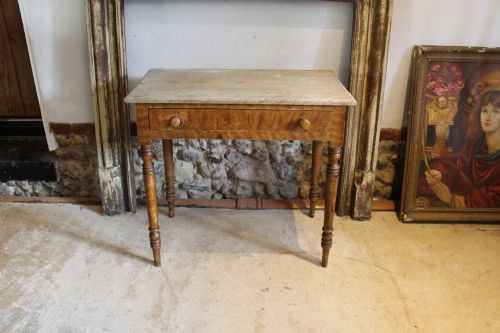
Many examples double as side tables or nightstands, reflecting how these functional objects adapted over time. Marble tops and glass inserts appear on later specimens designed to handle moisture.
Materials and construction
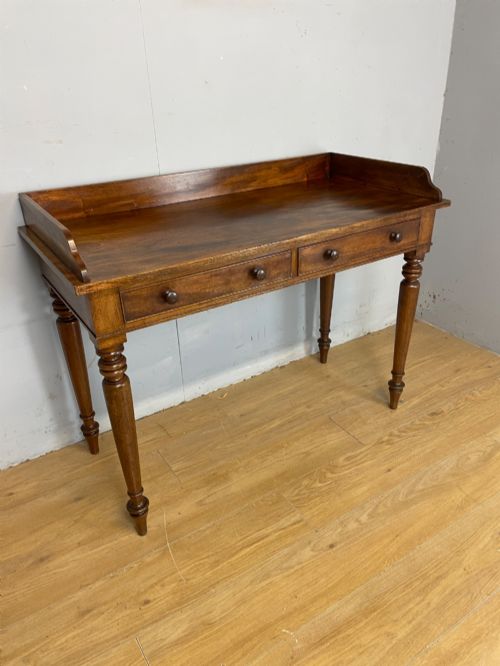
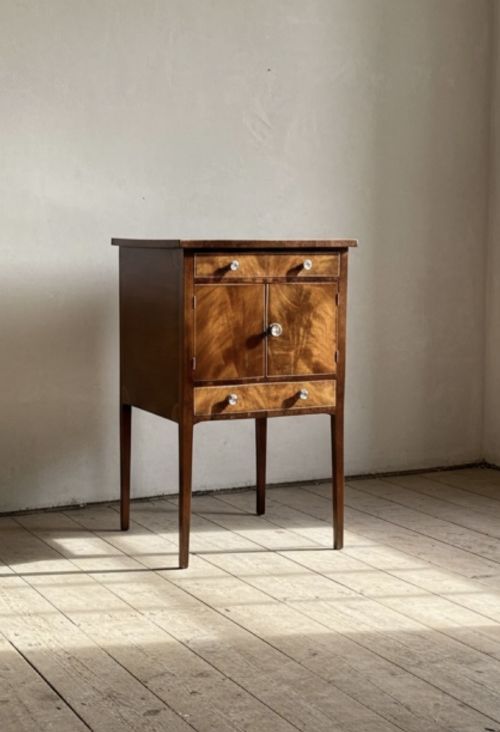
Cabinet makers relied heavily on solid mahogany and flame mahogany veneer, often pairing the timber with boxwood inlay for decorative contrast. Oak and pine served as secondary woods for internal framing and drawer construction.
Surface protection utilised inset white marble or glass plates to shield the timber from water jugs and basins. Brass fittings, including handles and castors, completed the hardware on finer items.
Retail Price Guide 2026
Typical UK retail prices for washstand table, calculated from the Sellingantiques database of over a million retail prices indexed since 2003. This retail price guide relies exclusively on Sellingantiques data; no external sources or auction records are used, so the figures do not describe the wider market.
Listings for this phrase include examples in mahogany, pine, and satinwood, spanning the Georgian, Victorian, and William IV periods.
Distinctions in quality
Differences in quality rest upon the selection of timber figures and the precision of the joinery. Flame mahogany veneers and crisp boxwood inlay separate refined pieces from plain pine variants.
The integration of heavy marble slabs and original brass hardware indicates a higher tier of domestic commission. Proportions and the retention of original paint surfaces further divide standard utilitarian items from superior examples.
The Antique Washstand Table Glossary
- Washstand
- A dedicated table or cabinet designed to hold a wash basin, jug, and related washing accessories. These items date primarily from the Georgian and Victorian eras.
- Flame mahogany
- A veneer cut from the fork of the mahogany tree, creating a distinctive flamelike pattern. Cabinet makers used this timber on prominent exterior surfaces.
- Boxwood inlay
- Contrasting light wood inserted into recesses within a darker timber surface to form geometric or linear borders. This technique highlights the edge work of tabletops.
- Tray top
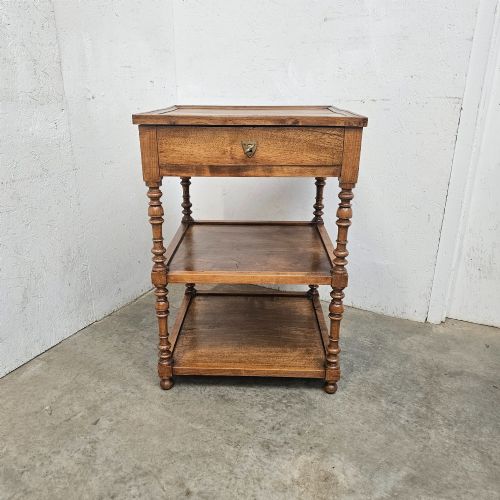
- A raised rim around the edge of a table surface designed to prevent items from rolling off. This feature is common on bedside and washstand tables.
- Marble top
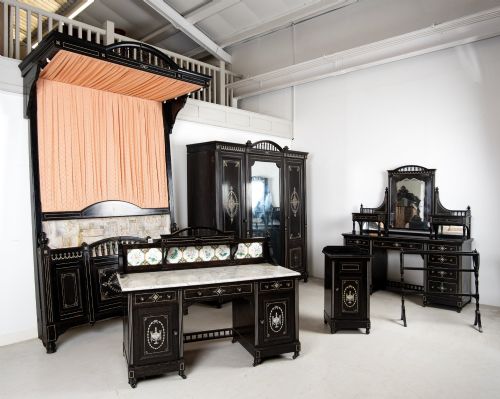
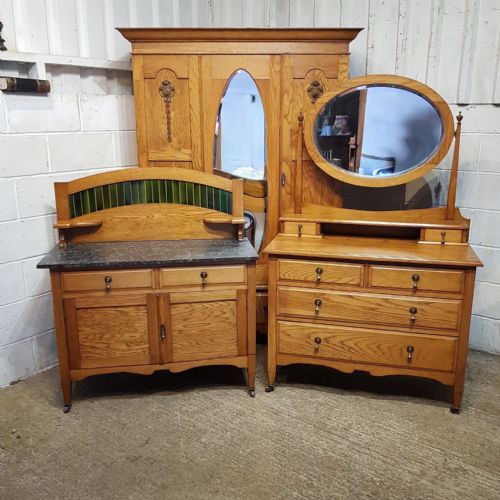
- A stone slab fitted to the surface of a washstand to provide a waterproof area for basins. White marble appears frequently on nineteenth-century specimens.
Frequently Asked Questions
What is an antique washstand table?
An antique washstand table is a piece of furniture built to hold washing equipment in bedrooms before running water became common. They typically feature wooden frames with specific tops designed to accommodate ceramic basins and jugs.
Over time, many of these tables transitioned into general use as side tables or nightstands. Their sturdy construction and surfaces make them adaptable for contemporary rooms.
How do I identify a Georgian washstand?
Georgian washstands generally display mahogany construction with restrained proportions, straight legs, or corner configurations. They often incorporate tray tops designed to secure washing gear.
Makers of this era focused on timber grain and subtle joinery rather than heavy stone inserts. Boxwood stringing or simple inlay work frequently distinguishes the formal examples.
Why do some washstands have marble tops?
Victorian cabinet makers added marble tops to protect the wooden structure from water splashes and staining. White marble provided a durable, easily cleaned surface for daily washing routines.
This addition marks a shift toward more robust, hygienic bedroom furniture during the later nineteenth century. Marble-topped versions often include tiled splashbacks or matching over-shelves.
How can I use a washstand today?
A washstand functions well as a hallway side table, a bathroom vanity support, or a bedside table. The drawers and lower shelves provide practical storage for modern household items.
Marble or wooden surfaces accommodate lamps, books, and decorative objects without modification. Their compact footprints suit smaller spaces that require traditional character.