


Antique Walnut Trolley
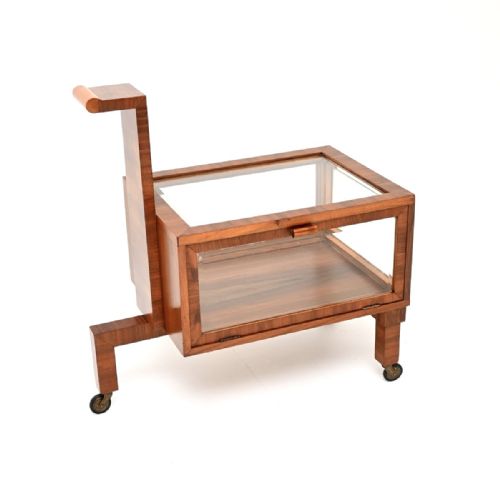
An antique walnut trolley serves as a mobile surface for drinks, books or serving, combining functional timber framing with period elegance.
Antique Walnut Trolley
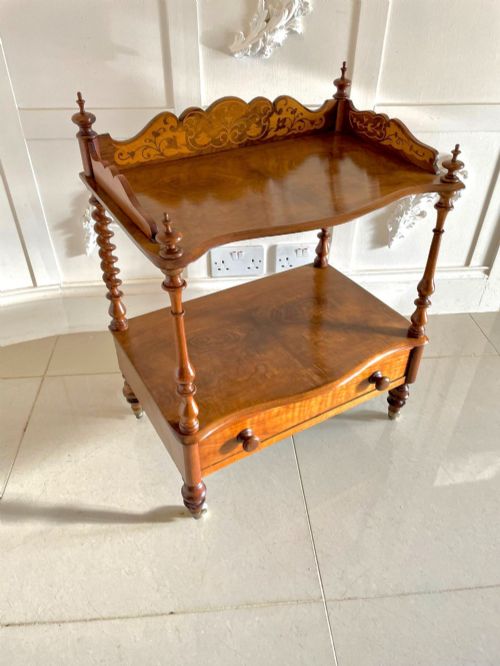
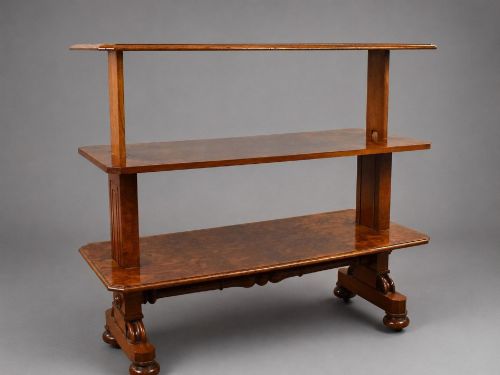
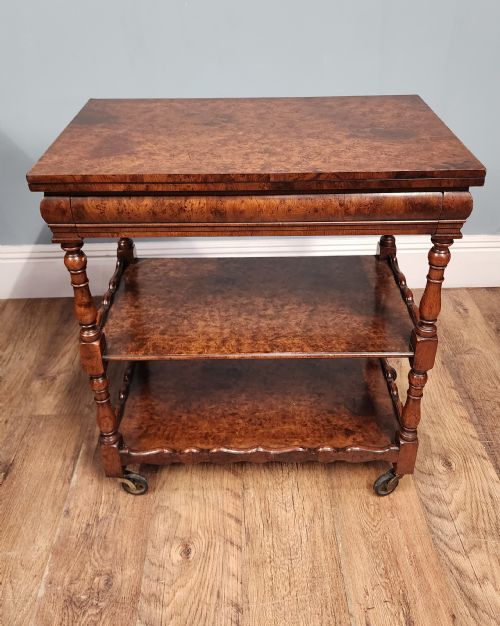
When buyers search for an antique walnut trolley, they encounter a range of mobile serving furniture spanning from the Victorian period through to the Art Deco era. The selection includes multi-tiered serving carts, dumbwaiters, and metamorphic tables designed for entertaining or display.
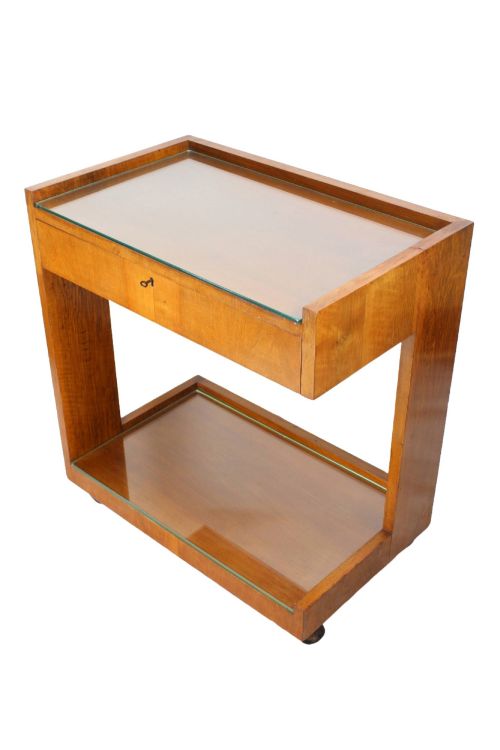
The most common versions on this page are Art Deco examples from the 1930s featuring circular tops or drop leaves, alongside 19th-century Victorian dumbwaiters and tea trolleys. These pieces utilise walnut timber, often accented with brass or glass elements.
Forms vary from simple two-tier serving carts to complex metamorphic designs that alter shape for cocktail service. Origins span English workshops of the nineteenth and twentieth centuries.
Materials and construction methods
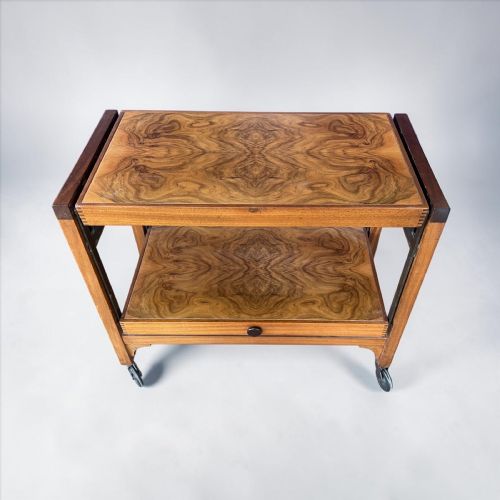
Constructed primarily from walnut and burr walnut veneer over solid timber carcases, these pieces rely on rich natural grain patterns for their visual impact. Ebonised wood details and brass fittings frequently complement the main walnut structure.
Joinery techniques range from traditional Victorian framing to Art Deco streamline laminations and mechanical folding actions. Glass inserts and metal castor wheels appear on later serving carts to facilitate movement.
Several trolleys conceal drinks inside pop-up mechanisms, ready for unexpected guests.
Distinguishing quality in walnut trolleys
Quality rests in the selection of figured burr walnut veneers and the precision of mechanical elements such as metamorphic drop leaves or telescopic tiers. Superior examples show careful grain matching across the surfaces.
The integrity of the timber framing, the original condition of brass castors, and the crispness of inlaid details separate standard production items from finer workshop pieces.
The Antique Walnut Trolley Glossary
- Dumbwaiter
- A multi-tiered piece of dining furniture used for holding food, drinks or tableware without requiring a servant. Victorian examples often feature adjustable or revolving tiers.
- Metamorphic
- A descriptive term for furniture that transforms its shape or function through mechanical hinges or pop-up mechanisms. These designs are common in 1930s cocktail carts.
- Whatnot
- An open set of shelves used for displaying ornaments, books or tea accessories. They appear in Victorian and Edwardian listings with multiple timber tiers.
- Ebonised
- Wood treated with a dark stain or finish to imitate ebony. This technique provides sharp contrast against lighter walnut sections.
Antique Walnut Trolley: Frequently Asked Questions
How do I date a walnut trolley?
Dating relies on stylistic markers such as Victorian turned supports or 1930s Art Deco streamline curves. Construction methods and materials also indicate the manufacturing period.
Examining the hardware, such as brass castors and hinges, provides further clues to the age of the piece.
What were dumbwaiters used for?
Dumbwaiters held dishes, drinks, and books within easy reach during dining or parlour gatherings. Multiple tiers allowed hosts to serve guests without constant assistance.
Victorian versions often included pivoting or adjustable shelves to suit different household needs.
Are these trolleys suitable for daily use?
Most pieces function well for serving drinks or displaying items in modern living spaces. Their original castors allow them to move across floors as intended.
Care should be taken with moisture and heat on polished walnut and veneer surfaces.
What is burr walnut?
Burr walnut comes from the distorted growth knots of the walnut tree, producing intricate, swirling grain patterns. Cabinetmakers sliced this wood into thin veneers for decorative surfaces.
It remains a defining feature of quality pieces across Victorian and Art Deco eras.