


Antique Walnut Shelves
Antique walnut shelves bring rich grain and practical tiering into a room, spanning open bookcases, wall units, and tiered whatnots.
What antique walnut shelves are
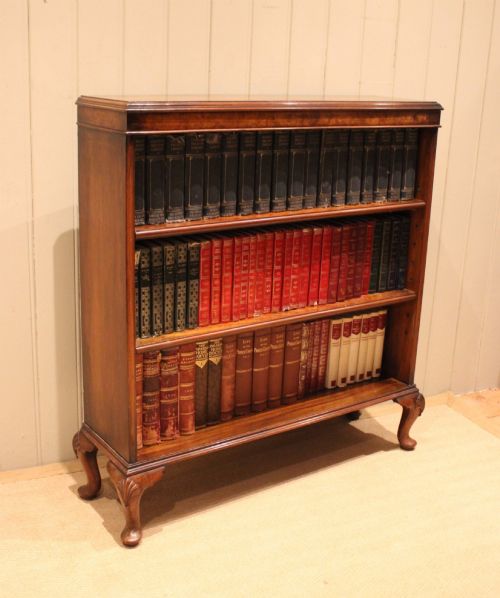
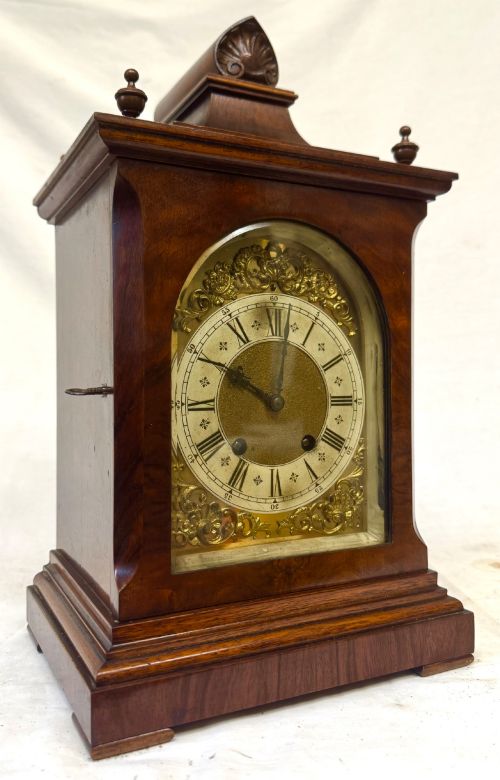
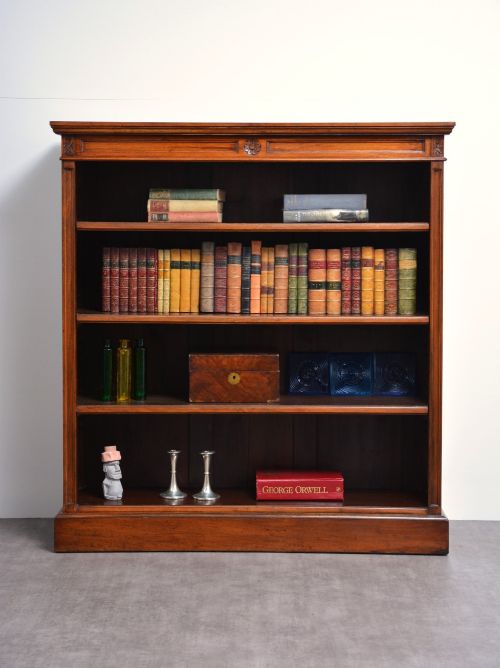
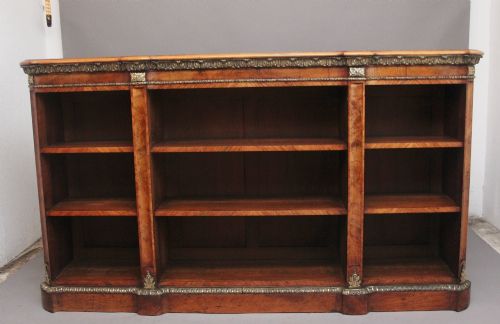
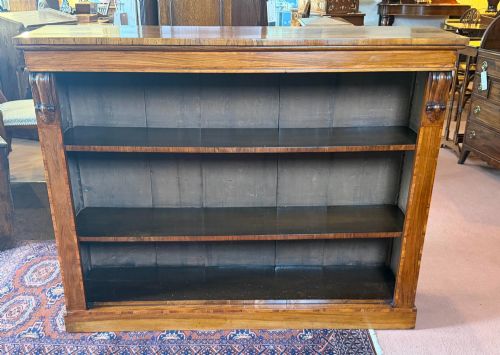
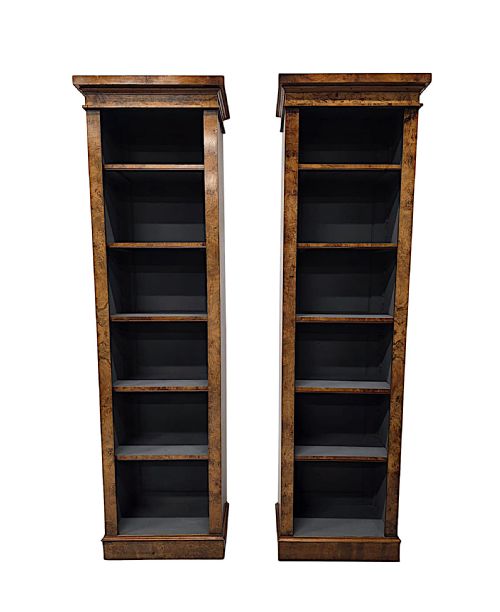
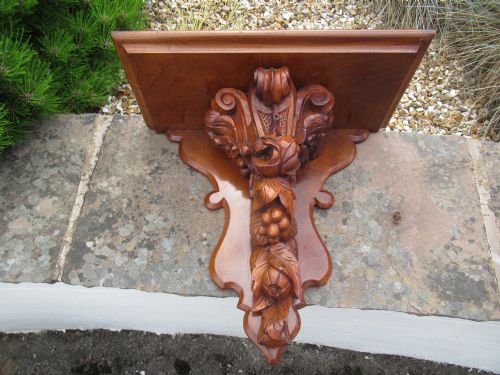
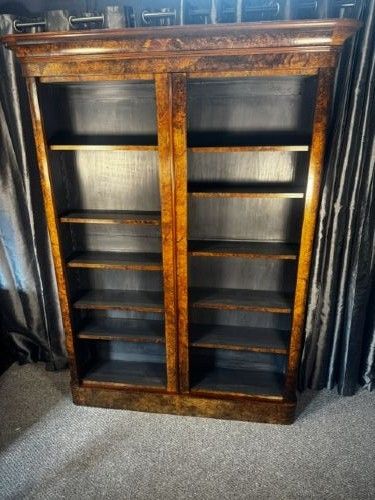
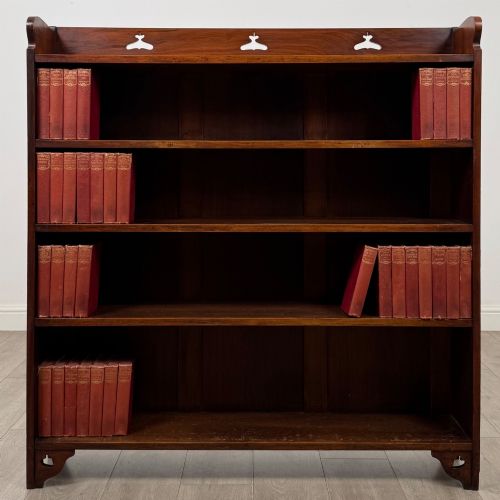
When you search for antique walnut shelves, you encounter pieces designed to hold books, display curiosities, or organise domestic spaces. These include open bookcases, wall-hung shelves, multi-tiered whatnots, and rotating revolving bookcases from the nineteenth and early twentieth centuries.
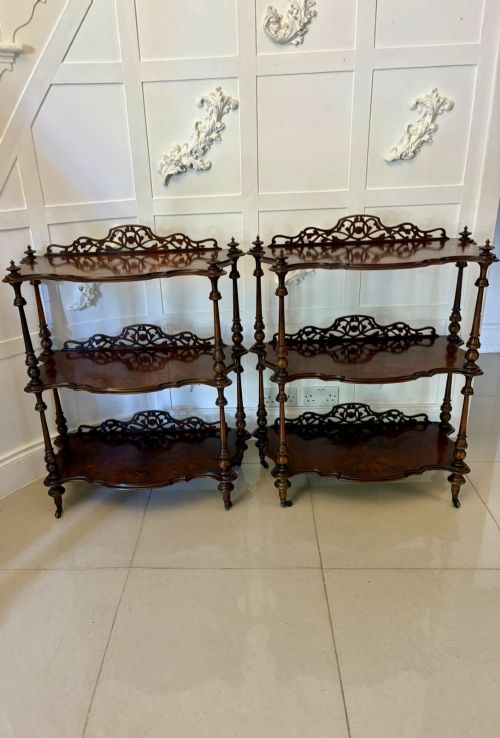
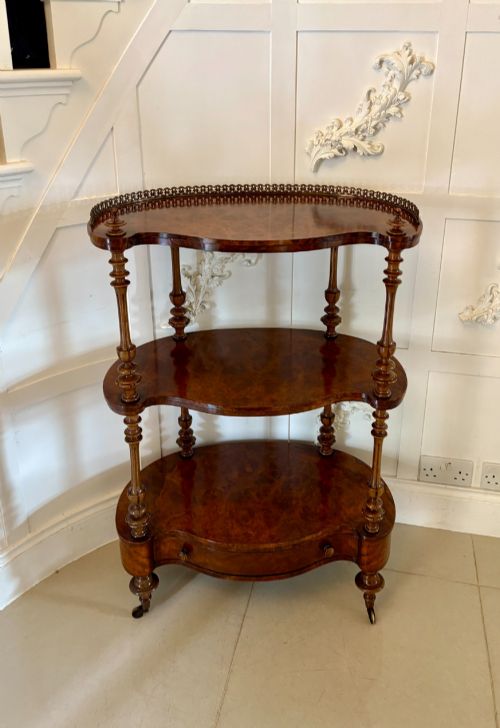
The domestic forms vary from compact Edwardian open bookcases with adjustable tiers to large scale Victorian library bookcases and serpentine shaped whatnots. Walnut veneer, solid walnut, and burr walnut dominate the construction across Victorian and Edwardian periods.
You also find specialised formats such as corner whatnots, waterfall wall shelves, and drawing room book cabinets incorporating oak, brass, and pine alongside the primary walnut timber. These pieces range from restrained Arts & Crafts designs to ornate Jacobean Revival styles with carved friezes and barley twist columns.
How they were made
Cabinet makers utilised solid timber and decorative walnut veneer applied to secondary woods such as pine and oak to achieve rich visual surfaces. Burr walnut sections were selected for their intricate, swirling grain patterns on prominent display fronts and tabletops.
Structural joints relied on traditional cabinet making methods, while metal elements like brass fixings and hinges supported adjustable shelf mechanisms and rotating mechanisms on revolving bookcases. Carved friezes, inlaid details, and turned columns such as barley twists were worked by hand to ornament the uprights and cornices.
Retail Price Guide 2026
Typical UK retail prices for walnut shelves, calculated from the Sellingantiques database of over a million retail prices indexed since 2003. This retail price guide relies exclusively on Sellingantiques data; no external sources or auction records are used, so the figures do not describe the wider market.
Listings feature walnut, burr walnut, brass, and pine across Victorian, Edwardian, and Arts & Crafts styles.
What varies in quality
The visual appeal of the timber grain marks the division between standard examples and exceptional items, particularly in the choice of figured and burr walnut veneers. Master cabinet makers selected veneers for symmetrical flow and book-matched patterns across larger surfaces like bookcase backs and display tiers.
Proportion and architectural detailing dictate the standing of a piece within the range. Refined execution shows in crisp hand-carved friezes, smoothly operating adjustable shelf racks, and well-balanced serpentine or multi-tier structures that maintain stability without heavy bracing.
The Antique Walnut Shelves Glossary
- Whatnot
- A piece of freestanding furniture consisting of multiple open shelves supported by pillars or columns, used for displaying ornaments and books. Victorian examples often feature tiered or corner formats.
- Waterfall shelves
- Wall-hung or standing shelves where each successive tier is deeper than the one above it, creating a stepped profile. This style gained popularity during the nineteenth century.
- Frieze
- The decorative horizontal band running along the upper section of a bookcase or cabinet, often carved or inlaid. On walnut furniture, it provides a focal point beneath the cornice.
- Barley twist
- A turned wooden column or spindle carved in a spiral shape resembling a twisted barley sugar stick. This decorative motif appears frequently on Victorian revival furniture.
Frequently Asked Questions
How do I adjust the shelves?
Many nineteenth and early twentieth century bookcases use wooden ratchets or metal pins slotted into vertical tracks inside the cabinet sides. You simply lift the shelf to clear the supports and reposition the pins at your preferred height.
Older mechanisms can stick due to seasonal wood movement, so ease them gently rather than forcing the timber. Once adjusted, ensure the shelf rests evenly on all four supports to maintain stability.
Are these strong enough for heavy books?
Solid walnut and well-constructed veneered bookcases handle standard book collections reliably, particularly designs featuring adjustable solid timber shelves. Large open libraries and library bookcases from the Victorian period were engineered specifically for heavy volumes.
Lighter pieces like wall-hung waterfall shelves and delicate corner whatnots suit lighter ornaments and paperbacks rather than dense sets of encyclopaedias. Check the thickness of the shelf timber and the integrity of the wall fixings before loading wall-mounted tiers.
How do I tell Victorian from Edwardian pieces?
Victorian walnut shelves, dating from roughly the mid to late nineteenth century, often display darker finishes, heavier proportions, and ornate details like carved friezes, inlaid panels, and barley twist columns. They include grand library bookcases and elaborate serpentine whatnots.
Edwardian pieces from the early twentieth century typically present lighter tones, simpler lines, and more restrained Arts & Crafts influences. They focus on practical utility with adjustable shelving and cleaner, less cluttered profiles.
Can I place walnut shelves in direct sunlight?
Walnut is sensitive to ultraviolet light and can bleach or lose its deep, rich brown colour over time when exposed to direct sun. Positioning your shelves away from south-facing windows preserves the natural grain and finish.
If natural light cannot be avoided, consider using window treatments or rotating the items displayed on the shelves periodically to prevent uneven fading across the timber surface.