
Carved Wood Bookshelf
A carved wood bookshelf brings practical storage and architectural warmth to a room through traditional timber construction and period detail.
Carved Wood Bookshelf
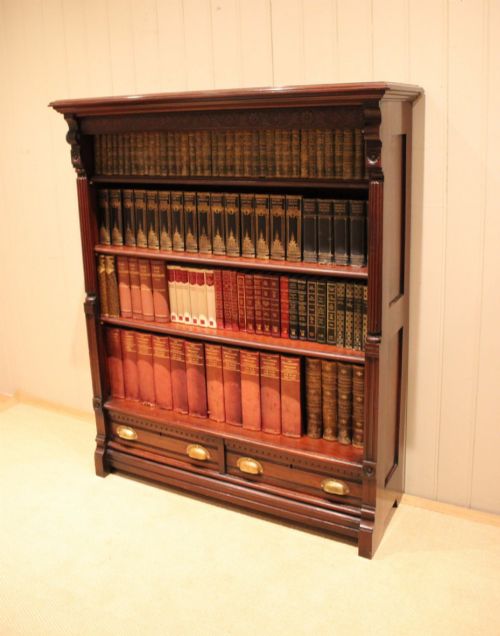
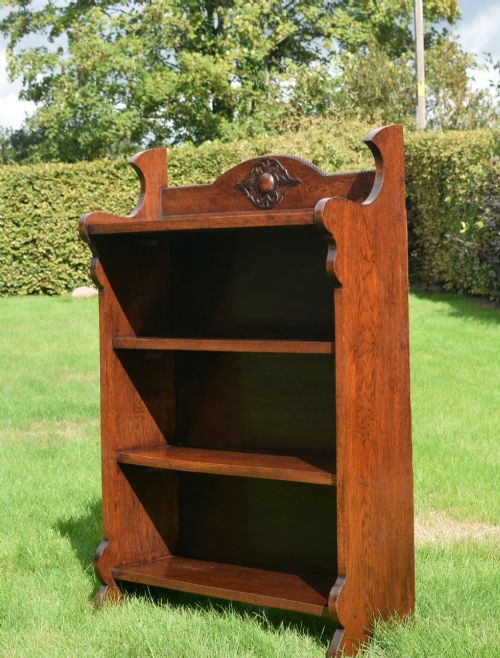
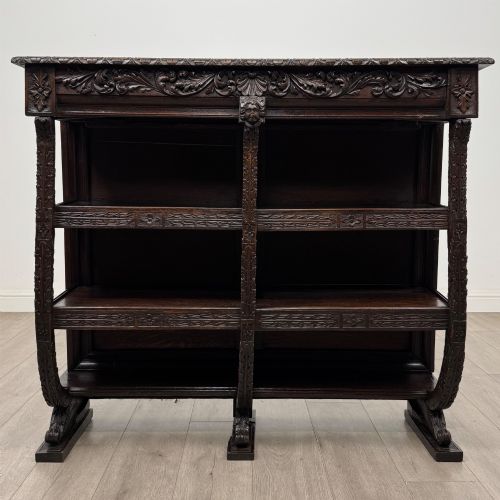
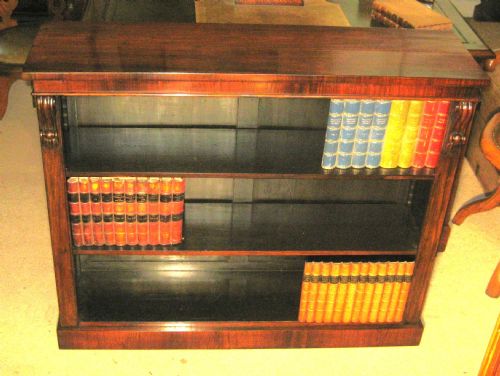
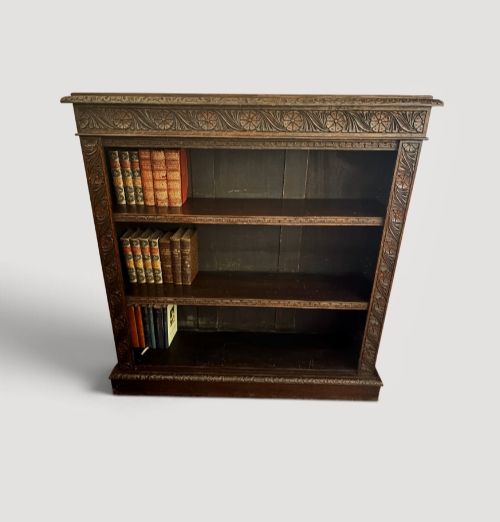
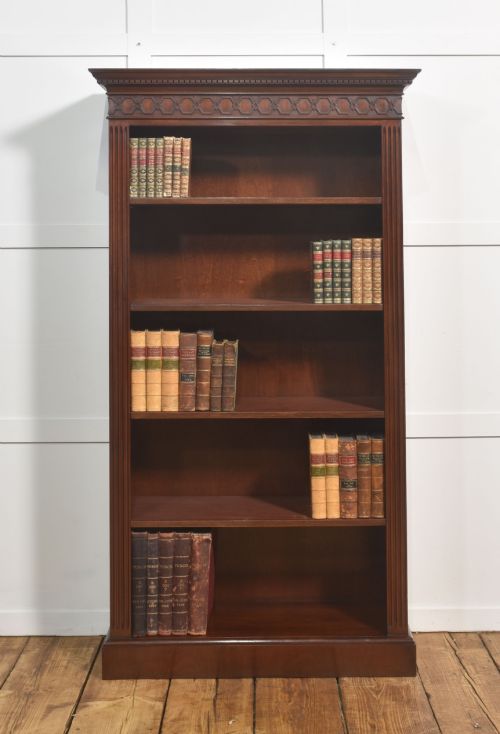
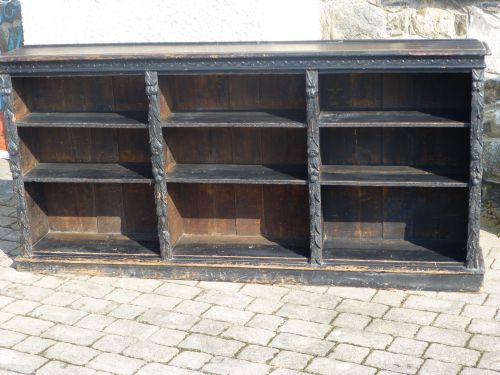
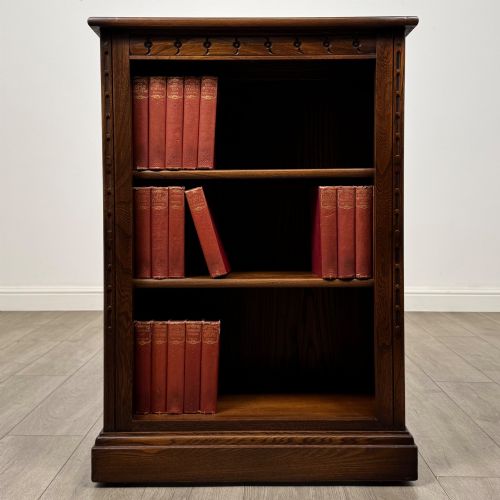
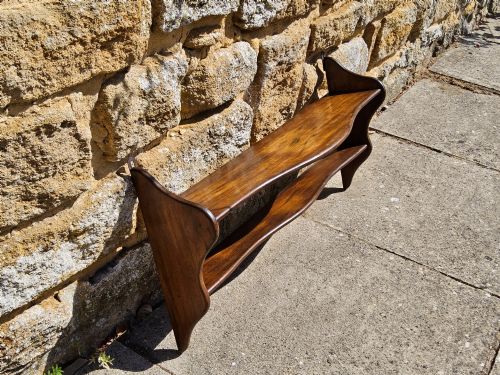
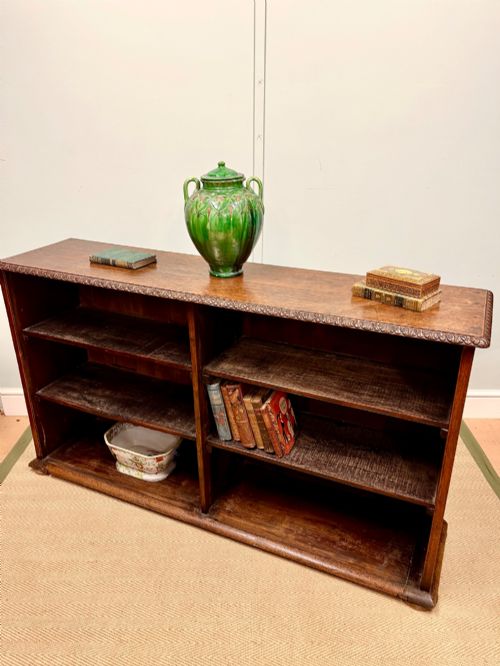
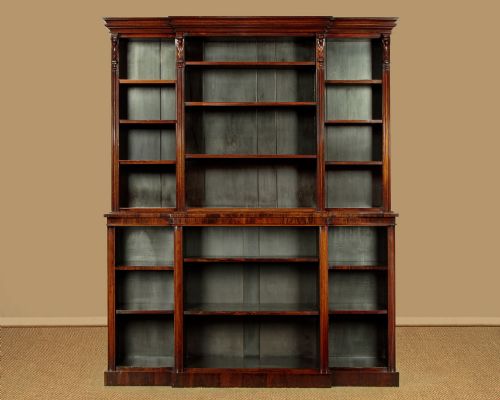
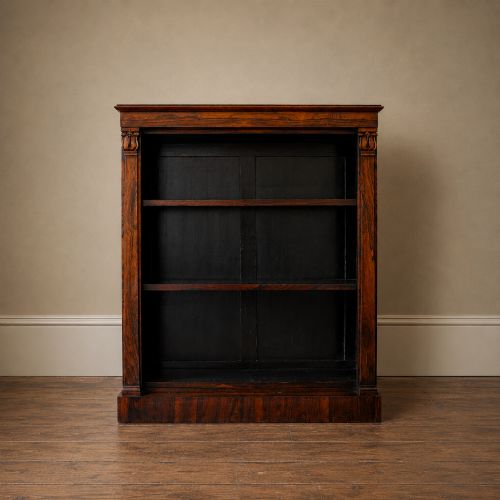
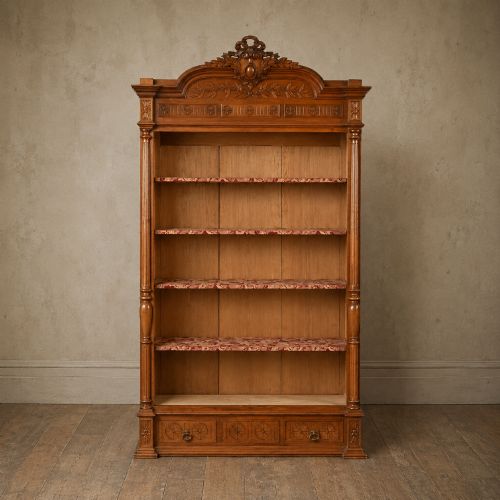
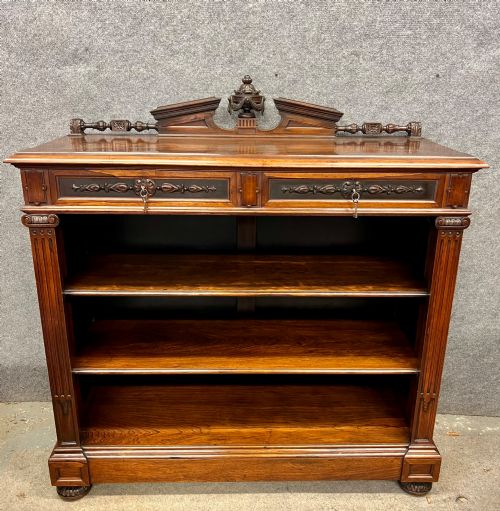
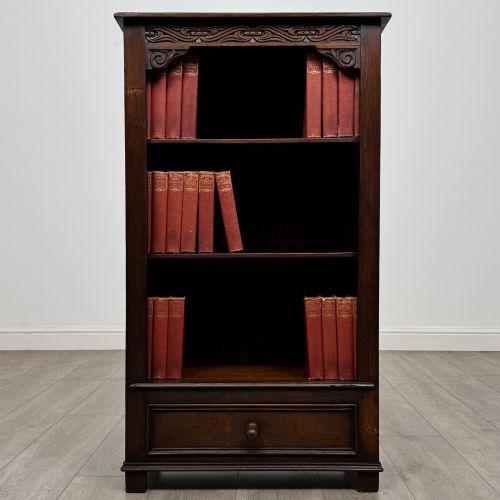
A carved wood bookshelf serves as a functional display for volumes while adding architectural presence to a room. When you search for a carved wood bookshelf, you encounter pieces spanning the nineteenth century and early twentieth century, alongside Regency and Edwardian examples. These items appear in forms such as open bookcases, wall shelves, and whatnots.
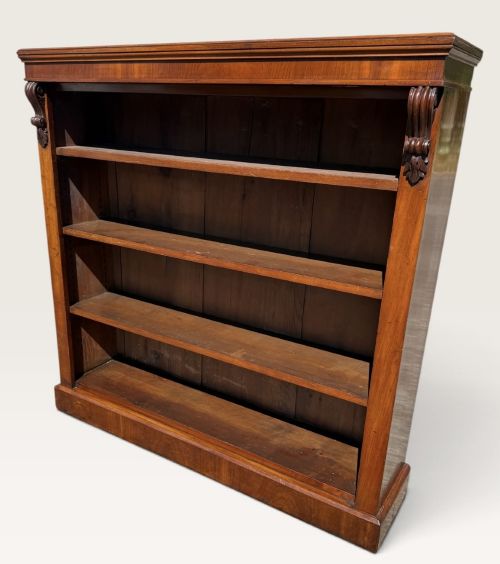
The most common formats on this page are Victorian and Edwardian open bookcases made from mahogany or oak. Many feature adjustable shelves, low dwarf profiles, or decorative carvings like the green man motif. Regional variations also bring teak, satin birch, and burr walnut into the selection alongside standard timbers.
What varies in quality
The standard of timber selection and complexity of carving dictate the tier of a piece. Finer examples display carefully matched grain patterns, dense hardwoods, and deeply carved corbels or figural elements rather than plain surface mouldings.
Construction methods also separate utilitarian items from exhibition pieces. Superior execution shows in robust joinery, well-fitted adjustable shelving systems, and refined brass or ormolu hardware that remains intact over generations.
Millinery hat blocks occasionally share shelf space with antique bookcases.
The Carved Wood Bookshelf Glossary
- Breakfront
- A piece of furniture where the central section projects forward from the flanking sides. This layout adds visual depth to larger library bookcases.
- Whatnot
- A set of open shelves supported by slender pillars, traditionally used for displaying ornaments or books. These freestanding units date frequently to the Victorian era.
- Green Man
- A sculptural architectural ornament depicting a human face entwined with foliage. It appears frequently on carved oak Victorian bookcases.
- Dwarf bookcase
- A low open bookcase designed to sit beneath window height. These compact pieces often feature adjustable shelving.
- Corbel
- A structural bracket projecting from a wall to support a weight above. On bookcases, these frequently take carved scroll or leaf forms.
Carved Wood Bookshelf: Frequently Asked Questions
What periods do these bookcases cover?
The selection spans the Regency, Victorian, and Edwardian eras, stretching from the early nineteenth century into the 1930s.
Most items date from the Victorian period, reflecting mainstream domestic production in oak, mahogany, and walnut.
Are the shelves adjustable?
Many of the open bookcases include adjustable shelving systems supported by wooden ratchets or brass tracks.
This adaptability allows the storage of varied book heights within a single unit.
What woods were commonly used?
Makers relied heavily on mahogany, oak, rosewood, and walnut as primary cabinet timbers. Burr walnut and satin birch also appear on decorative pieces.
Pine and secondary softwoods are typically found in concealed structural elements.
How do I identify a whatnot?
A whatnot is a multi-tiered set of open shelves used historically for books and display items. They are generally lighter in construction than standard bookcases.
Examples on this page include freestanding Victorian burr walnut models.