
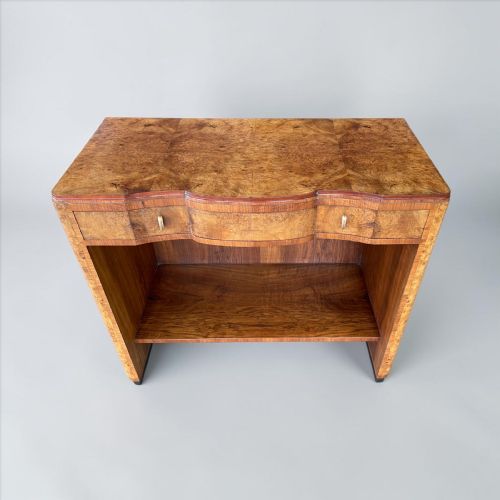
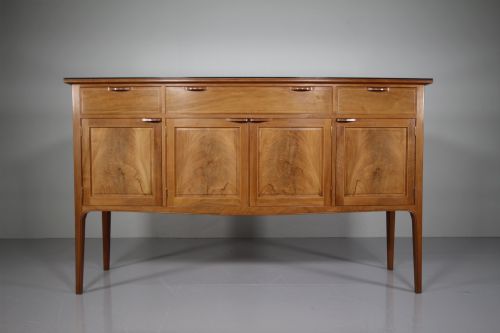
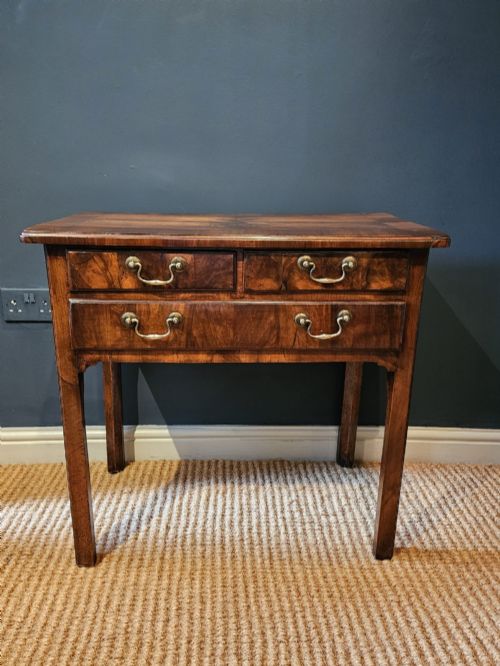
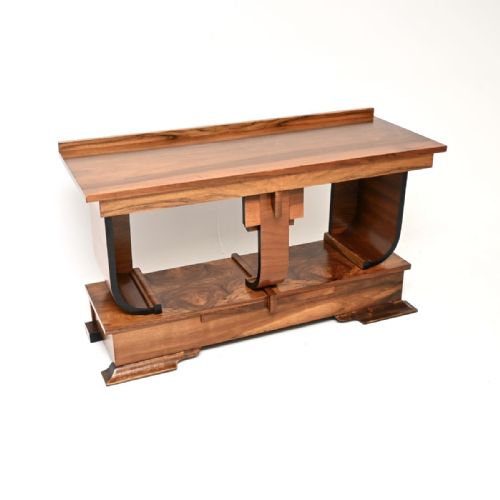
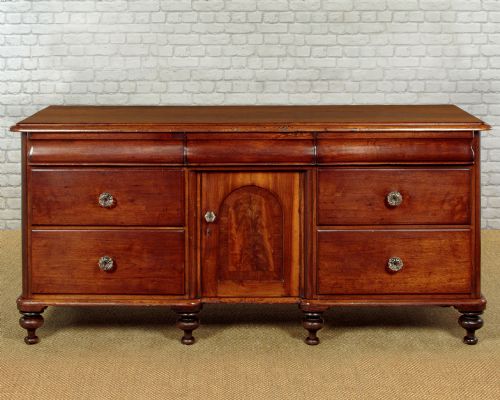
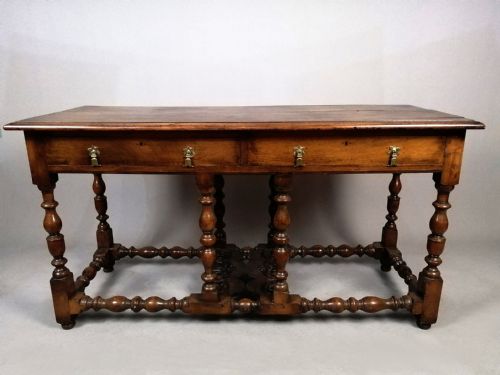

Antique Walnut Server Table
These antique walnut server table pieces bring rich grain and centuries of craftsmanship to a dining room or hallway.
Identifying an antique walnut server table
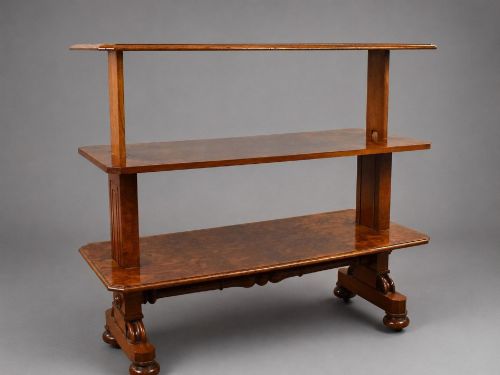
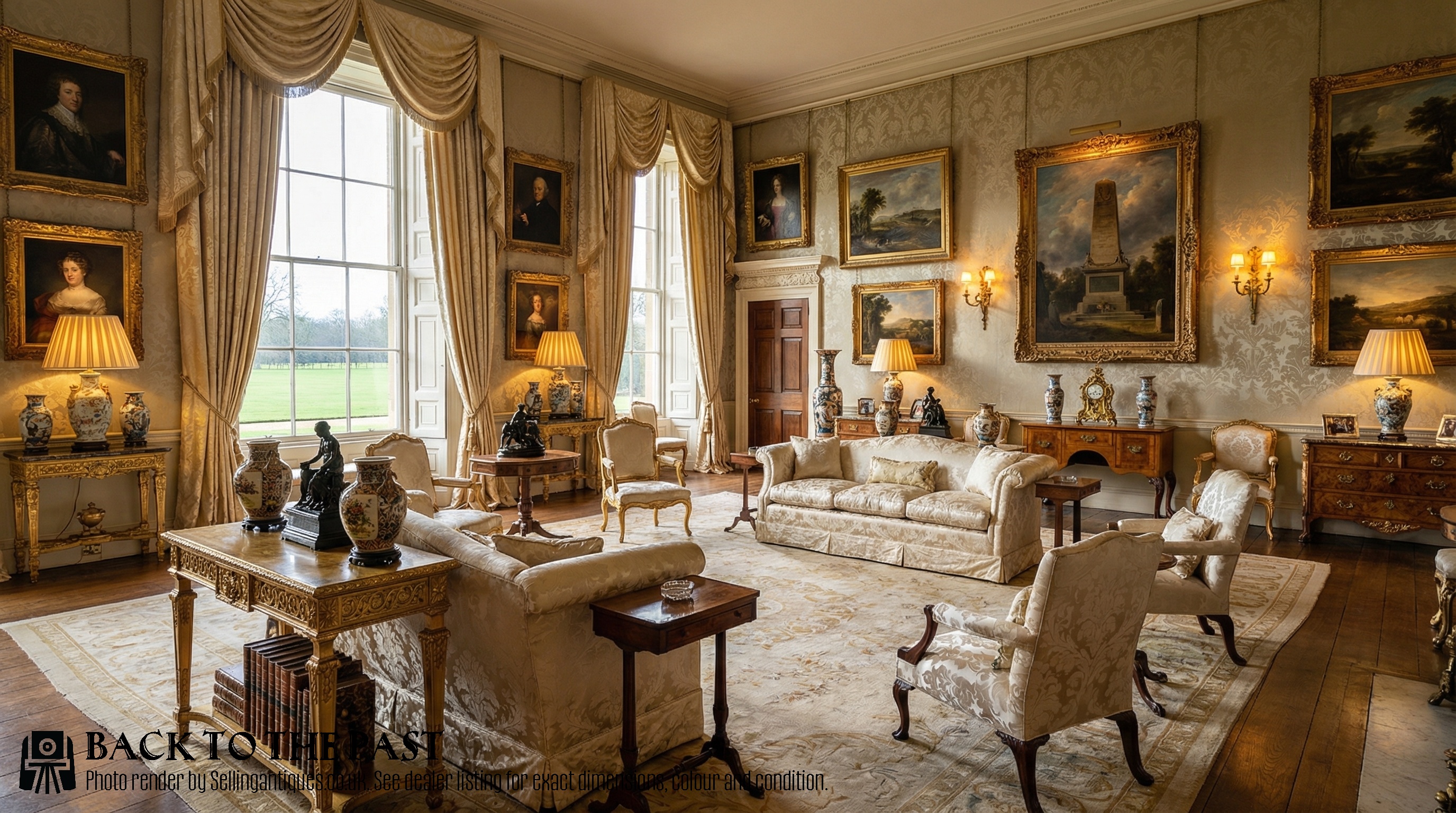
An antique walnut server table serves as a functional surface for dining rooms, hallways, and living spaces, drawing on forms from the eighteenth century onwards. Buyers searching this category encounter lowboys, console tables, and tiered buffets built to hold objects or assist with serving meals.
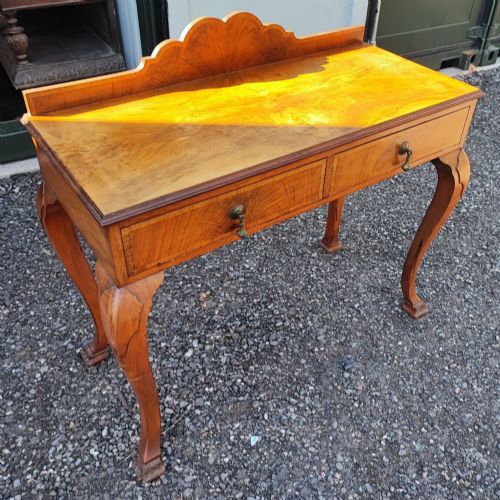
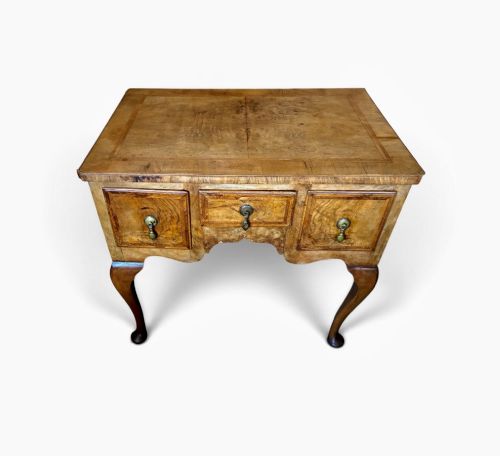
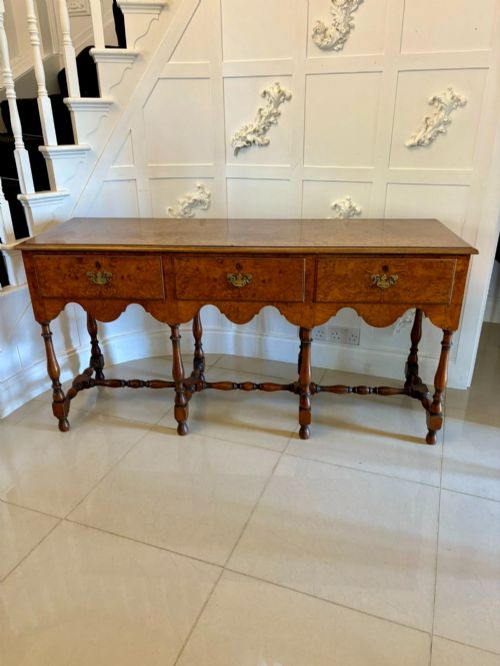
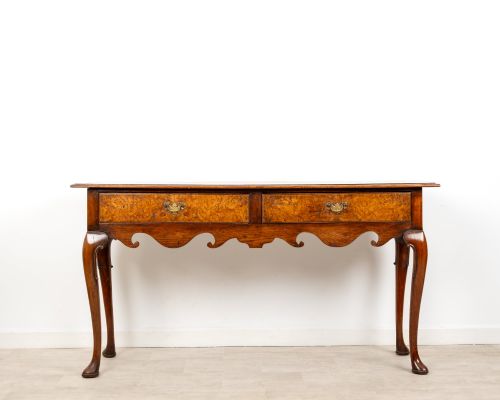
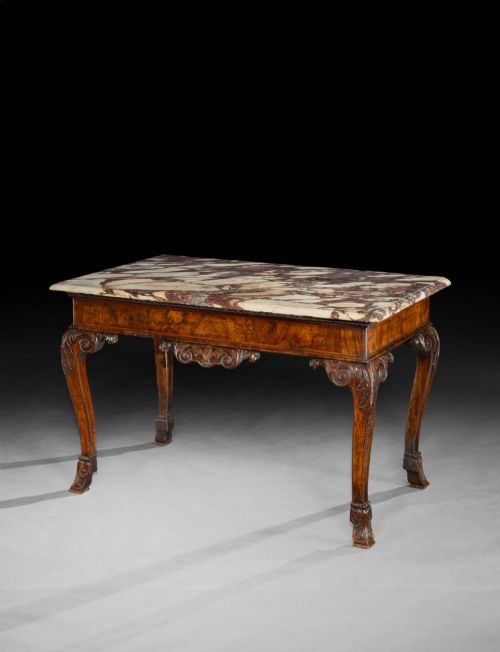
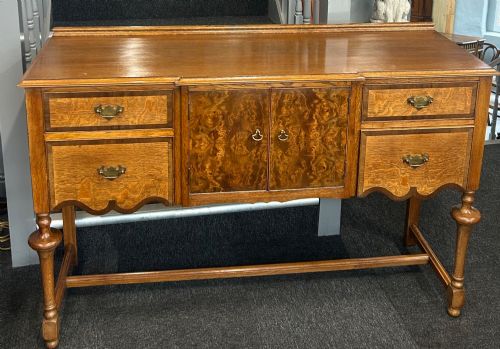
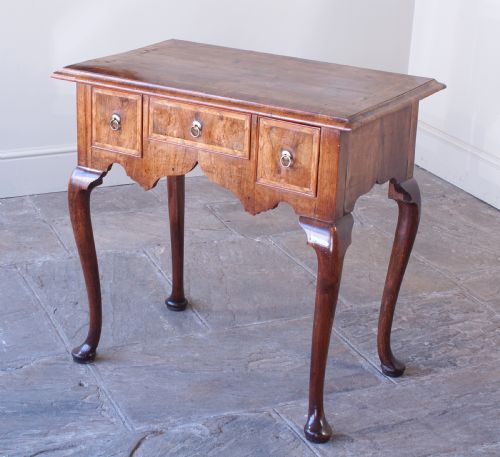
The pieces appearing on this page span the Georgian period, the Edwardian era, and the nineteen-twenties, incorporating styles such as Queen Anne, William and Mary, and Chippendale. Lowboys with single or multiple drawers represent a frequent form, alongside console tables and larger buffet servers.
Origins include domestic British cabinet-making traditions alongside occasional continental interpretations like French style designs. These tables range from austere early eighteenth-century examples to decorative burr walnut revival pieces produced in the twentieth century.
Materials and construction methods
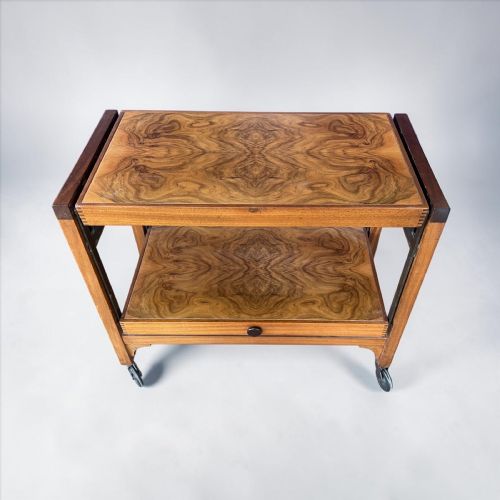
Makers built these tables using solid walnut and structural oak for internal framing, applying rich veneers of burr walnut to primary surfaces to showcase intricate grain patterns. Brass hardware, including drop handles and escutcheons, provides functional contrast to the dark timber.
Cabinet-makers employed traditional joinery techniques, such as dovetailed drawer construction and tenoned frames, to build durable furniture. Surfaces received hand-applied polish or wax finishes that deepened the natural colour and protected the wood over generations of use.
Retail Price Guide 2026
Typical UK retail prices for walnut server table, calculated from the Sellingantiques database of over a million retail prices indexed since 2003. This retail price guide relies exclusively on Sellingantiques data; no external sources or auction records are used, so the figures do not describe the wider market.
Listings feature walnut, burr walnut veneer, oak, and brass across periods spanning the eighteenth century to nineteen-twenty.
Distinctions in quality
Quality rests upon the selection and matching of timber veneers, where symmetrical burr walnut figures display superior visual depth compared to plain planks. The crispness of carved details, such as cabriole legs and shell motifs, indicates the hand of a skilled maker.
Structural integrity and the survival of original brass handles and secondary woods elevate a piece above altered examples. The balance of proportions and the subtlety of patination acquired through age distinguish finer workshop production from standard utility items.
Hille London·Eadon and Son Sheffield
The Antique Walnut Server Table Glossary
- Lowboy
- A small eighteenth-century dressing or side table featuring drawers beneath a flat top, typically raised on slender cabriole or tapered legs. This form appears frequently among early walnut examples.
- Cabriole leg
- A furniture leg that curves outward at the knee and tapers inward toward the foot, often ending in a pad or claw and ball. This shape defines the Queen Anne and Georgian styles.
- Dovetail
- A joint formed by interlocking wedge-shaped fingers, used primarily in drawer construction to secure corners against pulling forces. Fine historical pieces show tight, hand-cut dovetails.
- Console table
- A table designed to stand against a wall, sometimes supported by brackets or legs at the front only. These pieces function as decorative serving surfaces in dining and reception rooms.
Frequently Asked Questions
What is an antique walnut server table used for?
These tables served as functional furniture for dining rooms and hallways, holding dishes, serving utensils, or decorative items. Their surface area and drawer space made them adaptable for storing household goods.
Today, buyers utilise them as sideboards, hall tables, or desk surfaces in domestic interiors. They combine practical utility with decorative presence.
How do I date an antique walnut server table?
Dating relies on examining construction methods, timber choices, and stylistic details such as leg shapes and hardware. Eighteenth-century pieces typically show hand-cut joinery and solid timber or early veneers, while twentieth-century revivals display different internal framing.
Comparing the style against known periods like Georgian or Edwardian helps narrow the timeline. Secondary woods inside drawers also provide clues to the period of manufacture.
What is the difference between a lowboy and a server table?
A lowboy is a compact table with one or more rows of drawers beneath the top, originally intended for personal grooming or as a small side table. A server table generally offers a larger surface for dining room use and may include multiple tiers.
Despite distinct historical functions, the terms overlap in marketplace descriptions because both forms served utility roles in reception rooms.
How do I care for walnut furniture?
Protect antique walnut by keeping it away from direct sunlight and heat sources that can dry out the timber and crack veneers. Regular dusting with a soft cloth maintains the surface.
Applying microcrystalline wax occasionally helps nourish the polish without building up residue. Avoid commercial silicone sprays which damage historic finishes.