
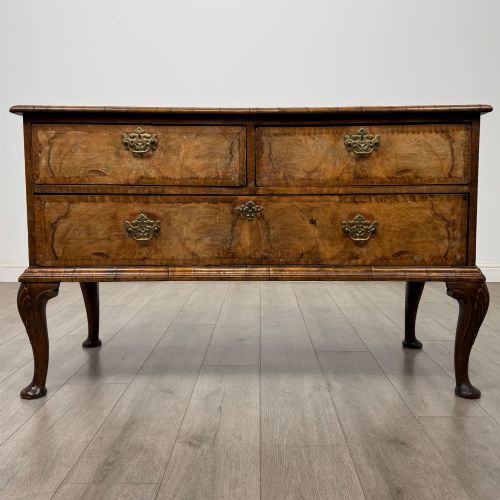
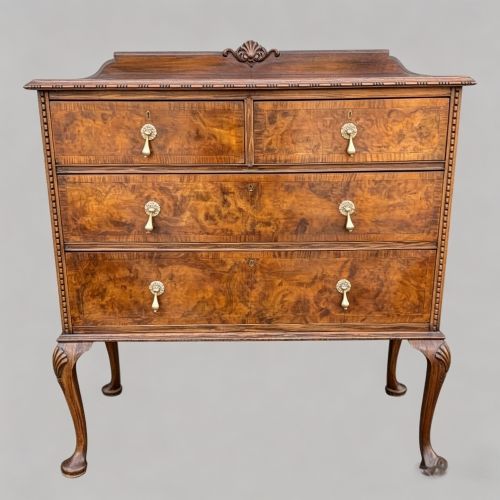
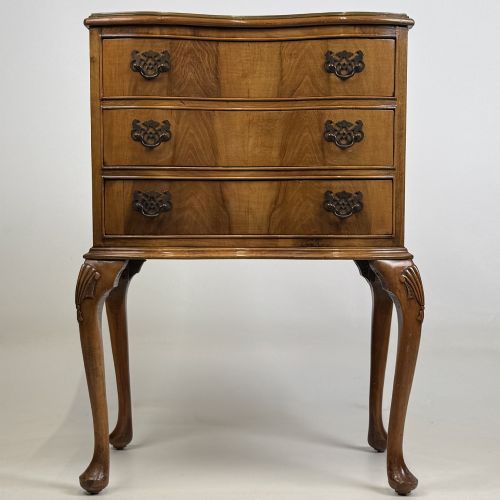
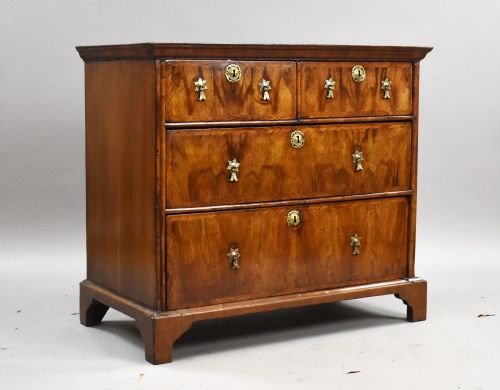


Antique Walnut Lowboy Chest
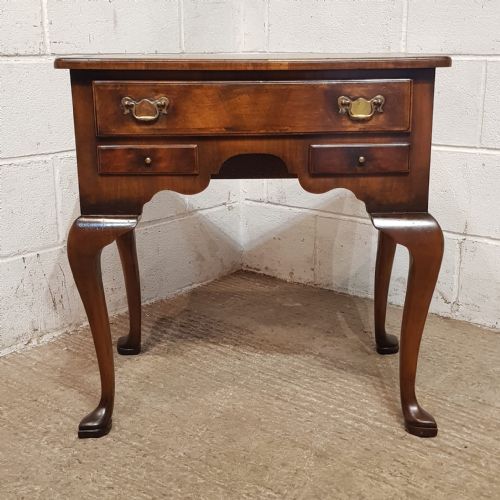
An antique walnut lowboy chest is a low-slung table with drawers, combining timber warmth and practical storage that buyers seek for compact living spaces.
Antique Walnut Lowboy Chest
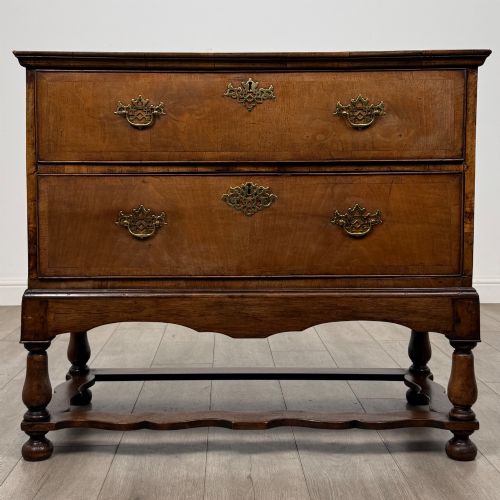
The antique walnut lowboy chest bridges the gap between a side table and a chest of drawers, offering a low surface with deep storage beneath. Pieces span periods from the eighteenth century through to later revivals in the nineteenth and twentieth centuries.
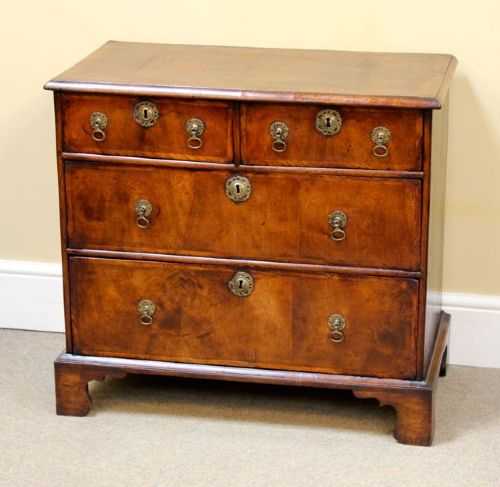
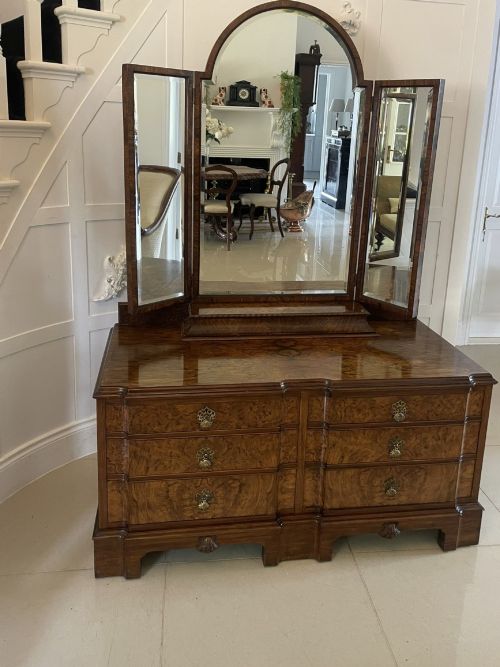
Most examples found on this page adopt styles such as Queen Anne or George II, alongside revival pieces from the Edwardian era and the nineteen-twenties. Forms range from dedicated lowboys and dressing tables to chest bases and side cabinets.
Origins stretch across English country house workshops and American iterations from the mid-eighteenth century. Buyers will frequently encounter walnut and burr walnut timbers shaped into compact proportions suited for hallways and bedrooms.
How they were made
Cabinetmakers utilised primary timbers of walnut and burr walnut veneer, complemented by secondary woods like oak, pine, and fruitwood within internal drawer structures. The choice of burr walnut provided intricate figuring across top surfaces and drawer fronts.
Hardware played a functional and decorative role, with brass drop handles and escutcheons fitted to secure drawers. Construction relied on traditional joinery methods to frame solid timber panels and support standing legs.
Cabinetmakers occasionally matched burr walnut veneers across drawer fronts like a deck of cards, creating symmetrical patterns that amuse close observers.
What varies in quality
The distinction between tiers of quality rests on the choice of veneer and the preservation of original timber surfaces. Highly figured burr walnut displays an even, complex grain pattern across the primary planes without heavy restoration.
Proportion and structural integrity define the better examples, where legs, friezes, and drawer linings remain cohesive to the period of origin. Finer pieces demonstrate precise joinery and matching timber selections across all visible facades.
Shoolbred and Co
The Antique Walnut Lowboy Chest Glossary
- Lowboy
- A small table with one or more rows of drawers, standing on relatively tall legs. This form originated in the late seventeenth century and served various domestic functions.
- Burr Walnut
- A specialised wood cut from the burl growth of a walnut tree, yielding swirling grain patterns. Cabinetmakers prized this veneer for decorative front panels.
- Queen Anne Style
- A design movement characterised by cabriole legs, pad feet, and graceful curved lines. Furniture from this design ethos emphasises comfort and domestic scale.
- Dressing Table
- A low table fitted with drawers, historically used for personal grooming. Many examples include compartments or mirrors integrated into the upper surface.
- Chest Base
- The lower section of a larger chest on stand or chest on chest. These remnants function independently as low drawer units.
Antique Walnut Lowboy Chest: Frequently Asked Questions
What is a lowboy chest used for?
These pieces functioned historically as dressing tables or side tables for private chambers. Today they serve equally well as hallway consoles or compact drawer units.
The shallow proportions allow them to fit into narrow spaces where standard chests would obstruct movement.
How do I date a walnut lowboy?
Dating relies on examining construction methods, timber choice, and hardware styles. Eighteenth-century examples often show hand-cut dovetails and solid fruitwood or oak linings.
Later revival pieces from the Edwardian period or nineteen-twenties adopt earlier design vocabularies while revealing twentieth-century manufacturing signatures.
Are these pieces made of solid walnut?
Many examples utilise walnut or burr walnut veneers applied over secondary woods like pine or oak. This technique prevented warping while displaying decorative grain patterns on the exterior.
Solid wood variants do exist, particularly in regional pieces and specific periods like the George II era.
Where should I place a lowboy in my home?
The compact footprint makes these tables suited for entryways, living rooms, or bedrooms as alternative storage surfaces. Their finished backs and sides often allow placement away from walls.
Pairing them with a mirror creates a functional dressing area without occupying excessive floor space.