
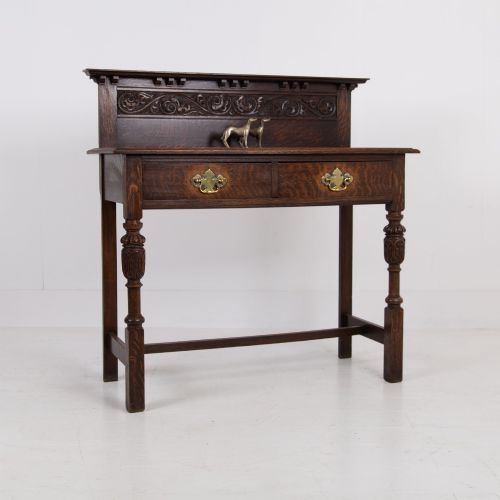
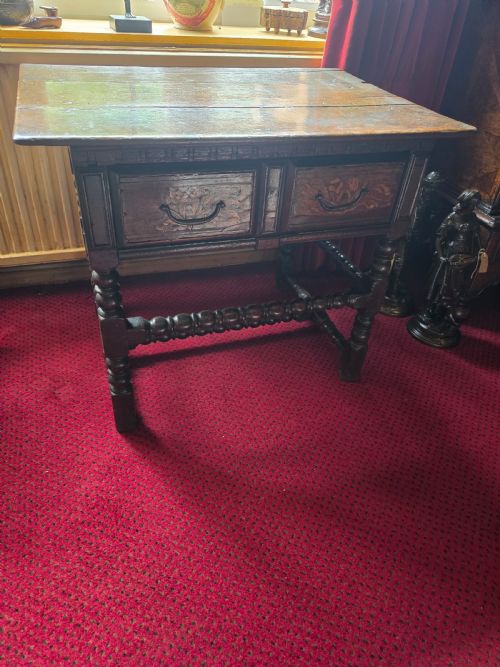
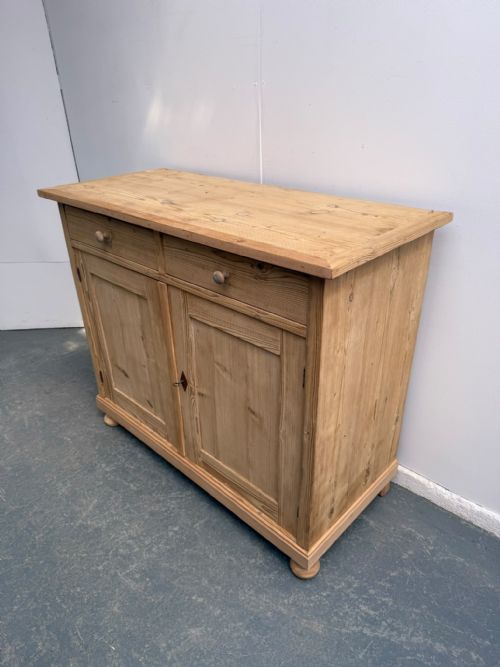
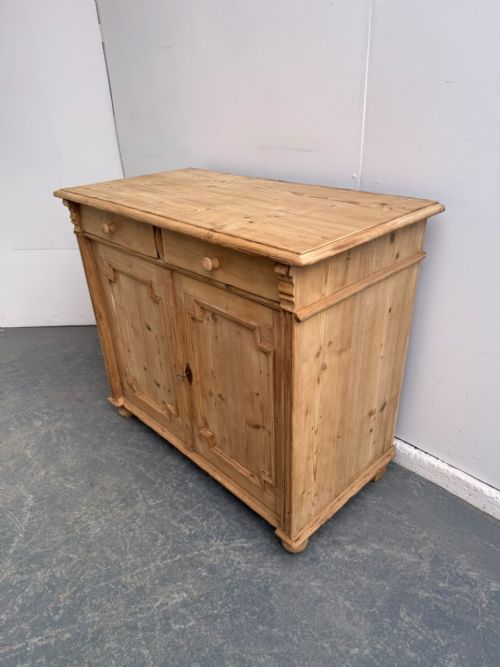
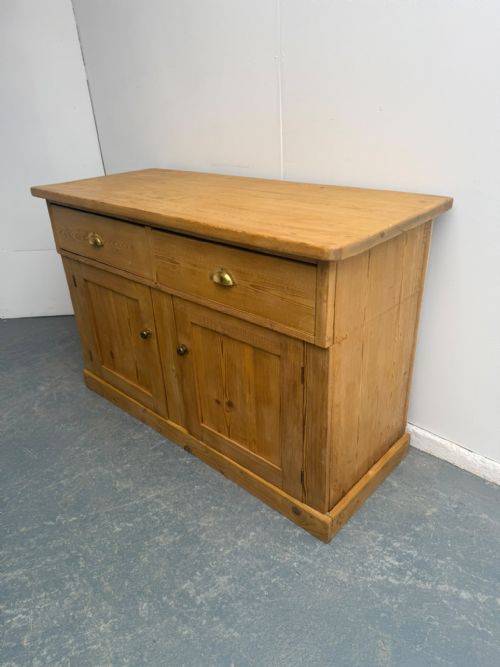


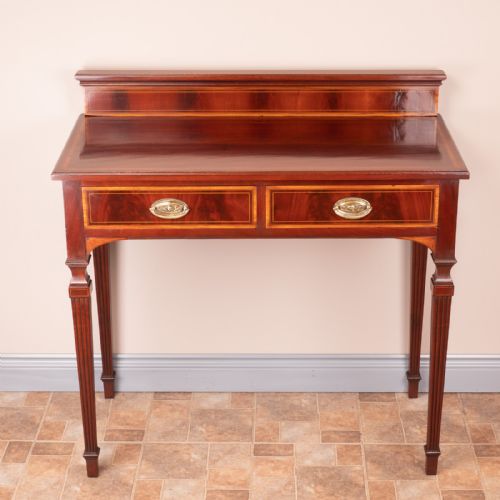

Antique 2 Drawer Server
An antique 2 drawer server provides a sturdy surface and storage, and you will most often find these pieces made in oak from the eighteenth century.
Antique 2 Drawer Server
When you search for an antique 2 drawer server, you encounter low tables, lowboys, and dresser bases designed for storage and serving. These pieces function as side tables, sideboards, and consoles across various historical periods.
The version you are most likely to meet on this page is an oak dresser base or side table dating from the eighteenth century or the Georgian period. Such examples often feature practical drawer space alongside a lower shelf or potboard.
Makers constructed these servers in multiple regional styles, including English country, Jacobean Revival, and Edwardian interpretations. Pieces range from utilitarian painted pine to refined walnut and mahogany forms.
Materials and construction
Carpenters relied heavily on solid oak for eighteenth-century dresser bases and side tables, utilising its strength for daily domestic tasks. Workshops also employed mahogany, walnut, and pitch pine, particularly in later nineteenth-century and Edwardian examples.
Construction techniques involve traditional joinery, with timber boards secured for tops and drawer fronts. Cabinetmakers added brass handles, iron hardware, and occasional carved detailing, while some provincial pieces received a painted finish.
Listings feature servers spanning from the eighteenth century through the Edwardian period, constructed in oak, mahogany, walnut, and pine.
What separates the fine from the plain
Quality in these servers rests upon the selection of timber, such as figured burr walnut or dense eighteenth-century oak, compared against simpler pine or later commercial stock. The choice of materials dictates the overall presence of the piece.
The crispness of hand-carved ornamentation and the retention of original brass or iron hardware distinguish superior examples from standard utility furniture. Proportion and the integrity of the timber frame further define the upper tier of the range.
Whytock and Reid·Beresford and Hicks London
The Antique 2 Drawer Server Glossary
- Dresser base
- A low wooden storage unit with drawers, originally used in kitchens or dining rooms for food preparation and serving. These forms frequently double as sideboards.
- Lowboy
- A small seventeenth or eighteenth-century dressing or side table featuring a low set of drawers beneath the top surface. They typically stand on slender cabriole or straight legs.
- Potboard
- An open slatted lower shelf built into the base of a dresser or sideboard. Historically, households placed heavy pots and ceramic vessels upon this board.
- Cabriole leg
- A furniture leg that curves out in a convex arc and then bends inward in a concave arc, ending in a pad or foot. This form became popular during the Georgian period.
- Jacobean Revival
- A nineteenth and early twentieth-century design style that copies the heavier, carved oak characteristics of the early seventeenth century. Furniture in this style often displays deep geometric moulding.
Antique 2 Drawer Server: Frequently Asked Questions
What is an antique 2 drawer server used for?
These pieces function as sideboards, serving tables, and console tables in dining rooms or hallways. The two drawers provide practical storage for small household items while the surface holds objects.
Historically, similar tables stood in kitchens and dining spaces to assist with food preparation and the service of meals. Today, they serve equally well as hallway tables or living room consoles.
How do I date an oak server?
Dating relies upon timber characteristics, construction methods, and hardware styles. Eighteenth-century pieces typically show hand-planed surfaces and pegged joints, whereas twentieth-century revivals utilise more uniform machine sawn timber.
Stylistic cues such as cabriole legs, brass drop handles, and carved oak detailing also point to specific periods like the Georgian era or the Edwardian years.
Where should I place a server at home?
A server suits dining rooms for holding dishes, or hallways as a narrow entry table. Their compact depth allows them to fit along passage walls without obstructing movement.
Pairing the table with a mirror or hanging art above creates a functional focal point in a living space or bedroom.
What is the difference between a lowboy and a server?
A lowboy is traditionally a compact side table with low drawers, often originating in the eighteenth century. Servers and dresser bases can be longer and incorporate potboards or cupboards.
Both categories overlap in modern descriptions, but lowboys generally present a more diminutive, table-like proportion.
Are painted pine servers authentic antiques?
Painted pine dairy tables and kitchen servers date back to the nineteenth century and earlier, reflecting regional vernacular utility. Many received painted finishes during their working life or in country settings.
Such pieces offer a distinct decorative character compared to polished hardwood mahogany or oak furniture.