


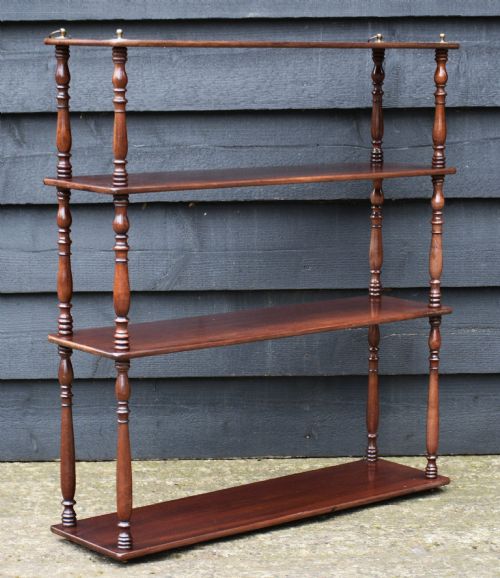
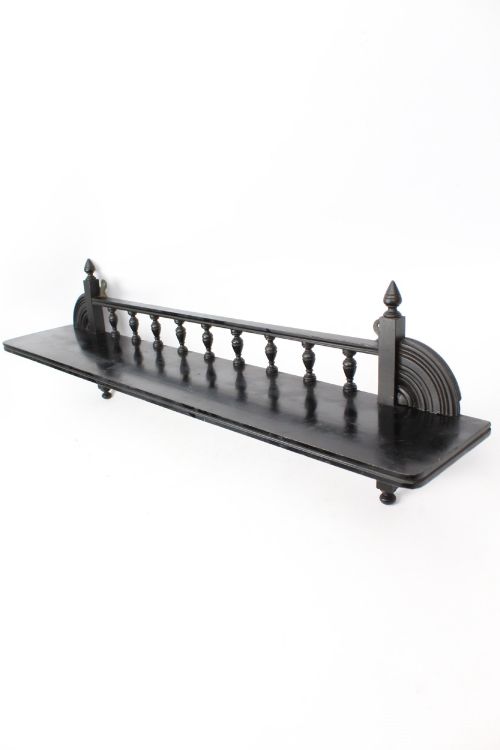
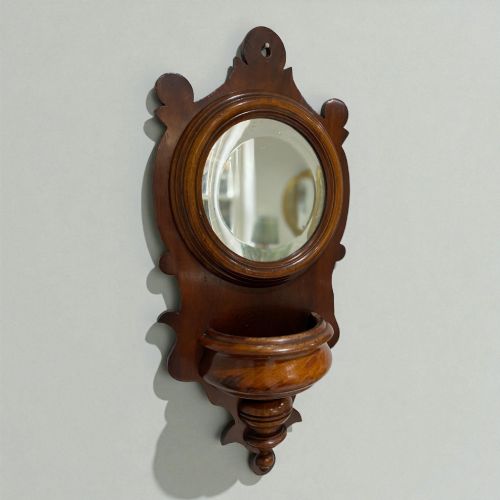
Antique Wall Hanging Shelf
An antique wall hanging shelf brings vertical storage and display to a room, using timber to lift ceramics and books clear of the floor.
Antique Wall Hanging Shelf
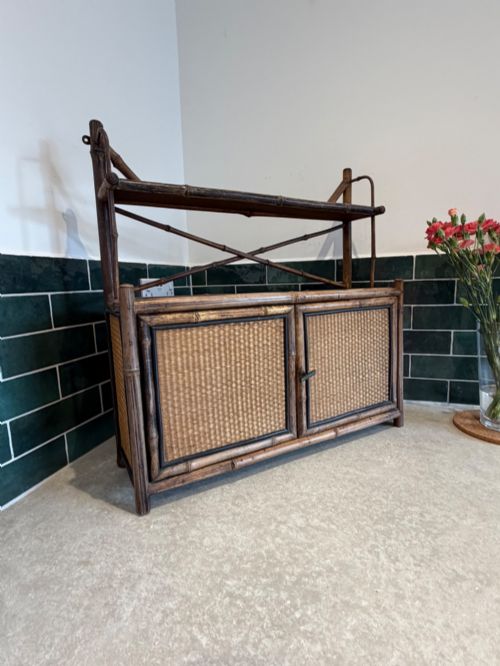
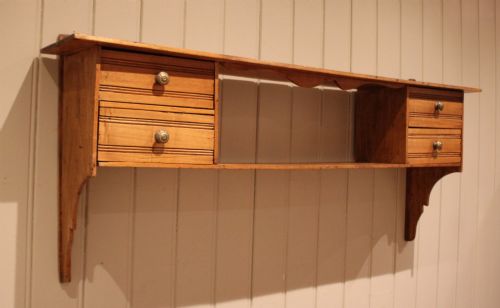
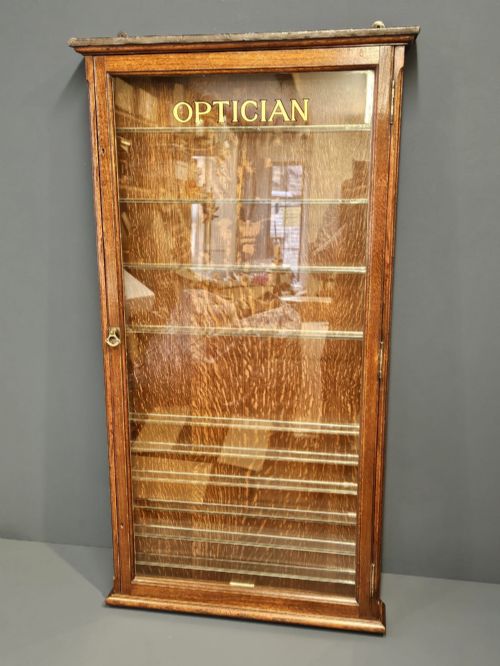
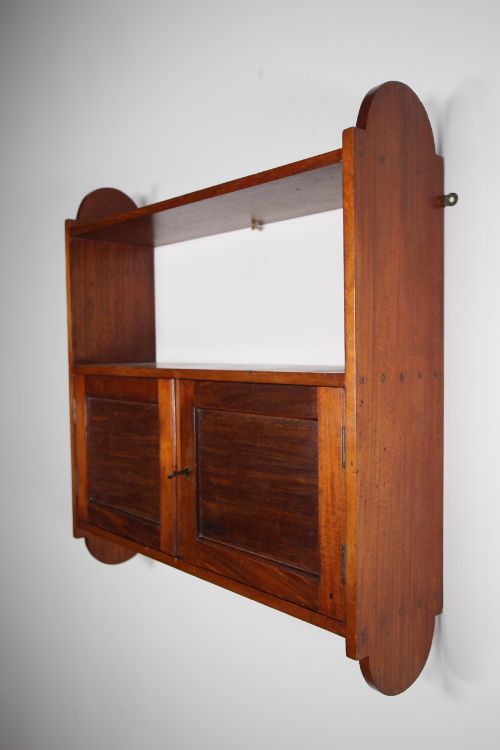
When you search for an antique wall hanging shelf, you encounter diverse domestic forms spanning open tiered boards, corner brackets, and enclosed cabinets designed to mount directly onto plaster.
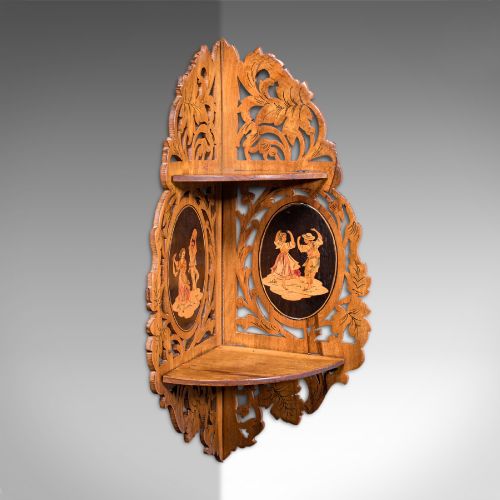
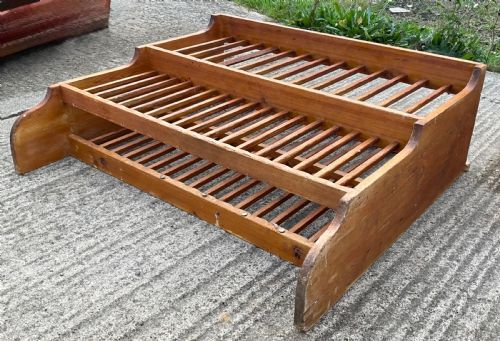
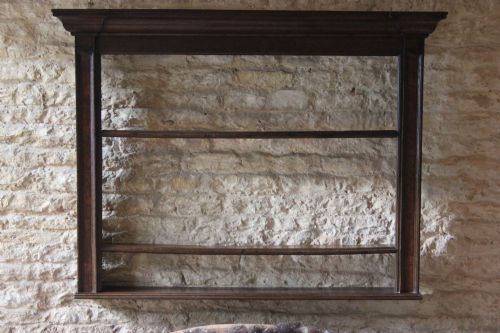
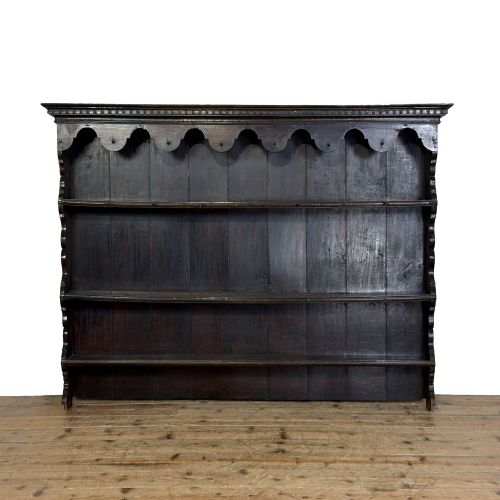
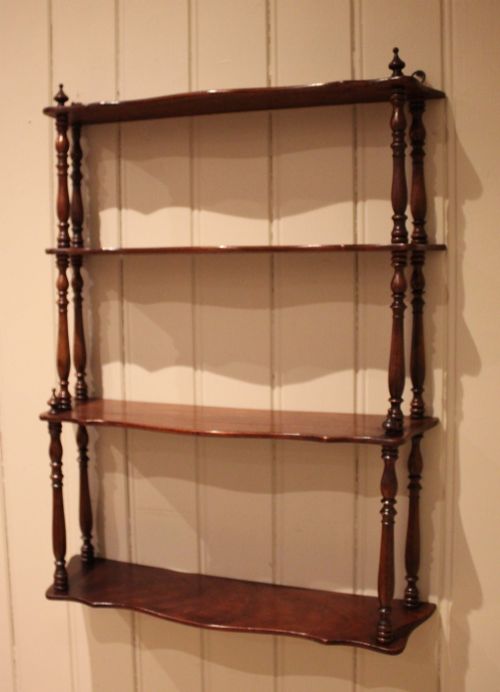
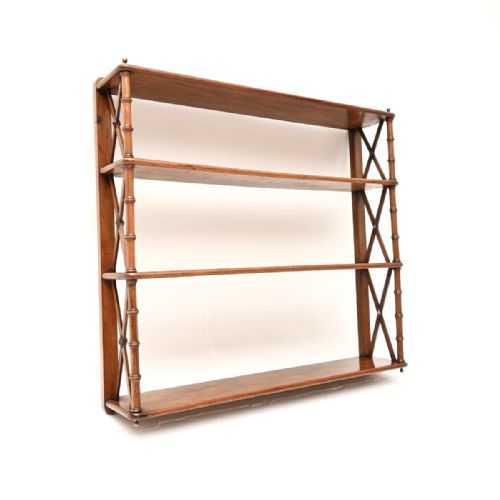
The selections on this page centre predominantly on nineteenth-century and Georgian pieces, taking the shape of kitchen plate racks, waterfall bookshelves, and corner units.
Originating across English country workshops, French provincial houses, and urban workshops, these pieces served practical functions in halls, dining rooms, and bedrooms before becoming decorative focal points.
Materials and construction
Timbers dictate the structural integrity of these items, with dense mahogany, quarter-sawn oak, and walnut providing stable framing for multiple tiers.
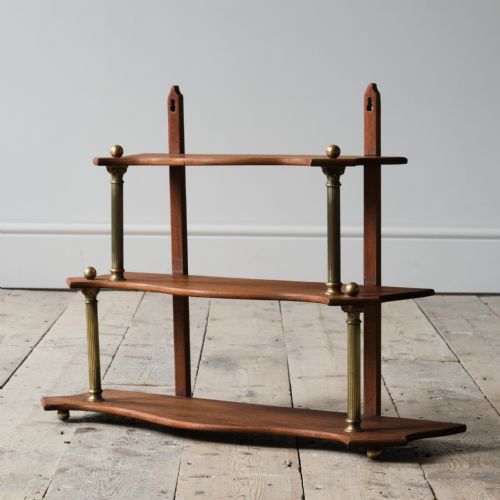
Cabinetmakers utilised brass for suspension brackets and hinges, while secondary woods like pine appeared in concealed structural areas on kitchen racks.
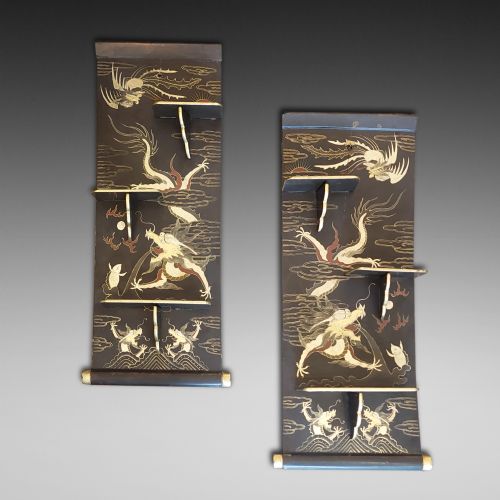
Surface treatments range from simple wax finishes on country pine to intricate marquetry in olive wood and ebonised detailing on Gothic Revival bookcases.
Antique Wall Hanging Shelf Retail Price Guide 2026
Typical asking prices for wall hanging shelf among the pieces listed under this phrase on Sellingantiques today, from the lower quarter to the upper quarter. They describe what is for sale here now, not the wider market.
The listings here demonstrate a strong presence of nineteenth-century mahogany and eighteenth-century oak, ranging from kitchen plate racks to inlaid corner cabinets.
Judging execution
Quality rests in the precision of the joinery connecting the upright supports to the horizontal shelves, where dovetailed joints indicate superior cabinetmaking over simple butt joints.
The selection of timber grain on prominent display surfaces separates standard utilitarian kitchen boards from sophisticated parlour bookcases.
Original hanging mechanisms and intact brass hardware preserve the structural authenticity of a piece far better than modern replacement fixings.
George Edmund Street·John Moyr Smith·Arthur Simpson
The Antique Wall Hanging Shelf Glossary
- Plate rack
- A wall-mounted rack featuring wooden slats or grooves designed to hold dining plates upright for display and drying. These frequently appear in eighteenth-century oak iterations.
- Whatnot
- A tiered open shelving unit designed for displaying ornaments or books. Examples span freestanding furniture and hanging corner variants.
- Waterfall bookcase
- A set of open shelves where each tier steps back progressively from the bottom to the top. They appear in mahogany and satinwood.
- Ebonisation
- A chemical or pigment treatment applied to cheaper woods like fruitwood to imitate expensive ebony. It is characteristic of Victorian Gothic Revival pieces.
- Marquetry
- The art of applying thin veneers of diverse coloured woods to a structural surface to create pictorial patterns. Sorrento items frequently utilise this technique.
Antique Wall Hanging Shelf: Frequently Asked Questions
How do I hang an antique shelf safely?
Wall-mounted timber pieces require secure fixing into solid masonry or direct wall studs using appropriate steel screws rather than standard plasterboard plugs.
The considerable weight of dense hardwoods like oak or walnut, combined with the books or ceramics placed upon them, demands robust load-bearing support.
Were these shelves originally meant for kitchens?
Many surviving open plank structures and plate racks originated in domestic kitchens or sculleries for storing earthenware and delftware.
More refined mahogany, walnut, and satinwood examples with glazed doors or inlaid panels served formal roles in libraries, parlours, and bedrooms.
How do I tell a Georgian shelf from a Victorian one?
Georgian pieces generally display simpler, robust proportions in oak or early mahogany, focusing on utilitarian strength for plate storage.
Victorian iterations frequently embrace revivalist ornamentation, employing ebonised finishes, turned bobbin supports, and elaborate bracket designs influenced by Gothic or Arts and Crafts ideals.
Can these shelves hold heavy books?
Smaller tiered bookcases and desktop pigeon holes suit lightweight volumes or delicate display items rather than heavy folio editions.
Checking the depth of the boards and the rigidity of the side supports helps determine whether a specific hanging shelf can manage heavier loads.