



Kitchen Dresser Top Rack
A kitchen dresser top rack gives you authentic period display space for plates and porcelain.
Kitchen Dresser Top Rack
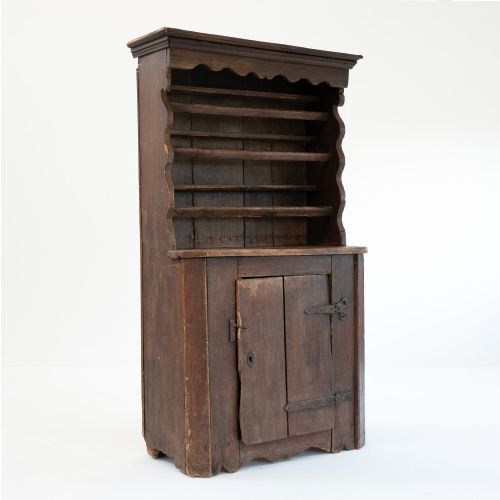
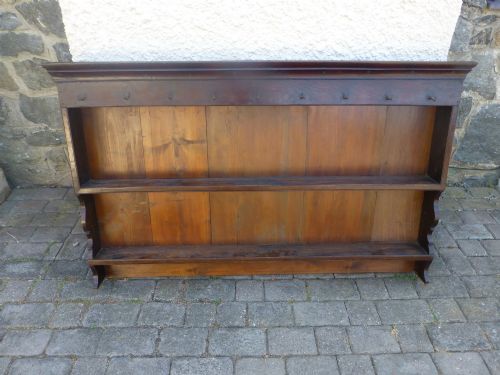
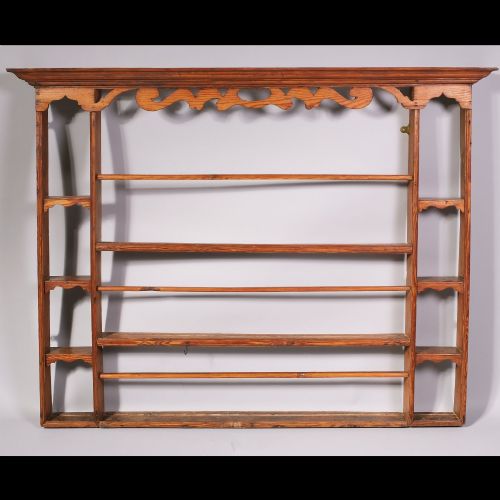
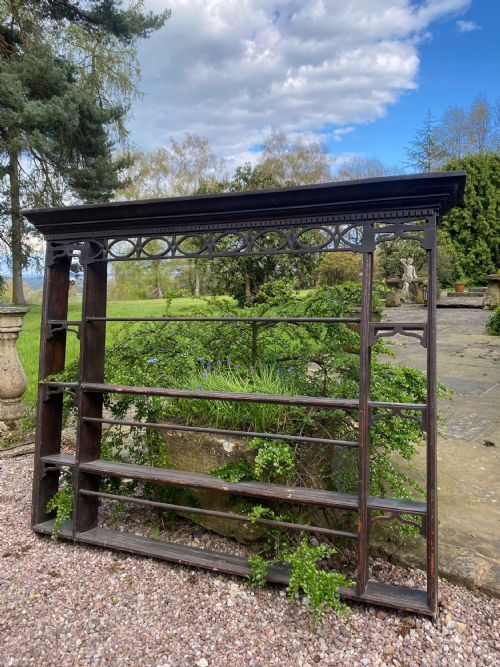
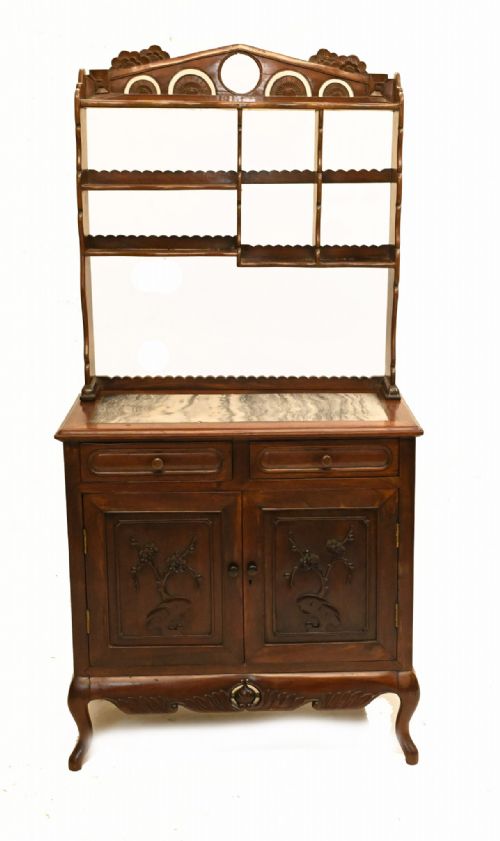
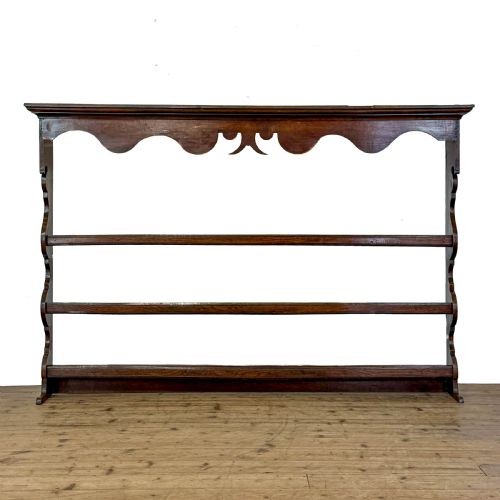
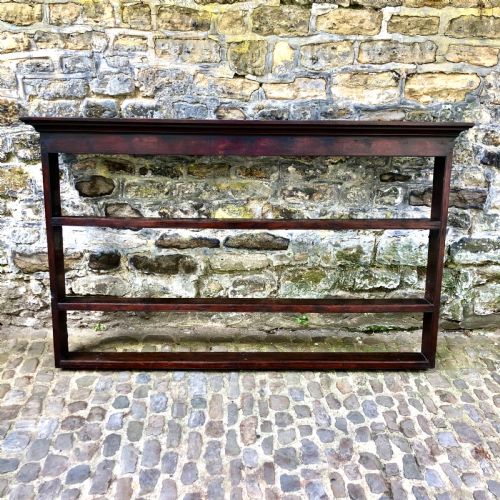
A kitchen dresser top rack provides open shelving designed to mount directly onto a wall or sit atop a base cabinet. When you search for a kitchen dresser top rack, you encounter open wall shelves and plate racks intended to hold ceramic plates and platters securely in place.
The pieces appearing on this page date primarily from the eighteenth century and the Georgian period, alongside Victorian and later examples. Oak and pine predominate among the materials, reflecting domestic country traditions from English, Irish and Georgian workshops.
Forms range from simple small oak wall shelves to substantial Welsh dresser top racks with multiple tiers. These practical fixtures served generations of households for everyday storage and display before finding a place in modern interiors.
How they were made
Joiners constructed these racks using solid timber boards of oak and pine, often joined with traditional pegged mortise and tenon joints. Backboards typically consist of vertical planks fixed to structural rails, supporting horizontal plate shelves fitted with retaining grooves.
Wrought iron fixings and brackets appear on structural elements and hanging points, providing the necessary strength to support heavy earthenware and stoneware. Surfaces show the marks of hand planning and shaping, with painted finishes applied on specific Irish and country regional variants.
The listings show oak and pine as the primary timbers, spanning the eighteenth century, the Georgian era, and the Victorian period.
What varies in quality
Quality in a kitchen dresser top rack rests on the choice of timber and the integrity of the original construction. Superior examples retain their original backboards, cornices, and structural proportions without excessive replacement timber.
Finer pieces display thoughtful architectural details such as moulded cornices, shaped friezes, and cleanly turned peg rails. The presence of original surface patination and uncompromised structural joinery distinguishes the better examples from later utilitarian utility pieces.
The Kitchen Dresser Top Rack Glossary
- Delft rack
- An open wall-mounted shelving unit designed specifically for displaying tin-glazed earthenware and ceramic plates.
- Welsh dresser
- A traditional kitchen storage unit comprising a base cabinet with an upper plate rack attached.
- Cornice
- The moulded horizontal projection that crowns the top edge of a wooden shelving unit or cabinet.
- George III
- A British design period spanning the mid to late eighteenth century, characterised by refined proportions and solid timber construction.
Kitchen Dresser Top Rack: Frequently Asked Questions
How do I hang a wall rack safely?
These wooden racks require secure fixing directly into structural wall studs or masonry using appropriate weight-bearing brackets and screws. Distributing the load evenly prevents structural strain on the antique frame.
Because loaded plate racks carry considerable weight from ceramics, professional installation ensures the piece remains stable against the wall surface.
Were these always attached to a base?
Many racks operated independently as wall-mounted plate shelves rather than sitting on a dresser base. Regional vernacular traditions dictated whether a rack hung separately on the kitchen wall or paired with a cabinet.
Listings include both standalone wall-mounted racks and upper sections separated from their original dresser bases over time.
How do I clean antique pine and oak?
Dust the surfaces regularly with a dry cloth and avoid using modern silicone polishes that build up sticky residues. Natural beeswax applied sparingly helps nourish dry historic timber without harming the patina.
Keep wooden racks away from direct heat sources and excessive moisture to prevent the historic boards from warping or splitting.
What periods do these racks date from?
The examples available span from the early eighteenth century through the Georgian and Victorian eras, extending into nineteen-hundred pieces. Oak pieces often reflect earlier country traditions, while pine versions frequently date to the Victorian period.
Construction methods, timber selection, and moulding profiles help distinguish eighteenth-century examples from later nineteenth-century interpretations.