
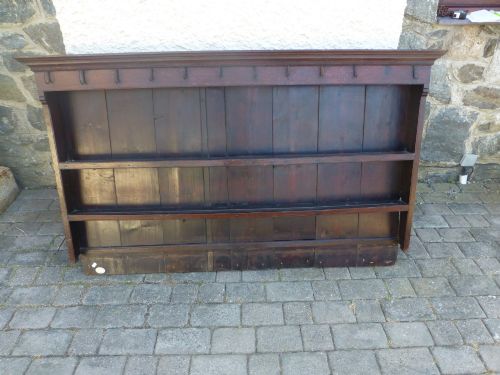
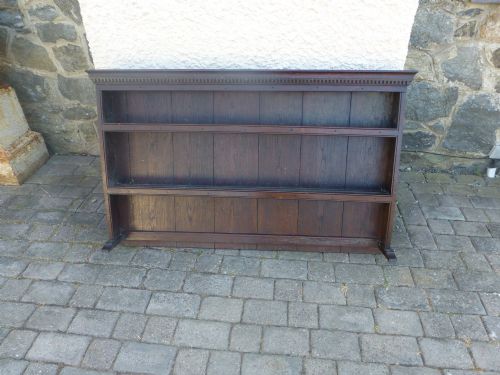
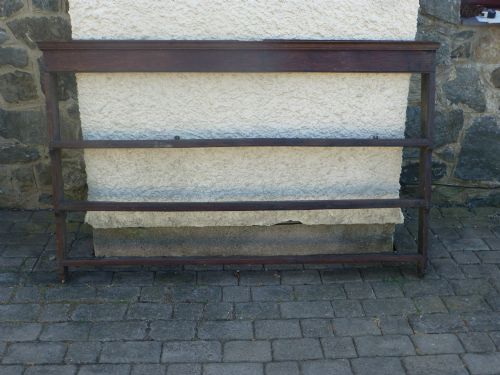
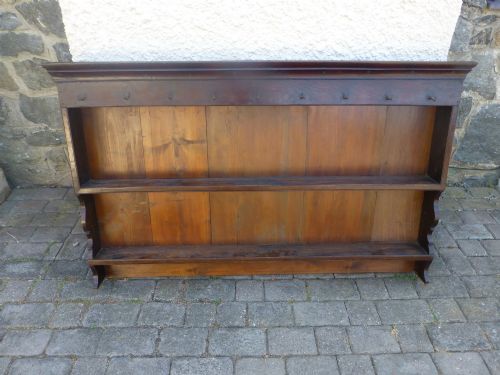
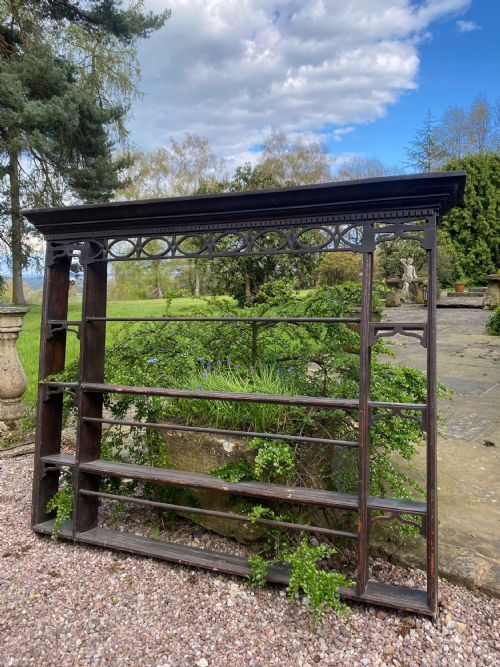


Oak Delft Display Rack
An oak delft display rack brings warm timber grain and practical vertical storage to a room, holding centuries of ceramic plates securely against the wall.
Oak Delft Display Rack
An oak delft display rack is a wall-mounted shelving unit designed specifically to display ceramic plates and platters upright in domestic interiors. Most pieces encountered on this page originate from the eighteenth century and the Georgian period, built in sturdy timber to bear the heavy weight of earthenware.
Makers constructed these racks using native timbers, predominantly oak combined occasionally with secondary woods like pine for internal elements. Styles range from plain country oak and Georgian proportions to occasional Gothic or Renaissance revival interpretations and later twentieth-century reproductions.
How they were made
Joiners built these racks using solid oak boards for the main frame, shelves, and backboards, frequently employing secondary woods such as pine for concealed components. Iron brackets or wooden hanging stiles secured the heavy structures firmly to domestic walls.
Individual shelves incorporate slender retaining rails, grooves, or turned spindles to keep plates tilted securely at an angle for viewing. Decorative detailing on better examples includes carved friezes, applied mouldings, and architectural elements like Corinthian columns.
Listings feature oak, pine, and brass materials spanning the seventeenth century through to nineteen hundred.
What varies in quality
The refinement of the timber and the crispness of any architectural carving separate standard utility racks from superior examples. Thick, well-figured oak boards with deep patination indicate a higher standard of original workshop production.
Proportion and structural integrity dictate the overall quality of the piece, particularly where guard rails, cornices, and sideboards meet. Untouched surface patination and original hanging fixtures retain significantly more character than heavily restored or altered structures.
The Oak Delft Display Rack Glossary
- Delft rack
- A wall-mounted shelving unit specifically constructed with retaining rails to display ceramic plates upright. These pieces historically hung in kitchens and dining parlours.
- Georgian
- A design period spanning the eighteenth century characterised by classical proportions and restrained ornament. Furniture from this era balances utility with elegant architectural detail.
- Country oak
- A descriptor for sturdy domestic furniture made outside fashionable urban workshops, relying on honest construction and durable native timber. These pieces often display simple, unpretentious lines.
- Plate rail
- A narrow wooden shelf or retaining strip positioned across the front of a display shelf to keep plates from sliding forward. They are essential functional components of any wall rack.
Oak Delft Display Rack: Frequently Asked Questions
How were oak delft racks used originally?
These racks served as everyday storage and display for tin-glazed earthenware and ceramic plates in kitchens and dining rooms. Households kept their best tableware visible and accessible for daily meals.
Over generations, the furniture transitioned from purely utilitarian kitchen fixtures to decorative wall pieces appreciated for their timber patination and historical display value.
How do I mount a heavy oak rack safely?
Mounting requires locating solid wall studs or using heavy-duty wall anchors capable of supporting both the substantial weight of the solid oak frame and the ceramics placed upon it. Professional installation ensures the structure remains secure.
Because eighteenth-century oak timber is remarkably dense, securing the hanging stiles correctly prevents the rack from pulling away from the wall under load.
How can I tell an eighteenth-century rack apart from later ones?
Eighteenth-century examples display distinct signs of age in the oak grain, hand-cut joinery, and natural surface patination accumulated over centuries of use. Tool marks and construction methods reveal the period of manufacture.
Later copies or revival pieces from the twentieth century often utilise more uniform machine-sawn timber and lack the worn, authentic character of genuine Georgian country furniture.
What kind of plates fit these racks?
Most historical racks accommodate traditional earthenware, delftware, and shallow ceramic plates within the depth of their display ledges. The spacing between shelves dictates the maximum diameter of the plates you can exhibit.
Checking the clearance height and the depth of the retaining rails helps ensure your specific collection of plates will sit comfortably at the proper viewing angle.