
Antique Vanity Mirror Drawers
Antique vanity mirror drawers combine a pivoting looking glass with concealed compartments for daily grooming.
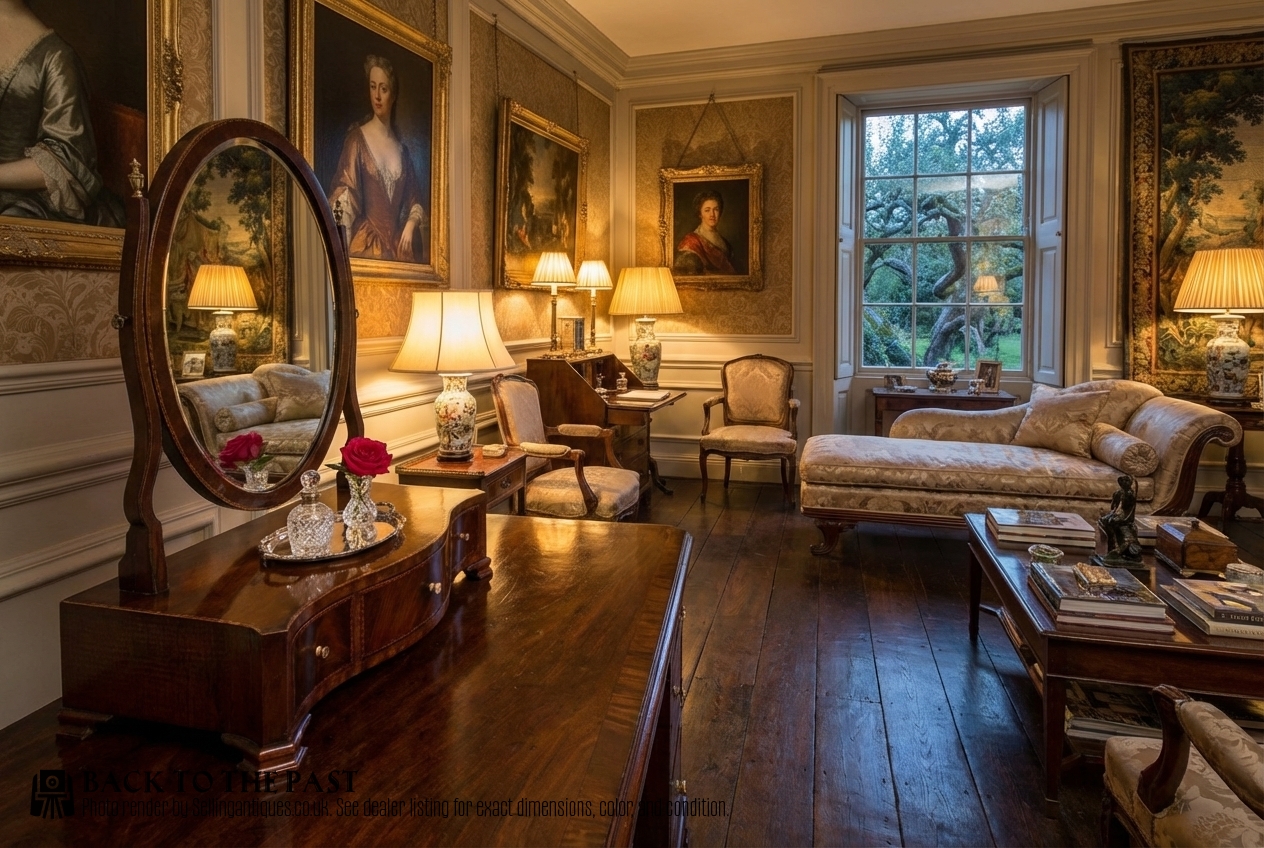
What antique vanity mirror drawers are
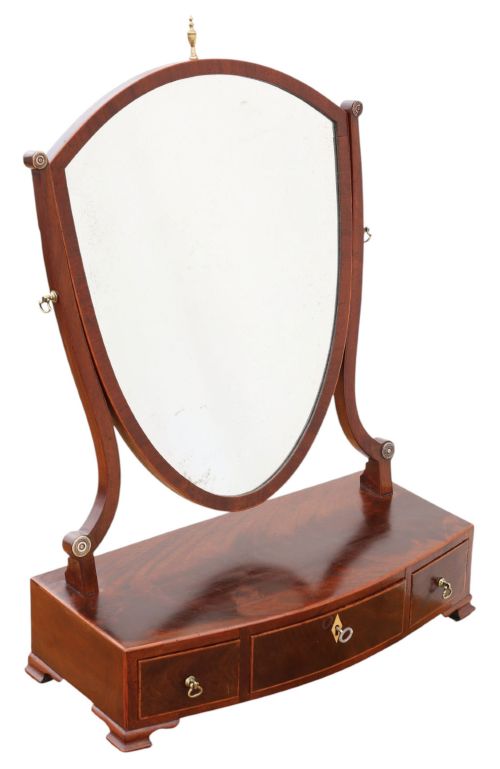
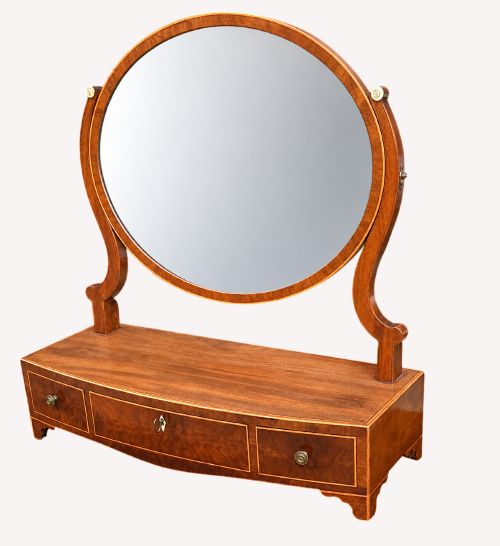
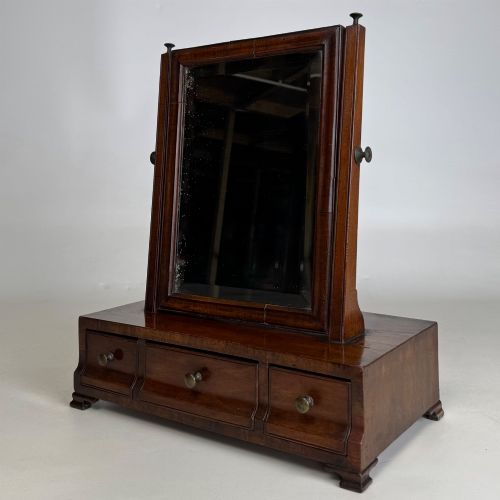
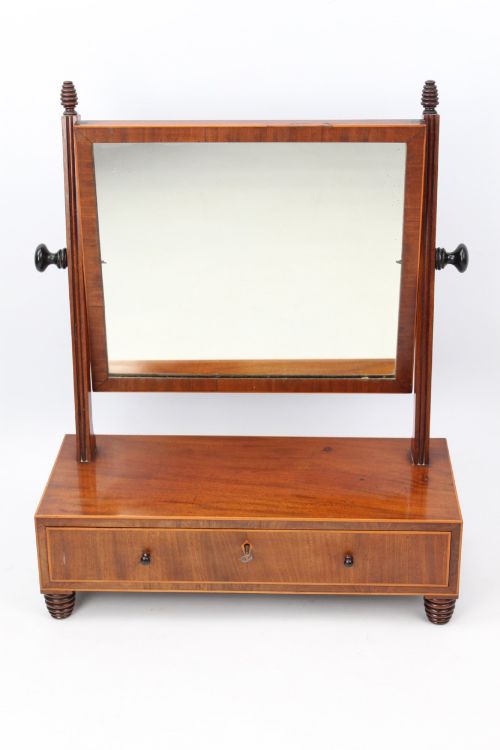
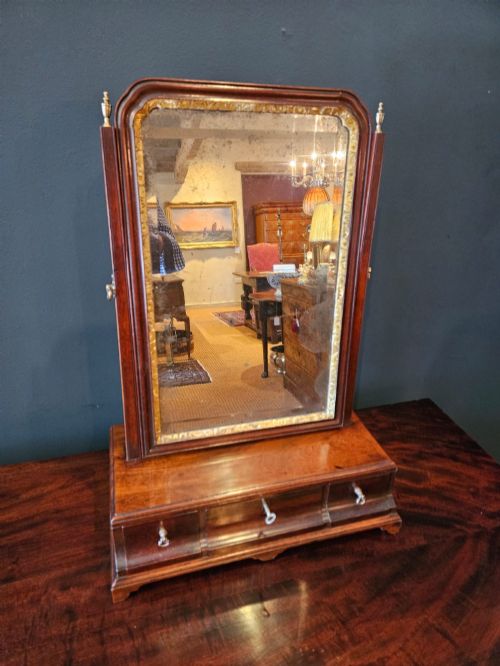
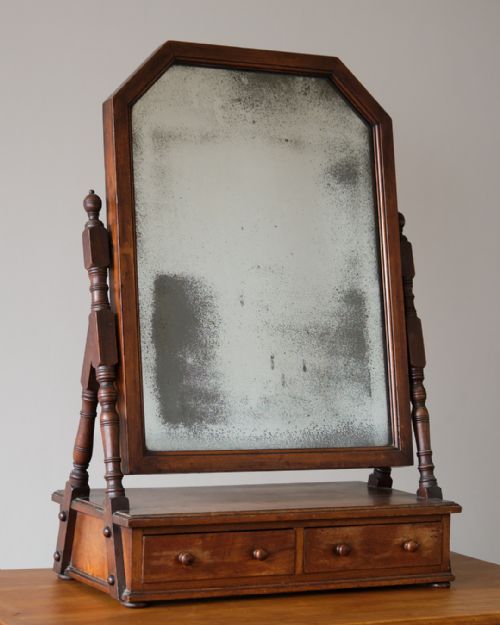
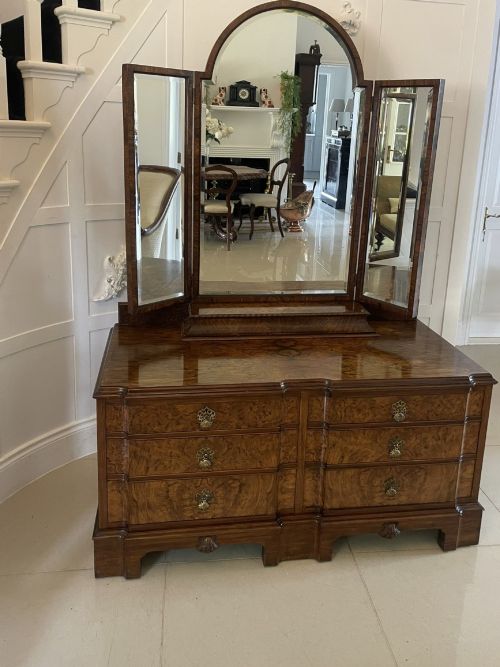
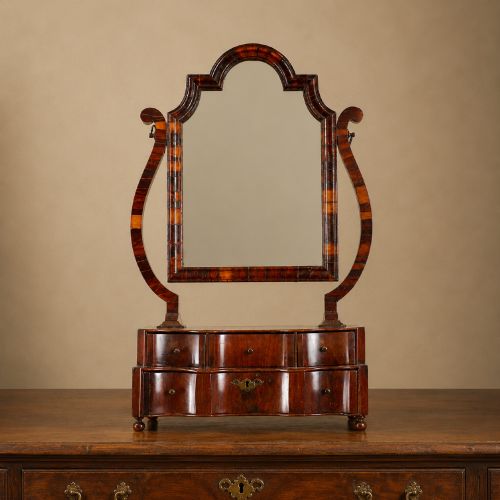
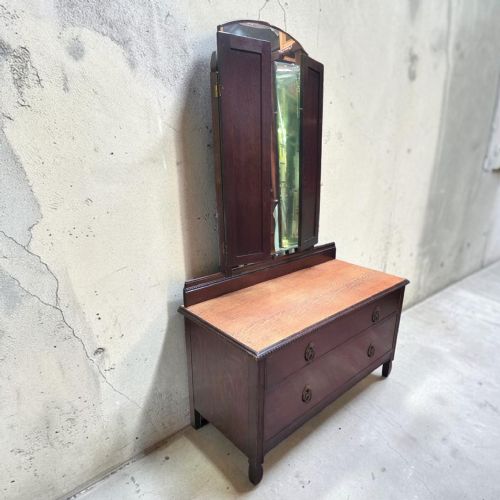
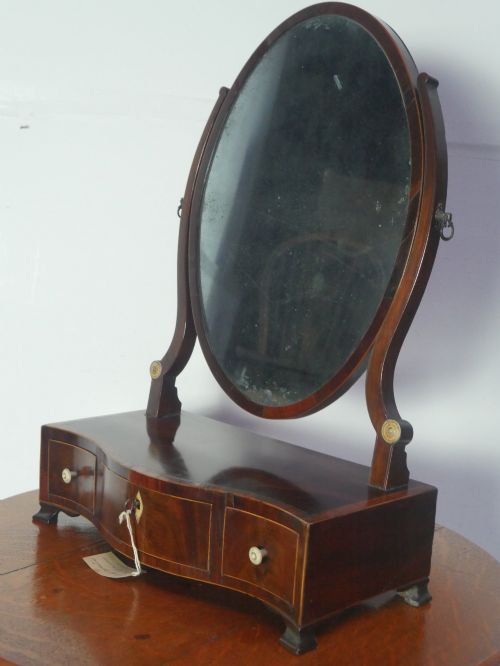
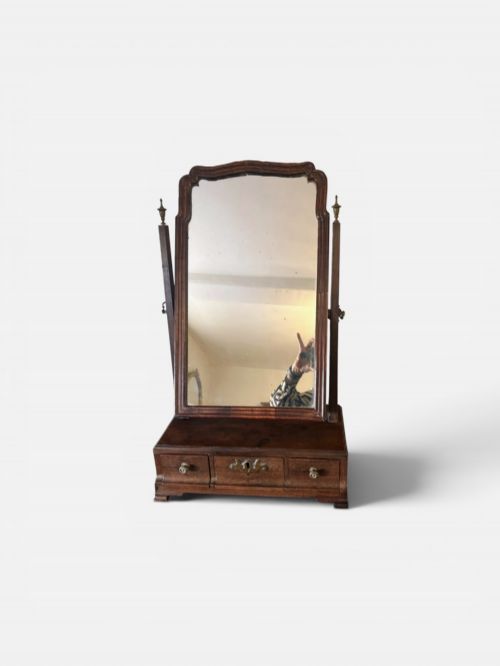
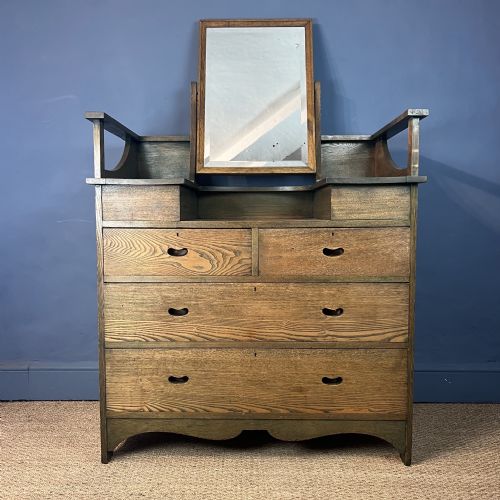
Antique vanity mirror drawers are functional dressing pieces designed to sit atop a chest or table, providing both a reflective surface and small storage compartments. The forms on this page span the eighteenth century, Georgian period, Regency era, and the early twentieth century.
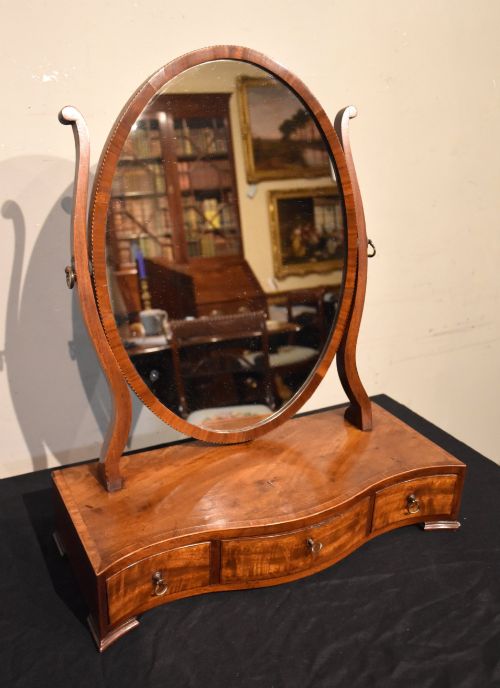
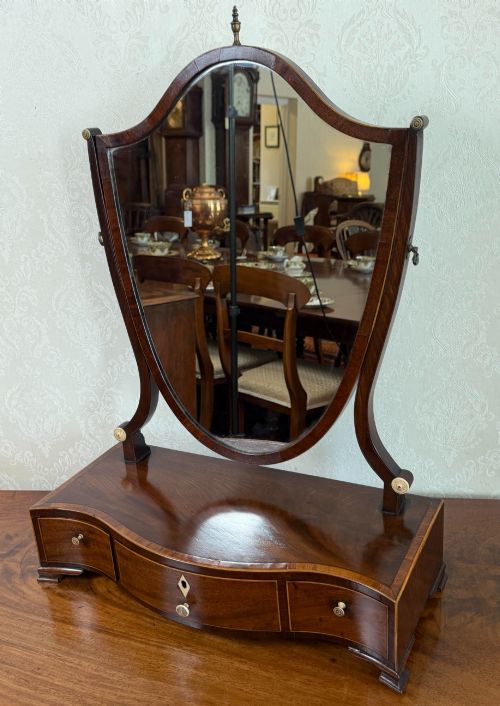
Buyers will most frequently encounter walnut, mahogany, and occasional maple or olive wood constructions, often styled after Georgian, Queen Anne, or French provincial designs. These pieces range from simple rectangular swings to serpentine oval plates and multi-drawer carcases.
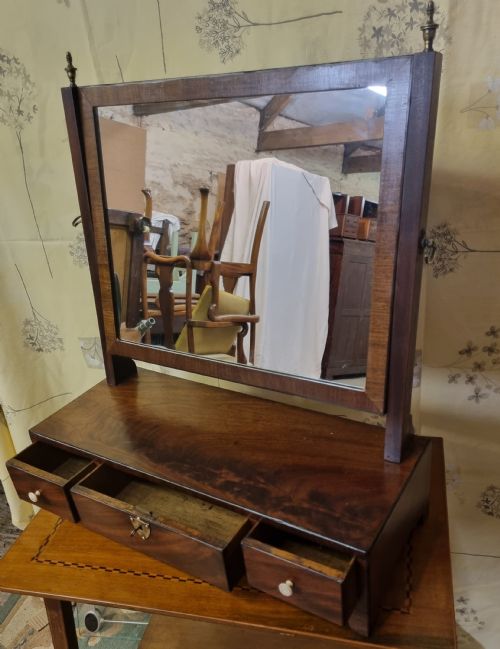
The integration of trinket drawers beneath the swing glass allows for the tidy storage of personal items and cosmetics. These mirrors reflect the domestic habits of earlier centuries, offering a compact station for grooming before the main bedroom wardrobe.
How they were made
Cabinetmakers utilised dense cabinet timbers such as mahogany, walnut, and maple, frequently enhancing the surfaces with boxwood inlay and contrasting stringing. Joinery relies on traditional techniques to house the pivoting mirror frames and the small underlying drawers.
The reflective elements consist of historic mirror glass set within shaped wooden frames, suspended between upright standards by brass pivots or screw caps. Interior compartments often feature oak linings and hand-cut dovetail joints on the drawer boxes.
Retail Price Guide 2026
Typical UK retail prices for vanity mirror drawers, calculated from the Sellingantiques database of over a million retail prices indexed since 2003. This retail price guide relies exclusively on Sellingantiques data; no external sources or auction records are used, so the figures do not describe the wider market.
Periods represented span from the 18th century and Georgian era through to Regency and 1910.
What varies in quality
Quality in these pieces is dictated by the fineness of the timber grain and the precision of the cabinetwork, such as the neatness of boxwood inlay and dovetailed drawer construction. Superior examples display balanced proportions, delicate horn or brass finials, and original mirror glass with natural ageing.
Lower tiers of quality typically present replacement glass, coarser secondary woods, or heavier, less refined mouldings on the mirror frame and base. The sophistication of the serpentine or bow-front shaping also separates standard workshop output from exceptional cabinet work.
Maple and Co
The Antique Vanity Mirror Drawers Glossary
- Dressing mirror
- A small table-top mirror with integrated drawers, designed for grooming and cosmetic storage.
- Bow-front
- A convex curved cabinet front that projects outward in an arc, commonly seen on Georgian drawer bases.
- Serpentine
- A line that curves outward at the ends and inward in the centre, creating an undulating profile.
- Boxwood inlay
- Contrasting pale wood inserted into recesses of a darker ground timber to form decorative lines or motifs.
- Swing mirror
- A looking glass hung on horizontal pivots between two upright posts, allowing the plate to tilt.
Frequently Asked Questions
What are antique vanity mirror drawers?
Antique vanity mirror drawers are tabletop dressing mirrors fitted with small storage compartments in the base. They were designed for personal grooming in bedrooms.
These pieces hold cosmetics, jewellery, and small daily items while providing an adjustable glass for reflection.
How do I date a Georgian dressing mirror?
Dating relies on timber choice, such as early walnut or later mahogany, alongside the profile of the base and mirror frame. Georgian examples often feature slender uprights and finely dovetailed drawer linings.
Detailing like boxwood stringing, ogee bracket feet, and the shape of the mirror plate itself help place the piece within the eighteenth century.
Where should I place a dressing mirror?
These mirrors sit comfortably on top of chests of drawers, sideboards, or dedicated dressing tables. They require a stable surface with adequate natural light for practical use.
Because of their compact footprints, they integrate well into modern bedrooms as functional surface decor.
Are the mirror plates original?
Many antique mirrors retain their original glass, which often shows light foxing, minor speckling, and gentle distortion. Original plates add authenticity to the piece.
Replacement glass is clean and bright, whereas historic glass bears the subtle irregularities of older manufacturing methods.