
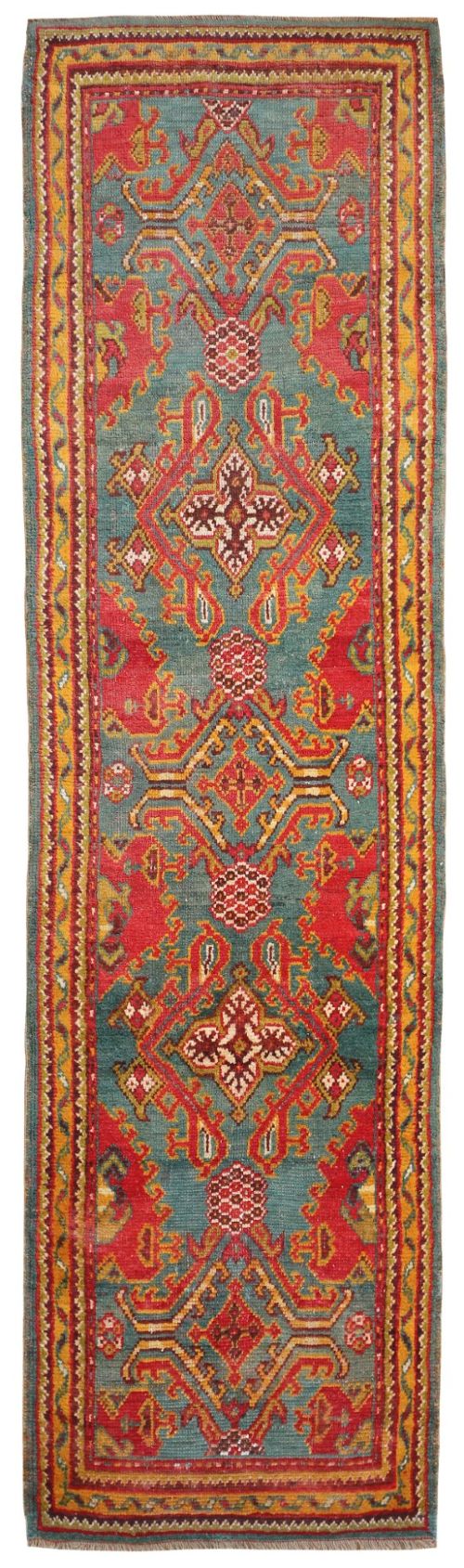


Antique Ushak Area Rug
These antique ushak area rug pieces bring soft palettes and large-scale Anatolian motifs into a room, offering a distinct historical floor covering.
Antique Ushak Area Rug
An antique ushak area rug originates from the traditional weaving town in western Anatolia, carrying Ottoman Turkish design lineages. The examples gathered here span from the nineteenth century into the early twentieth century, including the Victorian era.
Buyers encounter formats ranging from square carpets and runners to flatweave kilims. Most listings consist of large decorative carpets featuring muted colour palettes and expansive floral or medallion compositions.
Materials and Construction
Weavers constructed these textiles using wool, cotton, and occasionally angora wool for the pile and foundation. The combination of soft wool fibres on cotton warps allowed for the characteristic pliable handle associated with this tradition.
Natural dye absorption across these specific wool varieties produced the signature faded terracotta, ivory, and soft golden tones seen in the surviving specimens.
Listings span from the 1870s through the 1920s, featuring wool, cotton, and angora wool across runner, kilim, and carpet formats.
Judging Quality and Character
Quality rests upon the subtlety of the dye patination and the harmony of the large-scale Anatolian design against the ground field. Finer examples display a greater nuance in the transition of faded tones across the wool pile.
Structural integrity of the cotton foundation and the evenness of wear across the surface distinguish the superior specimens from heavily restored or depleted textiles.
The Antique Ushak Area Rug Glossary
- Ushak
- A town in western Turkey historically renowned for producing large-scale decorative carpets with distinctive geometric and floral motifs. These pieces are often associated with Ottoman weaving traditions.
- Kilim
- A flatwoven textile produced without a pile, resulting in a lighter and thinner floor covering or hanging. These items show the traditional structure of Anatolian flatweavings.
- Angora Wool
- A soft fibre derived from specific regional goats or rabbits, utilised in select textiles to impart a distinct sheen and pliable texture. It contributes to the softer handle found in certain nineteenth-century examples.
- Medallion
- A central ornamental design motif placed in the field of a carpet, frequently seen in ivory ground variations. This focal element anchors the surrounding floral patterns.
Antique Ushak Area Rug: Frequently Asked Questions
How do I date an antique ushak area rug?
Dating relies upon stylistic markers, material analysis, and the historical records linked to nineteenth and early twentieth-century production.
Examining the specific wool types and natural dye characteristics helps place a piece within periods such as the Victorian era or the 1920s.
Where were these rugs made?
Production centred on Ushak in western Anatolia, a region historically famous for large-scale carpet weaving within the Ottoman Empire.
These workshops supplied distinct designs that circulated widely through Turkish and international markets.
What is an angora ushak?
An angora ushak incorporates softer angora wool into the pile, creating a more lustrous surface and a pliable handle compared to standard wool.
These variations are particularly noted in nineteenth-century pieces from the region.
How do I care for a nineteenth-century carpet?
Protect the wool and cotton fibres by placing the textile in low-traffic areas and using a breathable underlay to prevent sliding.
Avoid direct, harsh sunlight to preserve the natural faded tones of the dyes over time.