

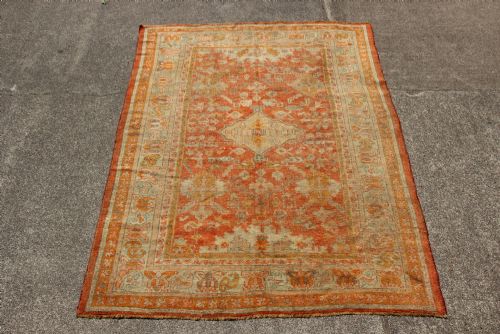
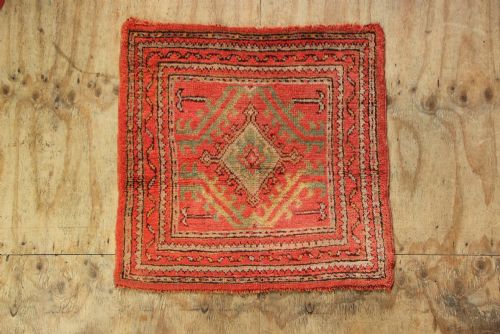
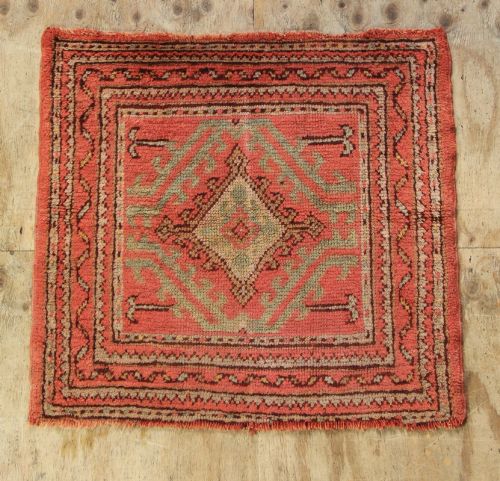


Turkish Oushak Carpet
A turkish oushak carpet brings historic Ottoman artistry into a room through generous scale and muted natural palettes.
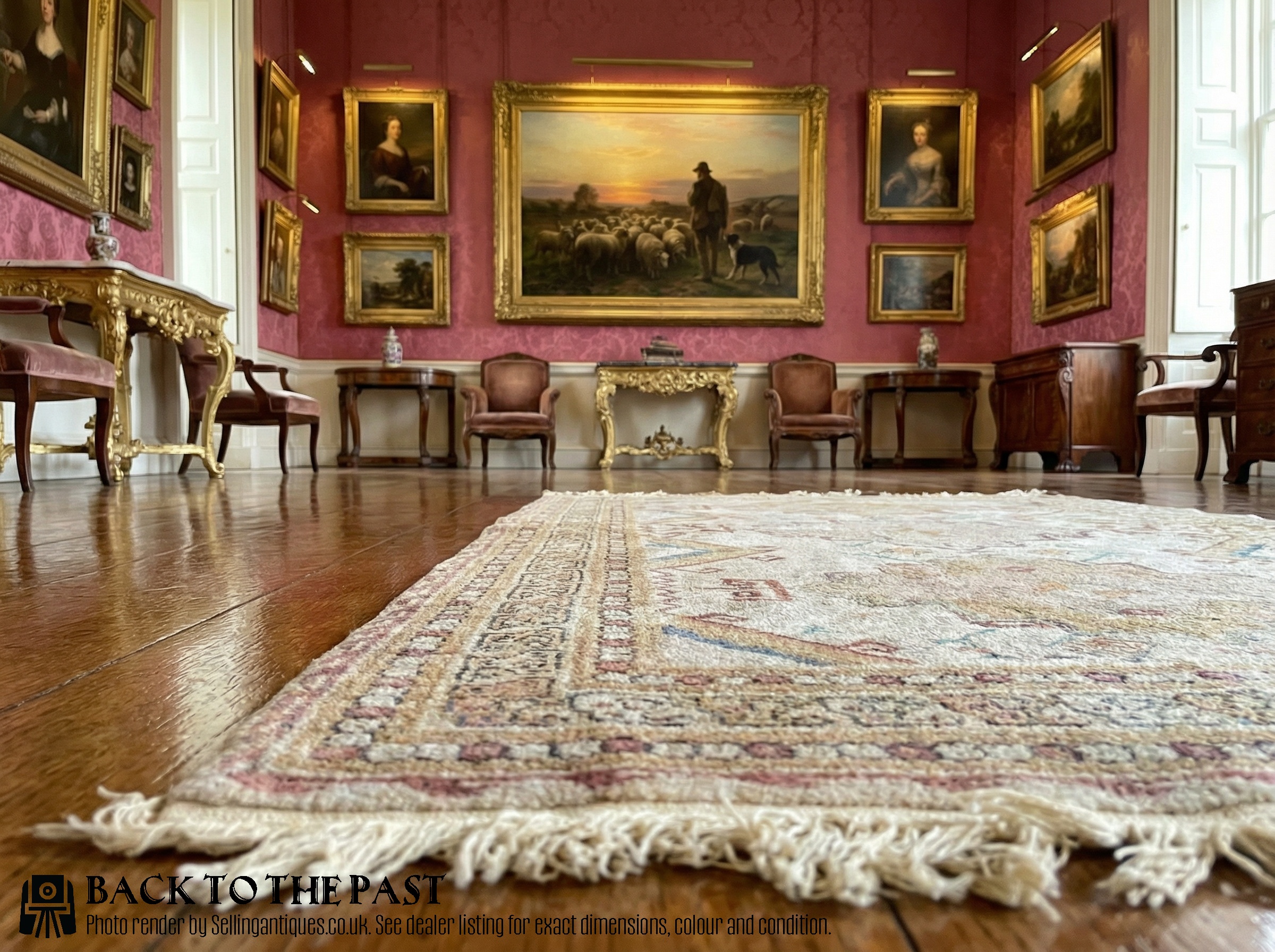
Turkish Oushak Carpet
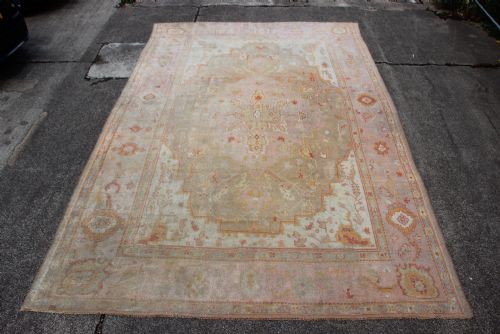
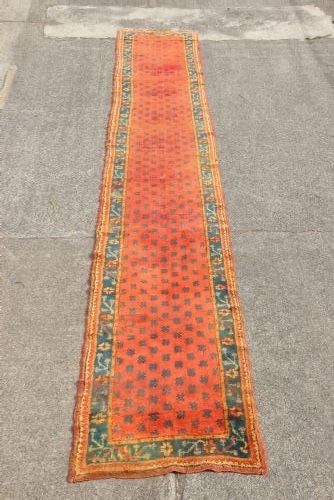
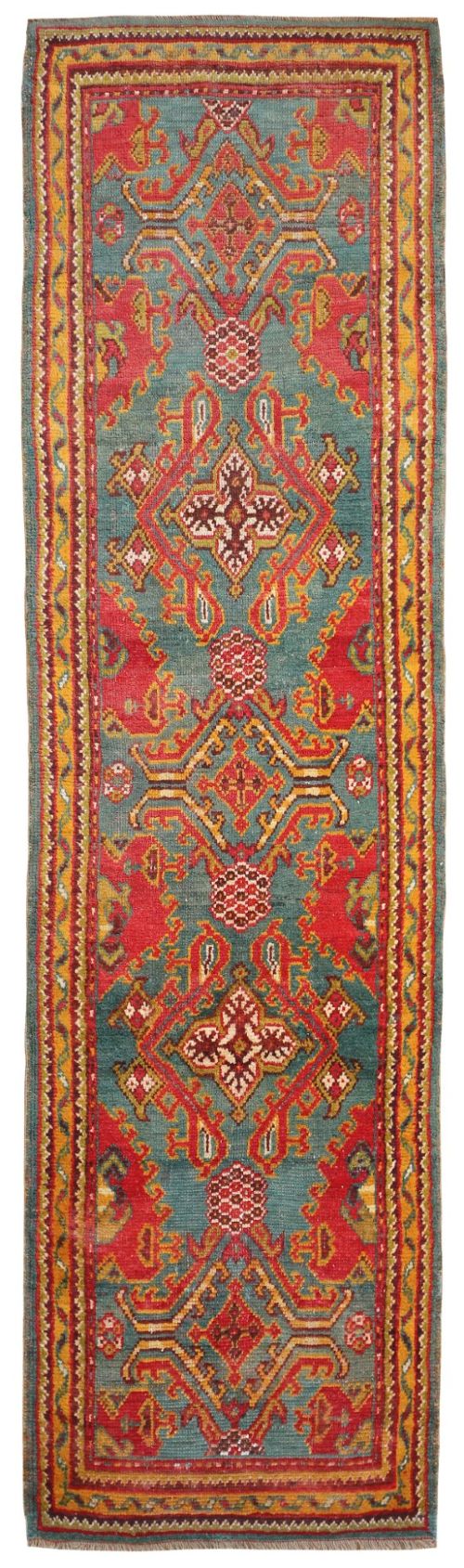
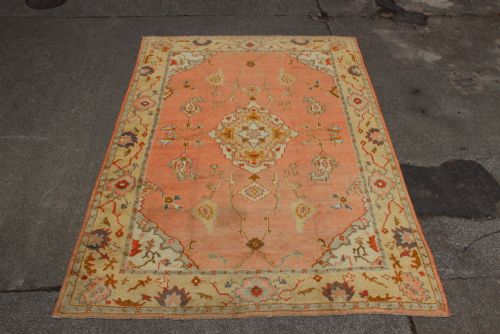
A turkish oushak carpet is a floor covering originating from Western Turkey, distinguished by large-scale geometric or floral motifs and a soft aesthetic. When searching for a turkish oushak carpet, buyers encounter expansive room-size formats alongside long narrow runners and occasional square rugs.
The pieces available span from the late nineteenth century into the early twentieth century, encompassing the Victorian era. Large decorative formats and country house runners dominate the selection, showing styles that blend Ottoman traditions with Anatolian weaving methods.
How they were made
These floor coverings utilise wool and cotton foundations, frequently incorporating supple angora wool for added texture in the pile. Weavers hand-knotted the materials tightly to create durable surfaces suited for heavy domestic use in country houses and large reception rooms.
Natural dye processes produced the characteristic pale blue, beige, and faded pink grounds recorded across the inventory. Artisans also employed distinctive green fields and weeping willow motifs, marking regional variations within Western Turkey.
Materials recorded across the archive include wool, cotton, and angora wool, spanning production dates from eighteen eighty to nineteen twenty.
What varies in quality
The distinction between standard examples and the finest pieces rests upon the nuance of the dye palette and the integrity of the pile. Faded patinas and unusual colour grounds, such as scarce pink or green fields, elevate certain examples above standard productions.
Proportion and scale also dictate worth, with oversized floor carpets demonstrating greater design ambition than smaller mats. The presence of specific regional attributes, like Ghiordes or Kula influences, separates conventional workshop output from superior items.
The Turkish Oushak Carpet Glossary
- Oushak
- A traditional town in Western Turkey renowned for distinctive carpet production. These textiles feature looser knots and larger designs than Persian counterparts.
- Angora wool
- A soft fibre derived from angora goats, utilised in specific antique weaves for pile depth and sheen. This material contributes to a luxurious tactile quality.
- Runner
- A long, narrow carpet format designed for hallways, corridors, and staircases. These pieces measure significantly longer than they are wide.
- Kilim
- A flat-woven textile produced without a pile. These items offer a lighter alternative to knotted floor coverings.
- Ghiordes
- A Anatolian weaving centre and associated design style. Pieces bearing this descriptor display specific regional motifs and knotting techniques.
Turkish Oushak Carpet: Frequently Asked Questions
Where were these carpets made?
These floor coverings originate from Western Turkey, specifically the town of Oushak and surrounding Anatolian weaving centres.
Production flourished through the Victorian period and into the early twentieth century, supplying both domestic markets and international traders.
How do I style a large runner?
Long narrow runners suit extended hallways, narrow galleries, and large landing spaces in period or contemporary homes.
Their elongated proportions help define traffic flow while adding warmth and historical texture to timber or stone floors.
What colours do these rugs feature?
The palette relies on soft, muted tones including pale blues, warm beiges, and faded pinks alongside occasional green fields.
Natural dyes mellowed over time to create the characteristic understated aesthetic prized by interior decorators.
How do I date an antique piece?
Dating relies on stylistic markers, wool characteristics, and structural evidence pointing to the late nineteenth and early twentieth centuries.
Pieces originating from around eighteen eighty to nineteen twenty display distinct weaving densities and dye signatures typical of those decades.