
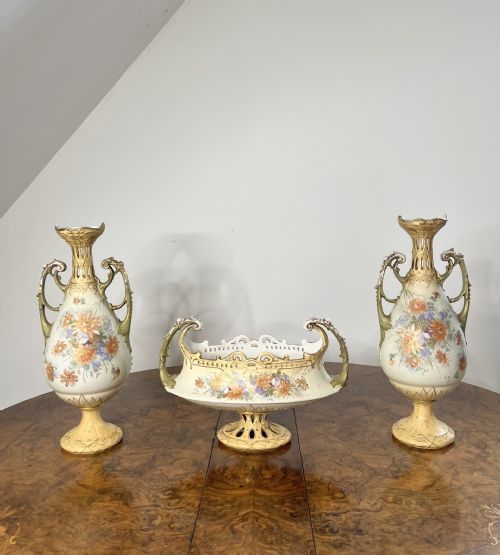


Antique Urn Garniture Set
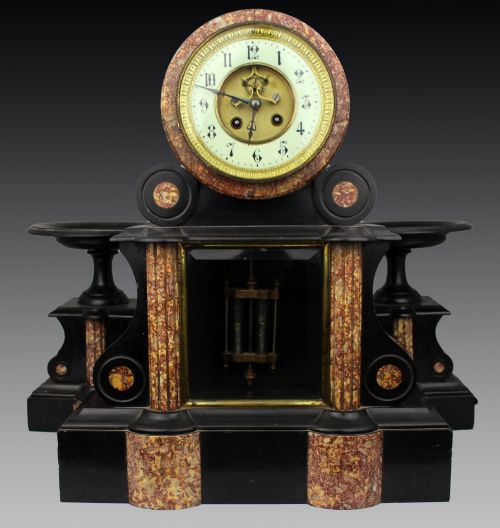
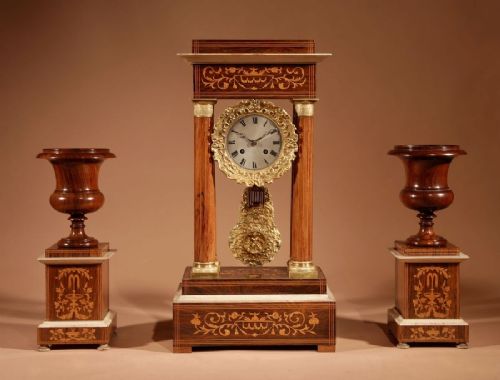
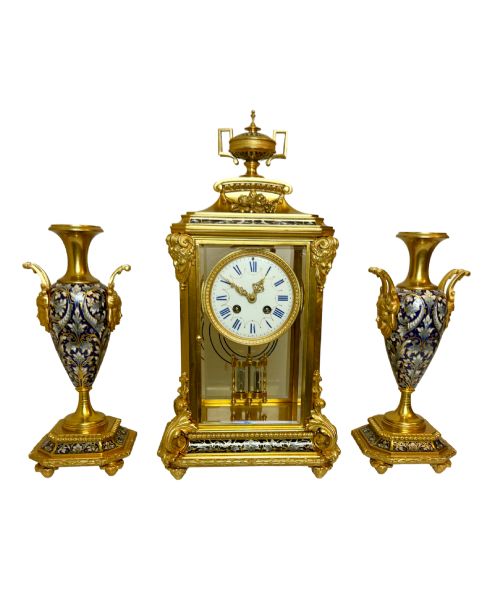
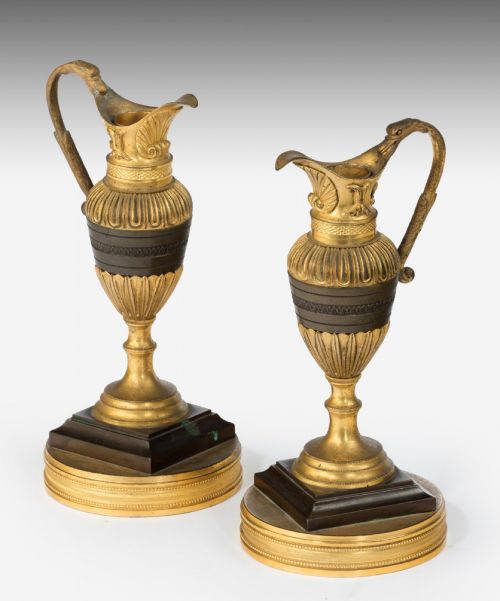
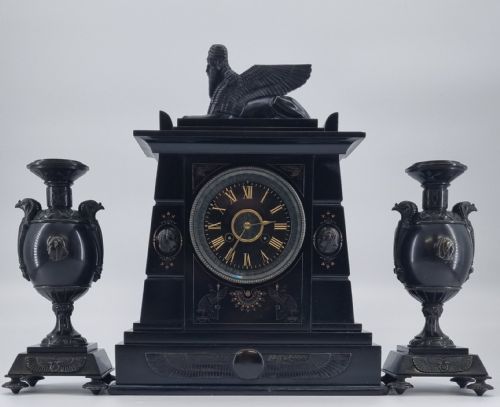
An antique urn garniture set brings symmetry and height to a mantelpiece, pairing a central clock or centrepiece with matching side vases.
Antique Urn Garniture Set
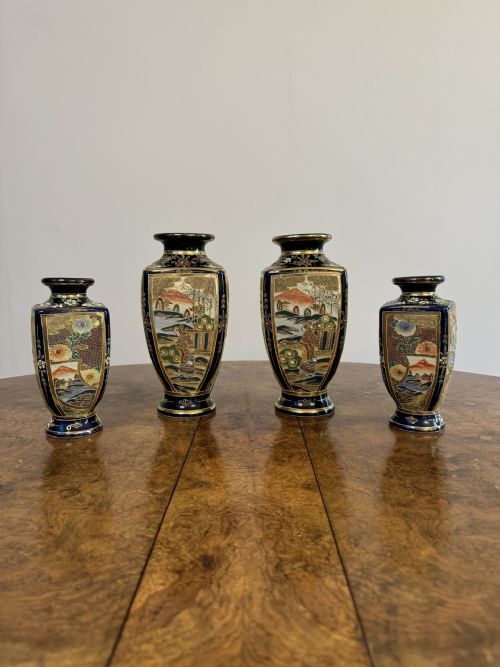
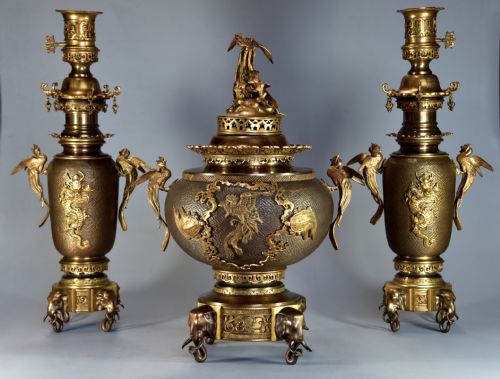
Most examples found on this page originate from the nineteenth century, spanning Victorian, French Rococo Revival, Louis XVI Revival, and Japanese export styles. Buyers encounter complete clock sets alongside matched trios and quartets of vases made to anchor a formal interior scheme.
The form developed to create balanced interior decoration, utilising matched materials and decorative motifs across every component in the set. Whether porcelain, marble, or bronze, each matching vessel repeats the shape and palette of the central piece.
Materials and Techniques
Foundry casting and hand painting dominate the production methods behind these sets, combining metals such as ormolu, gilt bronze, and brass with ceramic bodies. Artisans utilised champleve enamel, gold leaf, and overlaid glass to enrich the surfaces of nineteenth-century pieces.
Marble and onyx provide heavy, stable plinths and bodies for many clock sets and vases, often turned on a lathe and polished. Porcelain components from European factories and Japanese kilns received intricate hand-applied glazes and gilt detailing before final assembly.
Some elaborate French clock sets include a tiny moon dial that tracks the lunar phases right above the clock face.
Evaluating Quality in Garnitures
The crispness of the chasing on gilt bronze and ormolu mounts separates superior sets from standard production, showing sharp relief rather than softened casting details. Hand-painted ceramic panels and porcelain glazes display greater artistic skill in higher-tier examples, with refined brushwork and deep, stable colours.
Completeness dictates the integrity of a set, as matching side vases must share the exact height, weight, and decorative vocabulary of the central clock or urn. The weight and quality of the underlying marble or stone plinths also signal the ambition of the original maker.
Japy Freres·Flight Barr and Barr·KPM Berlin·A.D Mougin·Vincenti of Paris
The Antique Urn Garniture Set Glossary
- Garniture
- A set of matched decorative objects designed for symmetrical display on a mantelpiece or furniture top. It usually includes a central clock or vase accompanied by two matching side pieces.
- Ormolu
- Gilt bronze created by applying a mercury and gold amalgam to a bronze casting and heating it to drive off the mercury. This technique produces a rich, durable golden surface seen on nineteenth-century French mounts.
- Champleve
- An enamelling technique where troughs or cells are hollowed out of a metal surface and filled with vitreous enamel powder before firing. The resulting coloured patterns sit flush with the surrounding metal lines.
- Imari
- A style of Japanese export porcelain decorated in underglaze blue, iron red, gold, and green. It gained immense popularity in Europe during the Edo period and inspired subsequent Western revivals.
Antique Urn Garniture Set: Frequently Asked Questions
What is an antique urn garniture set?
An antique urn garniture set is a matching group of decorative vessels and timepieces designed to be displayed together in a symmetrical arrangement. The grouping typically centres on a mantel clock or large centrepiece flanked by two or more matching vases.
Historically placed on mantelpieces or large sideboards, these sets created a balanced focal point in formal nineteenth-century rooms. Each piece shares the same materials, decorative motifs, and colour palette to tie the display together.
How do you style a garniture set?
Styling a garniture set involves placing the tallest or central piece, such as a clock or large urn, in the exact middle of a mantelpiece or console table. The matching side vases are then positioned symmetrically to the left and right.
Keeping equal distance between the central object and the side pieces preserves the intended visual balance. Surfaces should be deep enough to support the heavy marble and bronze bases safely without crowding.
How do I identify French nineteenth-century garnitures?
French nineteenth-century garnitures often feature distinct revival styles, including Louis XVI, Rococo, and Empire designs executed in gilt bronze, marble, and painted porcelain. Maker marks stamped on clock movements or porcelain bases frequently point to Parisian foundries and studios.
The use of cast ormolu mounts, champleve enamel, and patinated bronze further characterises this regional production. Quality indicators include numbered movement plates and finely chased metal details.
What materials are common in antique garniture sets?
Antique garniture sets commonly incorporate metals such as brass, gilt bronze, ormolu, and patinated bronze alongside natural stone bases like black marble and onyx. Ceramic materials appear frequently, ranging from European porcelain to Japanese Imari and Satsuma wares.
Glass elements, including Bohemian glass and protective glass domes, also feature in nineteenth-century arrangements. These varied materials were often combined within a single set to create contrast and texture.