


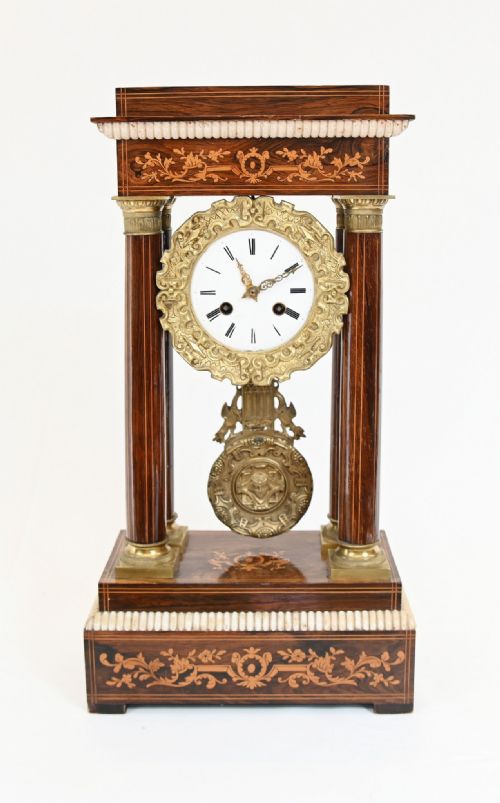


French Ormolu Portico Clock
A french ormolu portico clock brings architectural symmetry and brilliant metallic warmth to a mantelpiece, combining classical columned structure with precise horological movement.
French Ormolu Portico Clock
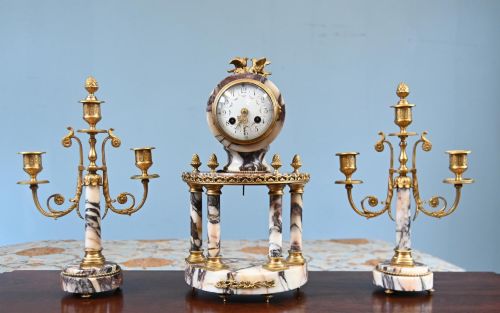
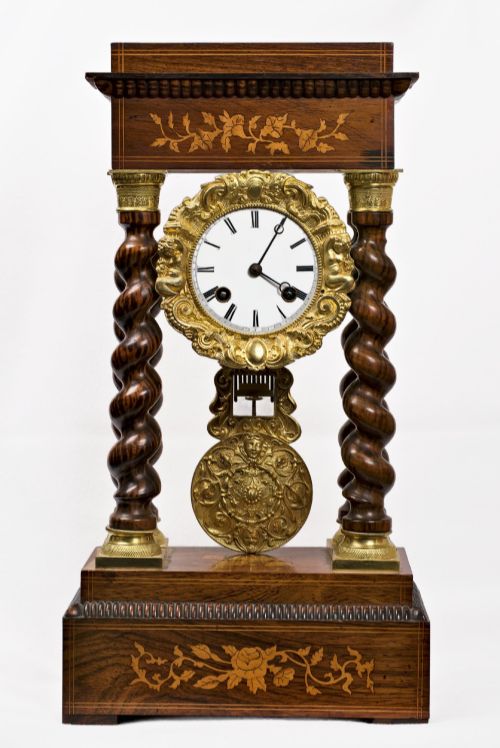
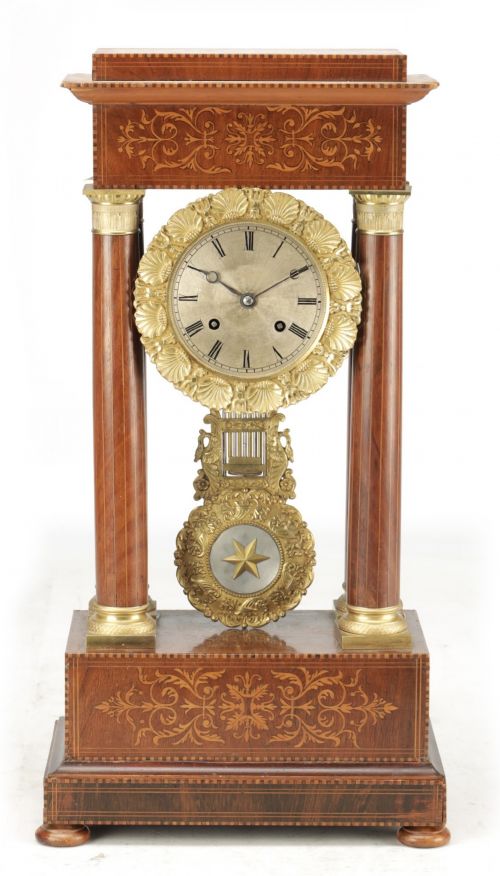
A french ormolu portico clock typically takes the form of a freestanding architectural case supported by four columns, framing a central suspended pendulum. These striking mantel timepieces span several decades of design, appearing in classical architectural styles such as Charles X, Louis XVI revival, and Empire.
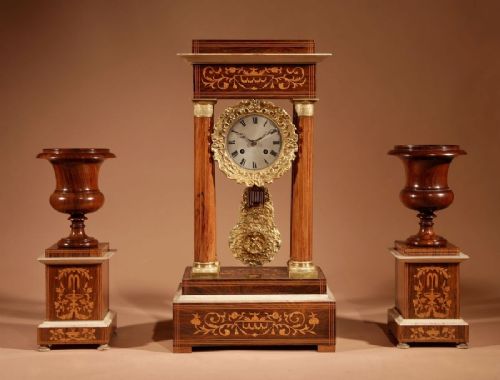
Buyers encountering these pieces will most frequently find examples originating from the nineteenth century, alongside occasional eighteenth-century precursors. Many survive as part of larger garnitures accompanied by matching candelabras or side urns.
Materials and construction
Maker workshops built these architectural clock cases using dense white, pink, or sienna marble, alabaster, and fine timbers like rosewood often inlaid with contrasting lemon wood. Cast bronze and brass components received heavy fire-gilding, creating the rich golden ormolu surface that defines the style.
Enamel dials with delicate painted numerals sit centrally within the columned structure, frequently protected behind bevelled glass bezels. Intricate brass and gilt-bronze mounts decorated with floral motifs, cherubs, or classical emblems punctuate the stone and timber frames.
French Ormolu Portico Clock Retail Price Guide 2026
Typical asking prices for french ormolu portico clock among the pieces listed under this phrase on Sellingantiques today, from the lower quarter to the upper quarter. They describe what is for sale here now, not the wider market.
Current listings demonstrate a strong presence of nineteenth-century French production, pairing white and pink marble structures with fire-gilded ormolu mounts.
Craftsmanship and distinction
The division between standard and superior pieces rests in the crispness of the gilt-bronze chasing and the architectural proportion of the columns. Finely articulated ormolu mounts retain deep, even gilding and sharp relief work rather than softened edges from worn casting moulds.
Material selection and movement sophistication further elevate the piece, distinguishing simple timber boxes from monumental marble and crystal constructions housing complex french mechanical movements. The integration of marquetry inlay, signed dial work, and matching garniture elements signals higher workshop ambition.
Breguet·Japy Freres·A D Mougin·Fritz Marti
The French Ormolu Portico Clock Glossary
- Ormolu
- Gilded bronze produced by applying a mercury and gold amalgam to a cast brass or bronze object and heating it to vaporise the mercury. This historic technique yields a warm, enduring golden finish.
- Portico clock
- A mantel clock designed with a distinct architectural case featuring vertical supporting pillars or columns. The pendulum typically swings visibly within the open central chamber.
- Garniture
- A set of matching decorative objects designed to be displayed together on a mantelpiece, usually comprising a central clock flanked by candelabras, vases, or urns.
- Charles X
- A French design period spanning the 1820s characterised by clean architectural lines, light timber veneers, and restrained classical ornamentation.
French Ormolu Portico Clock: Frequently Asked Questions
How do these architectural clocks work?
These timepieces rely on traditional spring-driven or weight-driven mechanical movements housed within the central drum or pediment. The pendulum is suspended centrally between the columns, often swinging freely within the open portico space.
Regular winding using an appropriate key keeps the movement operational. Professional servicing ensures the brass gears and escapement function smoothly over time.
What styles influence portico clock design?
The primary influences stem from classical architecture and revival movements popular across France and Britain throughout the nineteenth century. Charles X, Louis XVI, and Empire aesthetics heavily dictate the column shapes, pedestal bases, and decorative mount motifs.
Earlier iterations favour severe classical symmetry, while later Victorian adaptations introduce softer decorative flourishes and varied coloured marbles.
Are these clocks suitable for daily use?
Most antique mechanical clocks function reliably as daily timekeepers when properly maintained and placed on a stable, level surface. The delicate nature of nineteenth-century movements and exposed pendulums requires careful handling during any relocation.
Placing the clock away from direct sunlight and drafts protects both the wooden veneers and the painted enamel dial faces from environmental stress.