



Antique Umbrella Bucket
An antique umbrella bucket keeps hallway floors dry while adding robust country house character to your entrance.
Antique Umbrella Bucket
When you search for an antique umbrella bucket, you encounter sturdy vessels designed to hold wet walking gear and walking sticks in domestic hallways. The pieces appearing here span the Georgian, Victorian, and Edwardian periods, stretching into early twentieth century utilitarian forms.
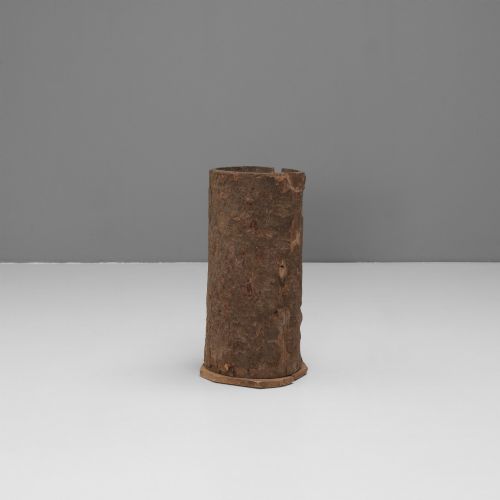
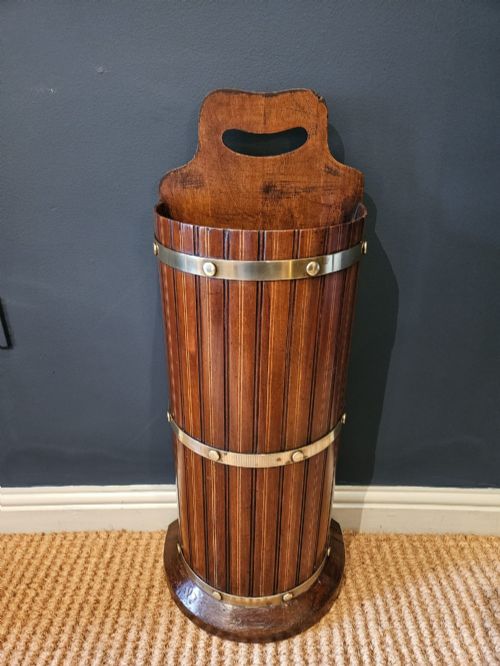
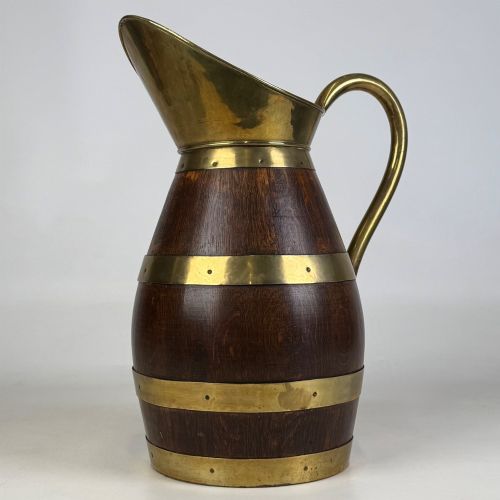
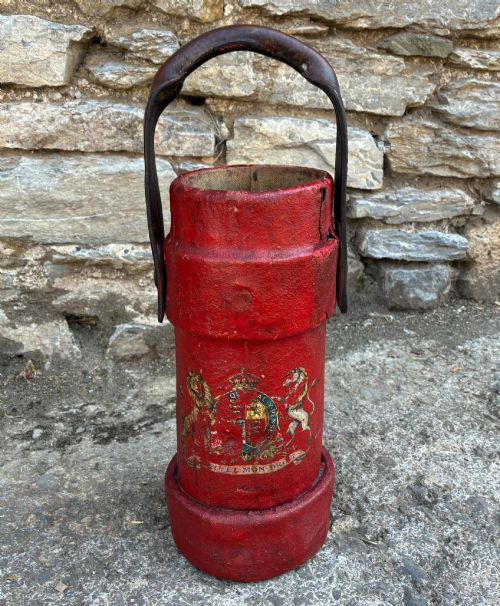
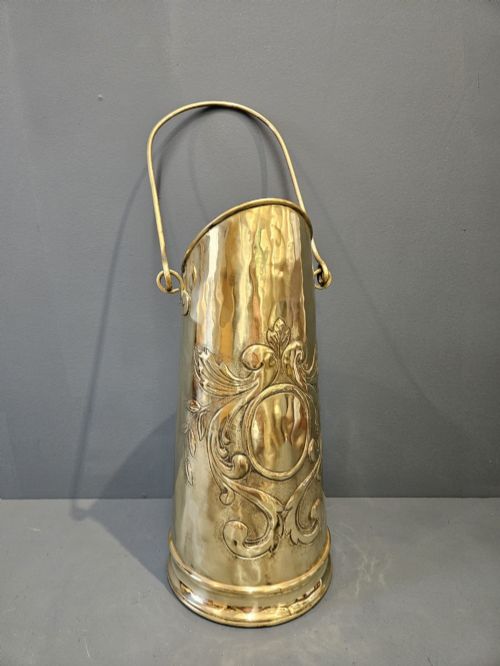
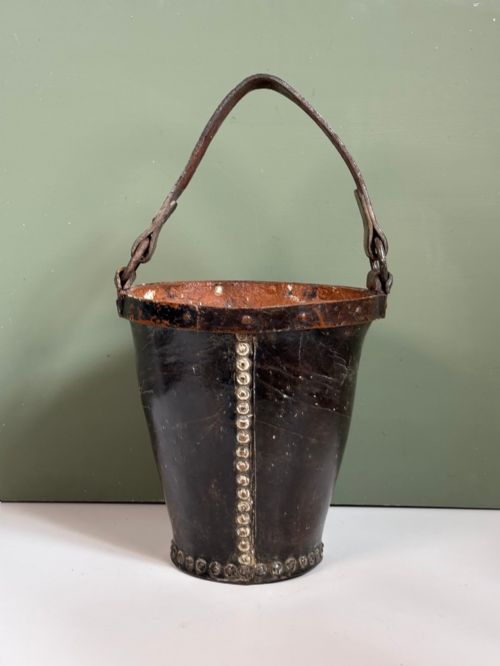
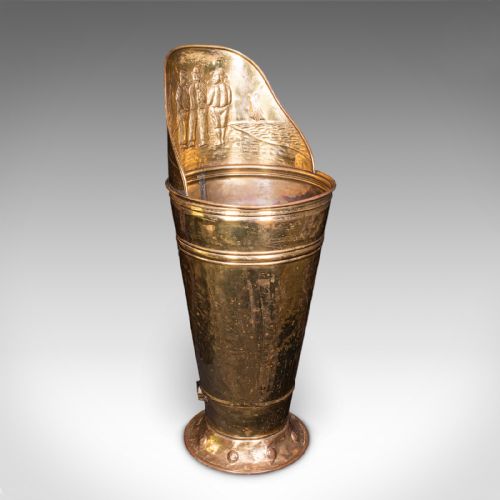
The selection encompasses coopered oak barrels, leather fire buckets, brass-bound mahogany vessels, and metal shell carriers repurposed for domestic use. You also find French grape hottes and Dutch traditional designs alongside traditional English umbrella stands.
Wooden barrels and leather buckets dominate the forms, often fitted with metal handles, brass bands, or interior loops. These pieces bring functional utility from agricultural, military, and domestic settings directly into the hall.
Materials and construction methods
Coopered construction defines the wooden examples, where narrow staves of oak are joined together and secured with tight metal bands. This traditional barrel-making technique provides the structural integrity required to hold heavy walking sticks and wet umbrellas.
Leather buckets utilise thick hides, sometimes boiled for rigidity or hand-painted with crests, then stitched and reinforced with metal rivets. Metal vessels rely on hammered copper and sheet brass, frequently combined with iron handles and decorative brass bindings.
The listings show materials ranging from raw industrial copper and boiled leather to polished mahogany and coopered oak.
Distinguishing quality in these vessels
Quality rests in the integrity of the materials and the crispness of the original hardware, such as solid brass bands and riveted seams. Finer pieces display careful timber selection, visible in the rich grain of coopered oak or polished mahogany.
Proportion and execution set apart standard utility items from decorative country house pieces. Superior examples retain their original patination, interior liners, and structural stability without relying on modern replacements.
The Antique Umbrella Bucket Glossary
- Coopered
- Built from curved wooden staves bound together with metal hoops, much like a traditional barrel. This method ensures strength in containers meant for holding liquids or heavy implements.
- Hotte
- A traditional French backpack carrier, often constructed from wood and wicker or metal, used during the grape harvest. These agricultural containers frequently find a second life as hallway stick stands.
- Cordite bucket
- A heavy metal or leather container originally manufactured to safely transport military explosives. Their cylindrical proportions make them well-suited for repurposing as umbrella stands.
- Patina
- The deep surface sheen and wear developed over decades of handling and use. A genuine patina tells the history of the object through its aged timber, leather, or metal.
- Elliptical
- Oval-shaped in plan rather than perfectly round. This narrower profile allows umbrella buckets to sit flush against hallway walls.
Antique Umbrella Bucket: Frequently Asked Questions
How do I use an antique bucket for umbrellas?
Place the bucket in a hallway or entrance lobby to hold walking sticks, canes, and umbrellas. Ensure wet items have a protective liner inside the vessel to protect historical wood or leather from standing water.
Position the container away from direct radiators to prevent the timber staves from drying out and shrinking over time. Regular gentle dusting preserves the natural surface patination.
Are leather buckets waterproof?
Historical leather buckets, particularly fire buckets and shell carriers, received treatments like boiled wax or pitched interiors to hold water. Over decades, this historic waterproofing can degrade or crack.
Check the interior condition before placing dripping umbrellas inside an unlined leather piece. Many collectors prefer to place a modern discrete tray inside the base for daily practical protection.
How can I tell a Victorian barrel from a Georgian one?
Georgian leather fire buckets often feature hand-painted coats of arms, early parish markings, and thick stitched seams. They tend to reflect utilitarian civic or estate use from the eighteenth century.
Victorian and Edwardian coopered oak barrels frequently incorporate machine-rolled brass bands and decorative handles. The timber finishing and interior hardware generally point to later domestic hallway production.
What is a grape hotte used for?
A grape hotte is a deep, angled carrying vessel historically worn by workers during the European grape harvest. Their characteristic shape is tapered to rest comfortably against the back.
In modern interiors, these French agricultural carriers stand upright in entryways as striking umbrella holders. Their rustic texture brings distinct continental character to traditional hallways.
How do I maintain coopered oak stands?
Keep coopered oak away from extreme temperature fluctuations and intense central heating to avoid wood splitting. Feed the dry timber occasionally with a traditional wax to maintain the grain.
Inspect the metal hoops periodically to ensure they remain secure around the staves. Gentle care preserves both the structural joins and the historic surface character.