




Victorian Umbrella Container
A Victorian umbrella container brings functional hallway organisation into focus, combining robust timber and heavy metal to keep wet weather contained.
Victorian Umbrella Container
When searching for a victorian umbrella container, buyers encounter hallway furnishings designed to hold walking sticks, parasols and wet umbrellas. These pieces originate predominantly from the nineteenth century, spanning periods from early Victorian work up to Edwardian and later 1920s examples.
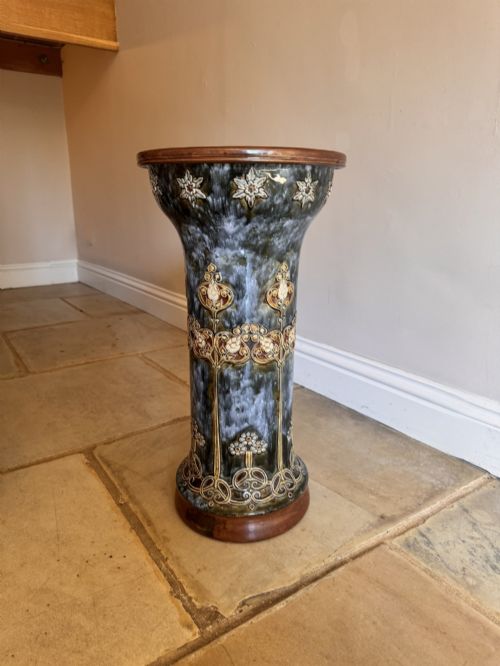
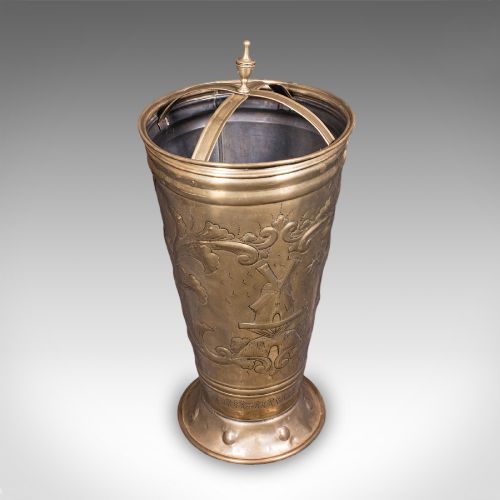
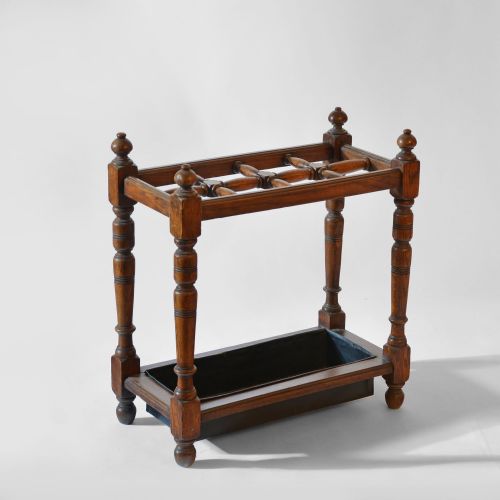
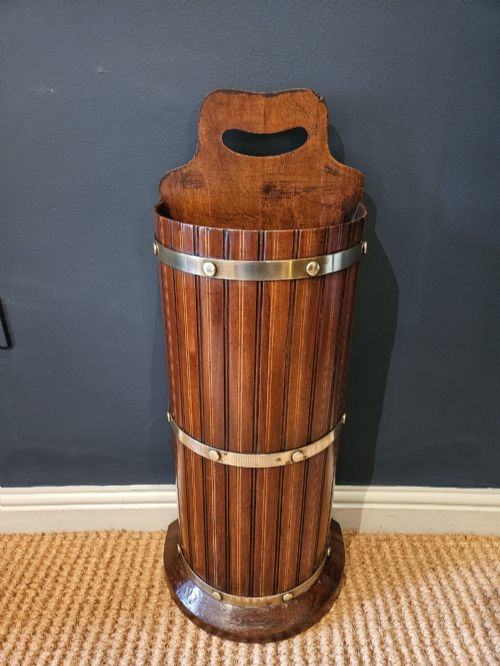
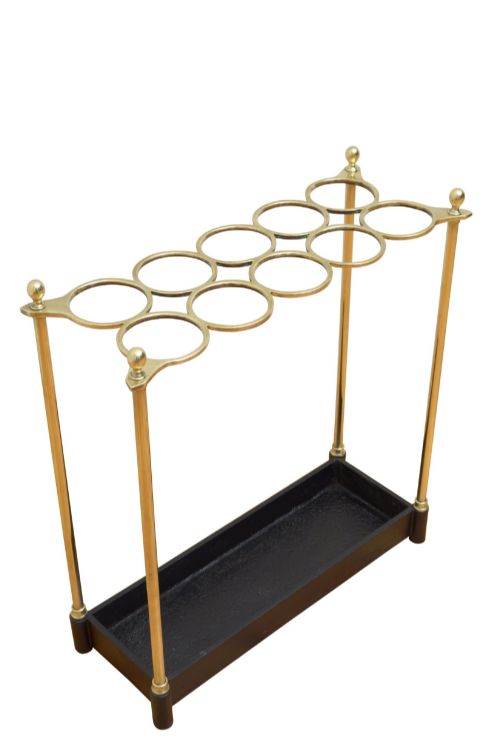
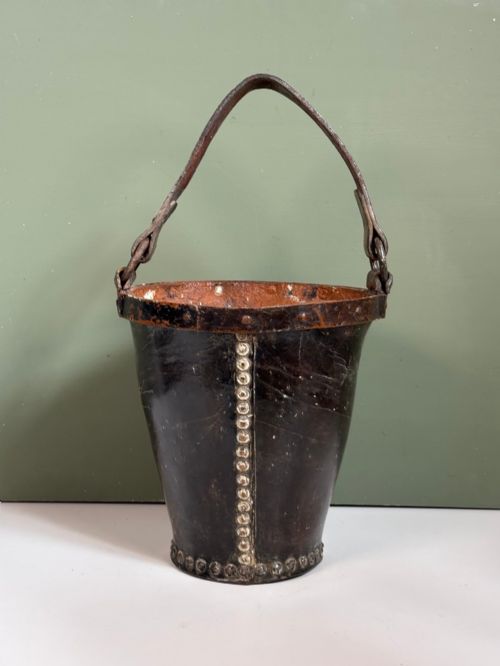
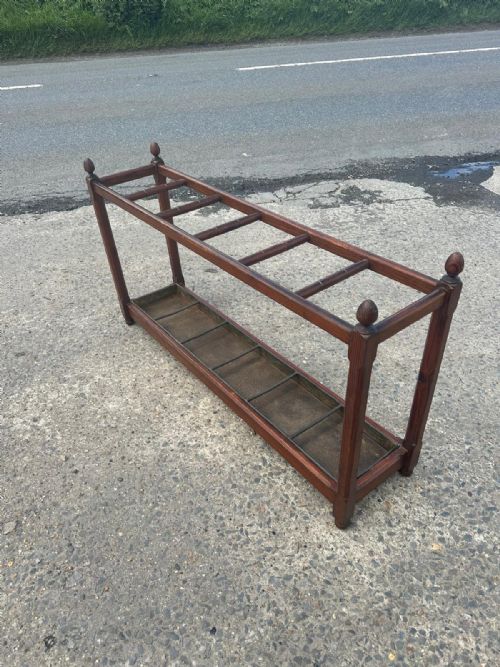
The most common forms on this page include coopered oak barrels, brass-bound buckets, and combined brass and cast iron stands. Examples range from simple pitch pine country house accessories to decorative Dutch styles and Iznik-revival ceramics.
Materials and construction methods
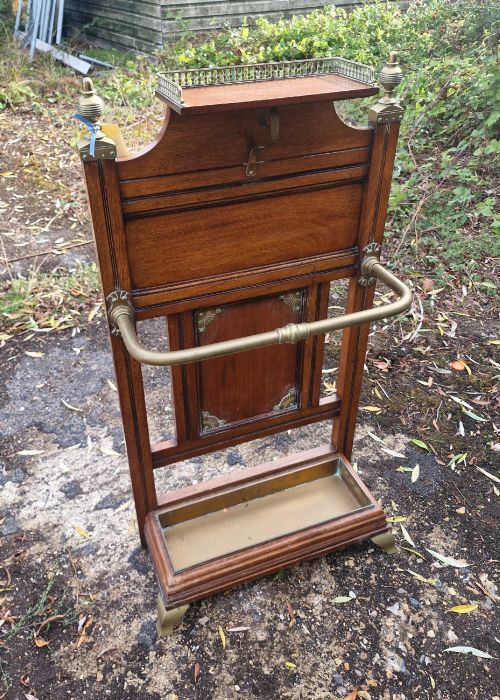
Makers utilised solid timbers such as oak, mahogany and pitch pine, frequently shaping them using traditional coopered stave construction. Metal components appear extensively, utilising heavy cast iron, sheet copper and polished brass for structural stability and decorative trim.
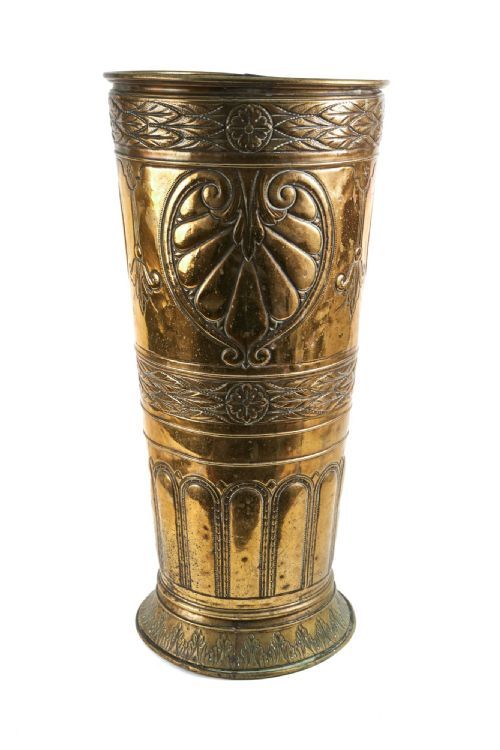
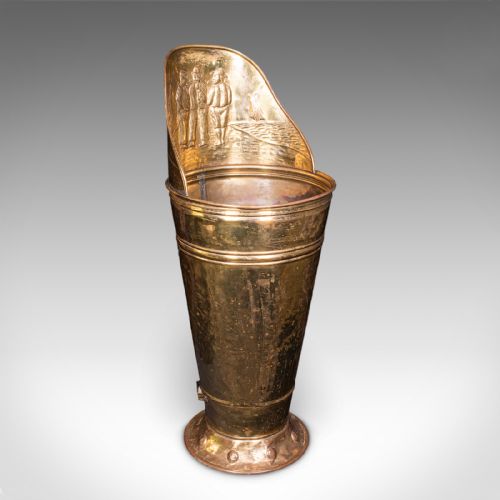
Metal vessels often feature riveted seams and applied ball finials, whilst wooden barrels employ tight-fitting brass hoops to secure the staves. Pierced sheet metal and glazed ceramic bodies provide alternative surfaces that resist moisture accumulation from wet items.
Victorian Umbrella Container Retail Price Guide 2026
Typical asking prices for victorian umbrella container among the pieces listed under this phrase on Sellingantiques today, from the lower quarter to the upper quarter. They describe what is for sale here now, not the wider market.
Period origins span the nineteenth century, Victorian era, Edwardian period and the early 1920s.
Distinctions in construction and material quality
Quality rests upon the integrity of the materials and the proficiency of the assembly, seen in the tightness of coopered joints and the thickness of the brass bindings. Substantial gauge metals and dense, figured hardwoods distinguish sturdier examples from lighter, utilitarian items.
Design ambition separates basic utility pieces from high-status objects, marked by decorative cast ironwork, pierced brass patterns or specialised ceramic bodies like Iznik-revival earthenware. Original surface patinas and intact structural hardware maintain the visual coherence of superior examples.
Théodore Deck
The Victorian Umbrella Container Glossary
- Coopered
- Constructed from wooden staves bound together with metal hoops, typical of barrels, casks and buckets.
- Demi Lune
- Half-moon or semicircular in shape, allowing the piece to sit flush against a hallway wall.
- Iznik Revival
- A nineteenth-century artistic movement imitating the colourful glazed ceramic styles of Ottoman Turkey.
- Finial
- A decorative terminal ornament, often spherical or ball-shaped, fitted to the top of metal stands.
Victorian Umbrella Container: Frequently Asked Questions
How were coopered barrels used?
Coopered barrels and buckets functioned as deep containers to catch water run-off at the bottom of walking sticks and umbrellas. Their wooden staves and metal hoops held liquid safely without leaking onto floorboards.
Many of these vessels started as water or dry goods barrels before being adapted or made specifically for hallway use.
How do I care for timber umbrella containers?
Wooden containers benefit from dry placement and regular dusting to preserve the natural grain of oak, mahogany or pitch pine. Keeping the interior dry prevents moisture damage to the base staves.
Applying occasional appropriate wax helps maintain the finish on brass-bound wooden barrels without harming the historic patina.
How do I distinguish brass and cast iron stands?
Cast iron provides heavy structural weight and rigid frames, often featuring moulded patterns or pierced designs. Brass appears as sheet metal panels, structural rods, and decorative bindings or finials.
Many nineteenth-century pieces combine both metals, using cast iron for heavy bases and brass for upper rings and decorative accents.