







Gold Brass Cane Holder
A gold brass cane holder organises hallway dampness with the steady gleam of Victorian and Edwardian metalwork.
Gold Brass Cane Holder
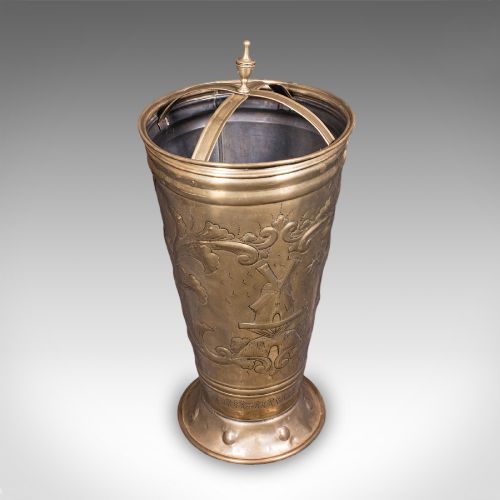
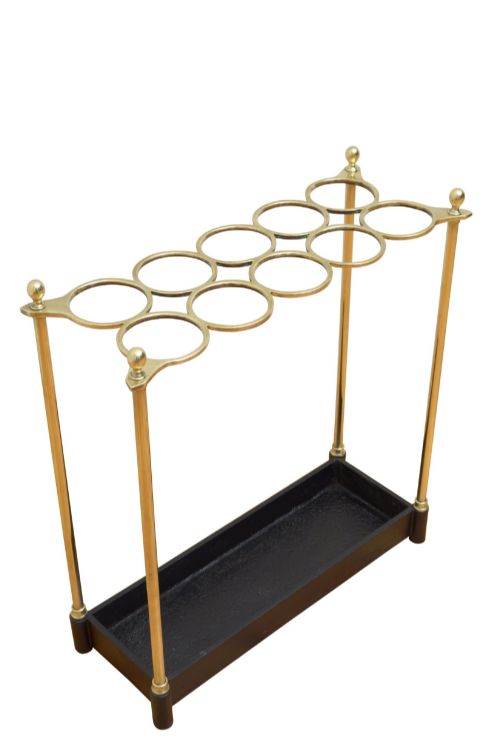
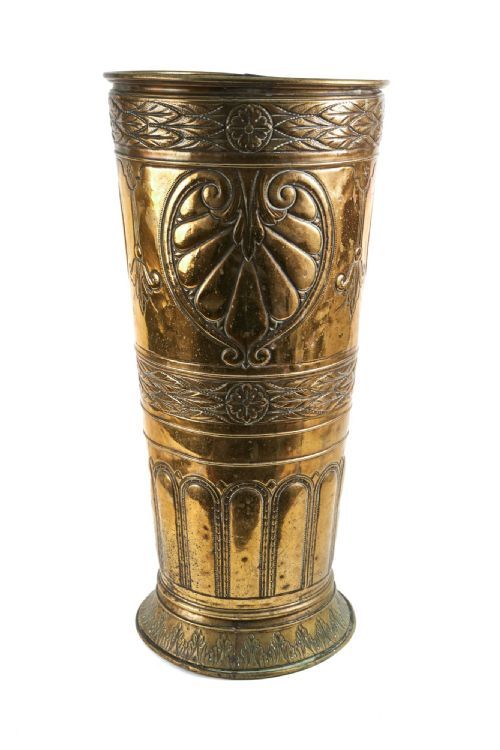
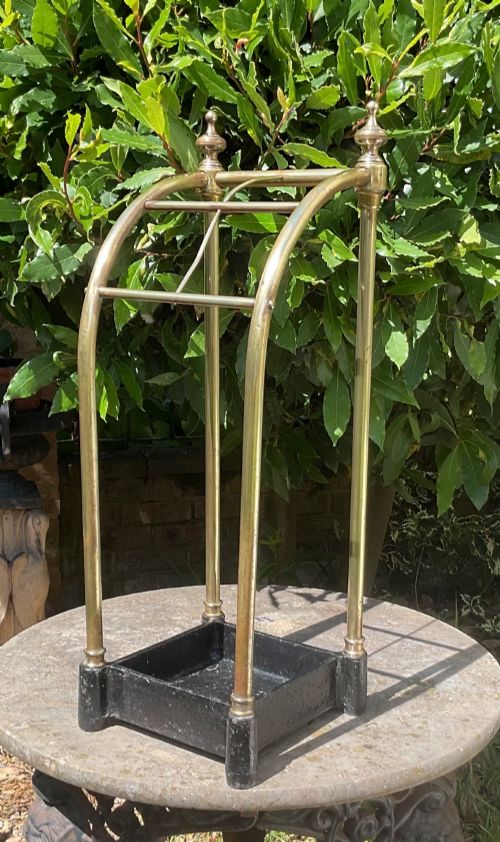
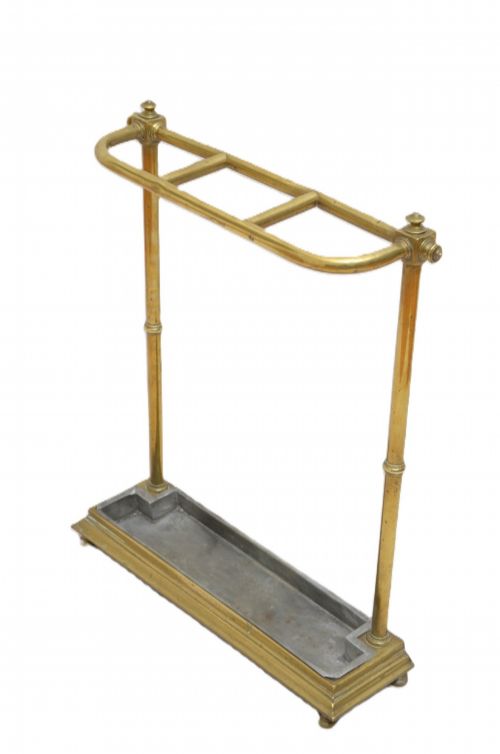
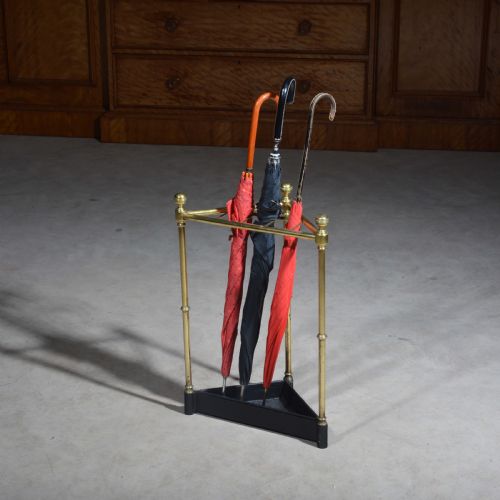
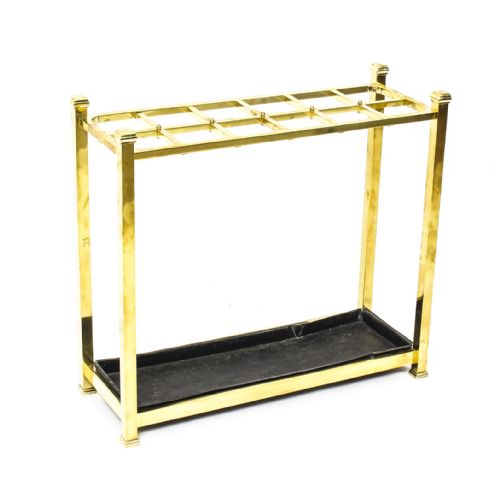
When searching for a gold brass cane holder, collectors encounter hall furniture designed to receive wet umbrellas and walking sticks upon entry. The examples on this page span the Victorian, Edwardian, and early twentieth-century periods, taking forms such as umbrella stands, stick stands, and hall stands.
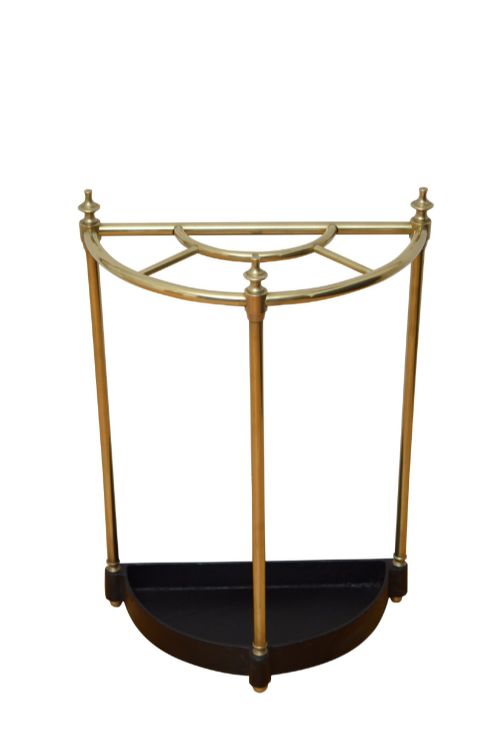
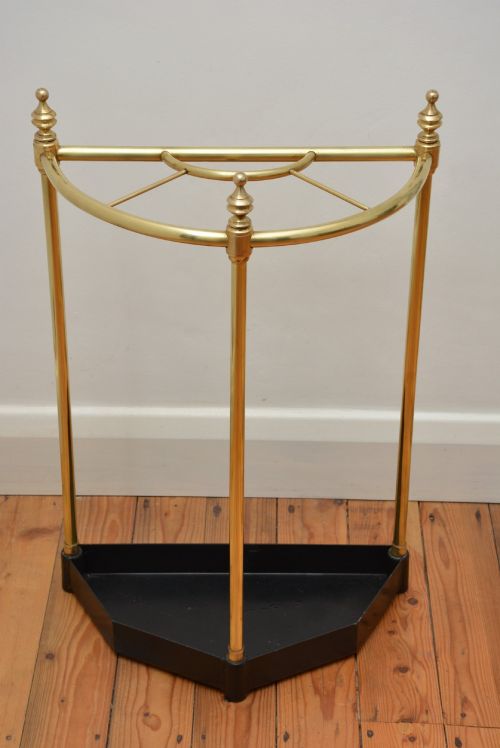
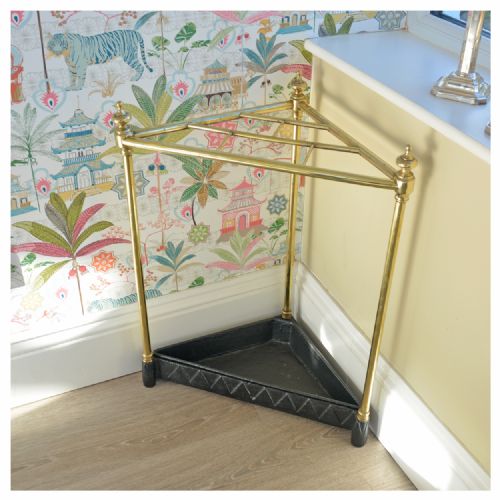
Most pieces seen here adopt a demi-lune or corner shape to fit snugly against a hallway wall, while others stand as circular or umbrella-shaped vessels. Materials are predominantly brass, sometimes paired with cast iron or general metal bases to provide the necessary weight for holding heavy walking canes.
Origins include English and Dutch workshops, offering functional hallway accessories from the nineteenth century through the nineteen-thirties. Buyers frequently meet items featuring decorative ball finials, bun feet, and integral drip trays designed to protect entrance floors.
Materials and construction
The primary material recorded in these listings is brass, shaped into tubular frames, stamped loops, and cast components. Metal and cast iron frequently appear in bases and internal frames to anchor the lighter brass upper structures.
Construction techniques combine cast metal elements with riveted or screwed joints, forming sturdy dividers and stick loops. Many examples incorporate soldered or riveted drip trays at the base to catch water run-off from wet umbrellas.
Gold Brass Cane Holder Retail Price Guide 2026
Typical asking prices for gold brass cane holder among the pieces listed under this phrase on Sellingantiques today, from the lower quarter to the upper quarter. They describe what is for sale here now, not the wider market.
Some stands take the literal shape of an open umbrella, holding your damp gear inside a metallic replica of itself.
Distinctions in quality
Quality in these hall stands rests upon the robustness of the metal casting and the complexity of the design. Heavier gauges of brass and substantial cast iron elements indicate superior manufacture compared to lighter, purely decorative items.
The Gold Brass Cane Holder Glossary
- Demi-lune
- A half-moon shape designed to sit flush against a hallway wall. This profile saves floor space in narrow entrance passages.
- Drip tray
- A shallow metal basin positioned at the base of a stand. It catches water dripping from wet umbrellas to protect flooring.
- Ball finial
- A spherical decorative terminal topping the vertical posts of a stand. These decorative elements typify Victorian metalwork.
- Bun foot
- A flattened spherical support elevating the base of the stand off the floor. They distribute weight and prevent moisture transfer from damp floors.
- Stick loop
- An upper metal ring or divider keeping walking canes upright. These loops prevent sticks from tangling or falling outward.
Gold Brass Cane Holder: Frequently Asked Questions
How do I use a drip tray?
The drip tray sits beneath the main body of the stand to catch water running off wet umbrellas. It protects wooden or tiled hallway floors from moisture damage.
Owners lift out the tray periodically to empty and dry accumulated rainwater.
Are these stands heavy?
Many examples combine lightweight brass frames with heavier cast iron or metal bases. This weighted construction prevents the stand from tipping when loaded with heavy walking sticks.
Smaller corner pieces rely on wall proximity or sturdy metal gauges for stability.
How do I date a brass stand?
Dating relies on stylistic markers such as Art Nouveau curves, Victorian ball finials, and Edwardian construction methods. Material combinations, including cast iron components, also help place pieces within the nineteenth and early twentieth centuries.
Specific production dates remain approximate unless accompanied by maker marks or registration numbers.