
Antique Turned Wooden Rack
An antique turned wooden rack brings functional utility to domestic spaces through time-tested joinery.
Antique Turned Wooden Rack
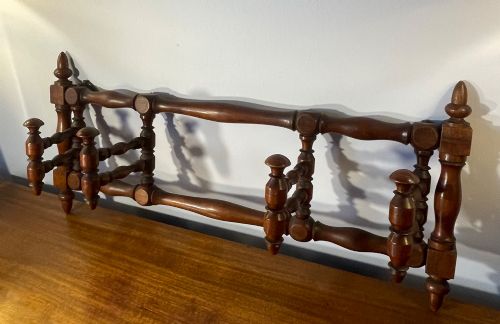
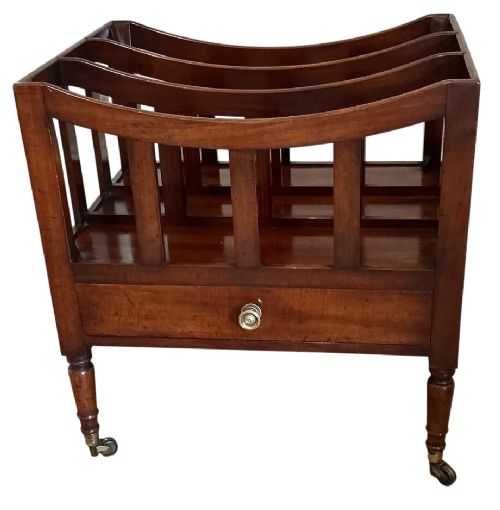
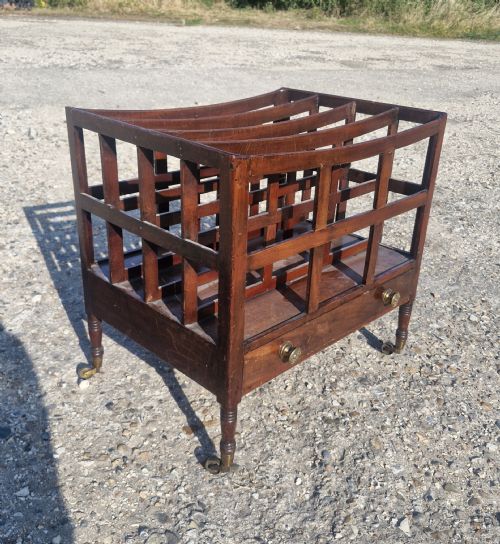
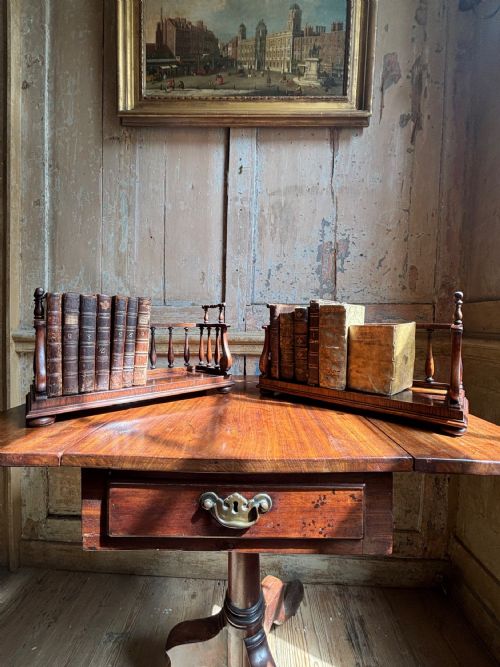
An antique turned wooden rack encompasses items designed for organising books, newspapers, garments, or umbrellas, drawing from periods such as the Georgian, Regency, Victorian, and Edwardian eras.
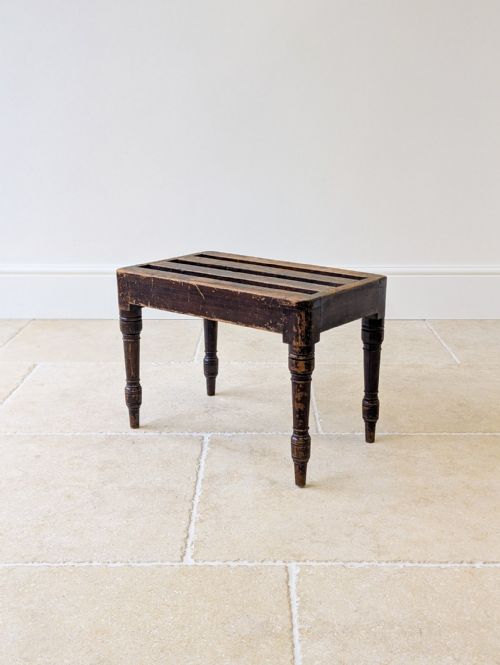
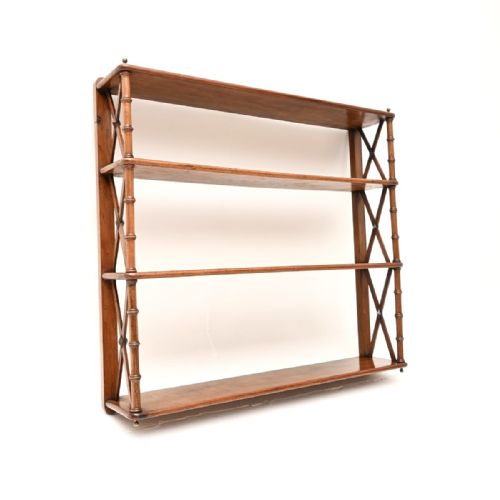
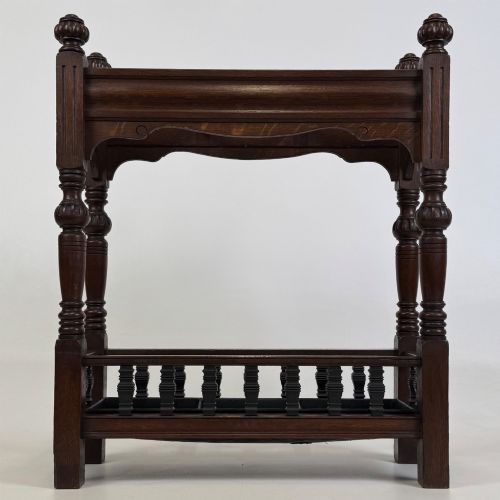
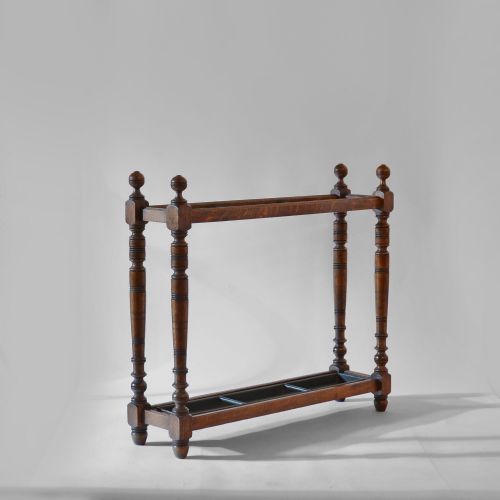
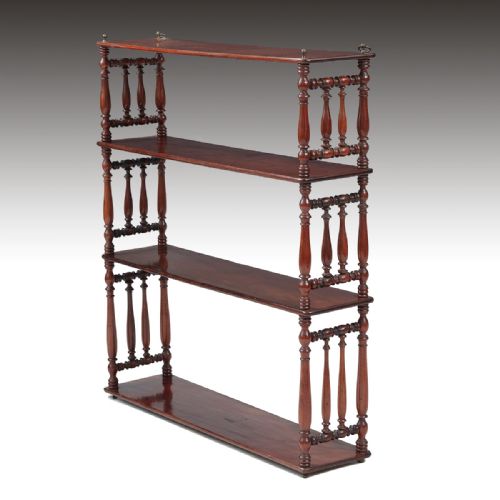
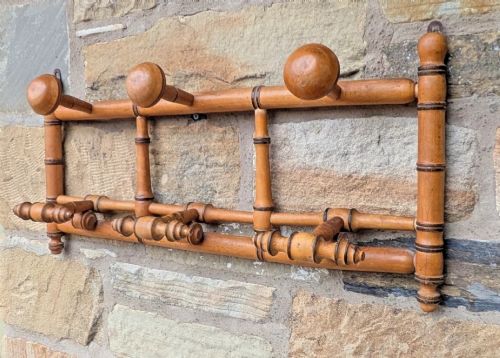
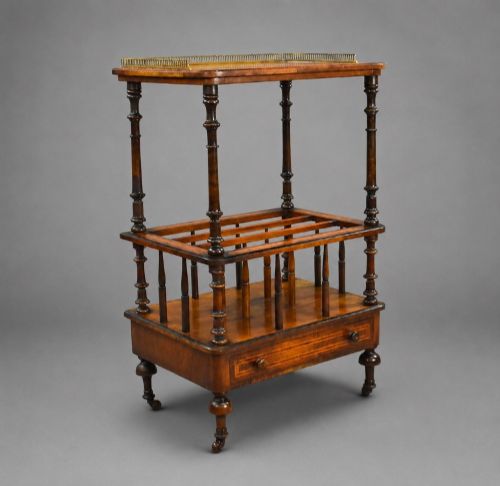
Buyers exploring this category encounter various domestic forms, most notably canterburys, coat stands, luggage racks, wall shelves, and umbrella stands.
Materials span mahogany, walnut, rosewood, beech, oak, ash, fruitwood, and pine, reflecting the primary woods utilised across the nineteenth and early twentieth centuries.
Construction and materials
Craftsmen built these pieces from solid hardwoods and softwoods, employing turning techniques on legs, spindles, and upright supports using a lathe.
Joinery methods relied on traditional pegging, mortise and tenon joints, and brass fixtures, integrating materials like castors, metal hooks, and ceramic details where functional utility required them.
Some Victorian umbrella stands include hidden drip trays underneath to catch rainwater from walking sticks after a stroll.
Assessing construction standards
Excellence in these items rests upon the crispness of the lathe turning, the selection of figured timber veneers, and the structural integrity of the frame joints.
Superior examples demonstrate careful proportion, balanced divisions in items like canterburys, and original brass castors or mounting hardware rather than later replacements.
Brown & Lamont·Gillows
The Antique Turned Wooden Rack Glossary
- Canterbury
- A low stand fitted with divisions, originally designed to hold sheet music or periodicals. The form typically incorporates turned legs and carrying handles.
- Turned
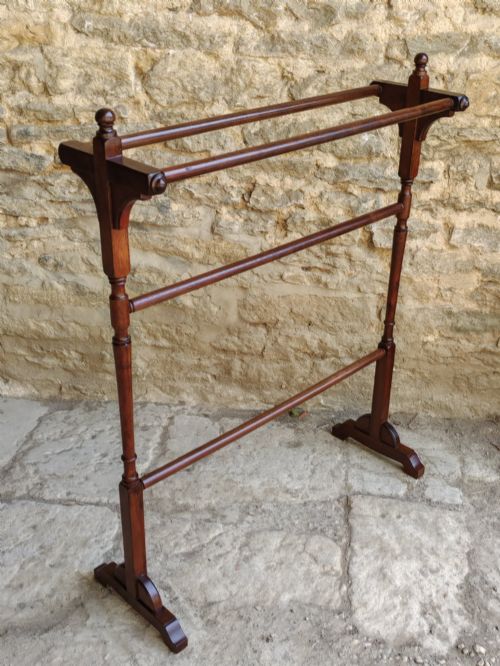
- Wood shaped on a lathe by rotating the piece against a cutting tool. This method creates cylindrical components with decorative profiles.
- Luggage stand
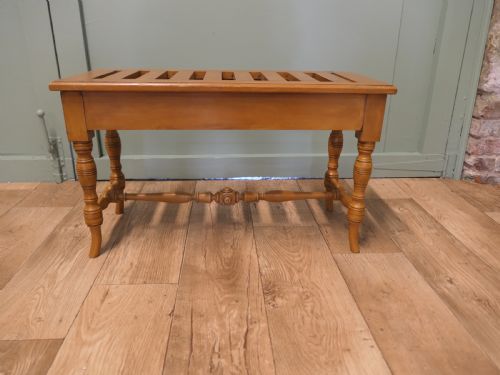
- A folding or rigid low table with webbing or wooden slats across the top, placed in guest rooms for trunks and bags.
- Whatnot
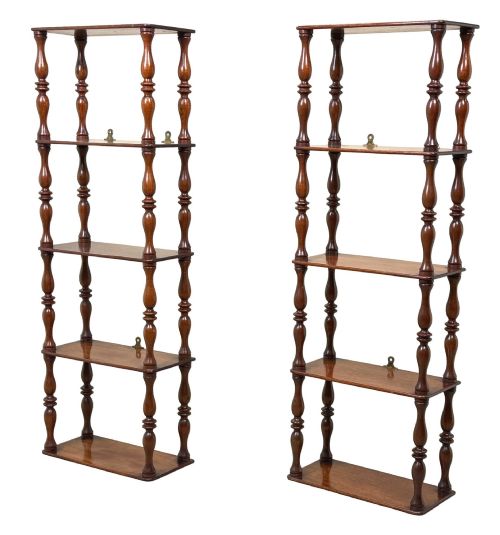
- An open set of freestanding or wall-mounted shelves used for displaying ornaments and small objects across multiple tiers.
- Spindle
- A slender, turned wooden rod used as a structural or decorative baluster in racks and stands.
Antique Turned Wooden Rack: Frequently Asked Questions
What is a canterbury used for?
A canterbury serves as a compartmentalised stand designed to hold newspapers, magazines, or sheet music within a living space or parlour.
Historically, these pieces sat beside seating areas to keep reading materials tidy and accessible.
How do I date a wooden rack?
Dating relies on examining the timber species, secondary woods, turning profiles, and construction methods relative to known historical periods.
Stylistic cues such as Regency boat shapes or Victorian burr walnut veneers provide further chronological markers.
Where should I place a luggage stand?
A luggage stand functions well in a bedroom or guest room as a sturdy platform for bags, blankets, or towels.
The raised design keeps luggage off the floor and provides easy access during packing.
Are these stands suitable for coats?
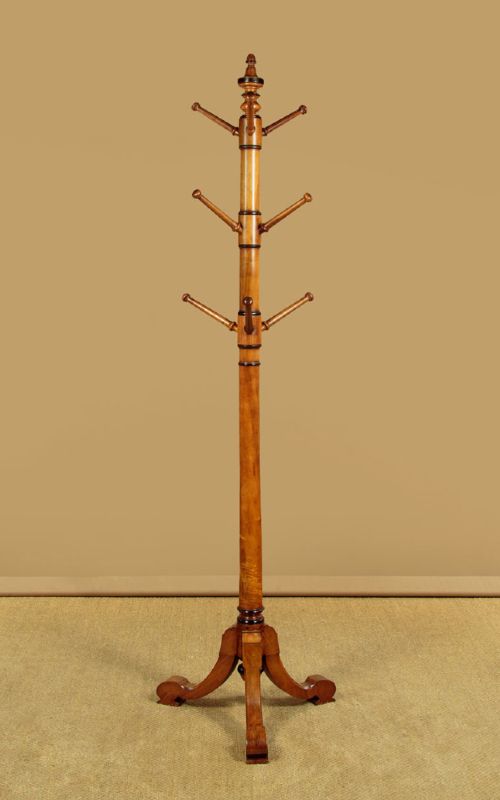
Hall trees, coat stands, and wall racks provide dedicated hanging space for garments, hats, and umbrellas in an entryway.
Their robust timber construction supports heavy winter coats and daily outerwear.