


Antique Turkmen Chuval
An antique turkmen chuval is a tribal storage bag face woven across Central Asia for domestic utility and nomad hospitality.
Antique Turkmen Chuval
An antique turkmen chuval represents a large trapping traditionally used for household storage inside nomad tents across the Central Asian steppes. Buyers frequently encounter bag faces preserved without their plain weave backs, though complete examples with original backs and hanging loops do survive.
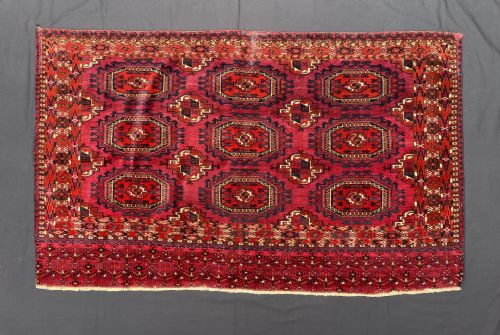
The majority of pieces on this page originate from the Tekke, Ersari, Yomut, and Saryq tribes, dating from the mid-nineteenth century up to the early twentieth century. Designs range from structured arrangements of primary guls to banded layouts and uncommon mina khani patterns.
Format variations include complete storage bags, cut fragments, and occasional matching pairs that demonstrate the utility and tribal artistry of Central Asia.
Wool construction and natural dyes
Weavers constructed these pieces using hand-spun wool and cotton foundations, occasionally incorporating silk highlights for specific motifs and detailing. Natural dyes provide the palette, yielding deep crimson reds, rich browns, and distinct madder tones across the field.
The weaving technique relies on dense pile knotting paired with lower plain weave sections known as elems at the base. Artisans frequently utilised supplementary weft techniques and white cotton accents to delineate geometric borders and central gul medallions.
Listings feature Turkmen chuvals dated across the eighteenth, nineteenth, and early twentieth centuries.
Weave density and structural preservation
Quality depends heavily on the fineness of the weave and the clarity of the primary gul structures across the field. Pieces possessing extremely tight knotting and intact original backs or hanging loops sit at the upper end of survivals.
The vibrancy and depth of the natural dyes, particularly cochineal and madder grounds, determine the visual strength of the textile. Condition plays a major part, distinguishing complete bag faces with minor wear from heavily fragmented examples.
The Antique Turkmen Chuval Glossary
- Chuval
- A large tent storage bag produced by nomadic Turkmen tribes to hold bedding and household belongings. These items formed an essential part of a bride's dowry.
- Gul
- A repeating primary medallion motif embedded within the central field of Turkmen weaving. Different tribal groups utilised distinct gul geometries to signal identity.
- Elem
- The decorated lower skirt panel situated beneath the main field of a bag face or rug. This section often displays tree, flower, or geometric band designs.
- Tekke
- A major Turkmen tribal confederation known for producing finely knotted chuvals featuring repeated guls and precise geometric borders. Their work defines a large portion of surviving pieces.
- Kizil
- A term denoting red-ground Turkmen weaving dominated by deep madder and cochineal dye stuffs. These red fields provide the backdrop for multi-gul arrangements.
Antique Turkmen Chuval: Frequently Asked Questions
What were chuvals used for?
Nomadic families utilised these large bags inside tents to store wool, clothing, and bedding off the ground. They hung against lattice walls or stacked upon pack animals during migrations.
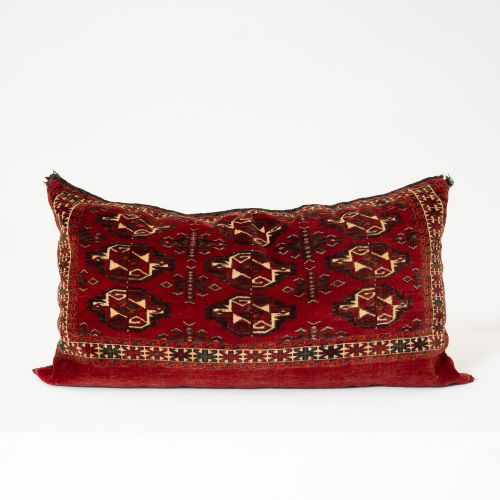
Over generations, many bag faces were separated from their plain weave backs when families divided textiles for domestic use or trade. Today, collectors mount them as decorative wall hangings or display them flat on floors.
How do I identify tribal origins?
Tribal attribution relies on the specific gul geometry, border arrangements, and secondary ornament choices woven into the field. Tekke pieces typically display orderly octagonal guls, whilst Yomut designs often incorporate alternative hooked motifs.
Ersari and Saryq weavers introduced distinct colour palettes and elem compositions that differentiate their work from Trans-Caspian productions. Examining the knotting structure and wool quality confirms the regional source within Central Asia.
Are complete bags common?
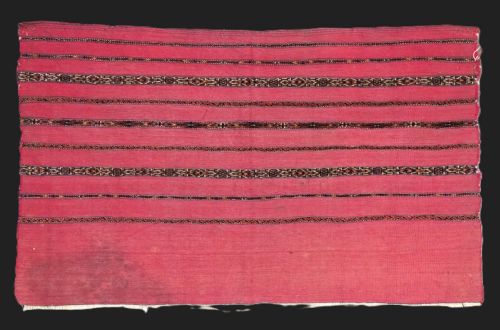
Complete examples featuring both the pile face and the original plain weave back are less frequent than single bag faces. Many surviving textiles represent the decorative face alone, trimmed from the utilitarian backing over time.
When a piece retains its back and suspension loops, it demonstrates how the trapping functioned within the nomad interior. Fragments and cushion conversions also appear amongst historical survivals.
How should I care for a textile?
Protect antique wool textiles from direct sunlight to prevent natural dye fading and fibre degradation over time. Gentle vacuuming through a mesh screen removes surface dust without stressing the wool pile or cotton foundation.
Avoid hanging pieces by isolated corners or loops if the fabric weight strains the ancient structure. Professional textile conservation ensures structural stability for items displayed on walls.