



Antique Trumpet Vase
An antique trumpet vase supports single stems or sits as a grand centrepiece, bringing height and structural grace to a table.
Antique Trumpet Vase
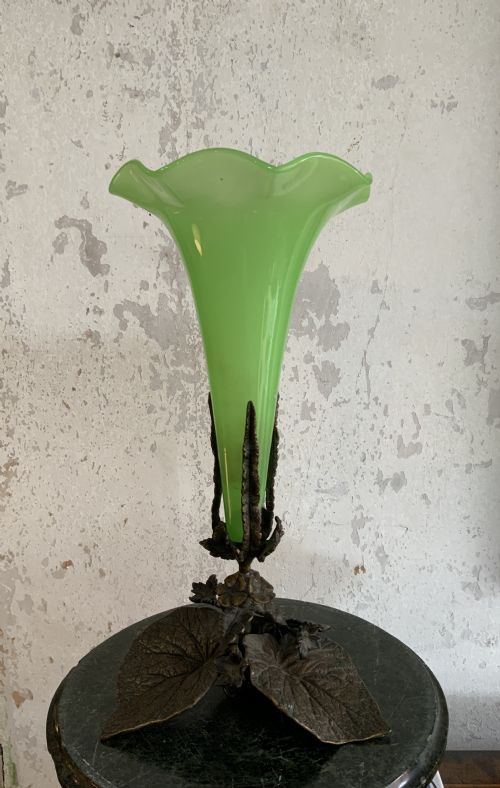
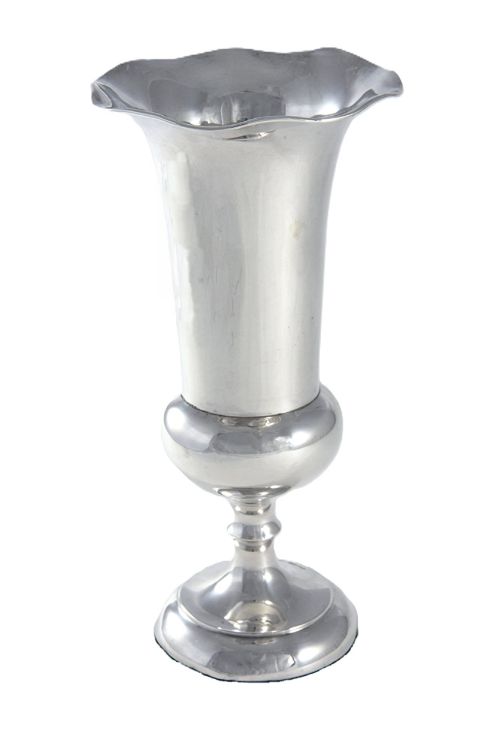
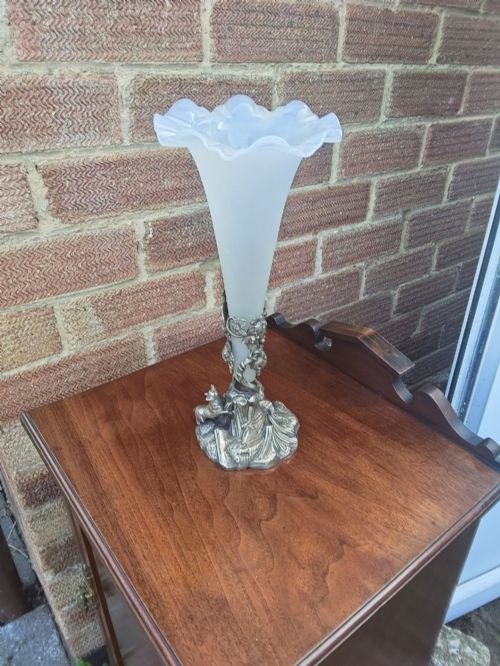
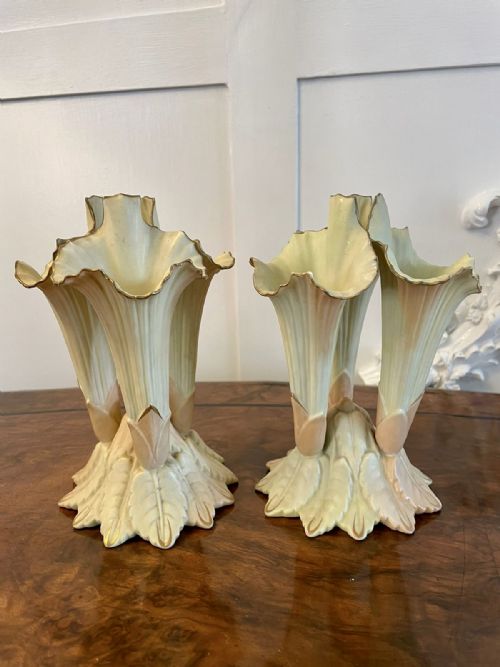
An antique trumpet vase expands from a narrow base into a wide, flaring rim, designed specifically to display cut flowers with individual stems or to form the central pillars of larger epergnes. The form appears across the Victorian, Edwardian, and Art Deco periods, drawing on diverse materials ranging from sterling silver to vibrant coloured glass.
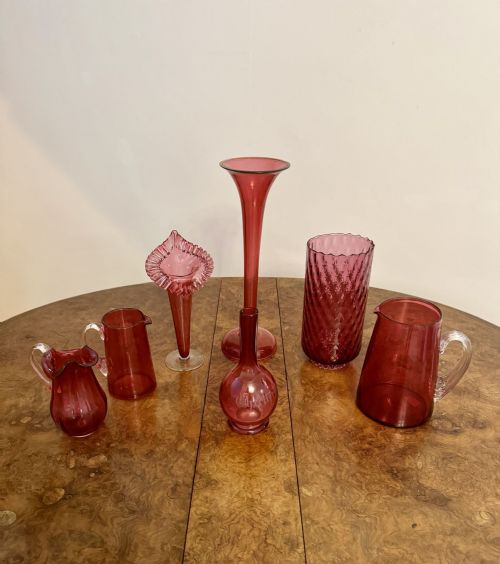
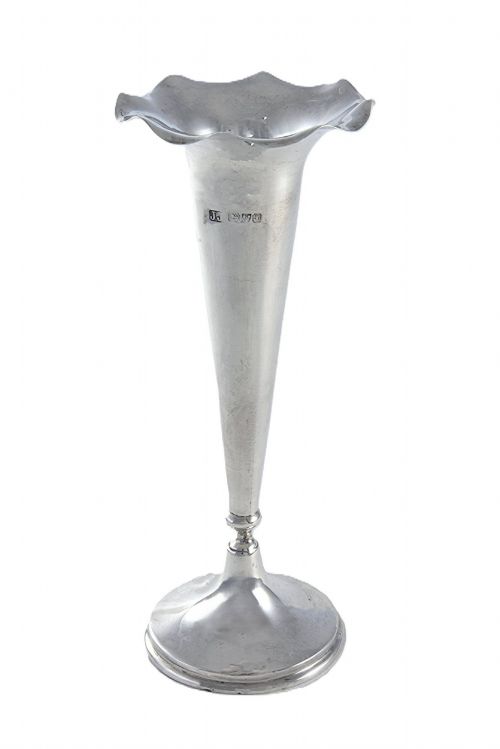
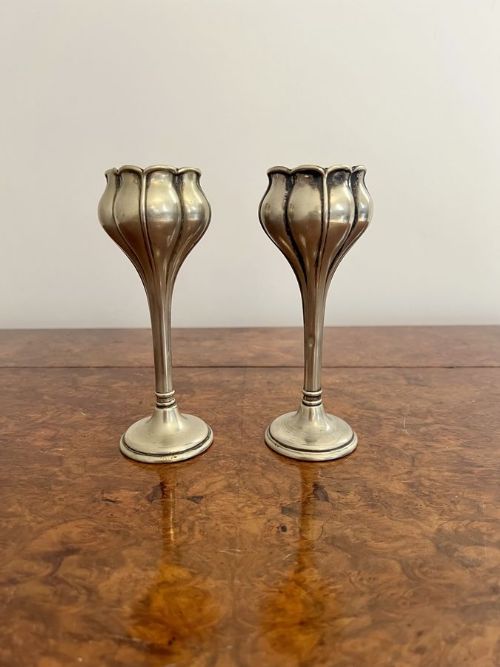
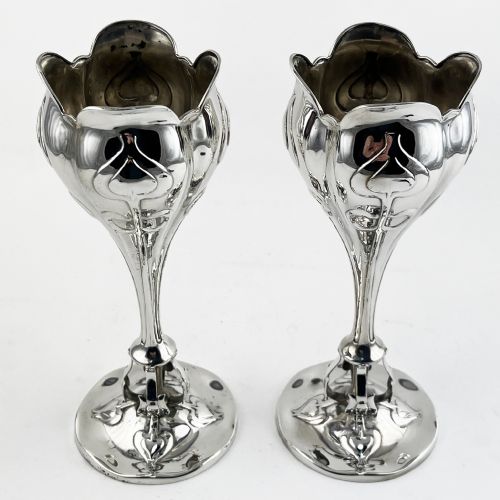
The versions most frequently met on this page include sterling silver and silver-plated posy vessels from the early twentieth century alongside nineteenth-century cranberry and vaseline glass flutes. Many survive as matched pairs or sets, originally intended for formal dining tables where symmetrical floral displays were expected.
Makers utilised porcelain, bronze, and copper alongside traditional glass and metal, producing spill vases and table centrepieces that reflect aesthetic movements like Art Nouveau and Arts and Crafts. Whether fashioned as tall floor pieces or small desk posies, the silhouette remains consistently defined by its upward expansion.
How they were made
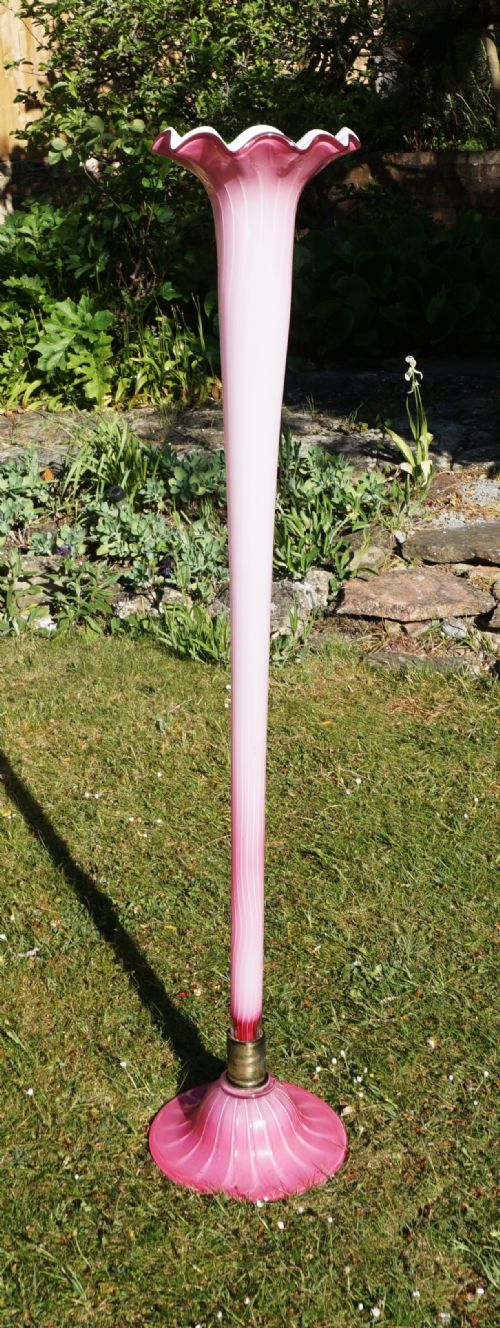
Glass vessels take shape through hand-blowing and casing techniques, layering uranium, cranberry, or opaque white glass to achieve rich colour saturation before cutting or engraving the surface. Molten glass is manipulated into fluted profiles and flaring rims, sometimes combining with bronze or Baccarat crystal components.
Metal examples employ sterling silver and silver plate, often shaped through spinning or piercing to create delicate pierced galleries with fitted glass liners. Silversmiths hammered copper and brass, incorporating Art Nouveau whiplash lines and applied ornamentation during the late nineteenth and early twentieth centuries.
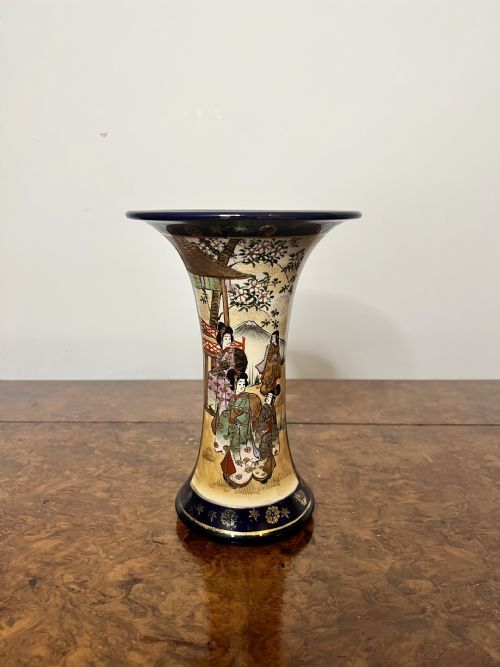
Ceramic forms rely on porcelain bodies finished with hand-painted decoration, cobalt and gilt moriage, or blush ivory glazes. Potteries applied traditional glazing methods across Japanese satsuma wares and English earthenwares alike.
Art Nouveau and Edwardian styles dominate the silver and glass pieces recorded across the archive.
What varies in quality
The weight and gauge of the metal dictate the structural integrity of silver and plated vessels, separating sturdy items from thin-walled pieces susceptible to distortion. In glass examples, depth of colour, crispness of wheel-cut engraving, and the absence of internal flaws distinguish superior manufacturing.
Artistic execution differentiates standard production from exceptional studio work, seen in the precision of hand-painted porcelain details and the fluid symmetry of organic glass forms. Surviving sets with matching hallmarks and undamaged original glass liners retain greater integrity than assembled groups.
Locke & Co·Royal Worcester·Josiah Williams & Co·LC Tiffany
The Antique Trumpet Vase Glossary
- Epergne
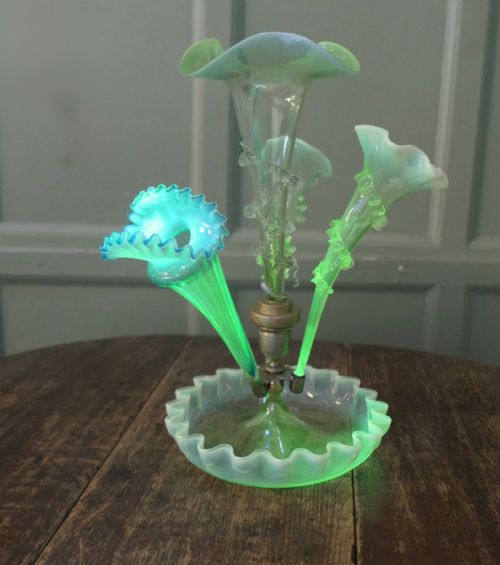
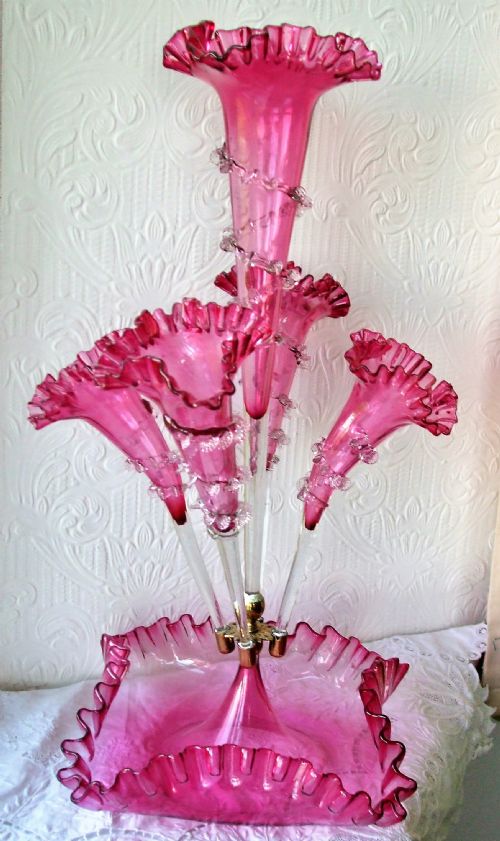
- A large table centrepiece featuring a central trumpet vase surrounded by smaller hanging or attached flutes for flowers or fruit. These multi-tier structures often combine silver frames with coloured glass components.
- Posy vase
- A small vessel designed to hold a compact bunch of flowers rather than long-stemmed arrangements. They appear frequently in silver and ceramic across the Edwardian era.
- Cased glass
- Glass formed by fusing two or more distinct layers of different coloured glass together before blowing. This technique allows artisans to cut through the exterior layer to reveal contrasting colours beneath.
- Moriage
- A Japanese ceramic technique using slip trailed decorative clay applied to the surface to create raised floral or dragon designs. It appears prominently on Satsuma wares from the nineteenth century.
- Spill vase
- A tall, narrow container originally used to hold tapered spills of paper or wood for lighting candles and fires. They transition naturally into vessels for holding single flower stems.
Antique Trumpet Vase: Frequently Asked Questions
How do I clean delicate glass vases?
Wash glass vessels gently in lukewarm water using mild detergent and a soft cloth, avoiding abrasive pads that scratch the surface. Ensure any mounted metal bases remain dry to prevent corrosion.
Allow items to air dry completely on a soft towel rather than wiping forcefully, particularly around delicate fluted rims and engraved sections.
Were these vases meant for dining tables?
Many trumpet vessels formed part of large epergnes or dinner service garnitures intended to decorate formal dining rooms during the nineteenth and twentieth centuries. Their height allowed guests to converse across the table without visual obstruction from floral arrangements.
Smaller posy versions served on sideboards, desks, and smaller parlour tables where limited space required compact floral displays.
How do I date a silver trumpet vase?
Examine the base or rim for British hallmark stamps, which include assay office marks, date letters, and maker's marks. These stamped symbols provide the exact year of manufacture and the town where the silver was tested.
Stylistic cues such as Edwardian reeded borders or Art Nouveau organic shaping help narrow down pieces that lack clear assay marks.
What is vaseline glass?
Vaseline glass is a transparent yellow-green glass containing small amounts of uranium dioxide, which causes the material to fluoresce brightly under ultraviolet light. The distinct yellowish hue earned the glass its common nineteenth-century name.
Victorian and Edwardian glassmakers utilised this material frequently for trumpet vases and epergne components.