
Antique Tripod Plant Table
An antique tripod plant table brings architectural elegance and useful surface area to a corner, most frequently met in mahogany, oak, or walnut.
Antique Tripod Plant Table
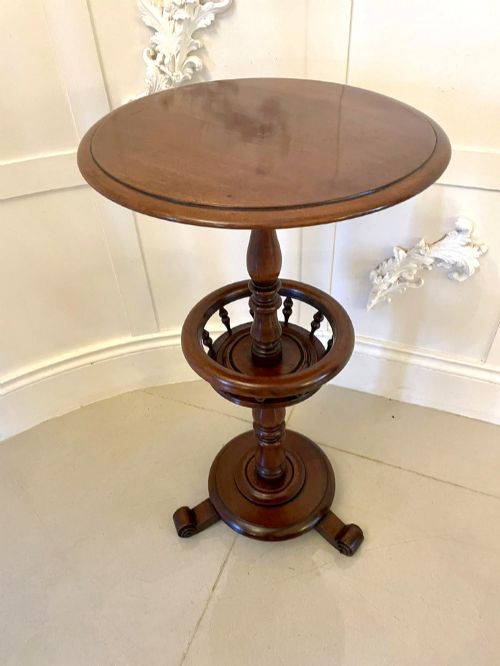
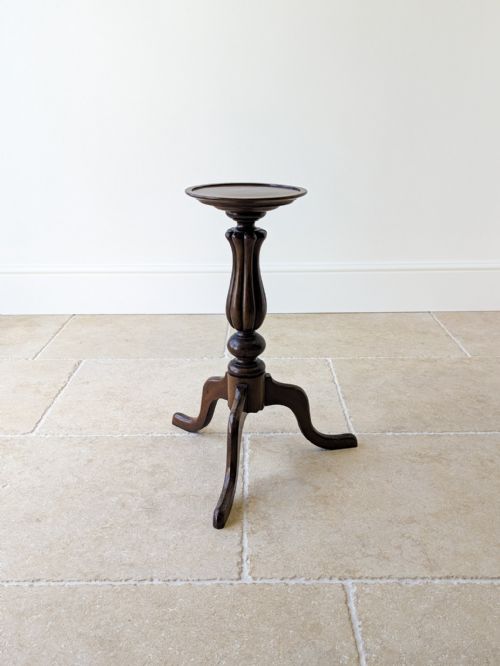
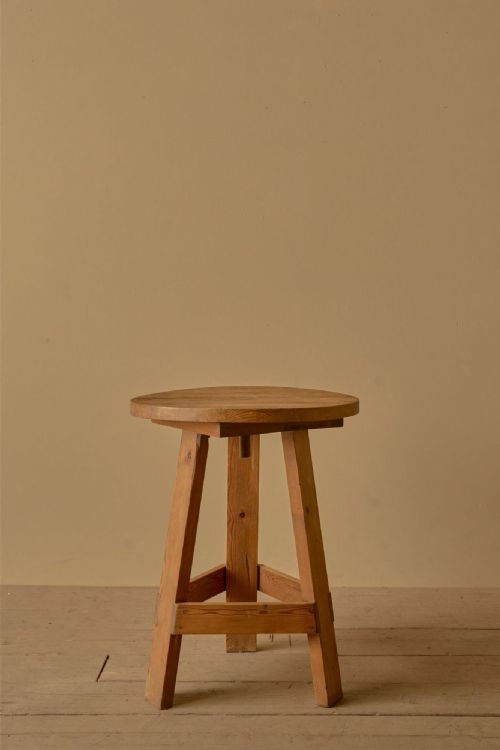
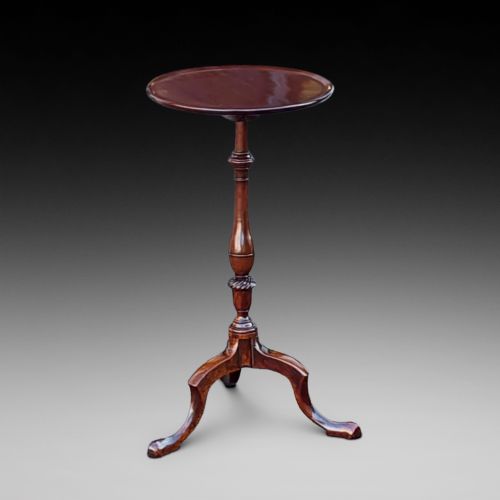
When you search for an antique tripod plant table, you examine small tables, plant stands, wine tables, and torchere candle stands supported by three legs. These pieces serve primarily to elevate plants, lamps, or decorative objects within a room.
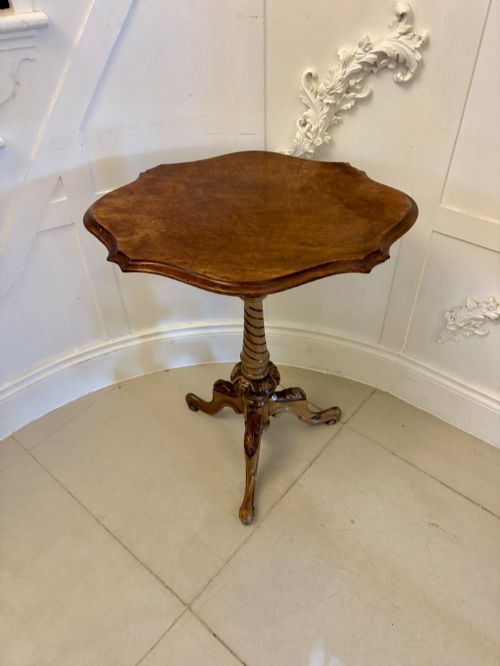
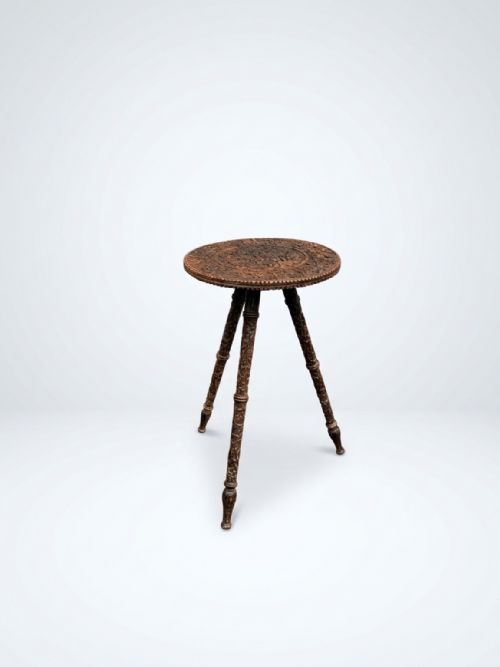
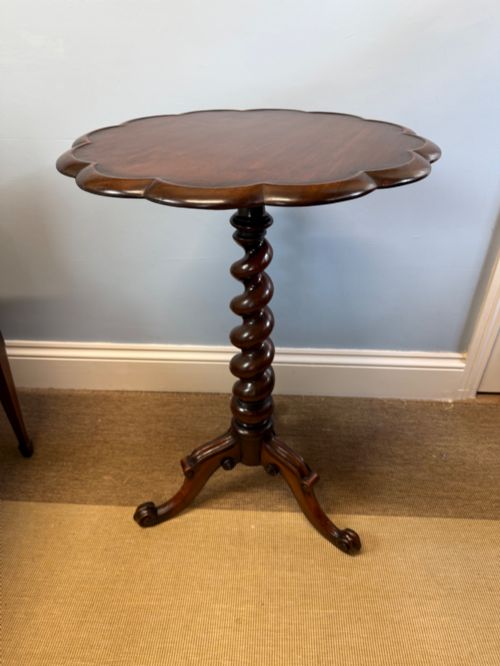
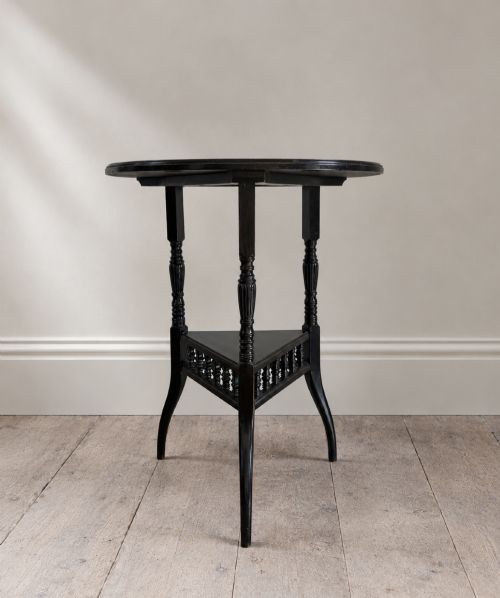
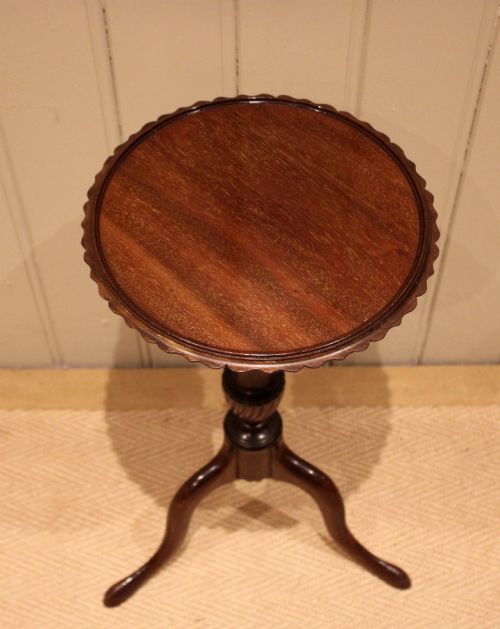
The versions you meet most frequently on this page date from the Victorian and Edwardian eras, alongside earlier Georgian and 19th-century examples. Forms range from simple round dish-topped tables to clover-shaped, triangular, and gipsy tripod designs.
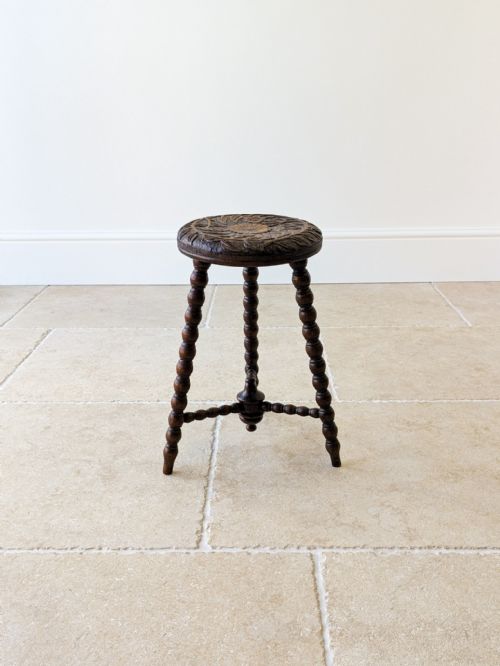
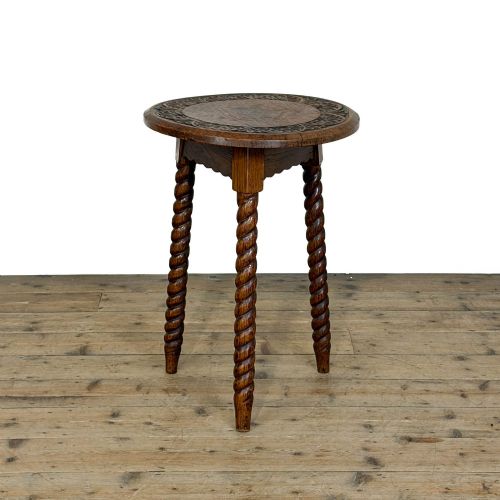
Makers utilised various timber and metal formats, producing items like bobbin-turned oak stands, ebonised chip-carved occasional tables, and marble-topped guéridon tables. Their compact footprints allow them to fit easily beside seating or in narrow hallways.
How they were made
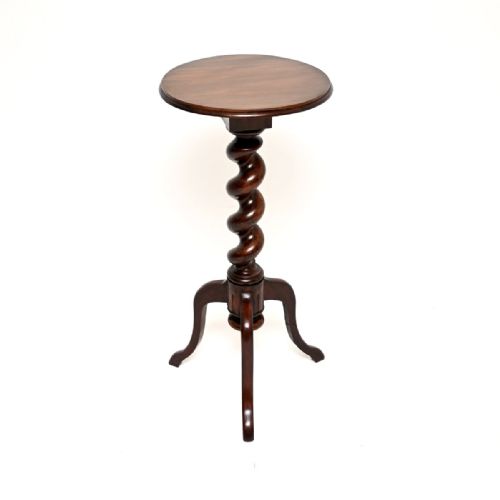
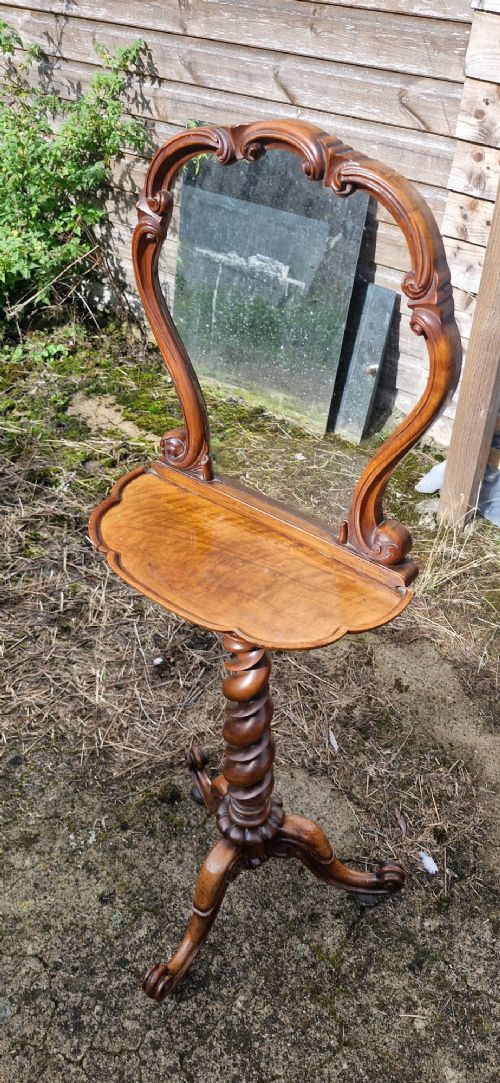
Cabinet makers constructed these tables predominantly using solid hardwoods such as mahogany, oak, and walnut, frequently employing a central pedestal column supported by three splayed legs. Joinery methods included turned components, barley twists, and structural pegging to ensure stability on the three-legged base.
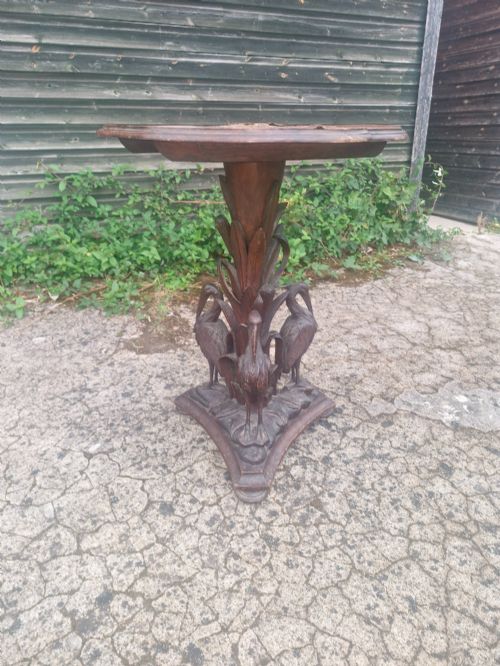
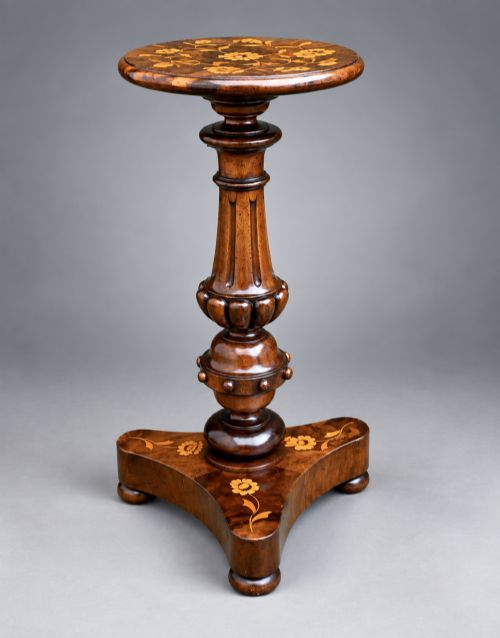
Surface ornamentation involved hand carving, chip-carving, and inlay, alongside ebonising or gilt wood finishes on specific revival pieces. Specialised materials like cast brass, cast iron, and marble inserts appeared on functional stands, trivets, and French-influenced guéridon tables.
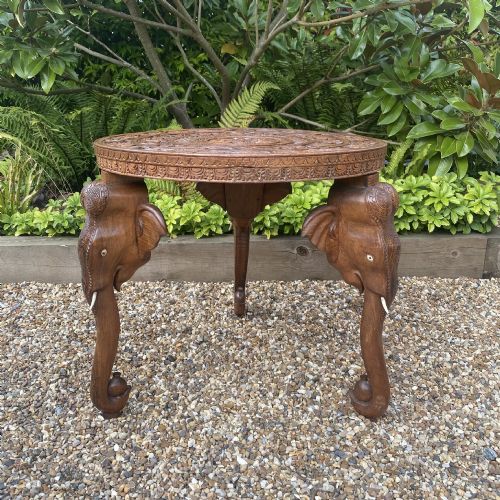
One late Victorian elephant table comes complete with painted wooden tusks.
What varies in quality
The standard of timber selection and depth of hand carving differentiate simpler utility pieces from finer examples. Superior specimens display well-figured mahogany or walnut grains and crisp, unsoftened carved details on the legs and column.
Construction integrity at the central tripod block dictates long-term stability, separating robustly jointed tables from those with excessive movement. The refinement of turned elements, such as bobbin or barley twist legs, indicates the care taken by the original maker.
The Antique Tripod Plant Table Glossary
- Tripod table
- A small stand supported by three legs radiating from a central pillar. This format provides stable placement on uneven historical flooring.
- Torchere
- A tall, slender stand designed specifically to hold a candle or lamp. These elevated surfaces often feature decorative carving.
- Guéridon
- A small French table, frequently round and supported by a single central column or figurative standard. They often feature marble tops.
- Dish-topped
- A tabletop with a raised, concave rim carved directly from the solid wood. This feature prevented small items from rolling off.
- Ebonised
- Wood finished with a dark coating to imitate ebony. This technique gained popularity during the Victorian and Aesthetic Movement periods.
Antique Tripod Plant Table: Frequently Asked Questions
Where should I place a tripod plant table?
These compact tables suit empty corners, beside armchairs, or in entrance hallways where surface area is limited.
Their three-legged bases allow them to tuck neatly against walls without dominating the floor space.
Can these tables hold heavy plants?
Most antique tripod stands comfortably support standard potted plants, though sturdy oak or mahogany examples handle heavier loads better.
Checking the stability of the central block ensures the stand remains secure under weight.
What is the difference between a wine table and a plant stand?
Wine tables typically feature smooth circular or shaped tops intended for glassware, while plant stands often incorporate waterproof inserts, marble tops, or elevated tiers.
In historical listings, however, makers and sellers frequently used these terms interchangeably for the same tripod form.