




Antique Trio of Tables
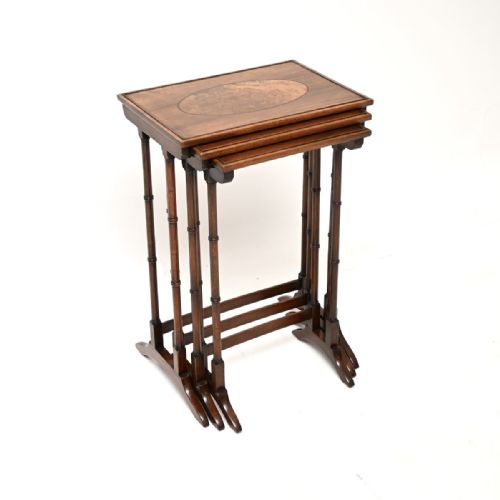
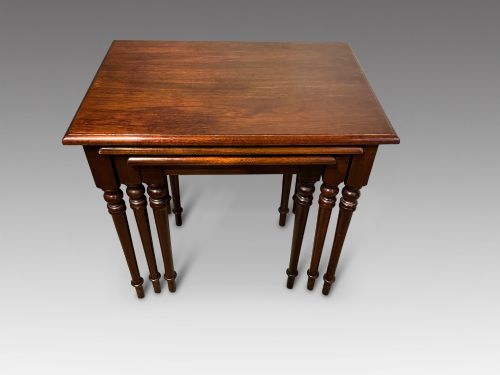
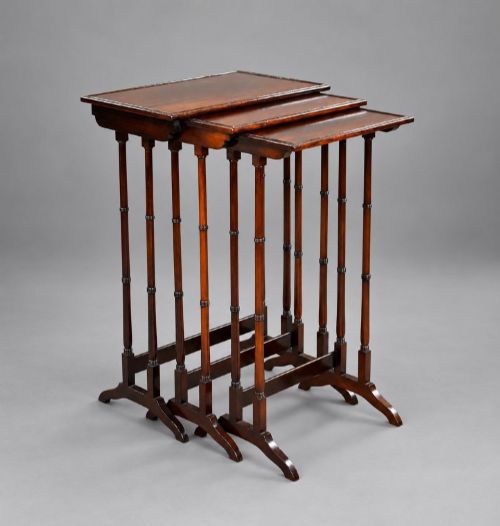
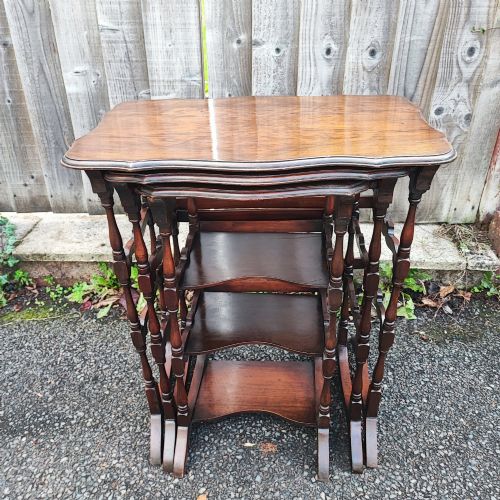
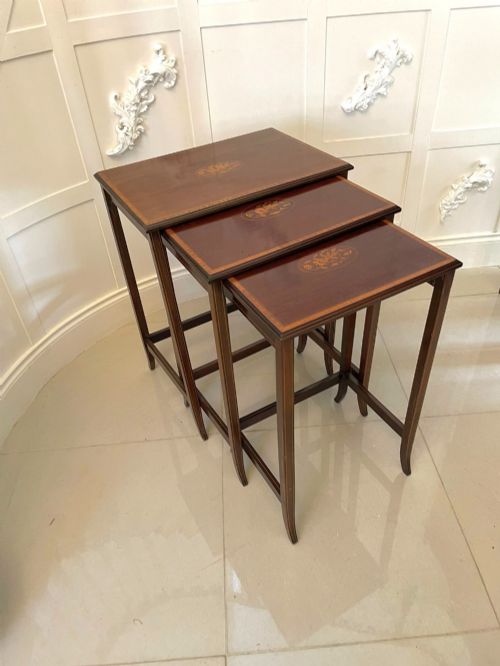
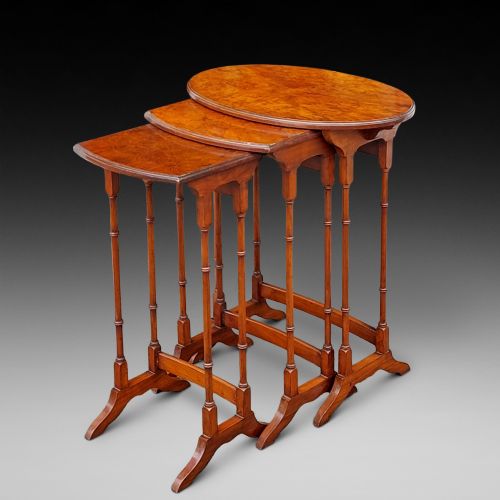
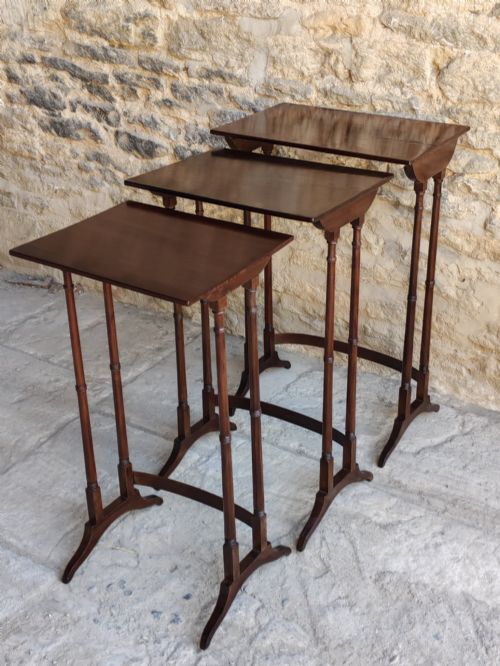
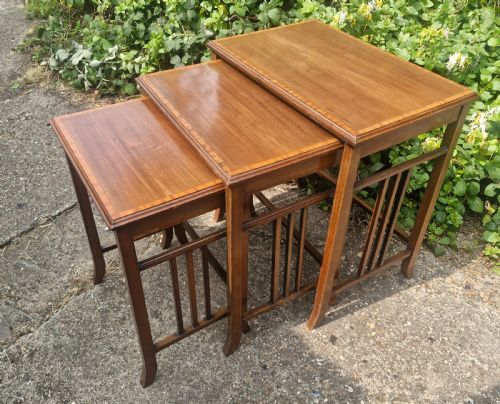
An antique trio of tables offers a nested design of graduated surfaces, combining clever space-saving utility with refined period timber work.
Antique Trio of Tables
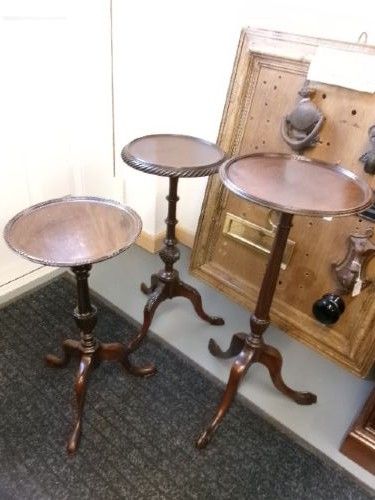
An antique trio of tables provides three graduated surfaces designed to slide neatly beneath one another when floor space is required. These pieces appear primarily as nests of tables and occasional tables originating from the Georgian, Regency, Victorian, and Edwardian periods.
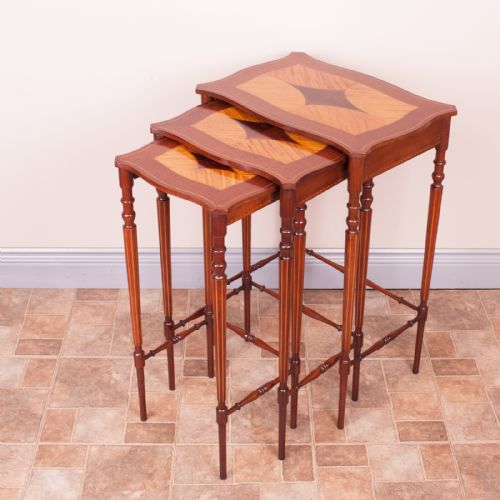
Mahogany forms the primary timber encountered across these listings, alongside rosewood, walnut, burr walnut, and oak. Marquetry inlay, leather inserts, and satinwood accents appear frequently on Edwardian and Regency examples.
Buyers seeking this form will find straightforward Edwardian mahogany iterations alongside more figured rosewood and walnut sets from earlier nineteenth-century workshops. The design adapts easily from formal drawing rooms to modern living spaces.
How they were made
Cabinetmakers constructed these tables using solid timbers and veneered panels laid over secondary woods, shaping the legs and frames to match the prevailing style of the decade. Turned supports, barley twists, and slender column legs provide the structural framework for the graduated tops.
Surface decoration relies on marquetry inlay, contrasting crossbanding, and occasional embossed leather top inserts. Finishing techniques utilise French polish to highlight the natural grain of mahogany, rosewood, and walnut.
Antique Trio of Tables Retail Price Guide 2026
Typical asking prices for trio of tables among the pieces listed under this phrase on Sellingantiques today, from the lower quarter to the upper quarter. They describe what is for sale here now, not the wider market.
One recorded workshop produced a set incorporating simulated faux rosewood alongside genuine timber.
What varies in quality
The choice of timber and the complexity of its grain pattern distinguish standard production from finer examples. Highly figured burr walnut, rich rosewood, and crisp marquetry inlay separate exceptional tables from plain mahogany versions.
Proportion and structural rigidity dictate the success of the nested design. Superior sets maintain smooth sliding action and balanced proportions across all three graduated surfaces without excessive play in the joints.
W&C Wilkinson London
The Antique Trio of Tables Glossary
- Nest of tables
- A set of graduated tables designed to fit one beneath another to save floor space. This form became particularly popular during the Sheraton Revival and Edwardian periods.
- Marquetry inlay
- Decorative patterns formed by fitting contrasting veneers into prepared recesses in the wood surface. Floral motifs and geometric lines appear frequently on Edwardian and Georgian tables.
- Crossbanding
- A strip of veneer applied to the border of a table top with the grain running perpendicular to the central panel. This technique frames the primary timber and adds visual depth.
- French polish
- A shellac finish applied in numerous thin layers using a rubbing pad to achieve a high gloss. It enhances the natural colour and figure of timbers like mahogany and rosewood.
- Barley twist
- A type of turned wooden leg carved in a helical screw formation. This decorative feature occurs on oak and walnut pieces from the late nineteenth and early twentieth centuries.
Antique Trio of Tables: Frequently Asked Questions
How were nests of tables used historically?
These tables served primarily for serving afternoon tea, holding books, or supporting small lamps in reception rooms. When not in use, the smaller tables slid away beneath the largest surface to clear the floor.
Their modular design allowed homeowners to distribute the surfaces around a room as guests required additional places for cups or writing materials.
What woods are most common?
Mahogany dominates the surviving examples, appearing across Georgian, Victorian, and Edwardian pieces. Rosewood and walnut also feature prominently, particularly in Regency and later nineteenth-century sets.
Oak appears alongside specific revival styles, offering a heavier alternative to the polished mahogany and satinwood finishes.
How do I date an Edwardian set?
Edwardian tables frequently display lighter mahogany frames, delicate stringing, and marquetry inlay influenced by Sheraton Revival designs. The construction often employs standardised machine milling alongside traditional hand joinery.
Makers from this era around 1900 to 1920 favored slender legs and subtle crossbanding rather than the heavier proportions of earlier Victorian furniture.
Can I use them as daily side tables?
These pieces function well in modern interiors for holding drinks, books, or small decorative items. Their tiered structure makes them adaptable for rooms with limited space.
Care should be taken to protect polished wood surfaces from moisture and heat by using coasters and mats.