

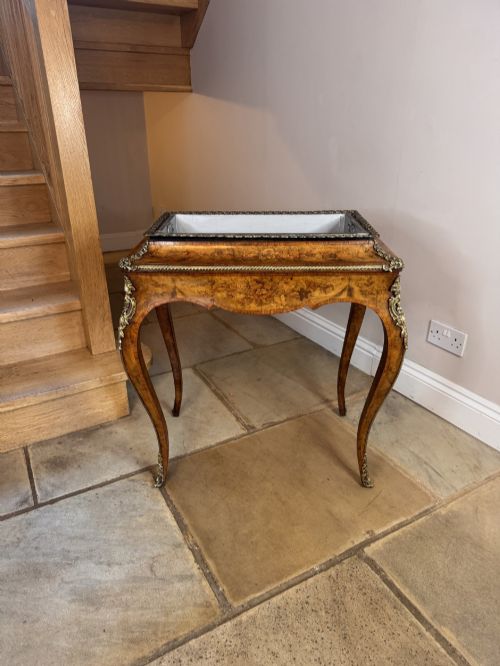
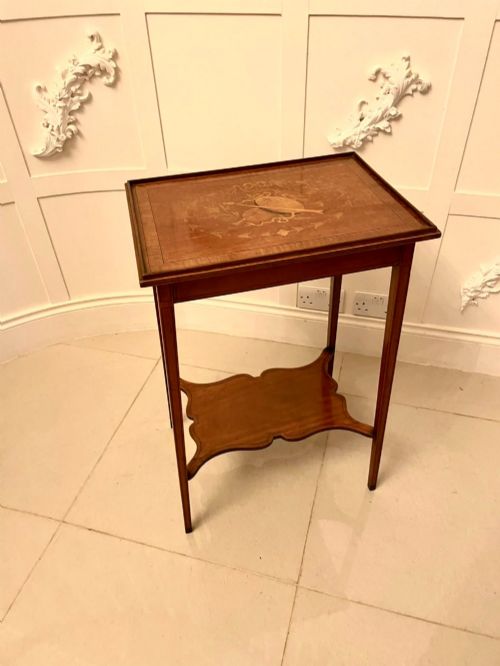
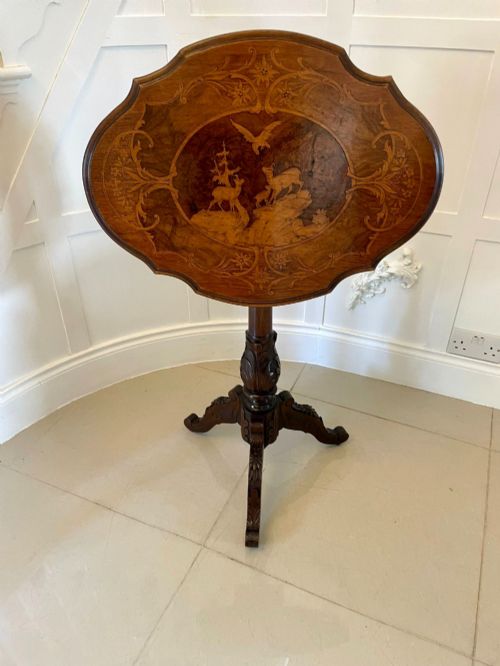
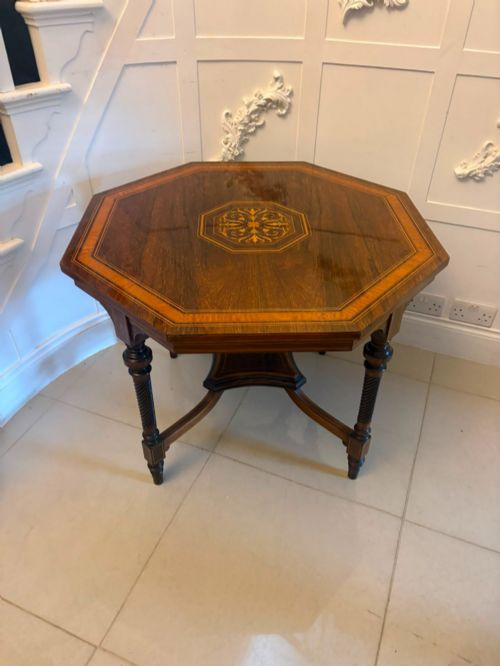
Edwardian Marquetry Side Tables
Edwardian marquetry side tables are decorative occasional pieces featuring detailed wood inlay, ideal for adding functional surface space and period charm to a sitting room.
Edwardian Marquetry Side Tables
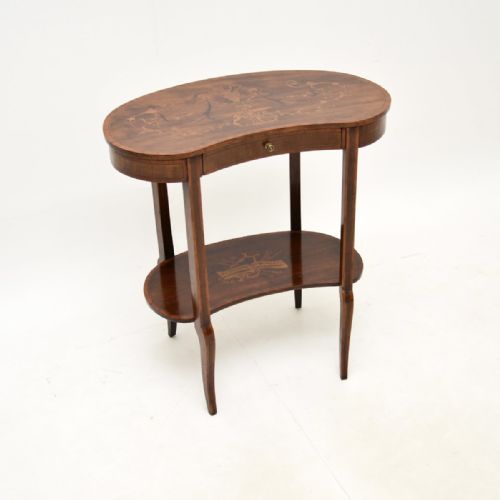
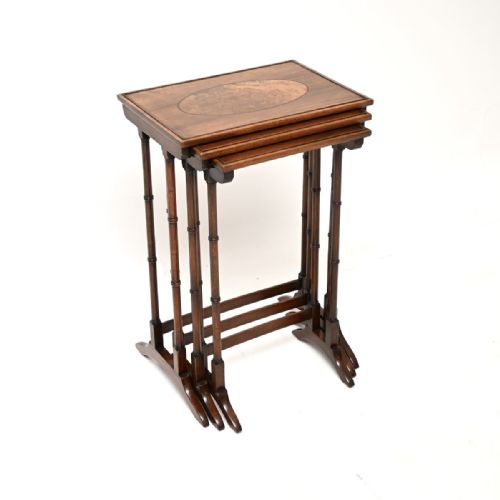
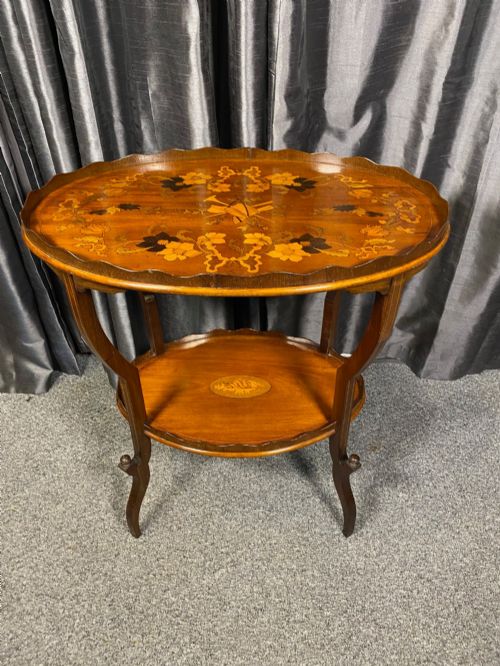
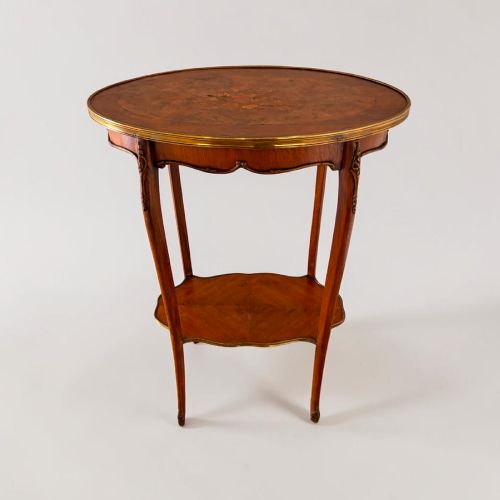
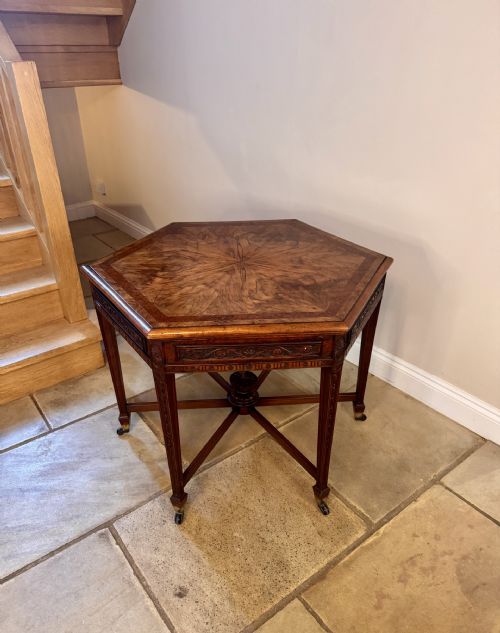
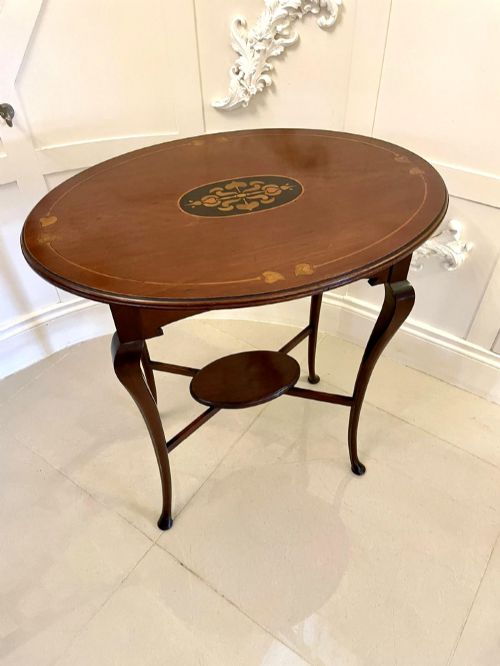
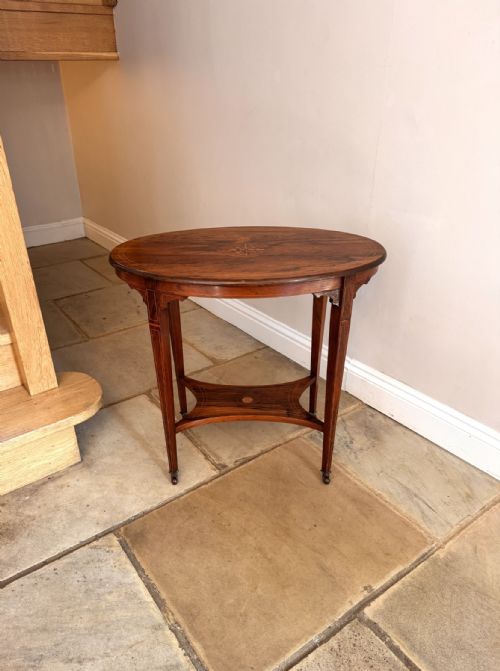
Edwardian marquetry side tables encompass a variety of compact occasional forms, including kidney shapes, nests of tables, octagonal centre tables, and oval lamp tables. Most pieces originate from the Edwardian era and the late nineteenth century, reflecting the tastes of the period.
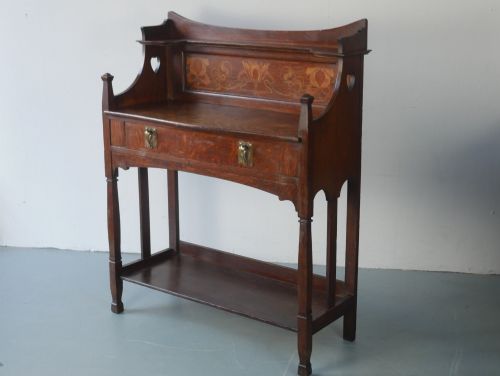
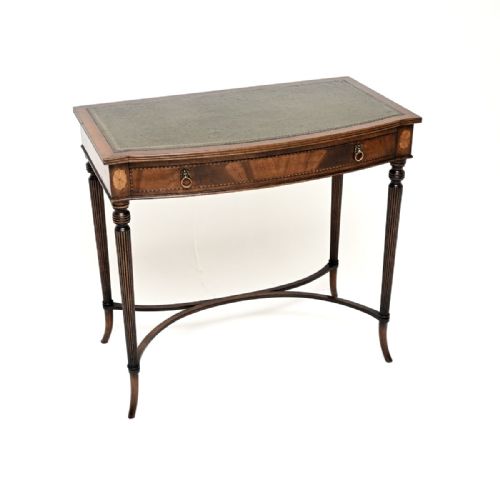
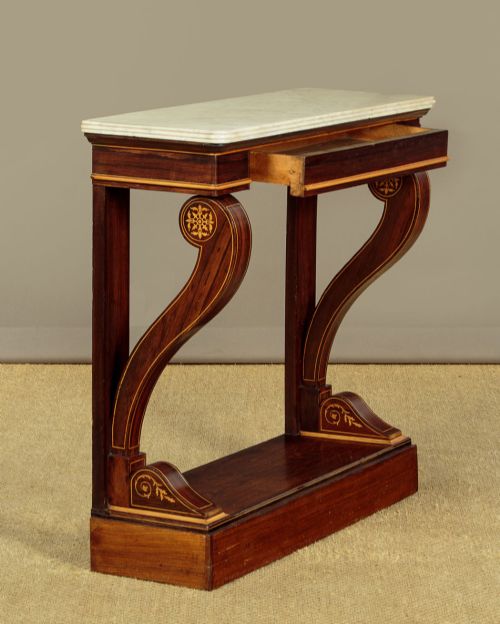
The selections span standard occasional pieces to more specialised forms such as writing tables, console tables, and tiered étagères. Mahogany and satinwood provide the primary framework for these occasional tables, often enriched with contrasting decorative veneers.
Makers and designers of the period drew inspiration from Sheraton Revival styles and French influences, producing light, portable furniture suitable for drawing rooms and boudoirs. These pieces served practical roles as lamp stands, tea tables, or display surfaces for ornaments.
Materials and Technique
Cabinetmakers utilised solid timbers such as mahogany, walnut, and rosewood for the structural frames and legs of these tables. Satinwood and kingwood frequently appeared as face veneers, providing a pale or richly figured ground for decorative schemes.
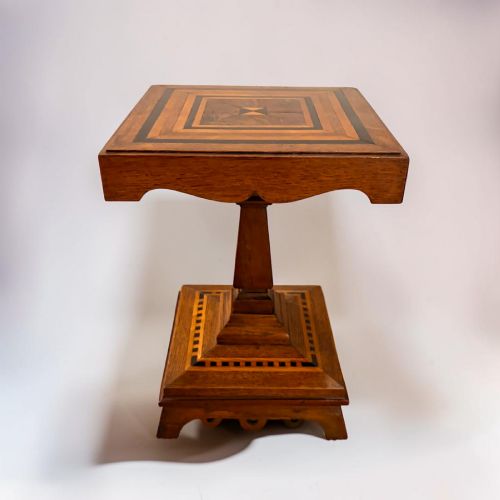
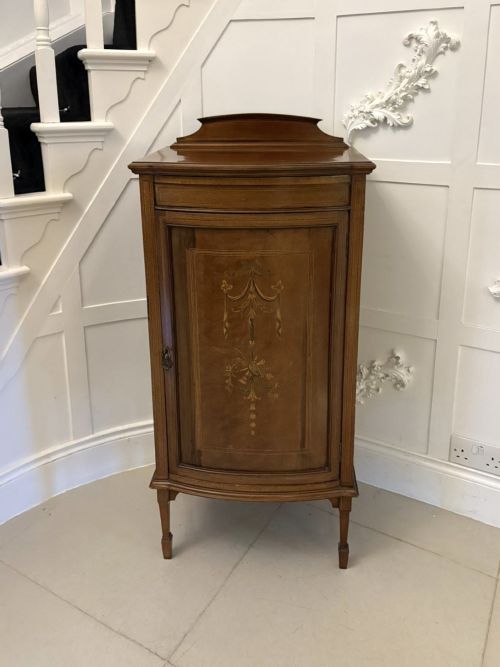
Marquetry inlay involved cutting intricate patterns from various dyed and natural woods, including boxwood and specialised fruitwoods, which were then fitted into recesses on the table top. Brass fittings, ormolu mounts, and leather inserts supplemented the woodwork on specific examples.
Edwardian Marquetry Side Tables Retail Price Guide 2026
Typical asking prices for edwardian marquetry side tables among the pieces listed under this phrase on Sellingantiques today, from the lower quarter to the upper quarter. They describe what is for sale here now, not the wider market.
Listings feature tables spanning the Victorian period through the Edwardian era, utilising mahogany, satinwood, rosewood, and walnut.
Assessing the Workmanship
The refinement of the marquetry inlay distinguishes superior examples, where precise cutting and tight joints create crisp floral or geometric motifs without excessive filler. The choice of underlying timbers also dictates tier, with finely figured satinwood or burr walnut indicating higher ambition.
Construction details such as the neatness of dovetails in drawers, the stability of leg joints, and the retention of original brass hardware or leather panels separate workshop standards. Tables retaining balanced proportions and crisp decorative carving reflect the upper tier of period production.
Shapland & Petter·Edward’s And Robert’s
The Edwardian Marquetry Side Tables Glossary
- Marquetry inlay
- Decorative patterns formed by fitting together thin veneers of different coloured woods and materials into a prepared surface. This technique allows for complex pictorial or symmetrical designs across table tops.
- Satinwood
- A durable, hard timber with a natural golden lustre and satin-like sheen, frequently used as a veneer in late nineteenth and Edwardian furniture. It provides a bright background for darker inlay motifs.
- Occasional table
- A small, movable table designed for a specific, intermittent domestic use rather than a permanent central placement. Common forms include lamp tables, spider tables, and small lamp stands.
- Sheraton Revival
- A late nineteenth and early twentieth-century style drawing inspiration from the lighter neoclassical designs of eighteenth-century designer Thomas Sheraton. Pieces often feature satinwood, tapering legs, and delicate floral inlay.
- Quartetto nest
- A graduated set of four small tables designed to fit neatly beneath one another when not in use. They became popular space-saving items during the Victorian and Edwardian periods.
Edwardian Marquetry Side Tables: Frequently Asked Questions
What rooms suit these side tables?
These compact tables function well in sitting rooms, hallways, and bedrooms as surfaces for lamps, books, or decorative objects. Their modest scale allows them to fit easily beside armchairs or against walls.
Because many designs feature finished backs or polished surfaces all round, they sit comfortably away from walls in the centre of a room. Their light construction also makes them easy to move as household needs change.
How do I identify Edwardian marquetry?
Edwardian marquetry typically employs bright satinwood or mahogany grounds decorated with delicate floral sprays, ribbons, or neoclassical urns. The contrasting veneers often incorporate boxwood and stained woods to create subtle shading.
Unlike heavier Victorian predecessors, Edwardian designs tend to prioritize lighter proportions and simpler structural lines. The inlay work on Edwardian pieces frequently shows crisp mechanical precision alongside traditional hand-cutting.
Were nests of tables common?
Nests of tables gained popularity during the late Victorian and Edwardian periods as practical, space-saving furniture for entertaining. Households used the individual tables for serving tea or holding small items during gatherings.
When not in use, the smaller tables slid neatly beneath the largest one to preserve floor space. They were produced in various woods, with inlaid satinwood and mahogany versions being particularly widespread.
How should I care for wood inlay?
Protect inlaid tables from direct sunlight to prevent the dyed and natural veneers from fading or changing colour over time. Maintaining a stable room temperature helps avoid timber movement that can stress the delicate veneer joints.
Apply a traditional beeswax polish sparingly and buff with a soft cloth to preserve the finish without building up heavy residues. Avoid placing damp items or unsealed plant pots directly on the wooden surface.