


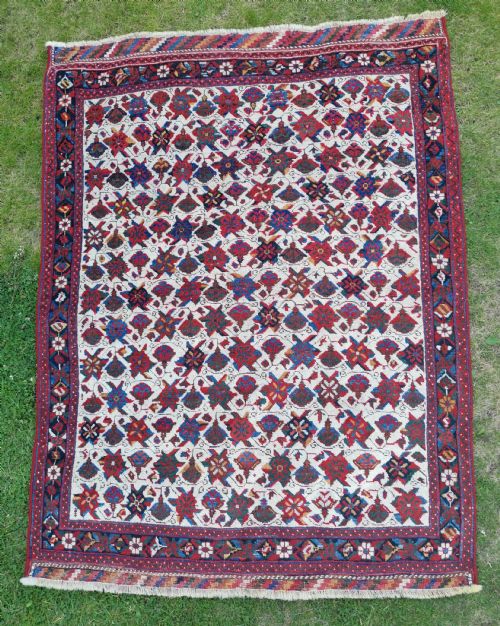
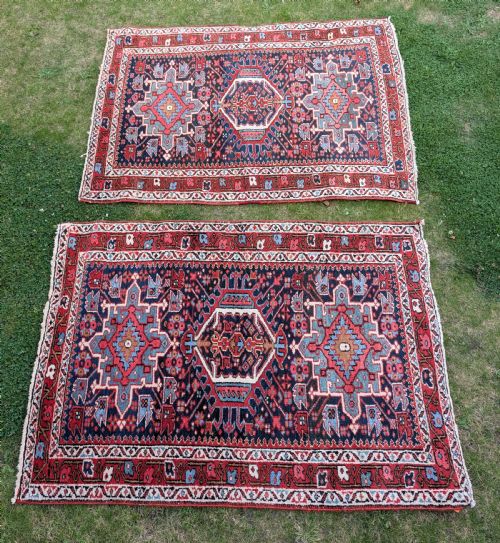
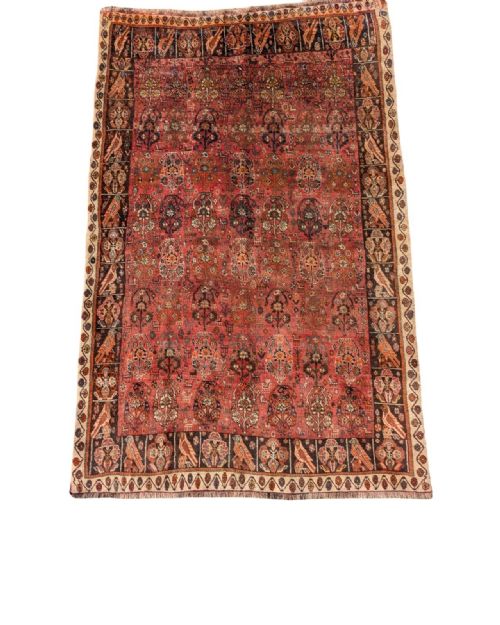
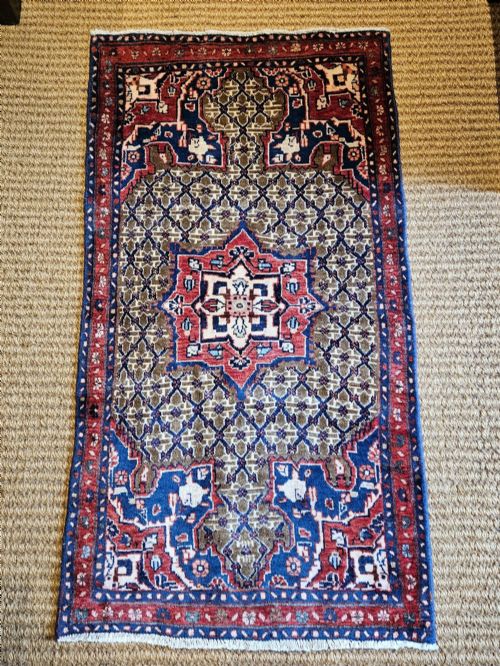
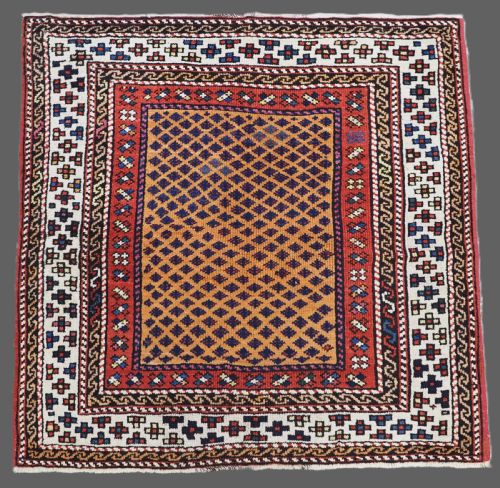
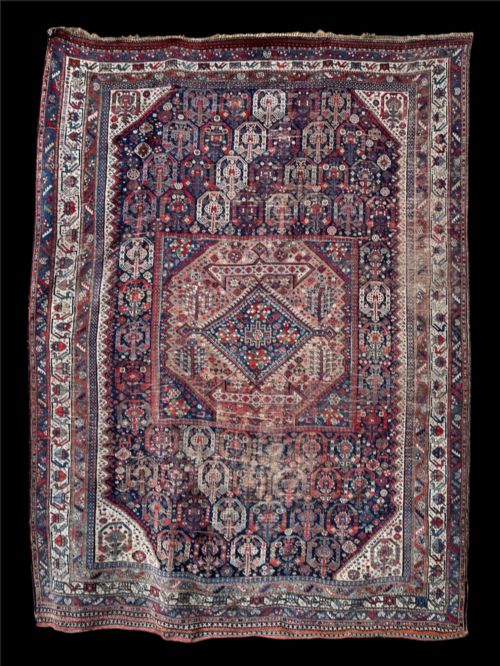
Antique Tribal Mat
An antique tribal mat brings dense geometric weaving and saturated colour into a room, spanning nomadic traditions across Persia, the Caucasus, Anatolia and Central Asia.
Antique Tribal Mat
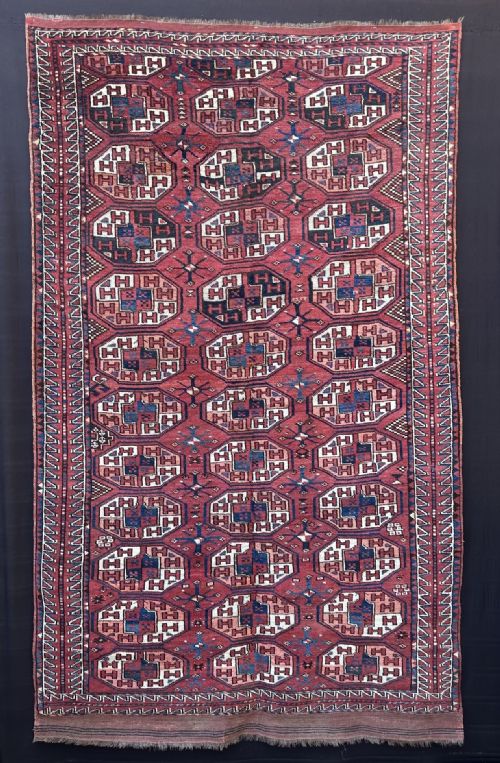
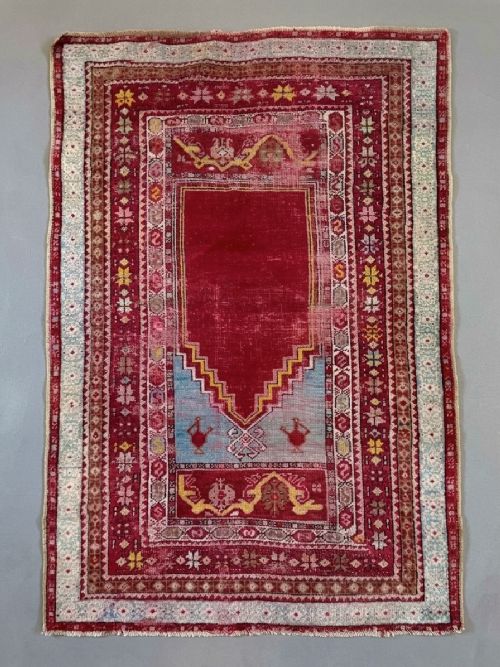
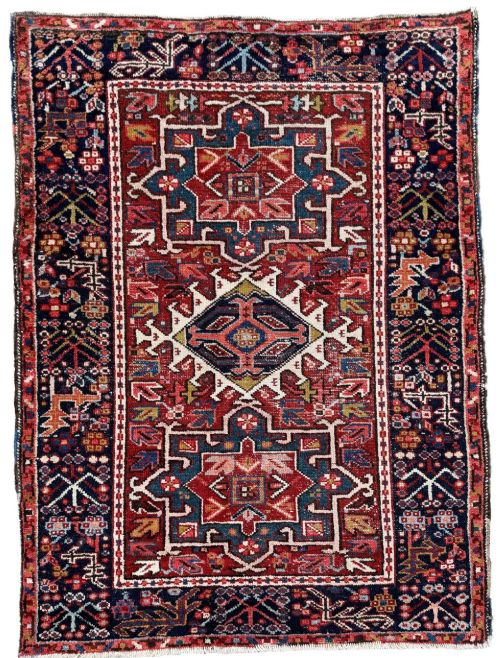
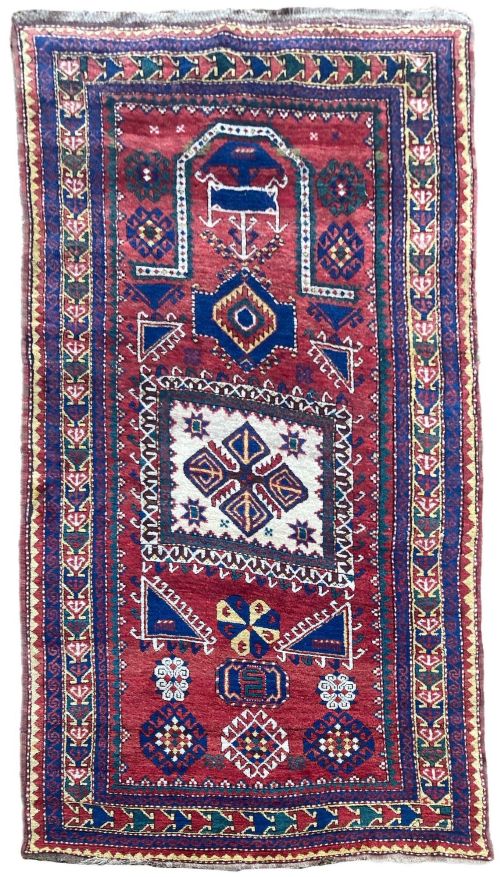
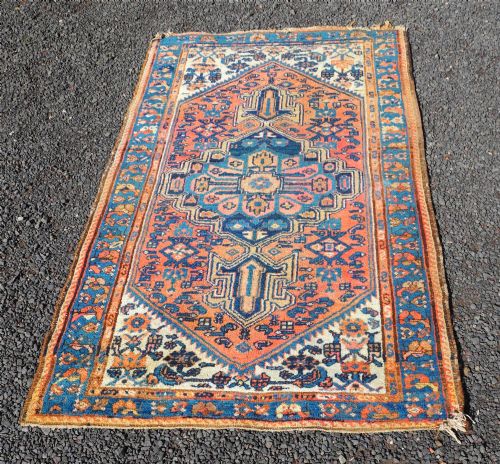
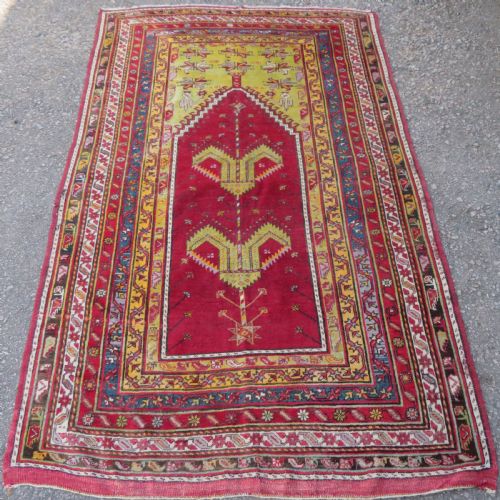
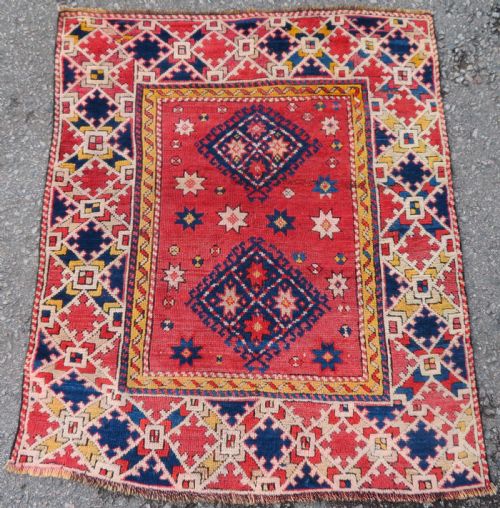
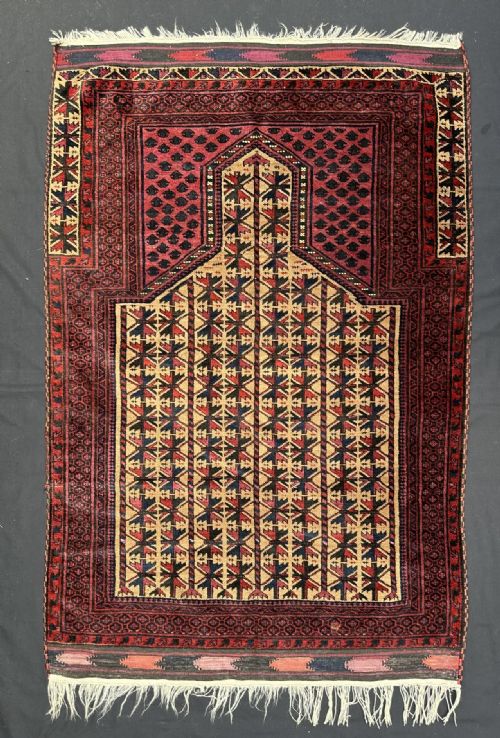
An antique tribal mat encompasses small-format carpets, prayer rugs, bagfaces, saddle covers and textile panels woven by nomadic and village communities. When searching for an antique tribal mat, collectors encounter pieces originating from Persian, Turkmen, Caucasian, Anatolian, Afghan and Central Asian traditions.
The formats vary from hearth-sized squares and rectangular floor coverings to specific utility pieces like bread sofrehs and meditation rugs. Many examples date from the nineteenth century through the early decades of the twentieth century, reflecting distinct regional weaving dialects.
Village and nomadic workshops produced these textiles for utilitarian domestic use, ceremonial functions, or personal transport. The surviving pieces display the characteristic iconography of specific tribal confederacies and borderland groups.
Materials and construction methods
Weavers utilised hand-spun wool, cotton, silk, camel wool and goat hair, often combining foundation threads of wool or cotton with plush wool pile. Certain specialised pieces incorporate intricate embroidery on textile panels rather than knotted pile construction.
Natural dyes provided the primary palette for colouring the fibres, yielding rich tones that developed patina over decades of exposure and use. Artisans worked on portable vertical or horizontal looms, integrating tribal motifs directly from memory and traditional pattern books.
Listings feature pieces spanning the nineteenth century up to 1930, utilising wool, cotton, natural dyes, silk and goat hair.
Assessing quality in nomadic weaving
Knot density and structural integrity distinguish finer village and tribal weaving from simpler utilitarian work, alongside the precision of the geometric or floral lattice design. The purity, saturation and complexity of the natural dyes directly influence the visual depth of the surface.
The survival of original elements such as flatwoven ends, selvedges and tassels indicates how carefully a textile has been preserved over generations. Artisanal execution in drawing and proportion separates standard regional production from exceptional tribal examples.
Kizyl Ayak Tribe·Timuri Dokhtar e Qazi·Yaqoub Khani Tribe·Sangtshuli Tribe·Baharlu Tribal
The Antique Tribal Mat Glossary
- Prayer rug
- A small format rug featuring a mihrab or arch design intended to direct Islamic prayer towards Mecca.
- Sofreh
- A flatwoven or piled spread used for dining, kneading bread, or serving food within nomadic households.
- Mihrab
- The arched architectural niche depicted on prayer rugs, representing the direction of prayer.
- Torba
- A small wall-hanging bag or storage sack traditionally used inside a Turkmen yurt.
- Selvedge
- The reinforced side edges of a carpet or mat that prevent the pile and foundation from unravelling.
Antique Tribal Mat: Frequently Asked Questions
How were antique tribal mats used?
Nomadic communities utilised these textiles daily as floor coverings, hearth rugs, prayer mats, and storage sacks within tents and dwellings.
Larger variations served as dining spreads or transport covers, while smaller formats functioned as personal meditation spaces.
Where did these woven pieces originate?
The pieces originate from traditional weaving regions across Persia, the Caucasus, Anatolia, Turkmenistan and Afghanistan.
Nomadic confederacies and village groups in these borderlands passed down specific tribal designs through generations.
How do I identify a prayer rug?
A prayer rug is typically distinguished by a prominent pointed arch, known as a mihrab, at one or both ends of the field.
This architectural motif directed the user toward Mecca during daily devotions.
What materials are in these textiles?
Weavers relied primarily on hand-spun wool for the pile, supported by wool, cotton, or goat hair foundations.
Natural dyes provided the coloration, and occasional examples incorporate silk highlights or detailed embroidery.
How do I care for an antique mat?
Protect the textile from direct, prolonged sunlight to prevent natural dye fading, and vacuum gently without using a rotating brush head.
Professional specialist cleaning is recommended when dust accumulates within the wool pile.