
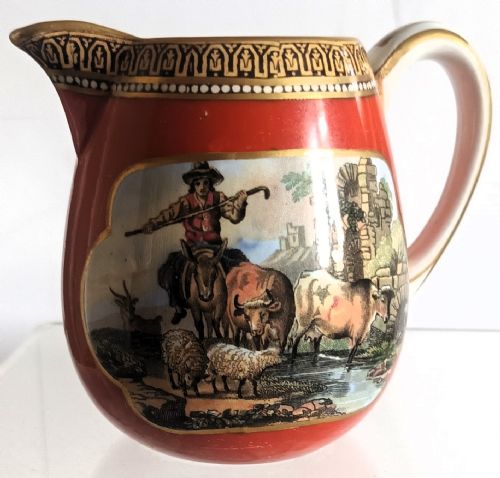
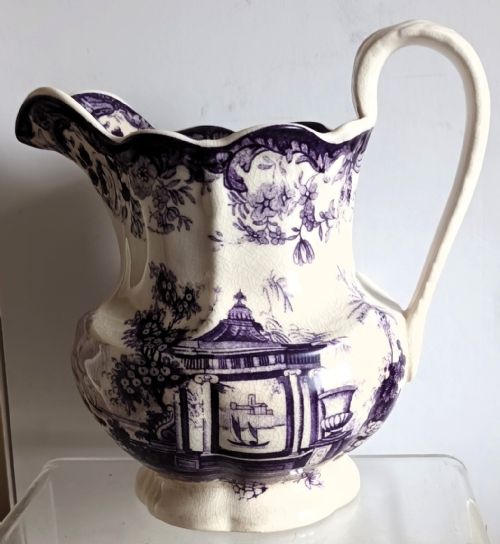


Antique Transferware Jug
An antique transferware jug brings Staffordshire scenes, maritime prints and deep blue patterns straight onto the table.
Antique Transferware Jug
An antique transferware jug is a ceramic vessel decorated with printed designs transferred from a copper plate onto the clay body before glazing. These pieces range from small cream jugs to large one-gallon pitchers and wash set ewers spanning the Georgian and Victorian periods.
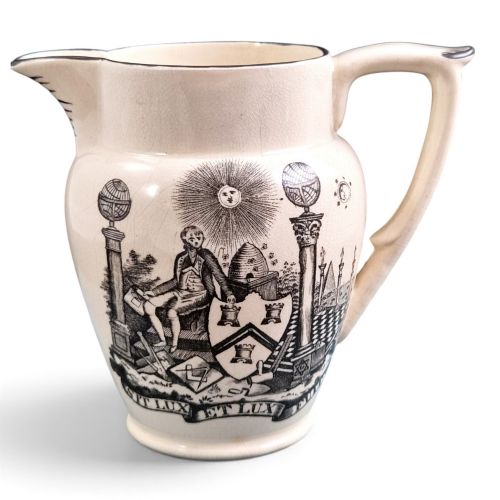
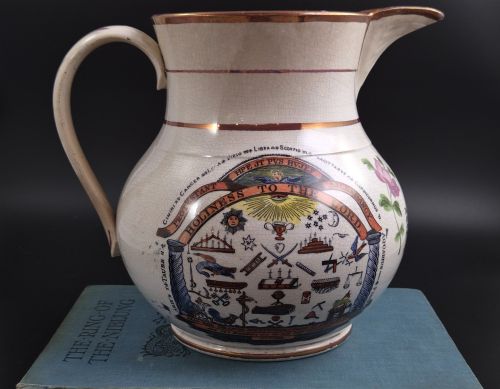
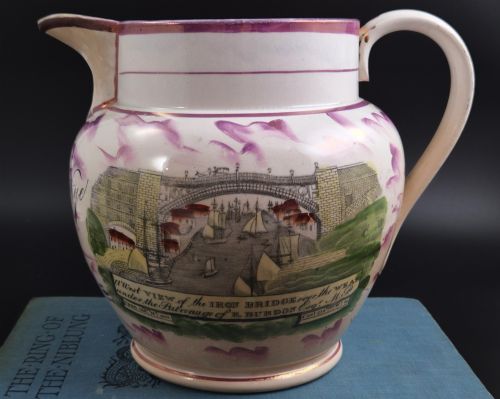
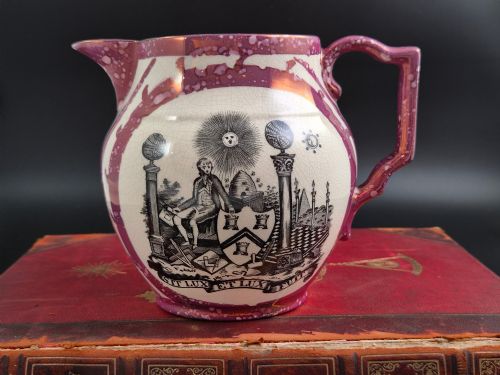
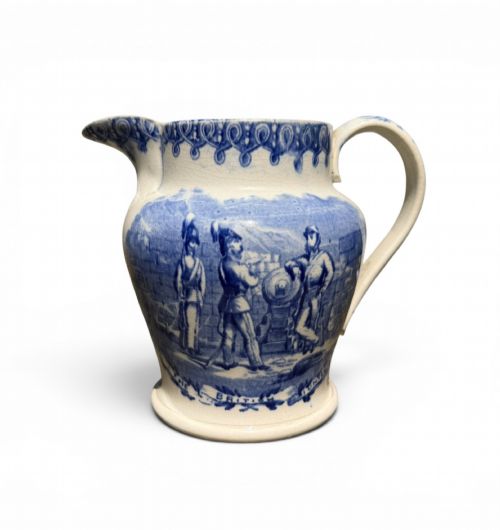
The selections here highlight English earthenware and creamware forms decorated with blue and white, pink splash lustre, and polychrome prints. Common subjects include masonic symbols, tall ships, topographical views, and classical patterns.
Buyers encounter everything from early nineteenth century Staffordshire commemorative pieces to Edwardian bathroom sets and Arts and Crafts ewers. Each item serves as a functional container or a decorative display object rooted in nineteenth century ceramic production.
How they were made
Potters shaped these vessels from earthenware, creamware, and pearlware bodies using traditional throwing and moulding techniques. The base clay was then fired to create a porous bisque ready for surface decoration.
Makers applied engraved copper plate prints onto tissue paper and transferred the pigment onto the ceramic surface. Many examples received supplementary hand-painted enamels, metallic lustre glazes, or gilding before a final gloss firing sealed the design.
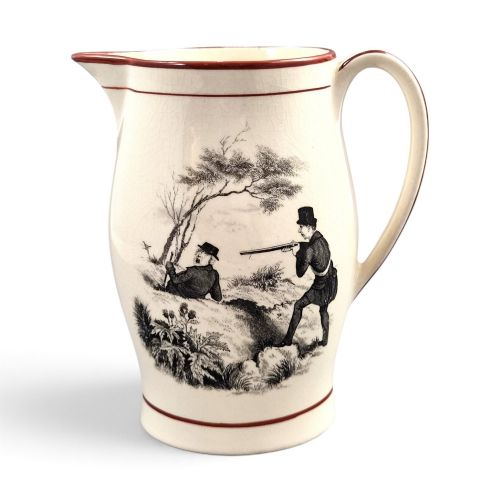
Some nineteenth century drinkers raised 'Dear Jack' and Bull Baiting jugs to toast local events, maritime triumphs, and robust rural pastimes.
What varies in quality
The clarity and crispness of the transfer print dictate much of the visual success, with superior pieces showing sharp lines without smudging or overlapping. Well-defined application of secondary embellishments such as pink splash lustre or hand-applied enamel colours elevates the piece.
Pottery weight, handle attachment strength, and the overall balance of the form distinguish standard commercial ware from masterworks. The complexity of the subject matter, from standard floral borders to detailed historical transfer scenes, also separates everyday domestic items from exhibition pieces.
Caughley Coalport·Dr Christopher Dresser·Minton·Doulton Burslem
The Antique Transferware Jug Glossary
- Transferware
- Earthenware decorated by applying a printed design from an engraved copper plate onto the ceramic body. This method allowed intricate pictorial scenes to be produced efficiently on a commercial scale.
- Creamware
- A refined earthenware developed in the eighteenth century with a warm, pale yellow hue under a transparent lead glaze. Staffordshire potteries utilised this body extensively before pearlware gained popularity.
- Pearlware
- An improved earthenware body containing a small amount of cobalt in the glaze to make the ceramic appear whiter and closer to Chinese porcelain. It dates predominantly from the late eighteenth and early nineteenth centuries.
- Lustreware
- Pottery finished with a metallic glaze that creates a reflective, iridescent surface sheen. Sunderland examples frequently employ a characteristic pink splash effect.
- Ewer
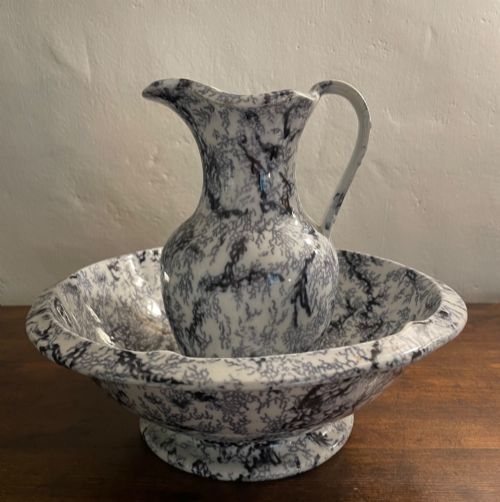
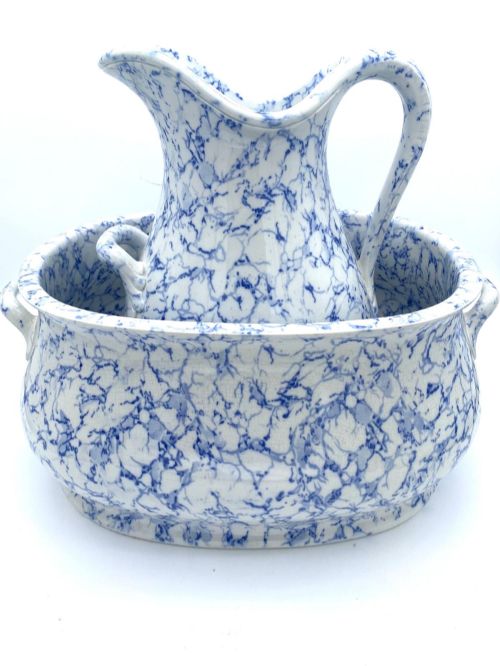
- A large jug with a flared spout and curved handle, traditionally designed for pouring water into a matching basin. These form the central pieces of nineteenth century wash sets.
Antique Transferware Jug: Frequently Asked Questions
What were antique transferware jugs used for?
These vessels served diverse roles ranging from serving liquids at the dining table to carrying water within large bedroom wash sets. Many functioned as commemorative pieces, displaying political slogans, fraternal emblems, or historical landmarks.
Over time, owners transitioned these heavy earthenware containers from practical daily service into decorative cabinet items and display pieces.
How do I identify a Georgian transferware jug?
Georgian examples typically feature creamware or pearlware bodies with early transfer printing techniques in dark blue, brown, or black. Look for distinct architectural motifs, maritime scenes, and early nineteenth century vessel shapes.
Pottery from this era often lacks modern factory stamps, relying instead on stylistic markers like hand-painted highlights and characteristic earthenware weight.
What causes pink splash lustre on jugs?
Pink splash lustre results from applying a metallic gold solution over the glaze and firing it in a reducing atmosphere. The metallic droplets scatter during the kiln process to create a mottled, pink, and purple spotted effect.
Potters in Sunderland and surrounding regions specialised in this technique for commemorative maritime jugs.