
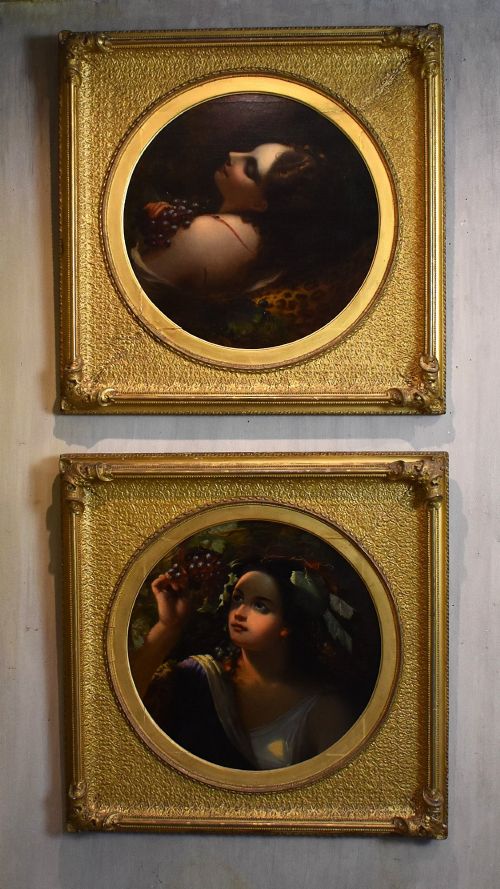


Antique Tondo Painting
An antique tondo painting brings a striking circular composition to a wall, offering classical subjects and historical depth.
Antique Tondo Painting
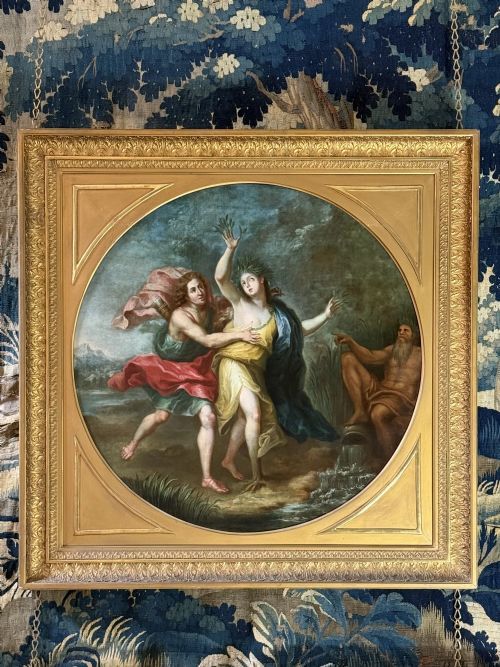
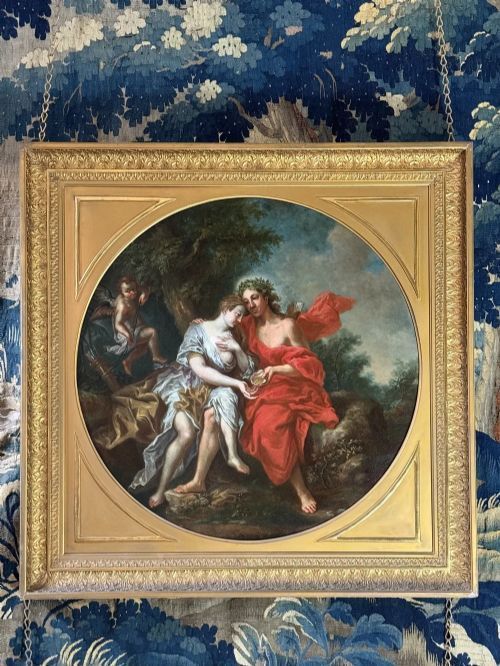
When you search for an antique tondo painting, you are looking at circular artworks executed in oil or watercolour, framed by the distinctive geometry of the tondo format. These pieces draw the eye away from traditional rectangular canvases and focus attention tightly on the central subject.
The versions you are most likely to meet on this page span the sixteenth century through to the nineteenth century, taking in Victorian examples, Renaissance Revival pieces, and French Rococo designs. Makers utilise wood panels, canvas, and heavy giltwood frames to house these circular compositions.
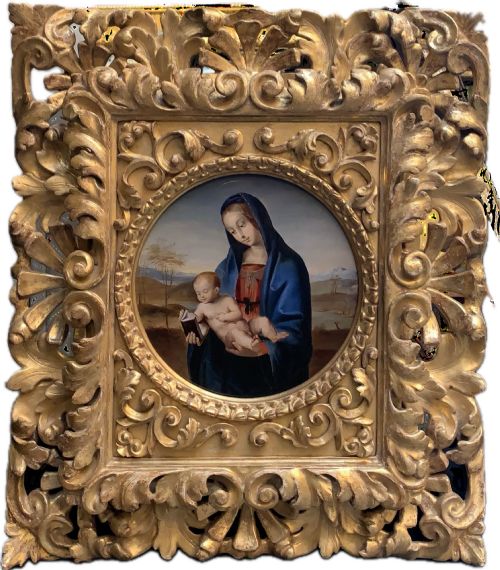
Subjects range from mythological scenes of gods and nymphs to religious portrayals after Raphael, alongside landscapes and coastal views with fishing boats. Continental schools and named artists appear among the selections, framed in gilded wood.
Materials and construction
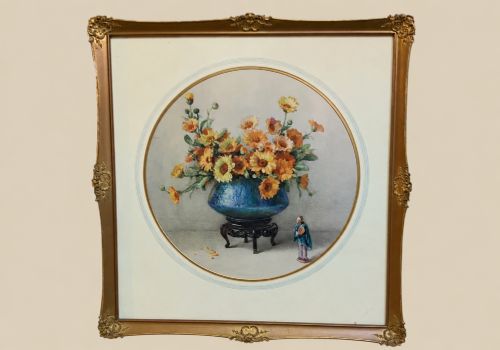
Artists painted these circular works using oil paint on canvas or wood, applying pigment to create rich mythological or religious scenes. Watercolours also appear on paper within round mounts, capturing coastal views and fine details.
Frames play a crucial role in the construction of a tondo, often fashioned from gilded wood or giltwood to match the curved perimeter of the painting. These heavy frames require specialist joinery to maintain a true circle over centuries.
Listings feature works from the sixteenth, eighteenth, and nineteenth centuries, including Victorian pieces.
Assessing quality and execution
The finesse of the brushwork distinguishes finer examples from simpler student copies, particularly in the rendering of figures and facial expressions. Artists who mastered the challenging circular geometry achieved a balanced composition that feels entirely natural within the curved boundary.
The quality of the surrounding frame matters greatly, with hand-carved gilded wood showing sharper detail and deeper relief than later replacements. Original backing materials and untouched painted surfaces preserve the integrity of the piece.
Charles-Antoine Coypel·Theodore Jensen·John Bell·Landseer·John Frederick Herring
The Antique Tondo Painting Glossary
- Tondo
- A circular work of art, either a painting or a sculpture. This ancient format was favoured during the Renaissance and revived in later centuries.
- Giltwood
- Wood that has been treated with gold leaf or a gold-coloured finish. It provides a bright, reflective border suited to classical oil paintings.
- Oil on Canvas
- Pigment mixed with drying oil applied to stretched fabric. This medium allows for deep blending of colours and long-term durability.
- Renaissance Revival
- A nineteenth-century stylistic movement that drew inspiration from the art and architecture of the fifteenth and sixteenth centuries.
- Continental school
- A term used to describe artwork produced in mainland Europe rather than Britain, often indicating a specific regional training style.
Antique Tondo Painting: Frequently Asked Questions
How do you hang a round painting?
Circular frames require secure central hanging points on the reverse to prevent the piece from tilting on the wall. Due to the weight of heavy gilded wood frames, sturdy fixings into solid masonry or wall studs are essential.
Positioning the tondo at eye level allows the circular composition to draw the viewer in without competition from rectangular frames nearby.
What subjects appear in these works?
Religious scenes after masters like Raphael sit alongside classical mythology involving gods and nymphs. Landscapes, farmyard scenes with horses, and coastal views with fishing boats also feature.
These varied subjects reflect the different periods of production, from sixteenth-century religious reverence to nineteenth-century narrative painting.
Are all tondo paintings circular?
The term specifically denotes a circular format, though the supporting panel or canvas stretcher is often square or rectangular behind the round frame opening. The painted surface itself remains strictly bounded by the circle.
This format challenges the artist to compose within non-traditional corners, creating a distinct visual focus.
How are these frames constructed?
Makers constructed the circular frames using curved wooden segments joined together before applying layers of gesso and gold leaf. This giltwood finish enhances the theatricality of the classical or religious scenes within.
Many frames survive from the nineteenth-century revival periods, matching the aesthetic of the oil paintings they enclose.