


Neoclassical Oil Painting
A neoclassical oil painting brings classical proportion, mythology and quiet dignity into a room through finely rendered canvas and giltwood framing.
Neoclassical Oil Painting
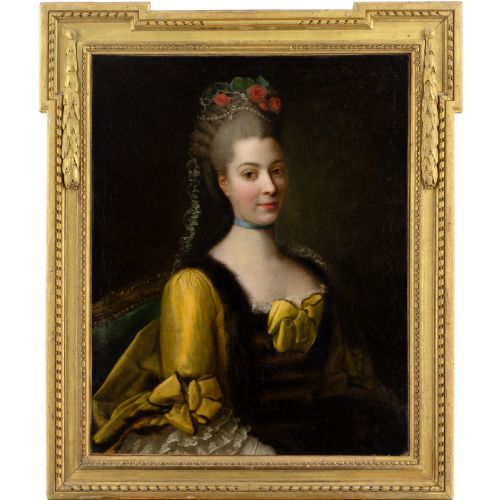
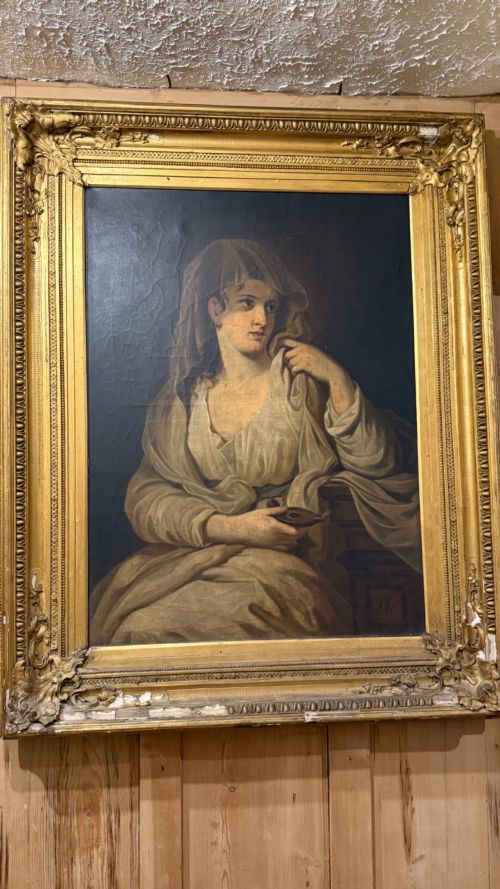
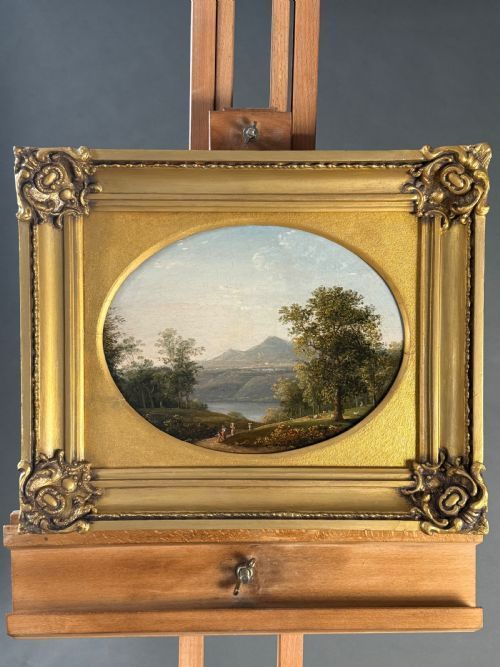
A neoclassical oil painting represents figures, landscapes and portraits rooted in eighteenth and nineteenth-century aesthetic ideals. Buyers searching for a neoclassical oil painting will encounter works from French, Italian, German and English schools spanning the eighteenth century through the early twentieth century.
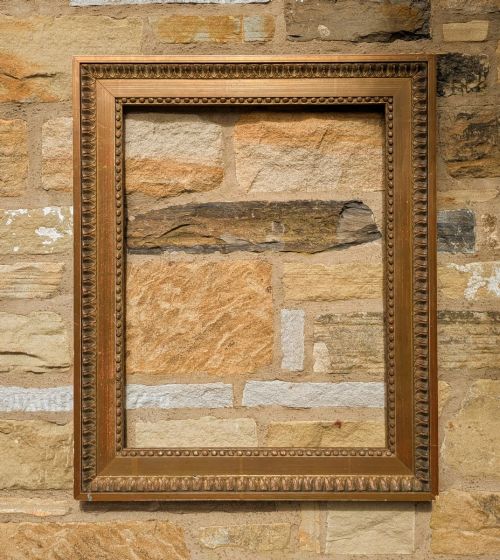
The selection ranges from grand tour landscapes and mythological scenes of gods and nymphs to formal portraits and trompe l'oeil compositions. Many pieces arrive housed in period giltwood frames featuring egg and dart beaded moulding or gesso ornament.
Portraits of elegant ladies, gentlemen and children appear frequently alongside decorative pairs and allegorical subjects such as the four seasons. These works bridge classical antiquity and academic painting traditions.
Materials and technique
These works utilise oil paint applied to canvas, wood panels and board supports. Painters built up compositions using refined pigments that captured subtle shifts in light, shadow and drapery.
Frames employ timber foundations finished with gesso and gilt wood. Artisans carved intricate decorative motifs including beaded moulding and classical revival ornament directly into the frame construction.
Cherubs and spaniels frequently keep watch beside eighteenth-century ladies, proving that aristocratic sitters rarely travelled without divine or canine backup.
Assessing quality
Quality rests in the precision of the brushwork, the anatomical accuracy of portraiture and the handling of classical drapery and light. Stronger examples display confident draughtsmanship and expressive facial modelling.
The integration of the painting with its period frame contributes significantly to the overall integrity of the piece. Original giltwood frames with intact gesso enrich the presentation of eighteenth and nineteenth-century canvases.
Jacob Philipp Hackert·Jean Baptiste Isabey·Louis Léopold Boilly·Del Buono·Guiseppe Mazzolini·Elisabeth Vigee Le Brun·John Russell·Francis Alleyne·Angelica Kauffman
The Neoclassical Oil Painting Glossary
- Grisaille
- A painting executed entirely in shades of grey or neutral monochrome. This technique often mimics stone sculpture or relief carvings.
- Camaieu bleu
- A monochromatic painting rendered in shades of blue. It creates a striking decorative effect reminiscent of porcelain or classical pigment studies.
- Trompe l'oeil
- An artistic illusion that tricks the eye into perceiving painted objects as three-dimensional reality. Artists applied this skill to render florals, cherubs and architectural elements.
- Grand tour
- Educational travels through Europe undertaken by young gentry to study classical art and antiquities. Paintings from this tradition recorded Italian landscapes and classical sites.
- Gesso
- A plaster mixture applied to wood frames as a base for gilding. It allowed artisans to carve crisp decorative details before applying gold leaf.
Neoclassical Oil Painting: Frequently Asked Questions
What is a neoclassical oil painting?
A neoclassical oil painting is a fine art canvas inspired by the art and culture of classical antiquity. These works often depict mythological figures, historical portraits or idealised landscapes.
Created primarily during the eighteenth and nineteenth centuries, they reflect an era that valued balance, proportion and academic discipline in art.
How were these paintings displayed?
These works were traditionally hung in the formal drawing rooms, libraries and galleries of stately homes. They served both as decorative statements and as expressions of classical learning.
Owners typically paired them with ornate giltwood frames designed to complement interior architectural mouldings.
How do I care for an oil painting?
Keep the canvas away from direct sunlight and dramatic shifts in temperature or humidity. Dust the surface and the surrounding gilt frame gently with a dry, soft brush.
Avoid using water or chemical cleaners on the paint surface or the gilded gesso frame.
How do I identify the period?
Dating relies on stylistic clues, canvas preparation, stretcher construction and the framing technique. Eighteenth-century works often feature distinct portrait attire and academic palettes.
Later nineteenth-century interpretations frequently adopt romanticised or revivalist approaches to classical subjects.