
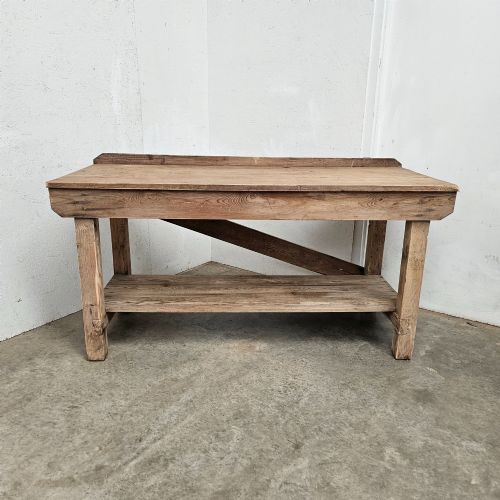
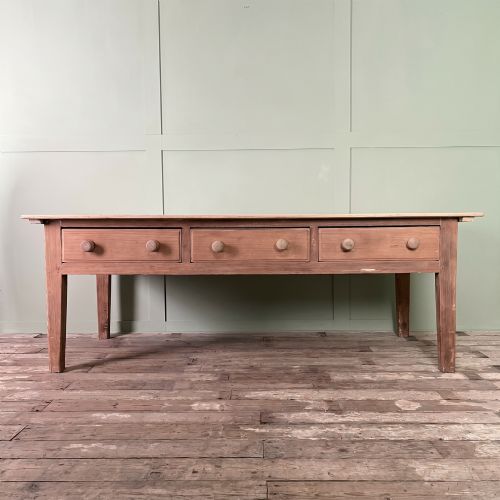
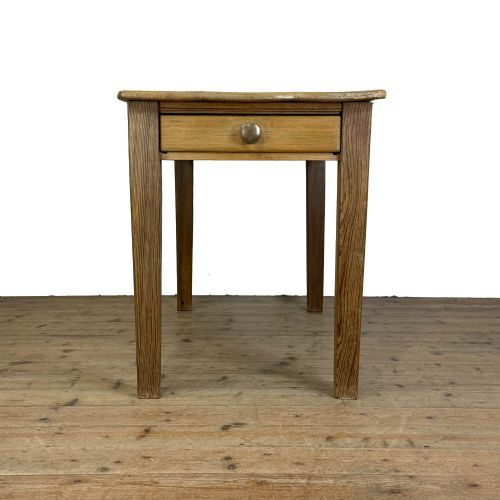
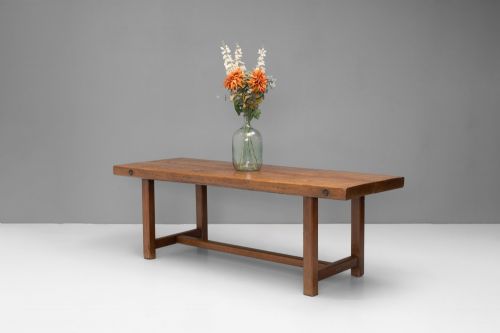
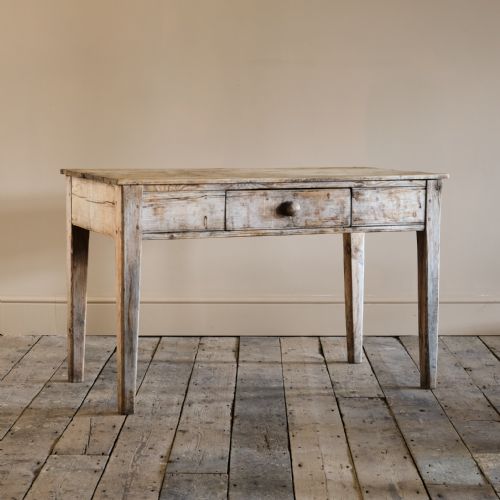
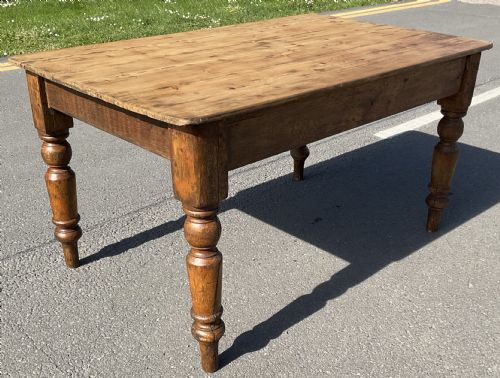


Antique Timber Work Table
An antique timber work table is a sturdy utilitarian surface built for honest graft, bringing practical history and character straight into a modern interior.
Antique Timber Work Table
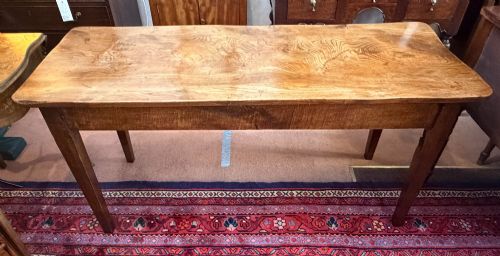
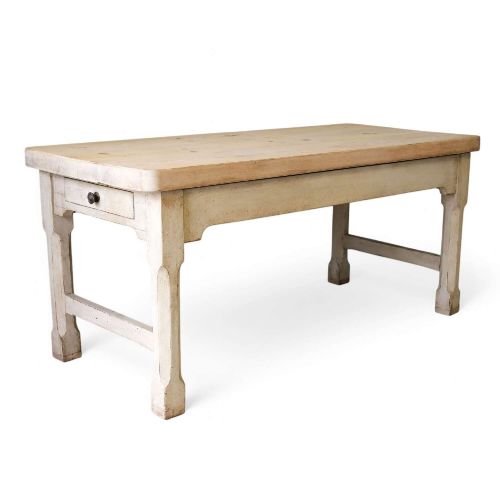
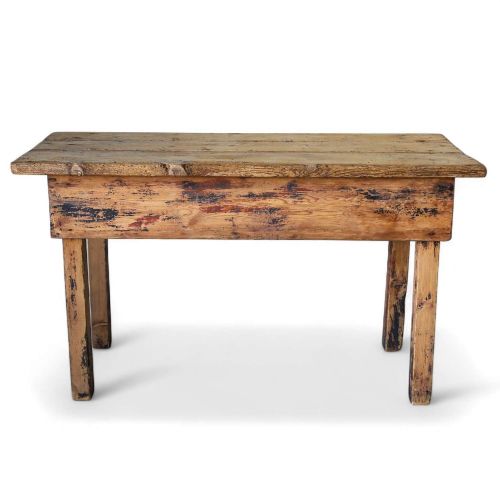
An antique timber work table is a functional domestic or trade surface designed for preparation, sorting, or crafting rather than formal dining. Buyers seeking an antique timber work table find themselves looking at 18th century, 19th century, and early 20th century examples originating from English country houses, French provinces, and Welsh sculleries. These range from heavy-duty artisans' benches fitted with vices to scrubbed pine prep tables and mahogany drapers' counters.
The most common variants on this page are pine and oak kitchen preparation tables, French workbenches in beech and oak, and sturdy farmhouse tables showing the marks of daily utility. Forms extend to potting tables with shelves, dairy prep tables in sycamore and pine, and specialist pieces such as watchmakers' tables and butchers' blocks. Every piece carries the scars and patination of actual labour.
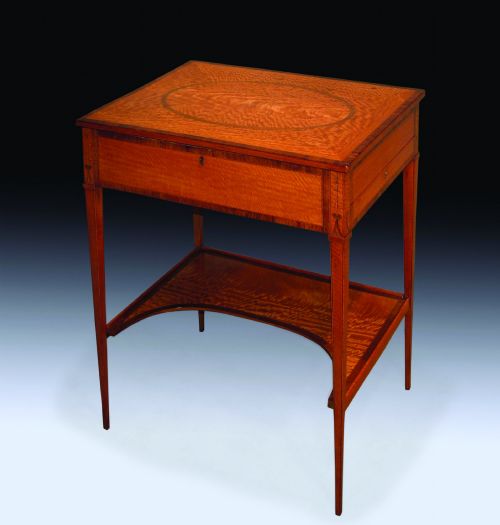
Makers and regional styles vary widely, encompassing English Regency pieces in mahogany, Spanish chestnut farmhouse tables, and Shaker-style yew wood tables. Whether configured as a console, a kitchen piece, or a side table, an antique timber work table offers a tactile connection to historical trades and domestic routines.
How they were made
Makers constructed these tables from durable native timbers including pine, oak, sycamore, elm, chestnut, beech, and mahogany, selecting each wood for its resilience to damp, weight, and impact. Surfaces were left bare to be scrubbed daily or treated with traditional finishes such as Falu paint, later layers of decorative paint, or simply left to acquire a deep natural patina through decades of friction and oil.
Construction techniques prioritised rigidity and endurance, employing heavy trestle bases, sturdy mortise and tenon joints, and occasional reinforcement from wrought iron, cast iron, brass, or standard metal fittings. Artisans incorporated functional elements directly into the structure, such as wooden vices on French workbenches, undershelves for storage, and thick end-grain blocks for heavy butchery and preparation.
Listings feature timber work tables spanning the eighteenth, nineteenth, and early twentieth centuries, constructed in pine, oak, beech, and mahogany.
What varies in quality
Quality in an antique timber work table rests in the integrity of its timber selection, the honesty of its wear, and the balance of its proportions rather than any factory-standard finish. Tables built with thick, unwarped planks of dense hardwood like oak, beech, or chestnut hold a distinct advantage over lighter or heavily restored examples that have lost their original heft.
The depth and authenticity of the patina dictate the visual success of the piece, separating tables that have naturally evolved through active service from those stripped down or artificially aged. Structural honesty matters deeply; an untouched base with original joints, vices, or brackets retains far more historical weight than a heavily altered carcass.
Trussant and Cie
The Antique Timber Work Table Glossary
- Prep table
- A utilitarian wooden surface historically used in country houses or commercial kitchens for food preparation, featuring a scrubbed timber top designed for heavy daily use.
- Trestle table
- A table structure composed of two or more supports connected by a horizontal beam, offering maximum legroom and exceptional stability under heavy loads.
- Butchers block
- A thick, heavy block of timber, often end-grain, constructed to absorb the repeated impact of cleavers and chopping tools in commercial meat preparation.
- Falu paint
- A traditional deep red or earth-coloured matte paint used historically in Scandinavia and Europe to protect exterior and interior timber surfaces.
- Patina
- The surface sheen, softening of edges, and tonal depth acquired by wood and metal over decades of handling, cleaning, and exposure to light.
Antique Timber Work Table: Frequently Asked Questions
What is a work table?
A work table is a heavy-duty utilitarian surface originally built for practical trades, food preparation, or domestic chores rather than formal entertaining.
Unlike standard dining tables, they prioritise rugged timber construction, thick tops, and absolute stability over refined decoration.
How do I clean a scrubbed pine top?
Scrubbed timber tops respond best to warm water, a stiff natural-bristle brush, and mild soap, rubbing along the grain to lift embedded dirt.
Avoid harsh chemical detergents or excessive water that can raise the grain or split aged pine planks.
Can I use an artisan workbench in a kitchen?
An artisan workbench makes an exceptional kitchen island, offering heavy-duty prep space, integrated storage, and characterful vices.
Their robust timber construction easily withstands modern culinary demands while anchoring the room with historical presence.
How can I tell a work table's age?
Age is determined through construction marks, tool traces, timber shrinkage, and the depth of the patination accumulated across active service.
Hand-cut joints, original fixings like wrought iron or brass, and genuine wear patterns reveal the period of manufacture far better than applied finishes.