
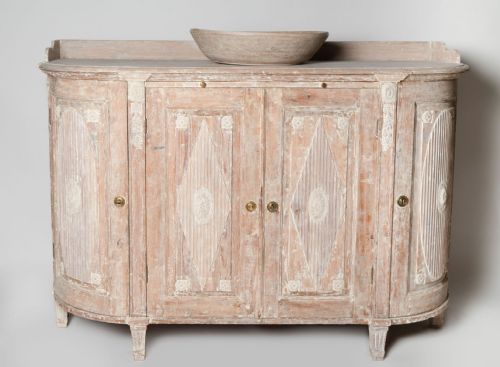


Swedish Country Pine Table
A swedish country pine table brings honest utility and pale, scraped pigment to a room, offering enduring everyday surfaces built for hard work.
Swedish Country Pine Table
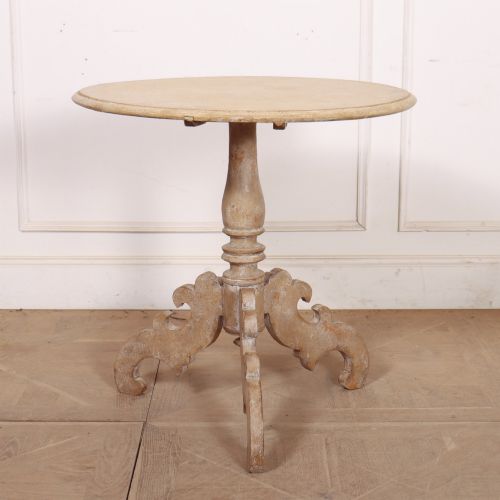
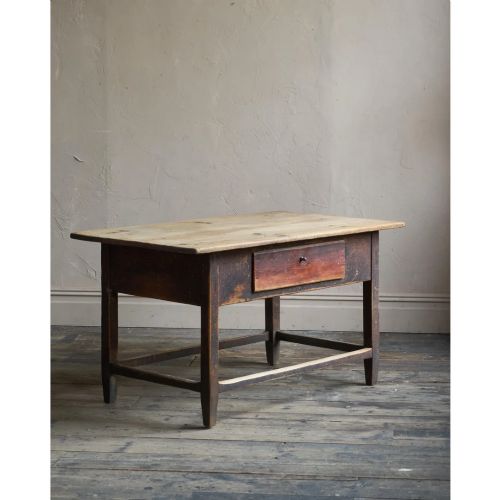
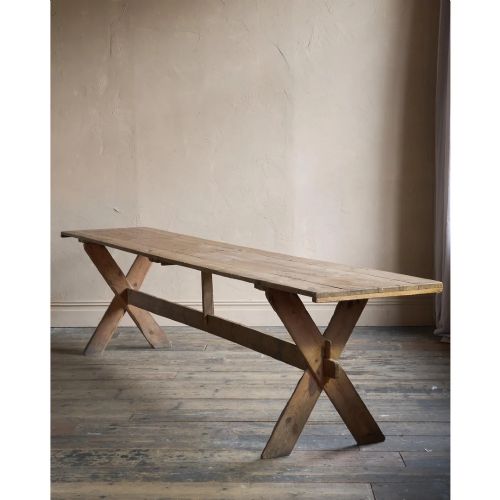
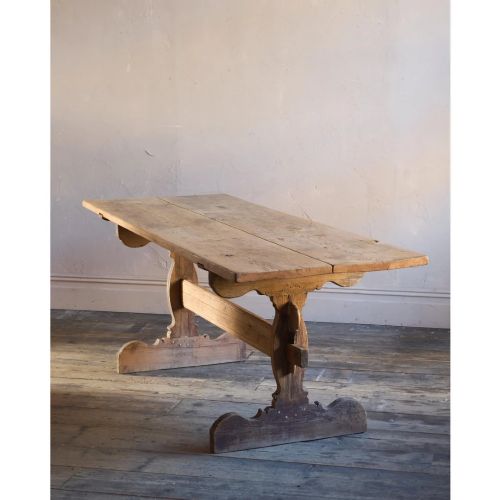
A swedish country pine table is a practical piece of domestic furniture designed for daily use in kitchens, dining rooms, and sculleries. These surfaces range from substantial dining and preparation boards to compact side tables, occasional tables, and drop-leaf forms.
The pieces appearing here stem primarily from the nineteenth century, alongside examples from the eighteenth and early twentieth centuries. Makers constructed them in softwood, timber, and pine, frequently applying traditional finishes like Falu paint.
Buyers meet diverse stylistic expressions, moving from rustic country and Scandinavian country to Gustavian lines and Swedish country Rococo revival. Side tables, dining boards, kitchen tables, and bakers tables dominate the current selection.
Judging quality in domestic tables
Quality rests in the survival of original painted surfaces, where scraped pine or undisturbed Falu paint reveals authentic age without heavy modern intervention. The integrity of structural supports, such as box stretchers and trestle bases, dictates the stability of the piece.
Proportion and form separate standard utilitarian boards from finer pieces showing Gustavian elegance or Swedish country Rococo detailing. The clarity of timber grain beneath worn paint layers further distinguishes superior examples.
Listings feature pine, softwood, and oak construction, spanning the eighteenth, nineteenth, and early twentieth centuries.
The Swedish Country Pine Table Glossary
- Falu paint
- A traditional deep red or pigmented paint derived from copper mine waste, used extensively on Scandinavian timber buildings and furniture. It provides a durable, matte finish that weathers distinctively over time.
- Slagbord
- A traditional Scandinavian drop-leaf table featuring swinging legs or gates to support the folding leaves. This form maximises floor space in smaller domestic rooms.
- Box stretcher
- A system of horizontal wooden bars connecting the lower legs of a table to increase rigidity and strength. These stretchers often show wear from resting feet.
- Gustavian
- The Swedish neoclassical style spanning the late eighteenth and early nineteenth centuries, characterised by restrained carving and lighter proportions. It derives inspiration from French Louis XVI design adapted to Scandinavian tastes.
- Bakers table
- A heavy-duty preparation table designed for kneading dough and food production, often featuring scrubbed pine tops and painted bases. These practical boards form a core category of domestic kitchen furniture.
Swedish Country Pine Table: Frequently Asked Questions
How do I clean a painted pine table?
Clean surfaces gently using a soft, dry cloth or a slightly damp sponge without harsh chemical detergents. Avoid soaking the wood to protect historic paint layers.
Wax can be applied sparingly to unpainted timber tops to maintain the grain, while original painted sections require minimal interference.
Were these tables used only in kitchens?
While many served as dining boards, baking tables, and preparation surfaces, smaller versions functioned as side tables, lamp stands, and occasional furniture in living spaces.
Their sturdy construction suited hardworking domestic environments across rural and urban Swedish homes.
How do I date a nineteenth-century pine table?
Examine the construction joints, tool marks, and fixings beneath the top and along the frame to understand the period of manufacture. Hand-planed boards and pegged joints indicate older craftsmanship.
The presence of original Falu paint or layered historical pigments also helps establish the timeline alongside stylistic clues.
What is the difference between rustic and Gustavian styles?
Rustic pieces embrace plain, utilitarian forms with visible wear, simple pine construction, and unpretentious country charm. They focus entirely on practical domestic utility.
Gustavian pieces incorporate refined neoclassical lines, lighter proportions, and subtle decorative carving influenced by French royal design adapted to Swedish tastes.