

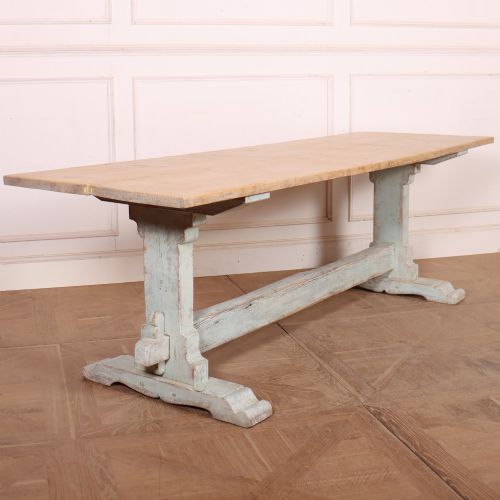

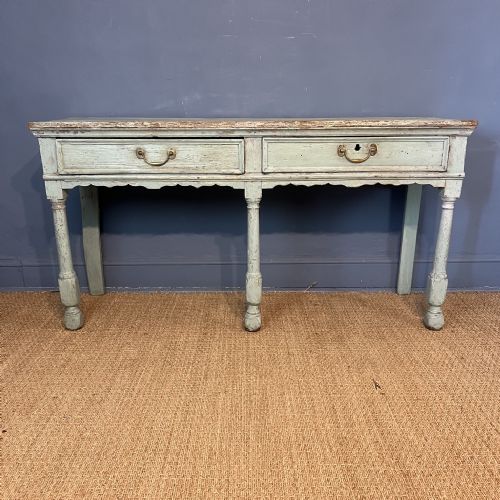


Blue Painted Pine Table
A blue painted pine table brings immediate colour and vernacular character to a room, spanning rustic country forms and simple functional designs.
Blue Painted Pine Table
When you search for a blue painted pine table, you encounter practical furniture designed for everyday domestic or commercial use. The pieces span side tables, lamp tables, bakers tables, and larger dining or work surfaces.
The selection here draws heavily on 18th century, 19th century, and early 20th century examples. English country styles sit alongside Scandinavian, French, and Italian country traditions, showing regional variations in construction and form.
Most items combine a sturdy softwood carcass with layers of historic or later pigment. You find drop leaves, trestle bases, single drawers, and two-tier structures among the surviving formats.
How they were made
Makers utilised straight-grained softwood timber for the main structural elements, shaping tops and legs with hand tools. Joinery relies on traditional methods such as pegged mortise and tenon joints.
Surfaces received coats of lead or oil-based pigment in various shades of blue. Over generations, this paint layer has developed natural wear and craquelure through regular use.
Blue Painted Pine Table Retail Price Guide 2026
Typical asking prices for blue painted pine table among the pieces listed under this phrase on Sellingantiques today, from the lower quarter to the upper quarter. They describe what is for sale here now, not the wider market.
Materials recorded across the selection include solid pine, painted wood, and minor metal or brass fittings.
What varies in quality
The distinction between ordinary and exceptional pieces lies in the integrity of the surface and the honesty of the timber. Original pigment layers that show genuine weathering carry more character than later decorative coatings.
Proportion and construction detail elevate certain formats above standard utility furniture. Well-turned legs, balanced drop leaves, and retained original brass or wooden fittings separate superior examples from plain ones.
The Blue Painted Pine Table Glossary
- Pine
- A softwood timber commonly used for vernacular furniture due to its availability and ease of working. It accepts paint finishes readily and forms the primary material for these tables.
- Trestle table
- A format featuring a horizontal beam supported by two vertical legs or trestles at each end. This design provides sturdy support for large surfaces without obstructing legroom.
- Drop leaf
- A table top with hinged flaps on the sides that fold down to save space. It allows the footprint of the furniture to expand or contract according to room requirements.
- Bakers table
- A utilitarian work table historically utilised in food preparation and baking. These pieces typically feature robust tops and straightforward frames designed for heavy daily use.
- Dresser base
- A low sideboard or cabinet featuring drawers and sometimes cupboards beneath a flat top. They originate from country kitchens where they served as primary storage and workspace.
Blue Painted Pine Table: Frequently Asked Questions
Are these tables suitable for daily dining use?
These tables function well for everyday meals provided you respect their historic surfaces. Many forms offer generous proportions for seating.
Protective measures such as placemats help preserve the painted finish from excessive moisture and heat.
How do I identify the age of the paint?
Historic paint surfaces display natural thinning, chalkiness, and microscopic craquelure accumulated over decades. Examination under magnification reveals multiple underlying layers.
Modern repainting often feels uniform and lacks the subtle tonal variations found in genuine old pigment.
Where were these painted tables originally made?
The pieces originate from various European domestic workshops, with strong representation from English and Scandinavian country traditions. Regional preferences dictated the specific shade of blue and structural joinery.
Italian and French provincial makers also produced similar utility tables for local trades and homes.
How should I clean a painted pine surface?
Gentle dusting with a dry microfibre cloth removes everyday debris without harming the pigment. Avoid chemical solvents or abrasive cleaners that strip historic finishes.
Occasional application of microcrystalline wax can protect fragile paint layers from further wear.