




Antique Timber Office Table
These antique timber office tables combine sturdy construction with generous work surfaces, making them both practical furniture and handsome centrepieces for a study.
Antique Timber Office Table
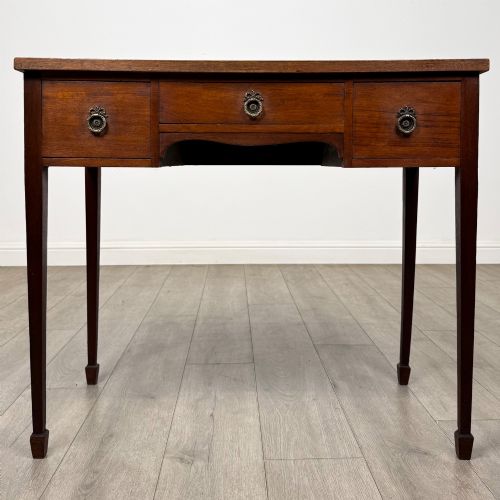
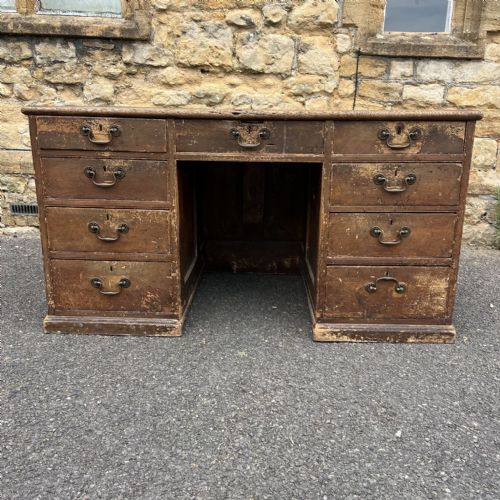
When you search for an antique timber office table, you encounter a variety of forms designed for writing, administration and clerical work. The selection spans pedestal desks, kneehole desks, partners desks and flat writing tables originating from the nineteenth and early twentieth centuries.
These tables served as the administrative hubs of country estates, boardrooms and town offices. Their robust construction allows them to continue functioning as practical workspaces in modern homes and offices.
Materials and construction
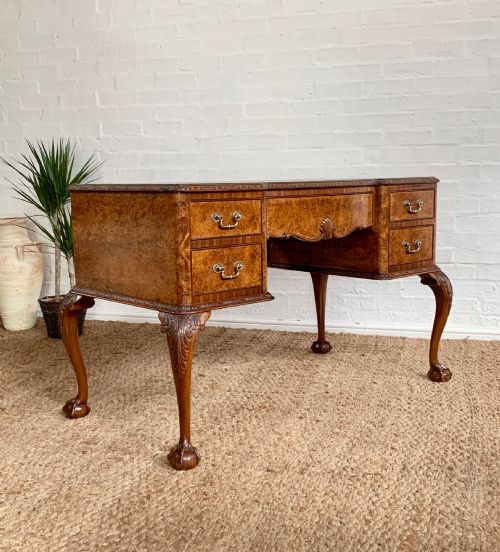
Cabinet makers built these office tables using dense hardwoods such as mahogany, walnut and oak, frequently selecting figured veneers for drawer fronts and top surfaces. Secondary woods like pine appear in internal drawer framing and hidden structural components.
Surface treatments typically involve hand-tooled leather inserts on the writing surfaces, complemented by cast brass handles, drawer pulls and occasionally brass castors on the feet. Joinery relies on traditional techniques including dovetailing for drawers and mortise and tenon joints for frames.
Listings feature woods spanning mahogany, walnut, burr walnut, oak, satin birch, pine and satinwood alongside brass and leather details.
Factors that distinguish quality
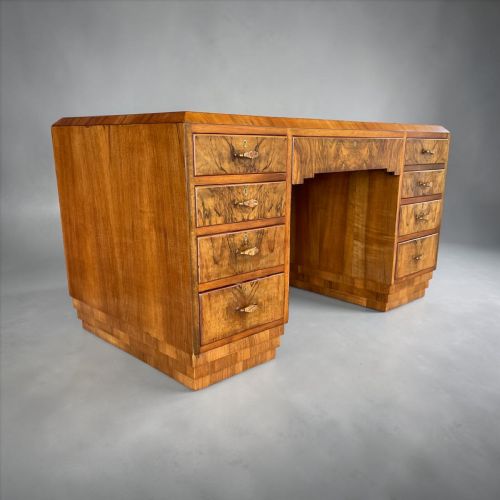
Quality in these office tables depends largely on the selection of timber and the precision of the cabinet work. Finely figured mahogany or burr walnut veneers, book-matched across drawer fronts, indicate a higher grade of manufacture than plain or uniform boards.
The sophistication of the internal construction further separates standard pieces from finer examples. Smoothly running drawers with hand-cut dovetails, original brass hardware and well-preserved secondary timbers reflect skilled workshop production.
Trollope & Sons·Heal and Son
The Antique Timber Office Table Glossary
- Pedestal desk
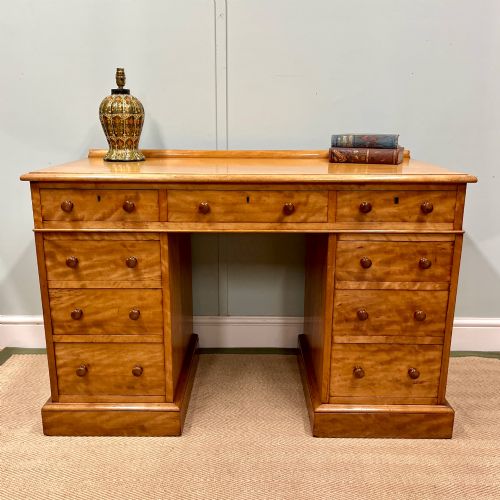
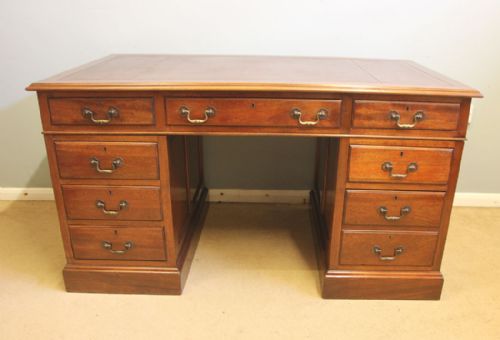
- A heavy desk comprising two freestanding drawer pedestals supporting a top surface with a central drawer. This form provides substantial storage capacity on both sides of the kneehole.
- Kneehole desk
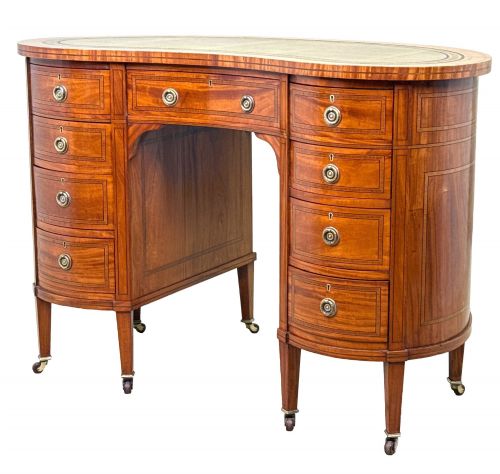
- A compact desk featuring a central recess for the user's legs, flanked by single or multiple columns of drawers. It offers a structured workspace without the bulk of a full partners desk.
- Partners desk
- A large double-sided pedestal desk designed for two people to work opposite one another simultaneously. Drawers and cupboards are duplicated on both long sides.
- Book-matched
- A technique of laying adjacent veneer slices so that they mirror each other, creating symmetrical patterns across large surfaces like desk tops. Cabinet makers used this to highlight the natural grain of walnut and mahogany.
- Tooled leather
- Leather writing surfaces decorated along the outer margins with blind or gilt tool impressions. This traditional finish provided a smooth, durable medium for writing.
Antique Timber Office Table: Frequently Asked Questions
What is a partners desk?
A partners desk is a large double-sided pedestal desk featuring drawers and cupboards on both the front and back. This configuration allowed two individuals to sit opposite each other and work at the same piece of furniture.
Originally utilised in banks, legal practices and large libraries, these desks require ample floor space to be accessed from all sides properly.
How do I care for a leather desk top?
Leather writing surfaces benefit from regular dusting with a soft, dry cloth and occasional treatment with specialist leather balms or waxes. Avoid using harsh chemical cleaners or excessive water, which can damage the leather and the surrounding timber.
Keeping the leather nourished prevents cracking and preserves the gold or blind tooling along the borders.
Are these desks suitable for daily computer use?
Many of these antique timber office tables accommodate modern computer equipment while retaining their traditional appearance. Generous surface areas and substantial kneeholes provide adequate space for screens and keyboards.
Care should be taken with cable management to protect both the timber edges and the original leather writing surfaces from wear.
How can I tell a Victorian desk from an Edwardian one?
Victorian desks generally feature dense, dark mahogany timbers with heavy proportions and robust brass hardware. The construction tends to be substantial, reflecting the high-status office furniture of the nineteenth century.
Edwardian pieces often display lighter timbers such as satin birch or mahogany with Sheraton Revival influences, sometimes incorporating inlaid stringing and more restrained decorative details.