
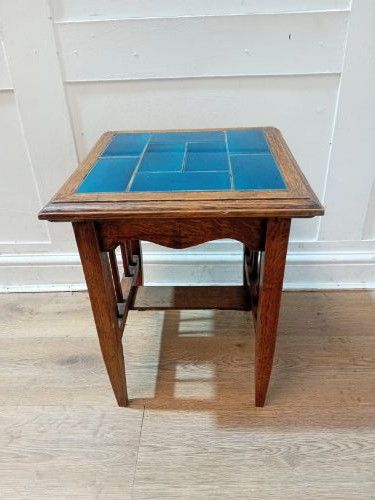

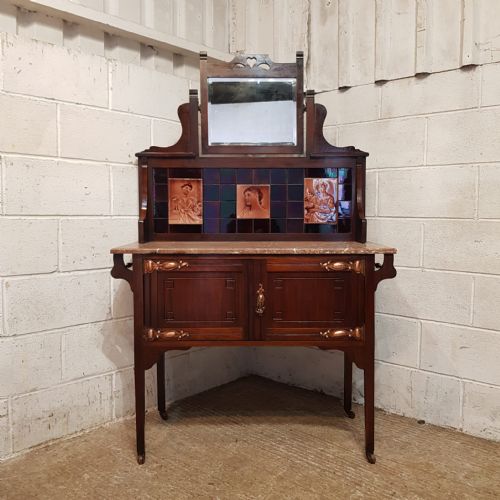


Antique Tile Top Table
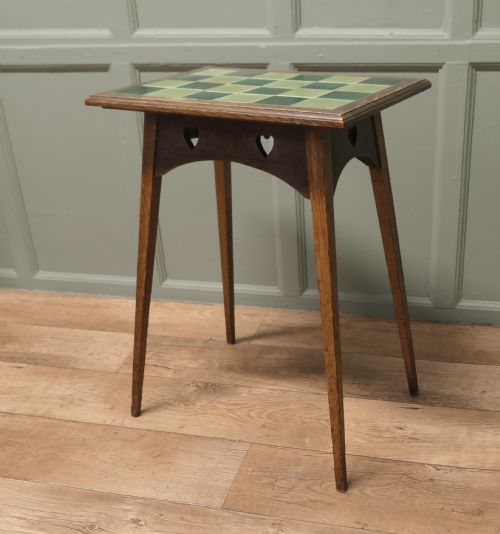
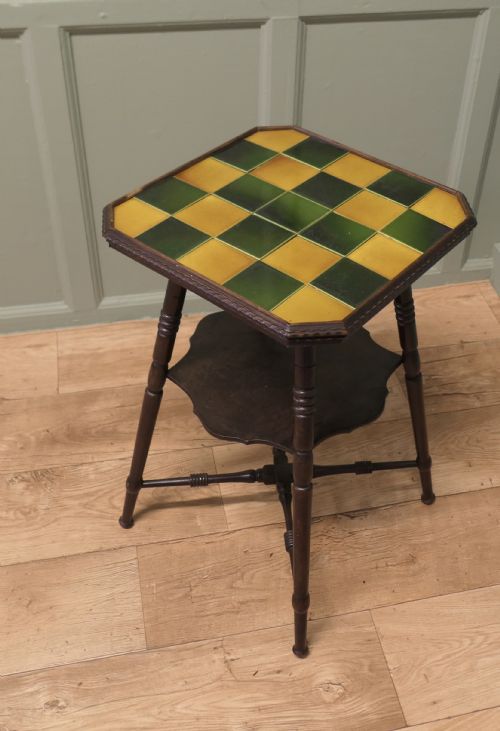
An antique tile top table brings glazed colour and robust timber into a room, offering a sturdy surface that shrugs off water and heat.
Antique Tile Top Table
An antique tile top table brings together glazed ceramics and traditional cabinet timber, serving utilitarian roles that evolved from bedroom washstands into decorative occasional furniture. These pieces span the Victorian, Edwardian and early twentieth century periods, reflecting changing domestic habits across the eras.
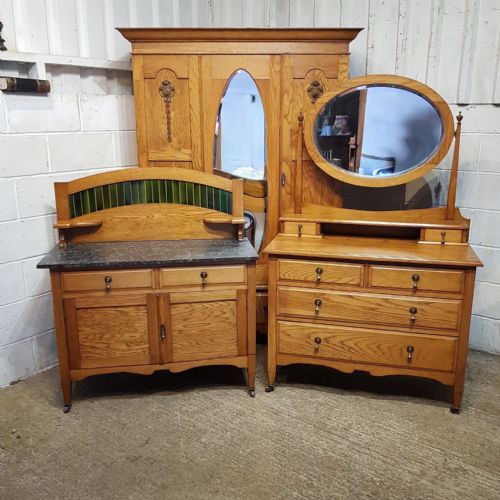
The most frequent form on this page is the washstand or side table, often constructed in oak or mahogany. Makers integrated ceramic tiles into the surface to create a durable, water-resistant area for washing or plant display.
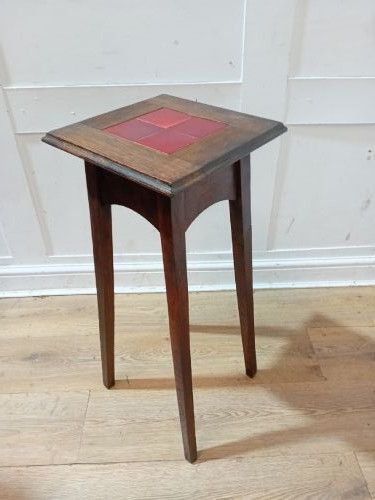
Beyond standard side tables, the category encompasses jardiniere stands, cabinets and occasional tables associated with the Arts and Crafts and Aesthetic movements. These designs use ceramic inserts to add colour and pattern to domestic interiors.
Judging quality and craftsmanship
Quality rests on the integrity of the timber framing and the artistic merit of the ceramic tiles. Finely executed hand-carved details in the wood and hand-painted or tube-lined tile designs indicate superior workshop production.
Construction solidity distinguishes better examples, where timber frames remain square and joints hold firm without movement. The precision of the fit between the ceramic tiles and the surrounding wooden rebate also marks the level of care taken by the cabinet maker.
Listings feature oak and mahogany pieces spanning the Victorian and Edwardian eras, alongside Arts and Crafts and Aesthetic Movement styles.
Liberty London·Shapland & Petter·Baillie Scott
The Antique Tile Top Table Glossary
- Arts & Crafts
- A design movement valuing handcraft, natural materials and simple construction. It rejected mass production in favour of traditional craftsmanship.
- Aesthetic Movement
- A late nineteenth century style emphasising visual beauty above narrative or moral themes. It often drew inspiration from Japanese and Moorish decorative arts.
- Jardiniere stand
- A tall table or pedestal designed to hold a plant pot or flower bowl. These stands frequently incorporated waterproof tile surfaces.
- Washstand
- A piece of bedroom furniture designed to hold a basin and jug for washing. They often featured tiled splashbacks and marble or tile tops to resist water damage.
- Tile top
- A furniture surface inset with glazed ceramic tiles. This design provided a heat and moisture resistant area suitable for practical daily use.
Antique Tile Top Table: Frequently Asked Questions
How were tile top tables used originally?
These tables served practical daily functions in bedrooms and living spaces, often holding washbasins, pitchers or heavy potted plants. The glazed ceramic surface protected the timber underneath from water splashes and dampness.
Over time, smaller versions transitioned into sitting rooms and hallways as occasional tables or stands for decorative items. Their durable tops made them versatile for everyday household tasks.
How do I clean an antique tile top table?
Wipe the wooden frame with a soft, slightly damp cloth and dry it immediately to protect the finish. Avoid harsh chemical cleaners that can strip old wax or varnish from the timber.
Clean the ceramic tiles with mild soapy water and a soft sponge, taking care not to let moisture seep into the grout lines or wooden joints. Regular waxing of the surrounding wood preserves its natural sheen.
Are antique tile tops heat resistant?
While ceramic tiles withstand moderate warmth, extreme temperature changes can crack old glazes or the bedding mortar underneath. It is wise to use coasters or mats rather than placing very hot items directly onto the surface.
Older ceramics expand unevenly when exposed to sudden heat, risking permanent damage to the glaze. Treating the surface with care preserves both the tiles and the structural bed.
How do I date an Arts and Crafts table?
Examine the construction methods, such as visible dovetails, pegged joints and timber selection, which typically point towards the late nineteenth or early twentieth century. Oak was the preferred wood for this movement, often left with a natural or fumed finish.
Stylistic cues like stylized floral tiles, simple geometric lines and the absence of heavy Victorian ornamentation help narrow the period. Maker marks or stamps on the timber or underside of the tiles provide definitive evidence.