
Antique Textile Picture
These antique textile picture examples offer stitched portraits, pastoral scenes and samplers framed for display, bringing period domestic craft directly to your wall.
Antique Textile Picture
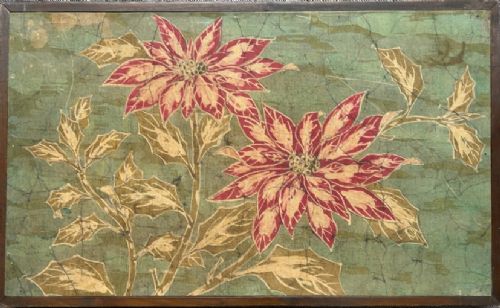
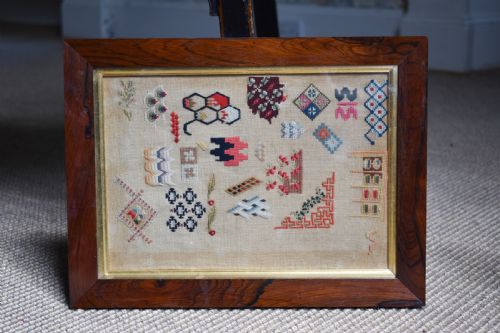
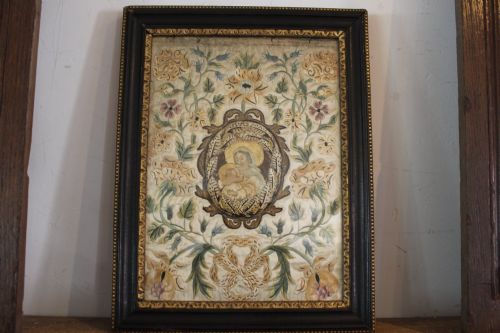
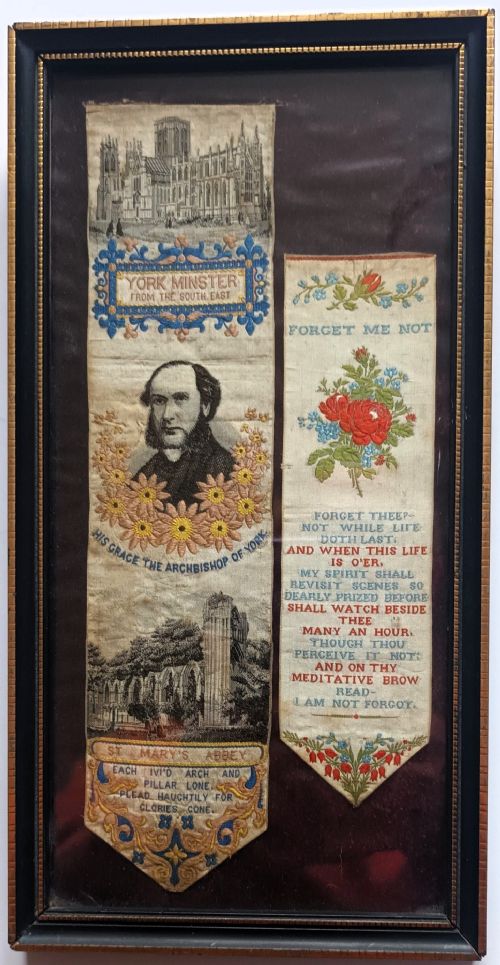
An antique textile picture brings together needlework, embroidery and woven silk mounted behind glass for interior display. Buyers examine pieces spanning from the 17th century through to the Victorian era and 1900, encompassing diverse stylistic influences.
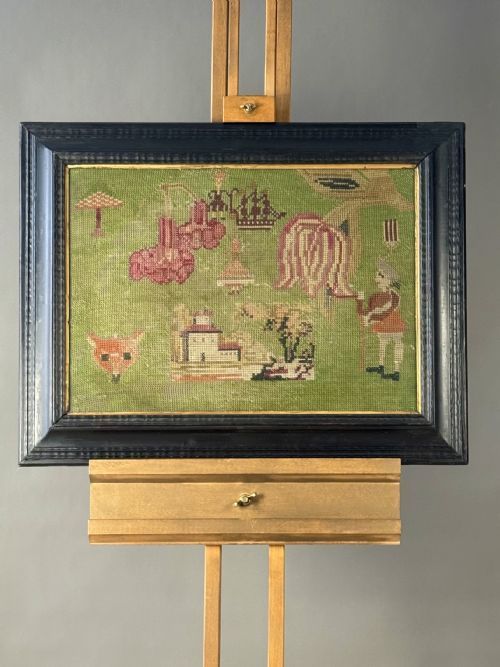
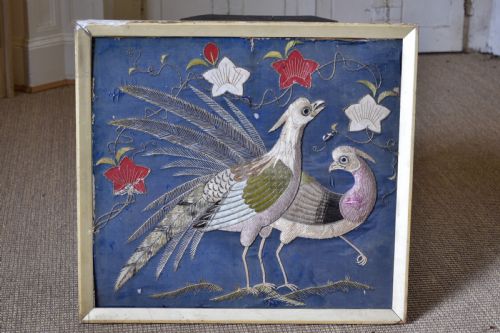
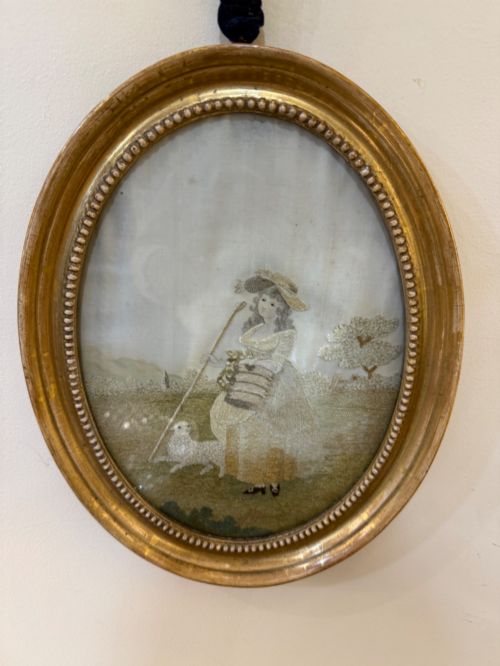
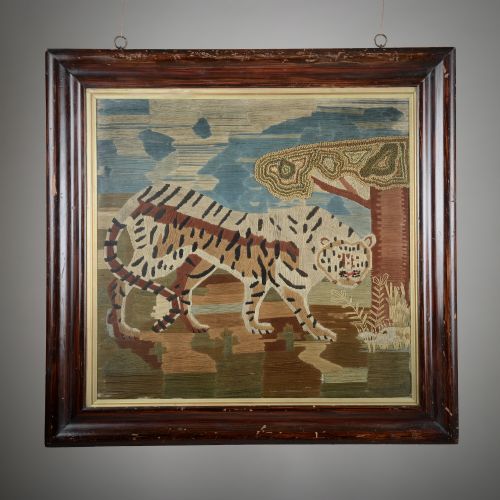
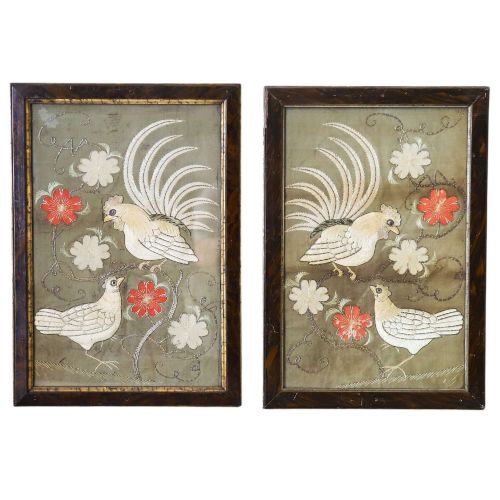
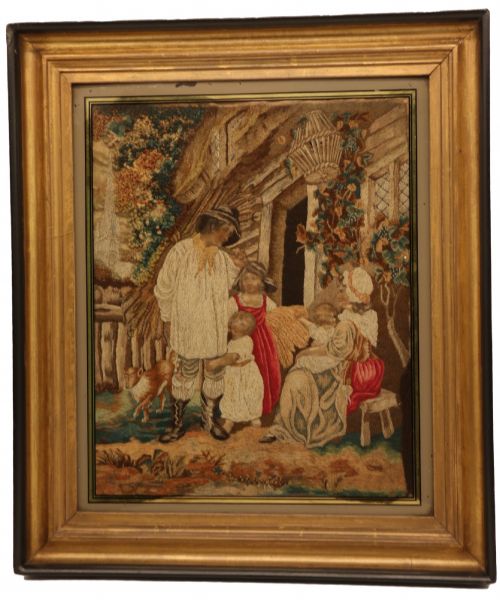
Sampler forms, pastoral farming depictions and animal studies dominate the visual record. Needlework pictures incorporate wool, silk floss and linen threads, frequently preserved inside period wooden frames.
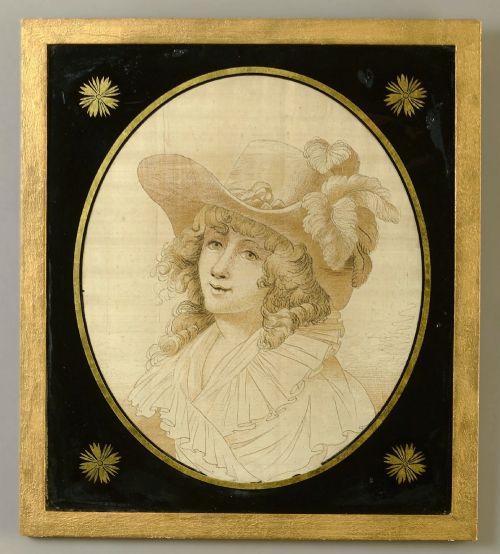
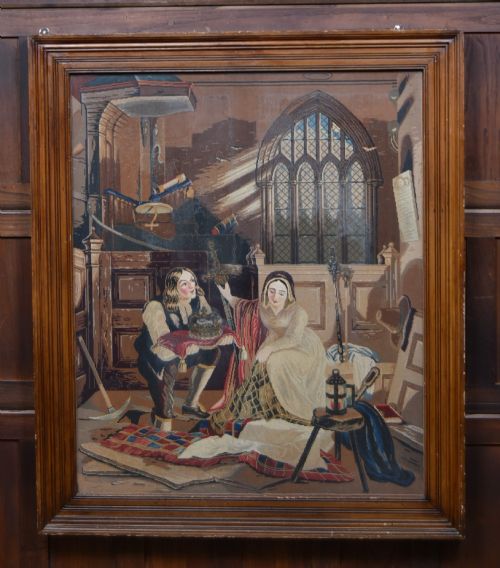
Domestic makers and professional workshops produced these works across Georgian, Regency and Victorian periods. Certain panels capture classical portraits, literary narratives or traditional alphabets executed in coloured threads.
How They Were Made
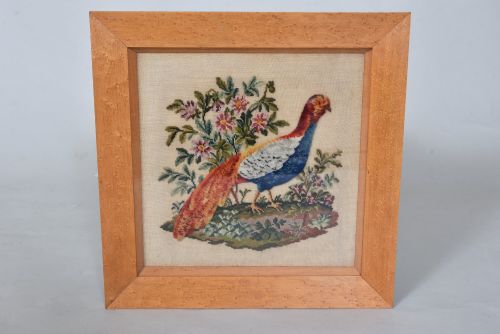
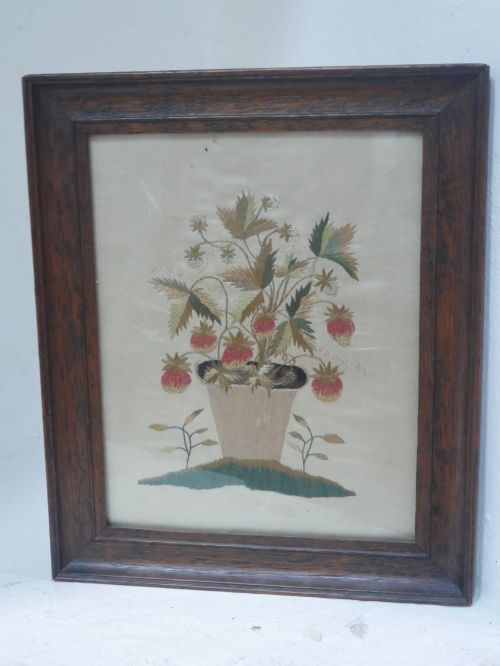
Artisans employed silk, wool, linen and canvas as grounds for detailed needlework and embroidery. Threads of silk floss and dyed wool built up the textured surface of pastoral scenes, birds and figures.
Makers housed completed panels inside timber frames constructed from giltwood, burr maple or faux tortoiseshell. Many compositions incorporate protective glass fronts alongside hand-painted silk elements or beadwork fragments.
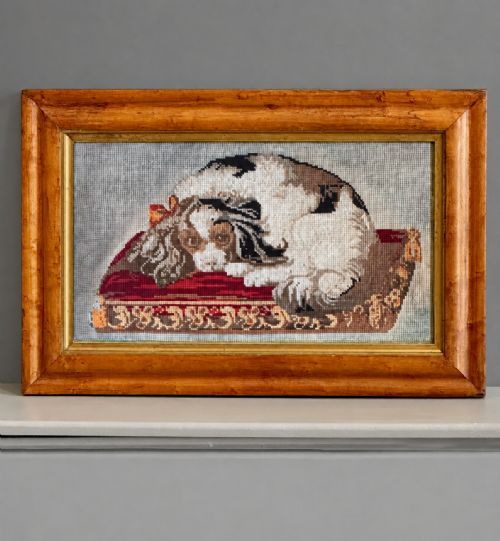
Stitched King Charles spaniels gaze out permanently from their burr maple frames, awaiting a lap that vanished centuries ago.
What Varies in Quality
Execution skill distinguishes finer needlework from simpler domestic efforts, seen in the precision of stitch density and facial detail. Complex stumpwork relief or nuanced silk shading requires advanced manipulation of materials.
The survival of original framing elements, such as verre églomisé glass panels or period giltwood mouldings, influences the overall integrity of the piece. Vibrant thread retention and stable canvas grounds separate well-preserved examples from faded works.
Stevens of Coventry
The Antique Textile Picture Glossary
- Sampler
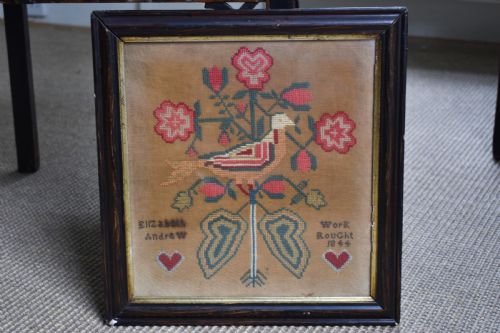
- A piece of needlework produced to demonstrate proficiency in various stitches and alphabets. These exercises often display dates, maker names and geometric motifs.
- Stumpwork
- Raised embroidery technique popular in the 17th century that creates a three-dimensional effect. Artisans padded stitches over wooden moulds or carved shapes.
- Plushwork
- Needlework style utilising clipped pile loops to create a tactile, velvety surface. This technique appears frequently on animal depictions.
- Verre églomisé
- Gilding and painting technique applied to the reverse of glass panels. Frames featuring this method provide decorative borders for portraits and pastoral scenes.
- Berlin work
- Grid-based needlework pattern popular during the 19th century that utilised brightly coloured wool threads. Embroiderers followed painted charts to complete detailed pictorial designs.
Antique Textile Picture: Frequently Asked Questions
What periods do antique textile pictures cover?
Surviving examples originate primarily from the 17th, 18th and 19th centuries, extending into 1900. Styles shift from Stuart stumpwork and Georgian pastoral scenes to Victorian wool work and Berlin work.
Specific decades within these centuries display distinct aesthetic priorities, ranging from formal alphabet samplers to narrative literary illustrations.
How should I hang an antique textile picture?
Mount these framed artworks away from direct sunlight to prevent silk and wool threads from fading. Maintaining stable room humidity protects both the textile fibres and the original wooden frames.
Glass fronts shield the delicate embroidery work from dust and atmospheric moisture during daily display.
What materials appear in these embroideries?
Makers utilised silk, wool, linen and canvas as the foundational base for stitched compositions. Threads include fine silk floss and dyed wool yarns.
Frames incorporate materials such as giltwood, burr maple, gold leaf and glass.
How do I identify a sampler from other pictures?
Samplers feature rows of alphabets, numerals, geometric bands or signature motifs executed by learners or skilled stitchers. Pictorial needlework focuses instead on a central scene like a landscape, portrait or animal.
Many samplers record specific dates and maker details directly within the stitched layout.