





Antique Italian Tapestry
These antique italian tapestry pieces bring centuries of hand-woven texture and historic European craftsmanship straight into your home.
Antique Italian Tapestry
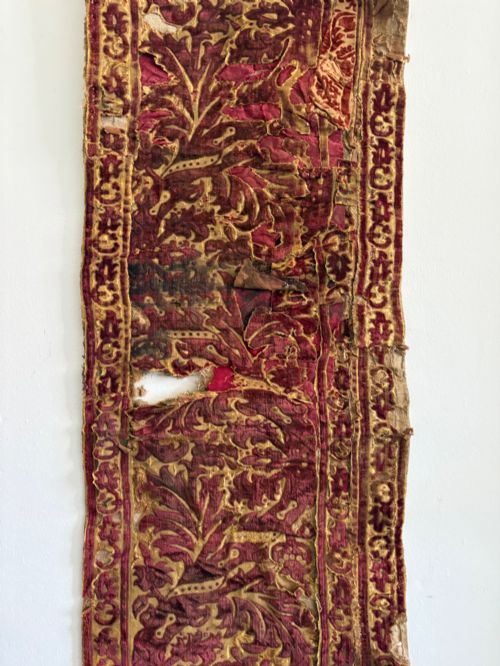
When you search for an antique italian tapestry, you encounter woven textiles and needlework alongside chairs and headboards mounted with historic panels. These items date from the 18th century through to the early 20th century, capturing centuries of decorative tradition.
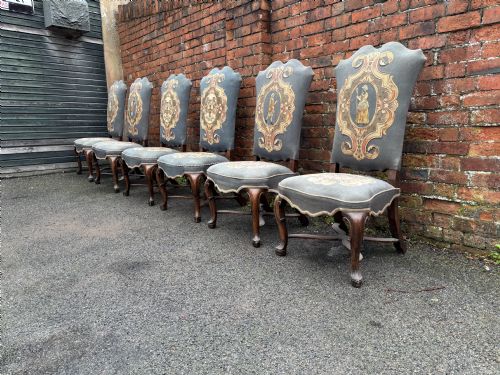
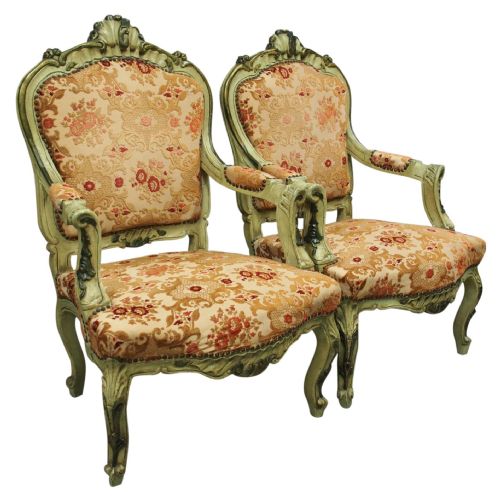
The selections on this page range from framed wall art and needlepoint portraits to walnut chairs upholstered in period textiles. You will find Venetian headboards, painted stools, and intricately worked armchairs featuring courtly figures and noble scenes.
Renaissance Revival, Italian Baroque, and Venetian Rococo styles dominate the aesthetic of these works. Each piece reflects the rich artistic heritage of Italian workshops and the enduring appeal of classical motifs.
How they were made
Makers utilised natural fibres such as wool and silk to build complex pictorial scenes and dense geometric patterns. These threads were hand-woven or meticulously needlepointed to create enduring surface designs.
Structural elements rely on traditional timbers like walnut, often paired with giltwood frames or painted finishes. Skilled artisans combined textile arts with joinery to mount tapestries onto seating, headboards, and wall panels.
Antique Italian Tapestry Retail Price Guide 2026
Typical asking prices for italian tapestry among the pieces listed under this phrase on Sellingantiques today, from the lower quarter to the upper quarter. They describe what is for sale here now, not the wider market.
A cobbler and a prince once shared a quiet moment in wool, captured forever by an industrious needle.
What varies in quality
The finesse of the needlework and the complexity of the figural depictions set finer examples apart from simpler productions. Tightly worked wool and silk threads retain their visual depth and structural integrity more effectively over time.
The supporting framework, whether carved walnut or giltwood, demonstrates varying levels of sculptural detail and joinery skill. Pieces that retain their original upholstery and frames hold a stronger connection to their period of origin.
White, Allom & Co.
The Antique Italian Tapestry Glossary
- Needlepoint
- A type of embroidery stitched onto a stiff open-weave canvas ground. It forms the dense pictorial surface seen on many period chairs and framed wall panels.
- Giltwood
- Wood that has been coated with a thin layer of gold leaf or gilt powder. This finish appears frequently on the frames and chair structures associated with Italian decorative arts.
- Walnut
- A dense, dark hardwood utilised extensively for furniture frames and chair structures. It offers a stable base for intricate carving and supports heavy textile upholstery.
- Renaissance Revival
- A 19th-century design movement that drew inspiration from the art and architecture of the 15th and 16th centuries. Pieces in this style often incorporate classical motifs and grand proportions.
- Venetian Rococo
- An ornate 18th-century style characterised by asymmetrical curves, lightness of touch, and decorative painted surfaces. It is frequently seen in Venetian headboards and seating from the region.
Antique Italian Tapestry: Frequently Asked Questions
How do I care for antique textiles?
Keep textile pieces away from direct sunlight to prevent the fading of wool and silk threads. Dust them gently with a soft brush rather than using aggressive cleaning methods.
Maintain a stable room humidity to protect both the natural fibres and the underlying wooden frames from warping or drying out.
Where were these tapestries produced?
These works originate from Italian workshops and regional centres influenced by classical design traditions. The craftsmanship reflects the distinct artistic preferences of regions such as Venice and Tuscany.
Local artisans combined imported or domestic textiles with regional furniture-making techniques to create integrated decorative pieces.
How can I identify the period?
Examine the stylistic markers, such as the curved asymmetry of Venetian Rococo or the classical symmetry of Renaissance Revival pieces. The choice of materials, including carved walnut and specific needlework techniques, also points towards a general date.
Comparing the structural joinery and frame design helps contextualize whether a piece belongs to the 18th, 19th, or early 20th century.
Can I hang framed tapestries directly?
Ensure the wall fixings are secure and capable of supporting the weight of the giltwood or wooden frame. Hang them in spaces with minimal temperature fluctuations to preserve the fabric.
Avoid hanging these artworks on damp walls or in areas exposed to excessive moisture that could harm the fibres.