
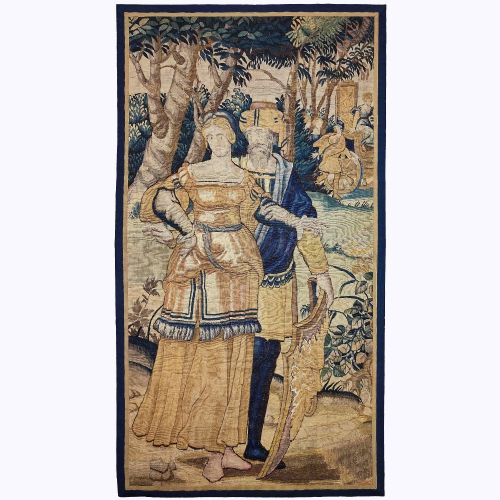


Antique Textile Artwork
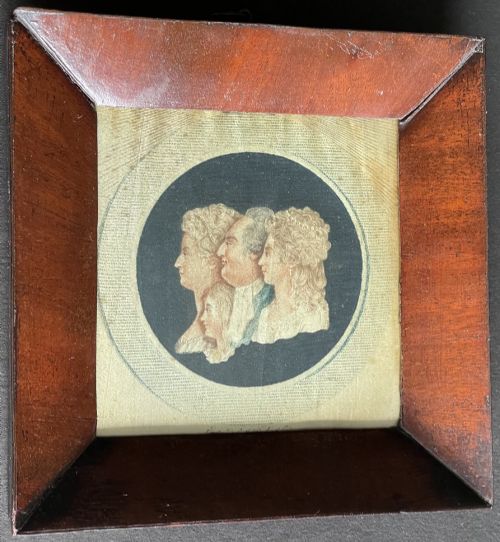
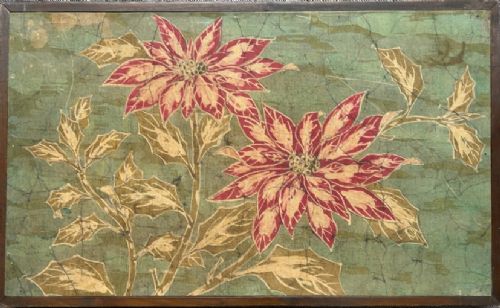
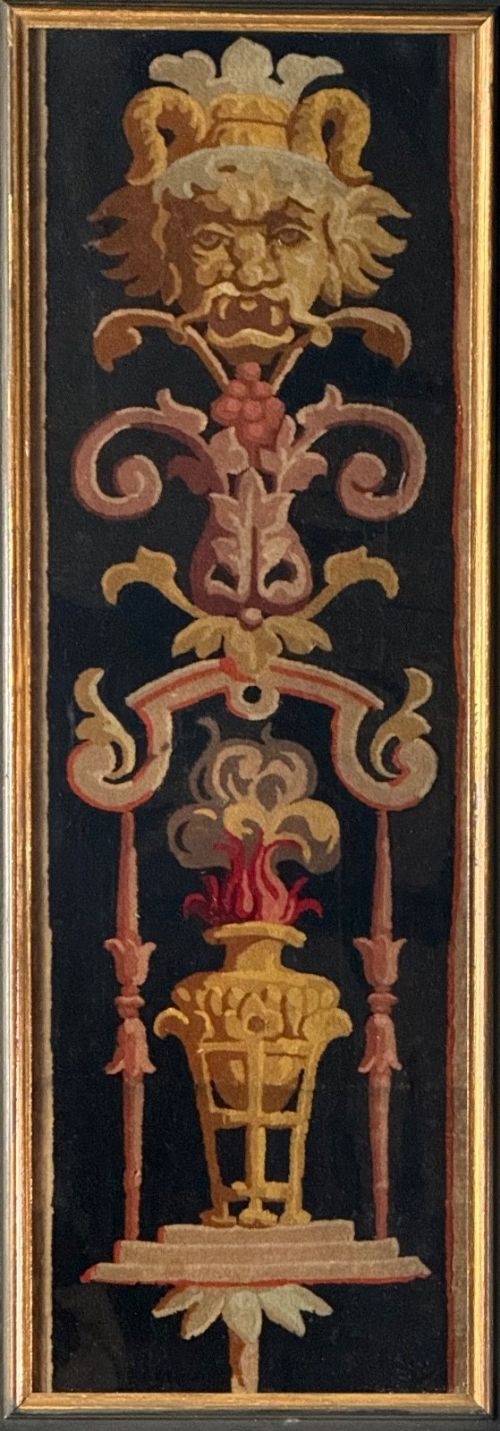
These antique textile artwork pieces span centuries of needlework, tapestry, and silk painting, offering rich historical narratives for your walls.
Antique Textile Artwork
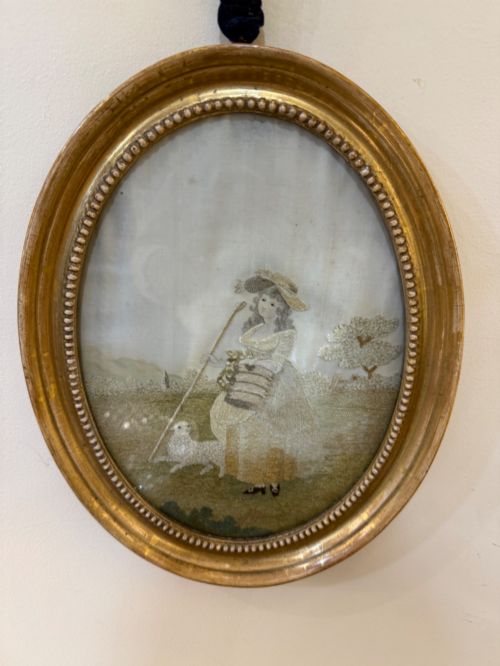
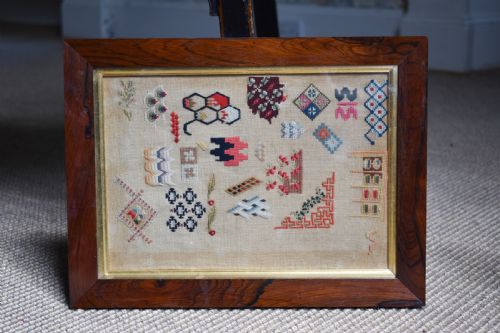
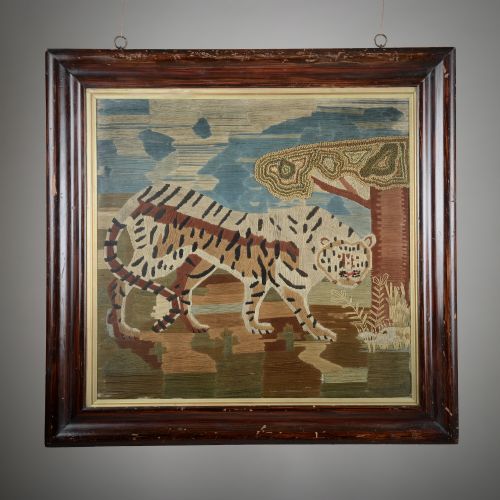
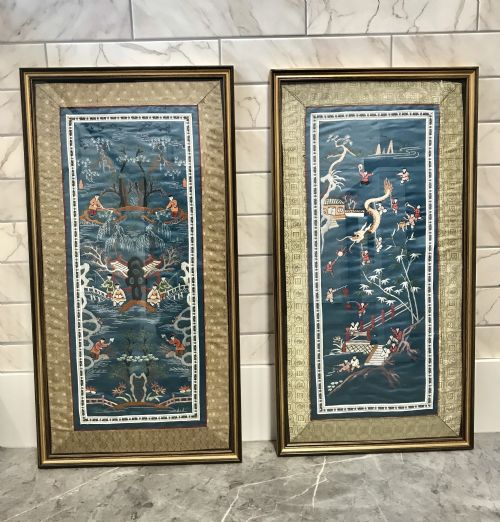
When you search for antique textile artwork, you encounter everything from finely worked needlework pictures and samplers to woven tapestries and painted silks. The pieces originating from the seventeenth, eighteenth, and nineteenth centuries dominate the selection.
Framed wall art forms the core of what you see here, often preserved behind glass in period frames such as burr maple or giltwood. Subjects range from pastoral scenes and religious iconography to detailed maps and exotic portraits.
Materials and construction
Maker utilise natural fibres including silk, wool, linen, and canvas, frequently stitching intricate designs using wool or silk threads onto a ground fabric. Some items combine painting directly onto silk with hand-sewn embroidery elements.
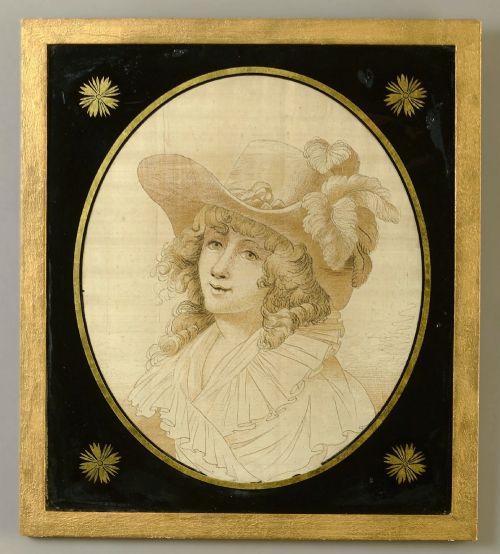
Mounting often involves wood frames, sometimes featuring glass protection or specialised verre églomisé borders to frame the textile securely.
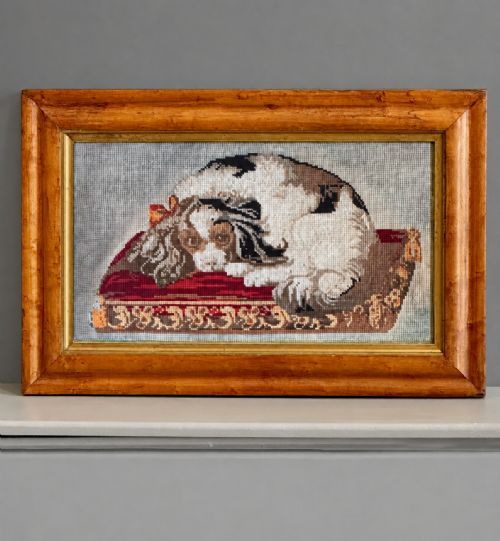
A King Charles spaniel immortalised in nineteenth-century Berlin work gazes out from an original burr maple frame.
Distinctions in quality
The fineness of the stitchwork and the complexity of the pictorial composition define the upper tier of these pieces. Tighter, more deliberate needlework demonstrates superior skill.
Condition and original framing also elevate an item, particularly when historical components like burr maple or giltwood frames remain intact.
The Antique Textile Artwork Glossary
- Berlin work
- A type of nineteenth-century canvas work embroidered in wool following a charted pattern printed on grid paper. This technique allowed makers to achieve highly shaded pictorial effects.
- Sampler
- A piece of needlework demonstrating various stitches and alphabets, typically worked by young learners. They often record names, dates, and locations.
- Crewel work
- Embroidery executed using fine wool yarn on a linen or cotton twill ground. It allows for rich texture and flowing vegetal designs.
- Gros point
- A counted-thread needlepoint stitch worked on canvas, creating a durable and textured surface suitable for pictorial panels and cushions.
- Verre églomisé
- A process of applying gold or silver leaf to glass along with engraving and painting on the rear face. It creates a reflective, decorative border for framing works.
Antique Textile Artwork: Frequently Asked Questions
How do I hang textile art safely?
Keep framed textiles away from direct sunlight to prevent fading of fragile silk and wool threads. Ensure the room humidity remains stable.
Use professional framing services that mount the fabric without adhesive directly against the glass.
What is the difference between a sampler and a needlework picture?
Samplers function as exercises in learning various stitches, alphabets, and numbers, often created by children. They prioritize technical demonstration over a unified scene.
Needlework pictures depict complete narrative subjects, portraits, or landscapes designed specifically as decorative wall art.
How can I tell the period of an embroidery?
Examine the materials, thread types, and framing styles characteristic of specific eras like Georgian or Victorian. Linen grounds and silk floss often point to eighteenth-century work.
Inscribed dates and names on samplers provide direct evidence of their origin and maker.
Were these always framed?
Many textile pieces spent time as functional household items, such as cushion covers or table panels, before later being mounted for display.
Needlework pictures and samplers were frequently framed close to their completion to protect the delicate threads from dust and handling.